
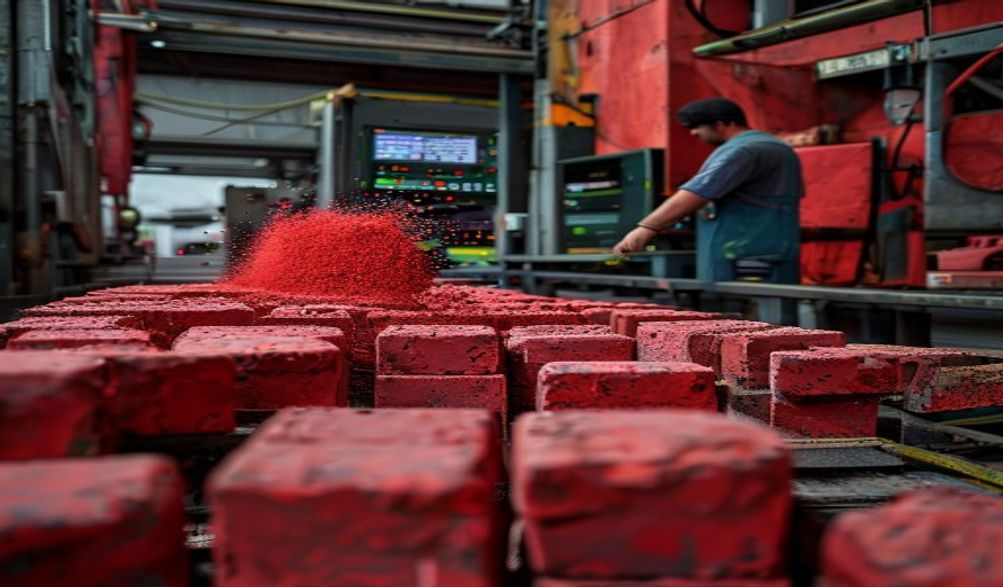
Pokistonda To'g'ri G'isht Qilish Mashinasini Qanday Tanlash Kerak: 2026-yilda Xaridorlar Uchun Qo'llanma
Kirish
Pokistonning qurilish sektori iqtisodiy faoliyatning qudratli markazi bo‘lib, Lahor va Karachidagi yirik shaharsozlik loyihalaridan tortib, butun mamlakat bo‘ylab muhim infratuzilma loyihalarigacha bo‘lgan jarayonlarni o‘z ichiga oladi. Ushbu o‘sishning asosida oddiy, ammo muhim tarkibiy qism – g‘isht turadi. Tadbirkorlar va korxonalar uchun g‘isht ishlab chiqarish mashinasiga sarmoya kiritish katta imkoniyatdir. Biroq, bu imkoniyat xavf-xatarlardan holi emas. Sizning miqyosingizga, materiallaringizga yoki bozoringizga mos kelmaydigan noto‘g‘ri mashinani tanlash og‘ir moliyaviy yo‘qotishlarga, operatsion qiyinchiliklarga va orzularingizning to‘xtab qolishiga olib kelishi mumkin.
Ushbu qo‘llanma to‘g‘ridan-to‘g‘ri sanoat tajribasi va Pokiston ishlab chiqarish sohasining chuqur tushunchasiga asoslangan. Biz umumiy savdo nutqlaridan oshib o‘tib, mahalliy sharoitlarga moslashtirilgan ishonchli, haqiqiy maslahatlarni taqdim etamiz. Maqsadimiz sizni – yangi tadbirkor bo‘lasizmi, rivojlanayotgan qurilish firmasi bo‘lasizmi yoki tajribali pudratchi bo‘lasizmi – murakkab bozorda yo‘l topishga kuch berishdir. Haqiqiy ishlab chiqarish ehtiyojlarini baholashdan tortib, aqlli sarmoyani qimmat xatodan ajratib turadigan muhim sotuvdan keyingi xizmatlarni baholashgacha hamma narsani tahlil qilamiz. Ushbu qo‘llanmaning oxiriga kelib...پاکستان میں خشت بنانے والی مشین کا انتخاب کیسے کریں, siz ishonchli va xabardor xarid qilish qarorini qabul qilish uchun aniq, amaliy asosga ega bo‘lasiz.
Ishlab chiqarish Ehtiyojlari va Maqsadlaringizni Tushunish
Hatto bitta mashina broshyurasini ko'rishdan oldin, ichki holatingizni tahlil qilishingiz kerak. Yangi loyiha hayajonida ko'pincha shoshilib o'tkazib yuboriladigan bu asosiy qadam eng muhim hisoblanadi. Amaliy biznes haqiqatlariga asoslangan chuqur o'z-o'zini baholash keyingi har bir tanlovni belgilaydi va sarmoyangizni himoya qiladi.
G‘isht ishlab chiqarishning kunlik/haftalik talablarini baholash
Sizning talab qilingan natijangiz xarajat va mashina turining asosiy omili hisoblanadi. Shafqatsizcha realistik bo'ling.
- Kichik miqyos (kuniga 2,000-3,000 blokgacha)Qo‘lda yoki yarim avtomatik mashinalar uchun ideal. Bu startaplar, kichik pudratchilar yoki mahalliy bozorga mahsulot yetkazib beruvchi korxonalar uchun mos keladi. Ishlab chiqarish ko‘pincha bir smenada boshqariladi.
- Oʻrta va katta hajmdagi (kuniga 5,000 dan 15,000+ blokgacha):Bu hudud toʻliq avtomatik stasionar mashinalarni talab qiladi. Bu katta qurilish ishlab chiqaruvchilari, uy-joy sxemalarini taʼminlash yoki asosiy mintaqaviy yetkazib beruvchi sifatida ishlashni maqsad qilgan korxonalar uchun moʻljallangan. Ular koʻpincha bir necha smenada ishlaydi.
Professional Maslahat:Har doim reklama qilingan nazariy maksimal ishlab chiqarish emas, balki barqaror 8 soatlik smenaga asoslanib hisoblang. Qolipni almashtirish, texnik xizmat ko‘rsatish va xomashyo yuklash vaqtini hisobga oling.
Siz ishlab chiqarishingiz kerak bo'lgan g'isht turlarini aniqlash
The brick type dictates the mold and, often, the machine pressure required. Align your product with market demand.
- Qattiq va Ichivor Beton Bloklar: The backbone of Pakistani construction. Hollow blocks are preferred for load-bearing walls due to their lighter weight and insulation properties.
- Pavement bloklari (O'zaro bog'lanadigan va Bog'lanmaydigan): High demand for driveways, parking lots, and public spaces in urban and semi-urban developments.
- Fly Ash G'ishtlar: A rapidly growing segment. Utilizing waste from Pakistani coal power plants, they are environmentally friendly, cost-effective, and often stronger. A forward-looking choice.
- Maxsus shakllar: Kerbstones, lawn grass blocks, etc., for niche markets.
Bozor tahlili: Demand for hollow blocks and pavers is consistently high in major cities. In rural or peri-urban areas, solid blocks may still dominate. Know your customer.
Evaluating Your Available Space, Budget, and Power Supply
These are your ground realities. Ignoring them is a recipe for failure.
- Kosmik makon You need space for the machine itself, raw material storage (sand, crush, cement), a mixing area, and most importantly, a large, shaded curing area for bricks to gain strength. A common mistake is underestimating curing space.
- Budget: Consider both Capital Expenditure (CAPEX)ваOperational Expenditure (OPEX).
- CAPEX: Machine cost, mold costs, installation, and potential foundation work.
- OPEX: Cost of raw materials, labor, power consumption, maintenance, and spare parts.
- Quvvat manbai: This is a crucial Pakistan-specific factor.
- Most semi-automatic and all automatic machines require a stable 3-phase power connection.
- Given load-shedding realities, factor in the cost of a dedicated generator backup. The machine’s power rating (in kW) will determine your generator size and fuel costs.
Key Types of Brick Making Machines Available in Pakistan
The Pakistani market offers a spectrum of technology. Understanding the core categories will help you match machinery to your business model.
Qo'lda va Yarim Avtomat Mashinalar
Bu ko'plab korxonalar uchun kirish nuqtasi hisoblanadi.
- Ular qanday ishlaydi: Manual machines rely entirely on human lever power. Semi-automatic machines use a mechanical or hydraulic press operated by the worker, with vibration often powered by electricity.
- Afzalliklari:
- Pastki boshlang'ich investitsiya: Significantly cheaper to purchase.
- Soddalik: Easier to understand, operate, and repair.
- Low Power Needs: Many manual models need no electricity.
- Kamchiliklari:
- High Labor Dependency: Output is directly tied to worker strength and stamina.
- Lower & Inconsistent Output: Cannot match the pace of automatics. Brick quality can vary.
- Physical Labor Intensive: Challenging to sustain high production over long periods.
- Eng yaxshisi: Small-scale startups, local village projects, contractors producing bricks for their own small projects, or businesses making niche, low-volume specialty products.
To'liq Avtomatik Statsionar Blok Yasalish Mashinalari
These are the workhorses of serious brick manufacturing businesses.
- Ular qanday ishlaydi: Integrated systems that automatically mix, feed, compact, vibrate, and eject bricks onto pallets via conveyor belts. Operated via a Programmable Logic Controller (PLC) panel.
- Afzalliklari:
- Very High Output: Can produce thousands of uniform blocks per shift.
- Superior, Consistent Quality: High-pressure and vibration ensure dense, strong bricks with perfect dimensions every time.
- Reduced Long-Term Labor Cost: Requires only a few skilled operators for a large output.
- Kamchiliklari:
- Yuqori Kapital Investitsiyasi: The upfront cost is substantial.
- Complex Operation & Maintenance: Requires trained technicians and proper maintenance schedules.
- Infrastructure Demands: Needs stable 3-phase power, a strong concrete foundation, and more space.
- Eng yaxshisi: Medium to large brick manufacturing plants aiming to supply developers, government contracts, or become a major regional supplier. The choice for scaling a business.
Mobil G'isht Tayyorlash Mashinalari
These offer a unique value proposition for specific use cases.
- Ular qanday ishlaydi: Often mounted on a trailer, these are smaller automatic or semi-automatic plants that can be towed to a construction site.
- Afzalliklari:
- Ultimate Flexibility: Produce bricks directly where they are needed.
- Eliminates Transport Costs: Can save massively on the logistics of transporting bricks from a factory.
- Ideal for Remote Projects: Useful for large-scale projects in areas far from brick suppliers.
- Kamchiliklari:
- Pastki chiqish: Generally have lower capacity than large stationary plants.
- Operational Complexity On-Site: Still requires setting up power, water, and raw material supply at each location.
- Eng yaxshisi: Large construction companies or developers building their own multi-year projects (like a housing colony) where they can set up a temporary on-site plant.
Critical Technical Specifications to Scrutinize
When you’re down to comparing specific models, these technical details separate robust machines from inadequate ones. Don’t just listen to sales talk; demand to see the specs.
Machine Capacity and Cycle Time
- “Blocks Per Hour” (BPH): This is the headline figure. Crucially, ask: “Is this for a standard 9″x4″x3″ block or for the brick I want to make?” Output changes dramatically with brick size.
- Sikl vaqti: This is the time for one complete press-mold-eject sequence. A faster cycle time means higher potential output. However, ensure speed doesn’t compromise the…
Pressure and Vibration System (The Heart of Quality)
This is what determines your brick’s compressive strength and durability.
- Titrama Look for high-frequency, dual-axis (or multi-directional) vibration. This ensures the concrete mix is thoroughly compacted, eliminating air pockets and creating a dense, uniform matrix. Weak vibration leads to crumbly, weak bricks.
- Bosim The hydraulic pressure (measured in tons or PSI) that compacts the vibrated mix. Higher pressure creates stronger bricks. For producing high-strength blocks (e.g., for multi-story buildings), sufficient pressure is non-negotiable.
Mold Quality and Customization Options
The mold is a consumable part that faces extreme wear.
- Material: Insist on hardened, heat-treated chromium steel molds. Softer steel will deform quickly with Pakistani abrasive aggregates (sand and crush), ruining brick dimensions.
- Moslashuv: A reliable supplier should offer a range of standard mold designs and the ability to fabricate custom molds for unique brick shapes. Ask about the lead time and cost for additional molds.
Automation Level and Control Systems
- PLC Panel: The brain of an automatic machine. A quality, brand-name PLC (like Siemens, Mitsubishi, or Allen-Bradley) ensures reliable, precise control over the entire cycle. Touchscreen interfaces are now common for easier operation.
- Gidravlik Tizim: Check the quality and brand of hydraulic pumps, valves, and cylinders. A robust, leak-free system is essential for consistent pressure and low maintenance downtime.
The Pakistani Market: Supplier Evaluation and After-Sales Support
In Pakistan, who you buy from is often as important as what you buy. This is where trustworthiness is paramount.
Researching Reputable Local Suppliers and Manufacturers
- Go Beyond Google: Check business history. How long have they been operating? A supplier with a 20-year track record has likely weathered market cycles.
- Visit in Person: Always visit their showroom or, better yet, their manufacturing or assembly facility. See the build quality firsthand.
- Talab qiluvchi mijozlar haqida ma'lumot: Ask for a list of existing Pakistani clients. Actually call or visit a few. Ask about machine performance, reliability, and most importantly, the supplier’s service response.
The Non-Negotiable: Warranty and After-Sales Service
Treat the warranty and service terms as a core part of the product.
- Kafolat: What is covered (parts, labor)? For how long (1 year is standard, 2 years is excellent)? What voids the warranty?
- Xizmatlar Tarmog'i: Is there a dedicated, trained service team based in Pakistan? What is their typical response time for a breakdown?
- Ehtiyot qismlar: Are common wear-and-tear parts (mold liners, hydraulic seals, vibration motors) readily available in-country? What are their costs? Request a spare parts price list.
Raw Material Compatibility in Pakistan
A machine designed for European aggregates might struggle here. This is a key expertise point.
- Test with YourMateriallar: The single most important piece of advice: Arrange a live demonstration where the machine uses siz local sand and crush. This will reveal if the machine can properly compact and handle the gradation and moisture content of Pakistani raw materials.
- Fly Ash Compatibility: If considering fly ash bricks, ensure the machine’s mixing and compaction system is designed for the different consistency of fly ash concrete.
Making the Final Decision: A Step-by-Step Checklist
Use this practical checklist to guide your final evaluation and negotiations.
- Needs Defined: I have written down my confirmed daily production target and the primary brick types I will sell.
- Supplier Shortlist: I have identified 3-4 reputable suppliers based on research, visits, and client references, not just advertisements.
- Live Demonstration Booked: I have scheduled demonstrations with my shortlisted suppliers, providing them with samples of my own raw materials for the test.
- Specs Compared: I have a spreadsheet comparing key specs: cycle time, vibration frequency, pressure (tons), motor power, and PLC brand across the finalist machines.
- Detailed Quotation in Hand: I have a written quote breaking down costs for the machine, specific molds, installation, and training.
- Service Terms Clarified: I have a clear understanding of the warranty document, spare parts availability/price, and the terms of the after-sales service contract.
- ROI Calculated: I have a financial projection estimating my payback period based on realistic output, market brick prices, and my operational costs (materials, labor, power).
Frequently Asked Questions (FAQ) About Brick Making Machines in Pakistan
Q: What is the average price range for a brick making machine in Pakistan?
A: Prices vary enormously. A basic manual machine can start from PKR 200,000, a semi-automatic from PKR 800,000, while a fully automatic stationary plant can range from PKR 3.5 million to over PKR 15 million depending on capacity and brand. Always get detailed, itemized quotes.
Q: Which areas in Pakistan have the best suppliers or manufacturers?
A: Major industrial clusters are in Lahore, Gujranwala, Sialkot, and Karachi. However, the physical location of the supplier’s office is less important than the strength and reach of their nationwide service and spare parts network. Choose service over geography.
Q: Can I get a loan or financing for a brick making machine in Pakistan?
A: Yes. Many banks offer SME financing for industrial equipment. Additionally, some of the larger, established machinery suppliers have partnerships with leasing companies or offer their own installment plans. Prepare a solid business plan to present to your bank.
Q: How important is fly ash brick production capability in Pakistan today?
A: Increasingly critical. With environmental awareness rising and fly ash abundantly available from local coal power plants, it’s a cost-effective and sustainable raw material. A machine that can efficiently produce high-quality fly ash bricks is a future-proof investment and can open up new market segments.
Q: What are the most common mistakes to avoid when choosing a machine?
A: The top pitfalls are:
* Buying on price alone (ignoring quality and service).
* Overestimating your production needs and buying an oversized, uneconomical machine.
* Neglecting after-sales support until the machine breaks down.
* Failing to test the machine with your specific local raw materials.
Xulosa
Choosing the right brick making machine in Pakistan is a strategic decision that balances your ambition with on-ground realities. It’s not about finding the cheapest machine or the one with the highest advertised output; it’s about finding the precise tool that aligns with your production goals, budget constraints, and the specific demands of the Pakistani market—from raw materials to power grids.
Remember, this purchase is a long-term partnership with the supplier as much as it is an acquisition of equipment. The hallmarks of a wise investment are thorough research, rigorous supplier verification, and a steadfast prioritization of long-term reliability and service over short-term cost savings. Use the checklist provided, demand live demonstrations with your materials, and ask the hard questions about service and support. By doing so, you lay a foundation for your business as solid as the high-quality bricks you will produce. We wish you tremendous success in your venture.
<