1. Kirish
Qurilish sanoatining samaradorlik, barqarorlik va arzonlik talablari o'zgarishi bilan birga, qulfli g'isht tayyorlash mashinalarining tez o'zlashtirilishi kuzatilmoqda. Ushbu ixtisoslashtirilgan uskunalar an'anaviy g'ishtlarga qaraganda yuqori barqarorlik, bardoshlik va o'rnatish tezligini ta'minlaydigan, ohak talab qilmaydigan qulfli qurilish bloklarini ishlab chiqarish uchun mo'ljallangan. Qurilish ta'minot zanjirida faoliyat yurituvchi distribyutorlar va xaridorlar uchun qulfli g'isht tayyorlash mashinalarining texnik jihatlari, bozor qiymati va operatsion afzalliklarini tushunish, yangi imkoniyatlardan samarali foydalanish uchun muhim ahamiyatga ega.
2. Tanasi
2.1 Interlok G'isht Tayyorlash Mashinalarining Asosiy Ishchi Tamoyillari
Interlock g'isht tayyorlash mashinalari mexanik yoki gidravlik kuch yordamida xom ashyolarni oldindan belgilangan o'zaro qo'shiladigan shakllarga siqish printsipida ishlaydi. An'anaviy g'isht ishlab chiqarish jarayonlaridan farqli o'laroq, ular ko'pincha pishirishga tayanmaydi, balki dizaynga qarab "yashil g'ishtlar" (pishirilmagan) yoki yarim pishirilgan g'ishtlar ishlab chiqaradi, ular keyinchalik mustahkamlikka erishish uchun quritiladi. Ish jarayonining asosiy bosqichlari xom ashyoni tayyorlash, aralashtirish, yuklash, siqish, qolipdan chiqarish va quritishni o'z ichiga oladi, ularning har biri yakuniy interlock g'ishtlarning sifat va ishlashiga hal qiluvchi ta'sir ko'rsatadi.
2.1.1 Xom ashyolarning muvofiqligi
Interlok g'isht tayyorlash mashinalarining asosiy afzalliklaridan biri turli xil xom ashyolarni qayta ishlashdagi ko'p qirraliligi hisoblanadi. Odatda ishlatiladigan materiallar orasida sement, qum, shag'al, maydalangan tosh, uchqun kul, shlak va hatto qayta ishlangan qurilish chiqindilari ham mavjud. Bu moslashuvchanlik nafaqat xom ashyo xarajatlarini kamaytiradi, balki chiqindilarni qayta ishlashni rag'batlantirish orqali global barqarorlik maqsadlariga ham mos keladi. Masalan, ko'mir yonishidan hosil bo'ladigan sanoat chiqindisi bo'lgan uchqun kul sement va agregatlar bilan aralashtirilib, yuqori mustahkamlikdagi interlock g'ishtlar ishlab chiqarishda ishlatilishi mumkin, bu esa atrof-muhit ifloslanishini kamaytirish bilan birga material xarajatlarini ham pasaytiradi. Distribyutorlar va xaridorlar shuni yodda tutishlari kerakki, xom ashyolarni tanlash mahalliy mavjudlik, loyiha talablari va kerakli g'isht xususiyatlariga (masalan, mustahkamlik, o'tkazuvchanlik, sovuqqa chidamlilik) bog'liqdir.
2.1.2 Siqish Mexanizmlari
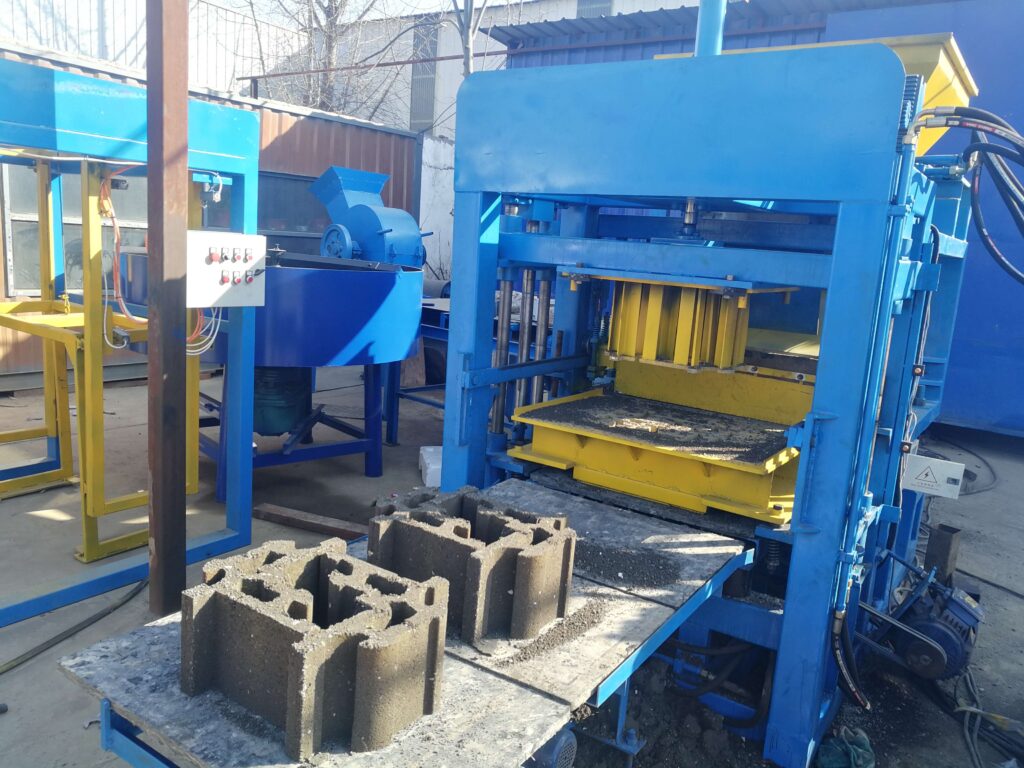
Sıqish bosqichi bir-biriga qo'shiladigan g'isht ishlab chiqarishning yurak qismi hisoblanadi, chunki u to'g'ridan-to'g'ri g'ishtlarning zichligi, mustahkamligi va bardoshligiga ta'sir qiladi. Bir-biriga qo'shiladigan g'isht yasash mashinalari asosan ikkita sıqish texnologiyasidan foydalanadi: mexanik sıqish va gidravlik sıqish. Mexanik mashinalar bosim hosil qilish uchun motor bilan harakatlanadigan eksantrik vallar yoki krank vallariga tayanadi, odatda bosim 10 dan 30 MPa gacha bo'ladi. Ular kichik va o'rta miqyosdagi ishlab chiqarish uchun mos keladi, boshlang'ich xarajatlari pastroq va texnik xizmat ko'rsatish oddiyroq. Gidravlik mashinalar, aksincha, yuqoriroq va bir xil bosimni (30 dan 100 MPa gacha) ta'minlash uchun gidravlik silindrlardan foydalanadi, natijada g'ishtlarning zichligi va siqish mustahkamligi yanada yuqori bo'ladi. Ular avtomagistrallar, sanoat pollari va ko'p qavatli binolar kabi yuqori samaradorlik talab qilinadigan yirik miqyosdagi loyihalar va operatsiyalar uchun idealdir. Ba'zi ilg'or modellar samaradorlik va ishlashni muvozanatlash uchun mexanik va gidravlik tizimlarni birlashtiradi, turli ishlab chiqarish ehtiyojlari uchun moslashuvchan yechim taqdim etadi.
2.1.3 Qoliplash va Qoliplardan Chiqarish Jarayonlari
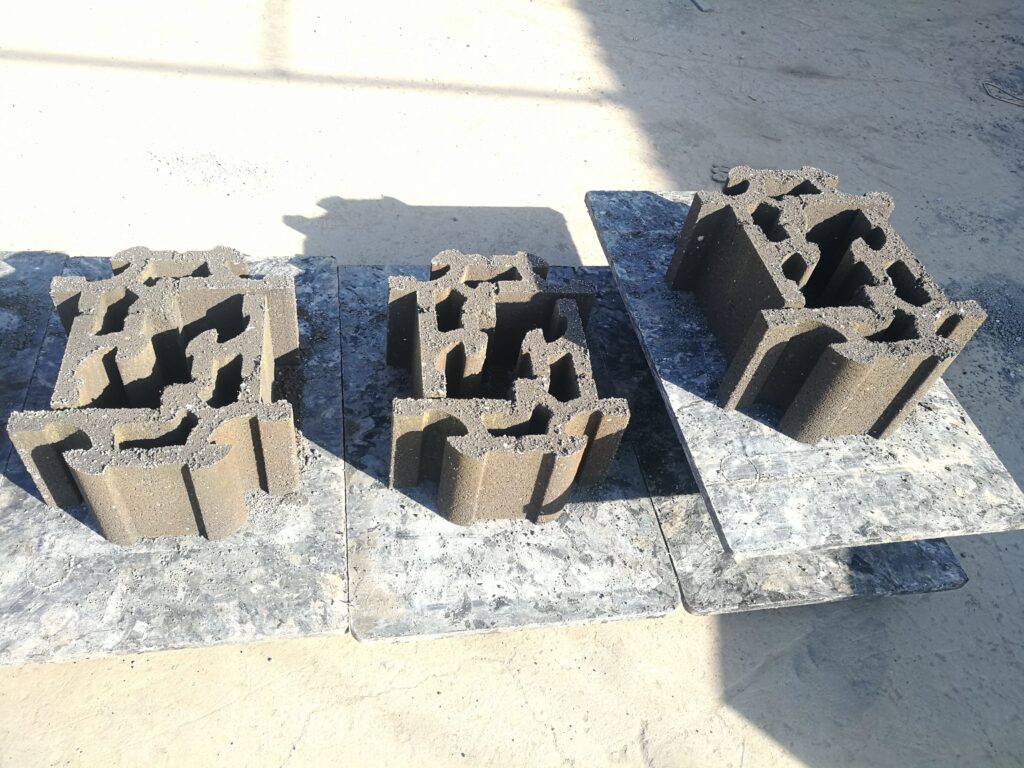
Interlok g'isht tayyorlash mashinasining qoliplanish tizimi g'ishtning shakli, o'lchami va qulflash xususiyatlarini belgilaydigan qolip bo'shlig'idan iborat. Qoliplar odatda yuqori sifatli po'lat yoki cho'yandan tayyorlanadi, bu takroriy siqish kuchlariga bardosh bera olish va o'lchov aniqligini ta'minlash uchun mo'ljallangan. Qulflash dizaynlari juda xilma-xil bo'lib, zigzag, tilli va o'yiqli, va boshqotirma o'yiniga o'xshash naqshlarni o'z ichiga oladi, ularning har biri yukni teng taqsimlash orqali devor qurilishining tuzilish barqarorligini oshirish uchun ishlab chiqilgan. Siqishdan so'ng, yangi shakllangan g'ishtlarni shikastlamaslik uchun qolipdan chiqarish jarayoni juda aniq bo'lishi kerak. Zamonaviy mashinalar avtomatik qolipdan chiqarish mexanizmlaridan, masalan, gidravlik chiqargichlar yoki tebranish stollari kabi vositalardan foydalanadi, ular g'ishtlarni shakli yoki butunligi buzilmasdan qolipdan muloyimlik bilan chiqaradi. Ushbu avtomatlashtirish nafaqat ishlab chiqarish samaradorligini oshiradi, balki mehnat xarajatlarini va inson xatosini kamaytiradi, bu xarajatlarga sezgir bozorlarni nishonga olgan distribyutorlar uchun muhim omil hisoblanadi.
2.2 Asosiy Komponentlar va Texnik Spetsifikatsiyalar
Интерлок гишт тайёрлайдиган машиналарнинг ишлаши ва ишончлилигини баҳолаш учун уларнинг асосий қисмлари ва техник параметрларини тушуниш муҳимдир. Бу омиллар машинанинг ишлаб чиқариш қобилияти, гишт сифати, энергия сарфи ва ишлаш муддатини белгилайди, бу эса сотиб олувчилар ва дистрибьюторлар учун ўз маҳсулотлари портфолиосини танлашда муҳим жиҳатлардир.
2.2.1 Asosiy Komponentlar
- Elektr tizimiMashinaning quvvat manbai, odatda elektr motor (5 dan 30 kVtgacha) yoki dizel dvigatel (elektr tarmog‘idan uzoqda ishlash uchun) hisoblanadi. Quvvat kuchi bevosita mashinaning siqish kuchi va ishlab chiqarish tezligiga ta'sir qiladi.
- Compaction Unit: As discussed earlier, this includes mechanical or hydraulic components responsible for applying pressure to the raw materials. High-quality compaction units feature durable bearings, seals, and cylinders to ensure consistent performance over time.
- Qoliplashni Yig'ish: Removable and replaceable molds allow the machine to produce different types and sizes of interlocking bricks. Molds should be easy to clean and maintain to minimize downtime.
- Oziqlantirish Tizimi: A hopper and conveyor mechanism that delivers the mixed raw materials to the mold cavity. The feeding system must ensure uniform material distribution to avoid inconsistencies in brick density.
- Control Panel: Modern machines are equipped with digital control panels that allow operators to adjust parameters such as pressure, feeding volume, and production speed. Some advanced models offer PLC (Programmable Logic Controller) systems for automated operation and remote monitoring.
- Ramka va Shassi: A robust steel frame provides structural support for the machine, absorbing the vibrations and forces generated during compaction. A durable chassis ensures stability and mobility (for portable models).
2.2.2 Critical Technical Specifications
- Ishlab chiqarish quvvati: Measured in bricks per hour (bph) or bricks per day. Small-scale machines typically produce 500 to 2,000 bph, medium-scale machines 2,000 to 5,000 bph, and large-scale machines 5,000 to 15,000 bph or more. Distributors should match the machine’s capacity to the needs of their target markets (e.g., small contractors vs. large construction firms).
- Brick Size and Shape: Machines can produce interlocking bricks of various dimensions, such as 200x100x60 mm, 250x125x80 mm, and custom sizes. The ability to produce multiple shapes (e.g., rectangular, hexagonal, curved) increases market versatility.
- Siqilish Kuchlanishi: The compressive strength of the produced bricks is a key quality indicator, ranging from 3 MPa (non-load-bearing) to 20 MPa (load-bearing). Machines with higher compaction pressure can achieve higher strength ratings.
- Energy Consumption: Electric machines consume 5 to 20 kWh per 1,000 bricks, while diesel machines consume 1 to 3 liters of fuel per 1,000 bricks. Lower energy consumption reduces operational costs, a major selling point for purchasers.
- Weight and Dimensions: Portable machines weigh 500 to 2,000 kg, while stationary models weigh 2,000 to 10,000 kg or more. Compact dimensions are important for small workshops or sites with limited space.
2.3 Advantages of Interlock Brick Making Machines for Business Operations
For distributors, distributors, and purchasers, interlock brick making machines offer a range of business and operational advantages that make them a lucrative investment. These advantages span cost savings, market demand, sustainability, and ease of operation, addressing the core needs of both end-users (contractors, builders) and supply chain professionals.
2.3.1 Cost-Effectiveness
Interlock brick making machines deliver significant cost savings compared to traditional brick production and alternative building materials. First, the raw material costs are lower, as the machines can use locally available aggregates and recycled materials, reducing transportation expenses. Second, the production process requires less labor, especially with automatic models, lowering labor costs by 30% to 50% compared to manual brick making. Third, interlocking bricks eliminate the need for mortar, reducing material costs and speeding up installation—contractors can save up to 40% on construction time and labor for masonry work. For distributors, these cost savings translate to higher profit margins, as they can offer competitive pricing while maintaining healthy markups. Purchasers, such as construction companies or brick manufacturers, benefit from lower production costs and higher return on investment (ROI), typically recouping the machine’s cost within 6 to 18 months.
2.3.2 High Market Demand and Versatility
The demand for interlocking bricks is growing rapidly across various construction sectors, driven by their superior performance and cost-effectiveness. Key application areas include:
- Residential Construction: Interlocking bricks are used for walls, floors, driveways, and patios in homes, offering quick installation and aesthetic appeal.
- Infrastructure Projects: High-strength interlocking bricks are ideal for roads, highways, sidewalks, and drainage systems, as they provide excellent load-bearing capacity and water permeability.
- Commercial and Industrial Construction: Warehouses, factories, and commercial buildings use interlocking bricks for floors and external walls, thanks to their durability and low maintenance requirements.
- Landscaping: Interlocking pavers are widely used in parks, gardens, and public spaces for their decorative designs and ease of replacement.
This broad range of applications ensures a steady market demand for interlock brick making machines, as distributors can target multiple customer segments. Additionally, the ability to produce custom bricks (sizes, shapes, colors) allows distributors to cater to niche markets, such as luxury residential projects or heritage restoration, further expanding business opportunities.
2.3.3 Sustainability and Environmental Compliance
Sustainability is a top priority for the global construction industry, and interlock brick making machines align with this trend. By using recycled materials (e.g., fly ash, construction waste) and reducing cement consumption, these machines minimize environmental impact. Unlike traditional fired bricks, which emit large amounts of CO2 during production, interlock bricks are typically unfired or semi-fired, reducing carbon emissions by 50% to 70%. Furthermore, interlocking masonry has better thermal insulation properties, reducing energy consumption in buildings by 15% to 25%. For distributors operating in regions with strict environmental regulations, these sustainability features are a major competitive advantage, as they allow customers to comply with green building standards (e.g., LEED, BREEAM) and access incentives for eco-friendly construction. Purchasers also benefit from enhanced brand reputation by adopting sustainable practices, appealing to environmentally conscious clients.
2.3.4 Ease of Operation and Maintenance
Interlock brick making machines are designed for user-friendly operation, even for operators with limited technical experience. Modern models feature intuitive control panels, automated processes, and safety features (e.g., emergency stops, overload protection), reducing the risk of accidents and training costs. Maintenance requirements are also minimal, with most machines requiring regular lubrication, mold cleaning, and inspection of moving parts. Spare parts are readily available and affordable, as the machines use standard components, minimizing downtime and maintenance costs. For distributors, this means lower after-sales support costs and higher customer satisfaction, as end-users can operate and maintain the machines with ease. Purchasers benefit from increased operational efficiency and reduced downtime, ensuring consistent production.
2.4 Factors to Consider When Selecting Interlock Brick Making Machines
Selecting the right interlock brick making machine is crucial for distributors and purchasers to meet market demands, maximize profitability, and ensure customer satisfaction. Several key factors should be considered during the selection process, including production requirements, quality standards, budget, and after-sales support.
2.4.1 Production Requirements
The first step in selecting a machine is to assess the production volume and scale of operations. For small-scale distributors targeting local contractors or small brick manufacturers, a portable or medium-capacity machine (500 to 2,000 bph) is sufficient, offering lower initial investment and flexibility. For large-scale distributors or purchasers supplying infrastructure projects, a high-capacity hydraulic machine (5,000+ bph) is more suitable, as it can meet large order quantities and produce high-strength bricks. It is also important to consider the production cycle time, which varies from 10 to 30 seconds per brick, depending on the machine’s design. A shorter cycle time increases production efficiency, allowing distributors to fulfill orders faster and increase sales volume.
2.4.2 Quality and Performance Standards
The quality of the produced bricks is a critical factor, as it directly affects customer satisfaction and repeat business. Distributors and purchasers should select machines that meet international quality standards (e.g., ISO, ASTM) and can produce bricks with consistent dimensions, compressive strength, and interlocking performance. It is advisable to test the machine’s output before purchase, checking for brick density, strength, and dimensional accuracy. Additionally, the machine’s durability and reliability are important, as frequent breakdowns can lead to lost sales and customer dissatisfaction. Look for machines with high-quality components (e.g., steel frames, hydraulic cylinders, molds) and a proven track record of performance in similar markets.
2.4.3 Budget and Total Cost of Ownership
While the initial purchase price is an important consideration, it is essential to evaluate the total cost of ownership (TCO), which includes maintenance costs, energy consumption, spare parts, and downtime. A cheaper machine may have higher TCO due to frequent breakdowns, high energy consumption, or expensive spare parts. Conversely, a higher-priced machine with better quality components may offer lower TCO over its lifespan, thanks to reduced maintenance and energy costs. Distributors should also consider financing options, such as installment plans or leasing, to make the machine more accessible to purchasers with limited upfront capital. For purchasers, calculating the ROI based on production volume, brick selling price, and operational costs is crucial to ensure the investment is viable.
2.4.4 After-Sales Support and Training
After-sales support is a key differentiator for distributors, as it ensures customer satisfaction and builds long-term relationships. When selecting a machine supplier, distributors should check for the availability of technical support, spare parts, and training services. A reliable supplier should offer on-site installation, operator training, and troubleshooting support to help end-users get the most out of the machine. Spare parts should be readily available locally or with short lead times to minimize downtime. For purchasers, access to after-sales support is essential to resolve any operational issues quickly and avoid production delays. Distributors can also add value by offering their own after-sales services, such as maintenance contracts or training programs, increasing customer loyalty and revenue streams.
2.5 Market Trends and Future Outlook for Interlock Brick Making Machines
The global market for interlock brick making machines is expected to grow at a compound annual growth rate (CAGR) of 6% to 8% over the next five years, driven by urbanization, infrastructure development, and increasing demand for sustainable construction materials. Several key trends are shaping the market, providing opportunities for distributors and purchasers to stay ahead of the competition.
2.5.1 Technological Advancements
Advancements in technology are improving the performance, efficiency, and automation of interlock brick making machines. Key innovations include:
- Automation and IoT Integration: Modern machines are equipped with IoT (Internet of Things) sensors and connectivity features, allowing remote monitoring of production data (e.g., output, pressure, energy consumption). This enables predictive maintenance, reducing downtime and improving operational efficiency.
- Energy-Efficient Designs: Manufacturers are developing machines with energy-saving motors, hydraulic systems, and compaction technologies, reducing energy consumption by 10% to 20% compared to older models.
- 3D-Printed Molds: 3D printing technology is being used to produce custom molds quickly and cost-effectively, allowing for greater design flexibility and shorter lead times for custom brick orders.
- Eco-Friendly Materials: Research is ongoing to develop interlocking bricks using alternative materials, such as biopolymers, recycled plastic, and agricultural waste, further enhancing the sustainability of the production process.
For distributors, offering technologically advanced machines can differentiate their product portfolio and attract tech-savvy customers. Purchasers benefit from improved efficiency, lower operational costs, and access to cutting-edge features that enhance productivity.
2.5.2 Regional Market Opportunities
The demand for interlock brick making machines varies by region, with emerging markets offering significant growth potential. Asia-Pacific is the largest market, driven by rapid urbanization in countries like China, India, and Southeast Asian nations. Infrastructure projects, such as road construction, affordable housing, and smart cities, are fueling demand for interlocking bricks and the machines that produce them. Africa is another high-growth market, as governments invest in infrastructure development and address housing shortages. Latin America and the Middle East are also experiencing steady growth, supported by commercial and residential construction activities. Distributors should tailor their product offerings to regional needs—for example, portable machines for remote areas in Africa, or high-capacity machines for large infrastructure projects in Asia-Pacific. Understanding local regulations, raw material availability, and customer preferences is key to success in regional markets.
2.5.3 Sustainable Construction Mandates
Governments around the world are implementing stricter regulations and incentives to promote sustainable construction. For example, the European Union’s Green Deal requires all new buildings to be carbon-neutral by 2030, driving demand for eco-friendly building materials like interlocking bricks. In India, the government’s Pradhan Mantri Awas Yojana (PMAY) scheme promotes affordable housing using sustainable materials, creating a large market for interlock brick making machines. Similar initiatives in China, Brazil, and the United States are boosting demand for green construction technologies. Distributors and purchasers who align their products with these mandates can benefit from increased market demand and access to government contracts and incentives. Additionally, the growing consumer preference for eco-friendly homes and commercial buildings is driving private-sector demand, further expanding the market for interlock brick making machines.
3. Conclusion
Interlock brick making machines are a game-changer in the construction industry, offering a cost-effective, sustainable, and efficient solution for producing high-quality interlocking bricks. For distributors, distributors, and purchasers, these machines represent a lucrative business opportunity, thanks to their broad application range, growing market demand, and operational advantages. By understanding the core working principles, key components, technical specifications, and business benefits of interlock brick making machines, industry professionals can make informed decisions that drive profitability and growth.
When selecting a machine, it is essential to consider production requirements, quality standards, budget, and after-sales support, ensuring the product meets the needs of both the distributor and the end-user. Additionally, staying abreast of technological advancements and regional market trends can help distributors and purchasers capitalize on emerging opportunities and stay ahead of the competition. As the construction industry continues to prioritize sustainability and efficiency, interlock brick making machines will play an increasingly important role, making them a valuable addition to any construction supply chain portfolio.
4. FAQ
4.1 What raw materials can be used in interlock brick making machines?
Interlock brick making machines are highly versatile and can process a wide range of raw materials, including cement, sand, gravel, crushed stone, fly ash, slag, recycled construction waste, and aggregates. Some advanced models can also handle alternative materials like agricultural waste (e.g., rice husk ash) or industrial byproducts, depending on the machine’s compaction capacity and mold design. It is important to ensure the raw materials meet the required particle size and moisture content (typically 8% to 12%) for optimal brick quality.
4.2 What is the production capacity of interlock brick making machines?
Production capacity varies by machine type and size. Small-scale portable machines typically produce 500 to 2,000 bricks per hour (bph), medium-scale machines 2,000 to 5,000 bph, and large-scale hydraulic machines 5,000 to 15,000 bph or more. The actual production capacity may vary based on raw material quality, operator skill, and machine maintenance. For distributors, it is advisable to offer a range of capacities to cater to different customer segments, from small contractors to large brick manufacturers.
4.3 How long does it take to recoup the investment in an interlock brick making machine?
The ROI period depends on several factors, including the machine’s purchase price, production volume, brick selling price, and operational costs (raw materials, energy, labor). On average, purchasers can recoup their investment within 6 to 18 months. Small-scale machines with lower upfront costs may have a shorter ROI period (6 to 12 months), while large-scale machines may take 12 to 18 months. Distributors can help purchasers calculate ROI by providing detailed cost estimates and production projections based on local market conditions.
4.4 Are interlock brick making machines easy to maintain?
Yes, interlock brick making machines are designed for low maintenance. Routine maintenance tasks include lubricating moving parts (e.g., bearings, hydraulic cylinders), cleaning the mold and feeding system, inspecting for wear and tear, and replacing damaged components (e.g., seals, filters). Most machines come with a maintenance manual that outlines the recommended schedule and procedures. Spare parts are readily available and affordable, as they use standard components. With proper maintenance, a well-built interlock brick making machine can last 5 to 10 years or more.
4.5 Can interlock brick making machines produce custom-shaped bricks?
Yes, most interlock brick making machines allow for custom-shaped bricks by replacing the mold. Molds can be designed to produce various shapes, including rectangular, hexagonal, curved, and puzzle-like interlocking patterns. Custom molds are typically made of steel or cast iron and can be ordered from the machine supplier or third-party manufacturers. Distributors can offer custom mold services as an added value, allowing customers to cater to niche market demands (e.g., decorative pavers for landscaping, specialized bricks for infrastructure projects).
4.6 What is the compressive strength of bricks produced by these machines?
The compressive strength of interlocking bricks depends on the machine’s compaction pressure, raw material quality, and curing process. Typically, the compressive strength ranges from 3 MPa (non-load-bearing bricks for walls and landscaping) to 20 MPa (load-bearing bricks for roads, highways, and industrial floors). High-pressure hydraulic machines can produce bricks with compressive strength exceeding 20 MPa, suitable for heavy-duty applications. Distributors should specify the strength rating of the bricks produced by each machine to help purchasers select the right product for their projects.
4.7 Are interlock brick making machines suitable for off-grid operations?
Yes, some interlock brick making machines are designed for off-grid operations, using diesel engines instead of electric motors. Diesel-powered machines are ideal for remote areas where electricity is unavailable or unreliable. They offer the same production capacity and performance as electric machines but require a steady supply of diesel fuel. Distributors targeting rural or off-grid markets should include diesel-powered models in their product range, along with accessories like fuel tanks and filters.
4.8 What safety features do interlock brick making machines have?
Modern interlock brick making machines are equipped with several safety features to protect operators, including emergency stop buttons, overload protection (to prevent damage to the machine and operator injury), safety guards for moving parts, and pressure relief valves (for hydraulic systems). Some advanced models also feature automatic shutdown mechanisms if a fault is detected (e.g., low oil pressure, excessive temperature). Distributors should ensure that the machines they sell comply with international safety standards (e.g., CE, OSHA) to minimize liability and ensure customer safety.