
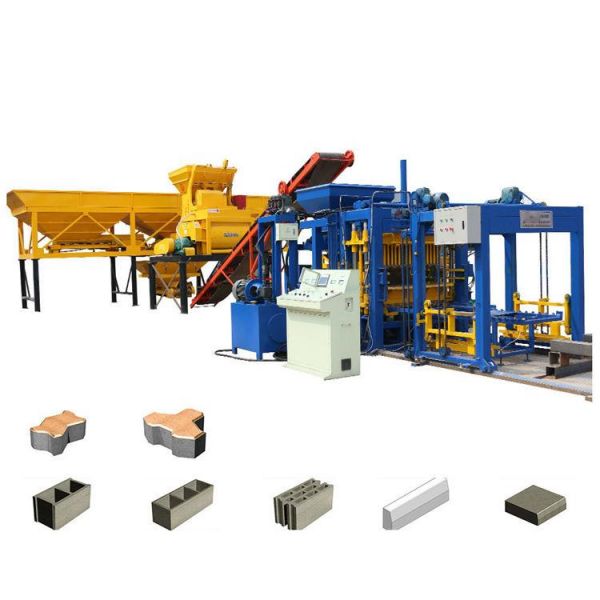
Kirish
Qurilish mashinalari bo'yicha global ta'minot zanjirida g'isht ishlab chiqarish mashinalari zavodi nafaqat ishlab chiqarish ob'ekti, balki sifat, innovatsiya va ishonchlilikning manbai hisoblanadi. Distribyutorlar, dilerlar va xarid mutaxassislari uchun ishlab chiqarish hamkorini tanlash bozordagi muvaffaqiyatni yillarga belgilaydigan eng muhim strategik qararlardan biridir. Bu qaror oddiy narxlar solishtirishdan tashqariga chiqib, ishlab chiqarish falsafasi, texnologik imkoniyatlar va uzoq muddatli hamkorlik salohiyatining mohiyatiga chuqurroq kirib boradi. Zavod mahsulotlar manbai emas, balki muhandislik bilimi, sifat nazorati va sotishdan keyingi qo'llab-quvvatlash ekotizimidir.
Dunyoning eng yaxshi ishlab chiqarish ob'ektlarining tuzilishi
Zavod mahsuloti uning kirishlarining to'g'ridan-to'g'ri aksidir — uning infratuzilmasi, jarayonlari va xodimlari. Potentsial ishlab chiqarish hamkorining ichki tuzilishini tushunish qat'iy tanlov jarayonining birinchi qadamidir.
Tadqiqot, Ishlanma va Prototiplash Laboratoriyalari
Har qanday istiqbolli zavodning hayot suvi uning innovatsiyalarga sodiqligidadir. Maxsus tadqiqot va ishlanmalar bo'limi ishlab chiqaruvchining kelajakka sodiqligining aniq ko'rsatkichidir.
- Mahsulot evolyutsiyasi:Doimiy takomillashtirish dalillarini qidiring. Bunga samaraliroq gidravlik tizimlarni ishlab chiqish, masofadan nazorat qilish uchun aqlli IoT asosidagi boshqaruv tizimlarini integratsiyalash, shuningdek, yuqori izolyatsiyali yoki me'moriy jihatdan murakkab bloklar kabi innovatsion g'isht profillari uchun yangi qoliplar yaratish kiradi.
- Materialshunoslik sinovlari:Yuqori darajadagi fabrika xom ashyolarni sinovdan o'tkazish uchun laboratoriyani boshqaradi, bu g'ishtlar (tuproq, sement, uchuvchi kul aralashmalari) va mashinaning o'z komponentlari (po'lat qotishmalari, gidravlik suyuqlik muvofiqligi, qoliplar materiallarining yeyilishga chidamliligi) uchun qo'llaniladi. Ushbu ilmiy yondashuv mahsulotning bardoshliligi va ishlashini ta'minlaydi.
- Prototiplash va Tasdiqlash:Dizayn ommaviy ishlab chiqarishga kirishidan oldin, u qat'iy prototiplash bosqichidan o'tishi kerak. Buning uchun ishlaydigan model yaratiladi, uni oddiy ish chegaralaridan ancha yuqori bo'lgan stress testlariga duchor qilinadi va dizayn potentsial nosozlik nuqtalarini bartaraf etish uchun takomillashtiriladi. Bu jarayon sizning investitsiyangiz xavfini kamaytiradi.
Ishlab chiqarish maydoni: Aniqlik va ish jarayoni
Yig'ish liniyasi loyihalarni moddy aktivlarga aylantirish joyidir. Ishlab chiqarish maydonchasida qo'llaniladigan tashkilot va texnologiya yakuniy mahsulot sifatining aniq ko'rsatkichlaridir.
- Kompyuter yordamida ishlab chiqarish (CAM):CNC (Kompyuter Raqamli Boshqaruvi) lazer kesish, plazma kesish va ishlov berish markazlaridan foydalanish juda muhimdir. Ushbu texnologiyalar har bir po'lat qismni millimetr aniqlikda kesish va teshishni ta'minlab, yig'ish paytida mukammal tekislanish va mos kelishni kafolatlaydi, bu esa mashinaning barqarorligi va uzoq muddatli xizmat qilishi uchun hal qiluvchi ahamiyatga ega.
- Tartibli Yig'ish Stanstiyalari:Mantiqiy va izchil ish jarayoni aniq ko'rinishi kerak. Jarayon odatda ramka ishlab chiqarishdan tizimli qismlarni o'rnatishgacha (gidravlika, elektronika, konveyer tizimlari), va nihoyat integratsiya va sinovdan o'tkazishgacha davom etadi. Tartibsiz ishlab chiqarish maydoni ko'pincha nomutanosib sifatga olib keladi.
- Payvand va Konstruksiya Standartlari:Mashina ramasining mustahkamligi muzokaralarga sabab emas. Payvandlash jarayonlari haqida so‘rang. Sertifikatlangan payvandchilar ishlatiladimi? G‘isht mashinasining doimiy yuqori tebranishli ishlashi bardosh berishi uchun muhim, yuqori stressli bo‘g‘inlarda robotlashtirilgan payvandlash qo‘llaniladimi? Yuqori sifatli, chuqur singib ketadigan payvandlar zarur.
Sifatni Kafolatlash va Nazorat Protokollari
Sifatga sadoqat fabrikaning da'volari bilan emas, balki uning o'rnatilgan jarayonlari bilan o'lchanadi. Sifat mahsulotga loyihalash va qurish orqali kiritilishi kerak, faqat oxirida tekshirish bilan cheklanmasligi lozim.
- Жараён ичидаги текшириш:Yig'ishning har bir bosqichida sifat nazorati amalga oshirilishi kerak. Bunga ishlangan qismlarning o'lchov aniqligini tekshirish, gidravlik liniyalar bosimining sizib chiqishini nazorat qilish va elektr zanjirlarining uzluksizligi va xavfsizligini sinash kiradi.
- Yakuniy Ishlash Sinovi:Mashina yuklash uchun yashiklarga joylashtirilishidan oldin, u har tomonlama ishlash testidan o‘tkazilishi kerak. Bunda barcha mexanik harakatlarni tekshirish uchun "sovuq test" (materiallarsiz ishlash) va namunaviy g‘ishtlar ishlab chiqarish uchun "issiq test" (haqiqiy xom ashyo bilan ishlash) o‘tkaziladi. Ushbu namunaviy g‘ishtlarning siqish mustahkamligi test mashinasi bilan tekshirilishi va yakuniy mijoz uchun sertifikatlangan ishlash hisoboti taqdim etilishi kerak.
- International Standards Compliance: Reputable factories adhere to international standards for safety (e.g., CE, ISO) for machinery. This compliance is not just about market access; it is a testament to a systematic approach to safety, quality, and environmental management.
Evaluating the Manufacturer as a Strategic Partner
The transaction should be viewed as the beginning of a long-term partnership. The factory’s capabilities beyond production are equally critical to your success as a distributor.
Technical Support and After-Sales Service Infrastructure
The true test of a manufacturer occurs after the sale. Their support infrastructure directly impacts your reputation and your clients’ satisfaction.
- Structured Training Programs: A top-tier factory offers comprehensive training for your technicians or your clients’ operators. This can include on-site training at the factory, detailed video manuals, and digital simulators. An educated user maximizes machine uptime and productivity.
- Global Spare Parts Network: The availability of spare parts is the single biggest factor in minimizing customer downtime. Evaluate the factory’s parts inventory, its logistics partnerships, and its ability to deliver critical components (like hydraulic pumps or PLCs) to your region within an acceptable timeframe (e.g., 3-7 days).
- Remote Diagnostic Capabilities: Modern factories are equipping their machines with IoT sensors that allow for remote monitoring and diagnostics. Their technical team can often identify and even resolve software-related issues remotely, saving immense time and cost associated with sending technicians abroad.
Customization and Engineering Flexibility
While standard models form the backbone of a product line, the ability to provide custom solutions is a mark of a superior factory.
- Bespoke Machine Configurations: Can the factory design a machine for a specific raw material, such as a clay-rich soil versus a sandy soil? Can they modify the output to produce a unique block size or shape requested by a major client?
- Modular Design Philosophy: Factories that employ a modular design allow for easier future upgrades. A client might start with a semi-automatic machine and later upgrade it to full automation by adding modules. This protects your clients’ long-term investment.
Logistical Competence and Supply Chain Stability
A factory’s ability to deliver on time reflects its overall management efficiency and resilience.
- In-House Logistics Expertise: Does the factory have a dedicated international shipping department experienced in handling the complexities of exporting heavy machinery, including customs documentation, container loading, and insurance?
- Supply Chain Robustness: Inquire about their sourcing for key components like hydraulic cylinders, PLCs, and electric motors. A stable relationship with reputable sub-suppliers ensures consistent quality and protects against production delays due to parts shortages.
The Financial and Commercial Framework
The commercial terms offered by the factory are a fundamental component of the partnership, impacting your cash flow and profitability.
Pricing Structure and Market Positioning
Understand how the factory positions itself in the market.
- Value-Based vs. Cost-Based Pricing: Factories may compete on being the low-cost producer or on offering superior value through better technology, quality, and support. Your target market segment will dictate which type of factory is the right partner for you.
- Volume Discounts and Payment Terms: Negotiate terms that are favorable to your business model. This may include tiered pricing for larger orders, flexible payment schedules (e.g., TT vs. LC), and support for consignment stock in key markets.
Marketing and Channel Support
A true partner invests in the success of its distributors.
- Co-operative Marketing: Look for factories that contribute to local marketing efforts, whether through funding for trade shows, providing high-quality marketing collateral, or developing co-branded digital campaigns.
- Territorial Exclusivity: For distributors making significant investments in marketing and inventory, negotiating territorial exclusivity can be a crucial step to protect your market and ensure a fair return on your investment.
Xulosa
Selecting a brick making machine factory is a strategic endeavor that requires due diligence far beyond a product catalog and a price list. It demands a holistic assessment of the manufacturer’s technological prowess, manufacturing discipline, quality ethos, and commitment to building lasting partnerships. The ideal factory is an extension of your own business—a reliable, innovative, and supportive partner that empowers you to deliver unparalleled value to your end-clients. By meticulously evaluating potential partners against the criteria outlined in this article, you can forge a relationship that not only supplies high-quality machinery but also fuels sustainable growth, enhances your brand reputation, and secures your position as a leader in the construction equipment distribution landscape.
Tez-tez so'raladigan savollar (FAQ)
Q1: What is the minimum order quantity (MOQ) when dealing directly with a factory?
A: MOQs vary significantly. For standard machine models, the MOQ might be 1-3 units for an initial order. For fully custom-designed machines, the MOQ is typically one. Factories are often more flexible on MOQ for new distributors who demonstrate strong market potential.
Q2: How do we verify the factory’s claims about their production capacity and quality certifications?
A: Always ask for verifiable evidence. This includes copies of ISO or CE certificates (which can be checked with the issuing body), video tours of the production facility, and client references from your region. An independent third-party inspection is also a highly recommended step for large orders.
Q3: What is the typical lead time from order confirmation to shipment?
A: Lead times depend on the machine’s complexity and the factory’s order book. For standard models, it can range from 30 to 60 days. For highly customized or large production line equipment, lead times of 90 to 120 days are common. A reliable factory will provide a detailed production schedule.
Q4: What level of after-sales support can we expect for our clients?
A: This should be clearly defined in a service level agreement (SLA). Expect a comprehensive warranty (e.g., 12 months for parts, excluding wear items), access to a multi-lingual technical support hotline, and the availability of field service engineers for major issues, though travel costs are typically borne by the distributor or client.
Q5: Can the factory provide customized marketing and technical materials?
A: Many high-quality factories offer this as a value-added service. This can include customizing operation manuals with your branding, providing 3D renderings and high-resolution photos of the machines for your website, and developing market-specific sales training materials.
Q6: How does the factory handle intellectual property and prevent design copying?
A: Reputable factories invest in patenting their innovative designs and mechanisms. When engaging in custom projects, a clear Non-Disclosure Agreement (NDA) should be signed to protect your proprietary ideas and the factory’s unique engineering solutions.
