
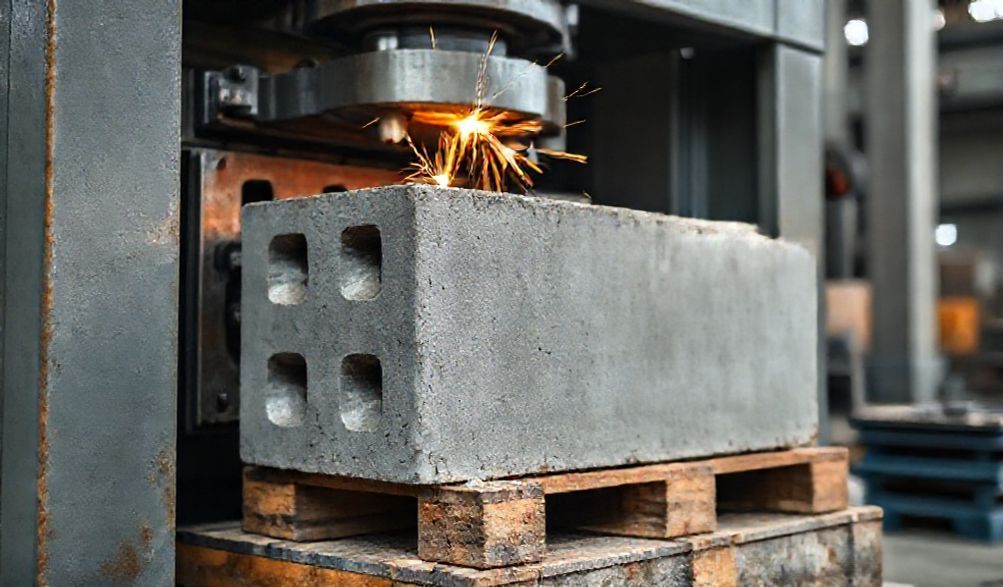
Blokli qoliplar mashinalari bo'yicha Yakuniy Qo'llanma: Tanlashdan Foydalanishgacha
Kirish
Qurilish va ishlab chiqarish sohasida samaradorlik va aniqlik muhim talab hisoblanadi. Infratuzilmaning asosiy qurilish elementlarini ishlab chiqarish jarayonida, so'zma-so'z, blok quyma mashinalari asosiy rol o'ynaydi. Ushbu kuchli mashinalar beton, loy va kompozit aralashmalar kabi oddiy xom ashyolarni aniq, bardoshli va bir xil bloklar, g'ishtlar va toshlarga aylantiradi.
Katta hajmdagi loyihalarni boshqarayotgan pudratchilar, qurilish maydonchasida samaradorlikni izlovchi quruvchilar yoki qurilish materiallari bozoridagi foydali imkoniyatlarni ko'zlayotgan tadbirkorlar uchun to'g'ri blok qoliplash mashinasini tanlash muhim qarordir. To'g'ri tanlov loyihangizning muddati, byudjeti va yakuniy inshoot sifatiga bevosita ta'sir ko'rsatadi. Aksincha, noto'g'ri tanlov to'siqlar, byudjetdan ortiq sarf-xarajatlar va past sifatli mahsulotlarga olib kelishi mumkin.
Ushbu qamrovli qo‘llanma blok quyma mashinalarini tushunishni osonlashtirish uchun mo‘ljallangan. Biz savdo jargonidan tashqariga chiqib, aniq, ishonchli va amaliy ma’lumot beramiz. Siz ushbu mashinalar qanday ishlashini, mavjud turlarini o‘rganasiz va ishonchli investitsiya qilish uchun amaliy maslahatlar olasiz. Keling, bilim asosini quramiz.
Blok Qoliplash Mashinalarini Tushunish
Ushbu mashinalarning asosiy tamoyillarini tushunish, texnik xususiyatlar va yetkazib beruvchilarni ko'rib chiqishdan oldin muhim ahamiyatga ega.
Blokli qoliplash mashinasi nima?
Blok qoliplash mashinasi - bu xom ashyani qoliplar bo'shlig'ida ma'lum bir shaklga siqib, bir xil qurilish bloklarini ishlab chiqaradigan mexanik yoki gidravlik qurilma. Asosiy jarayon soddaligi bilan aldashga oladi:
1. To'ldirish:Quruq yoki yarim quruq aralashma qolipga beriladi.
2. Siqish:Yuqori bosim—tebranish, gidravlik kuch yoki ikkalasi orqali—materialni zichlashtiradi, havo boʻshliqlarini yoʻqotadi.
3. Ejektsiya:Yangi tashkil etilgan yashil blok qotirish uchun paletga yoki konveyerga suriladi.
Bu jarayon har bir blokning o‘lchamlari, zichligi va mustahkamligi bir xil bo‘lishini ta’minlaydi, bu esa strukturaviy yaxlitlik uchun juda muhimdir.
Asosiy Komponentlar va Ular Qanday Ish Laydi
Har bir blok press mashinasi, eng oddiy qo‘l pressidan to to‘liq avtomatlashtirilgan zavodgacha, asosiy komponentlar asosida yaratilgan:
- Хоппер:Bu yuklash maydoni. Xom ashyo (masalan, beton aralashmasi)ni saqlaydi va uni qolip kamerasi ichiga bir tekisda uzatadi. Uzluksiz uzatish mahsulotning bir xilligi uchun muhimdir.
- Mold yoki o‘l:Mashinaning yuragi. Ushbu po‘lat bo‘shliq yakuniy mahsulotning shakli, hajmi va teksturasini belgilaydi — oddiy g‘ovak blok, qattiq g‘isht yoki murakkab bir-biriga bog‘lanuvchi plitka bo‘lishidan qat’iy nazar. Qoliplar almashtiriladi, ammo chidamlilik uchun yuqori aniqlikda ishlab chiqilgan.
- Siquqlash Tizimi:Sehrgar yuz beradigan joy. Ikki asosiy tizim mavjud:
- TezlikLI Uses electric motors to create high-frequency vibrations that settle and densify the material. Excellent for fluid mixes.
- Gidravlik: Uses pressurized fluid to exert immense, controlled force (measured in tons) on the material. Produces very dense, high-strength blocks and is common in larger machines.
- Many machines combine both for optimal results.
- Ejektsiya tizimi: Once compacted, a mechanism (often a hydraulic ram or plate) carefully pushes the block out of the mold without damaging its edges. In advanced systems, this is synchronized with pallet movement.
- Boshqaruv paneli: The machine’s brain. It ranges from simple manual levers and switches on basic models to sophisticated Programmable Logic Controller (PLC) panels on automatic machines. PLCs allow for programming block counts, cycle times, and diagnostics.
Blokli qoliplash mashinalari turlari
Your project’s scale, budget, and labor availability will point you toward one of these primary machine categories.
Qo'lda Blok Qoliplash Mashinalari
- Operatsiya: These are human-powered workhorses. An operator manually fills the mold, often uses a lever to apply compaction pressure, and then releases and removes the block for curing.
- Eng yaxshisi: Extremely small-scale projects, DIY homebuilders, community-led initiatives, or regions where labor costs are minimal. Ideal for production of a few hundred blocks per day.
- Afzalliklar va kamchiliklar:
- Afzalliklari: Very low initial investment, high portability, minimal maintenance, no power requirement for non-hydraulic models.
- Kamchiliklari: Low output, highly dependent on operator skill and stamina, inconsistent product quality, physically demanding.
Yarim Avtomatik Blok Qoliplash Mashinalari
- Operatsiya: This category strikes a balance. Key processes like compaction and ejection are mechanized (usually via a hydraulic system and electric vibrators). However, operators manually feed material into the hopper and remove finished blocks.
- Eng yaxshisi: Small to medium-sized block-making businesses, dedicated on-site production for housing projects, and municipal works. They offer a significant productivity boost over manual machines.
- Afzalliklar va kamchiliklar:
- Afzalliklari: Higher and more consistent output than manual machines, better block density and strength, reasonable upfront cost.
- Kamchiliklari: Still requires consistent operational labor, output is limited by the speed of manual feeding and removal.
Тўлиқ автомат блок қолиблаш машиналари
- Operatsiya: These are integrated production lines. They feature automatic material feeding (from a mixer via conveyor), molding, compaction, ejection, block stacking, and pallet handling—all synchronized and controlled by a PLC.
- Eng yaxshisi: Large-scale block production plants, industrial manufacturers supplying construction markets, and major infrastructure projects requiring vast, consistent block quantities.
- Afzalliklar va kamchiliklar:
- Afzalliklari: Maximum output (thousands of blocks per shift), exceptional product consistency, minimal direct labor required per block, high efficiency.
- Kamchiliklari: Very high capital investment, requires significant space and stable 3-phase power, needs skilled technical maintenance, less flexibility for very short runs.
Mobile Block Machines
- Operatsiya: These are compact, self-contained units mounted on a trailer or skid frame. They are designed to be transported directly to a job site to produce blocks on-location.
- Eng yaxshisi: Large, remote construction sites like dams, rural housing developments, or road projects where transporting finished blocks over long distances is cost-prohibitive or logistically challenging.
- Afzalliklar va kamchiliklar:
- Afzalliklari: Eliminates transport costs for heavy blocks, enables just-in-time production, reduces material waste on-site.
- Kamchiliklari: Output is typically lower than stationary plant machines, may require a supporting team for material handling on-site.
Key Applications and Materials Used
The versatility of block molding machines extends across construction and landscaping.
Qurilishda Asosiy Qo'llanilish So'halari
- Housing & Building Construction: The primary application. Machines produce hollow concrete blocks for load-bearing and non-load-bearing walls, solid bricks for facades and paving, and specialized architectural blocks.
- Asfaltlash va Ko‘kalamzorlashtirish: Manufacturing interlocking concrete pavers for driveways, walkways, and patios; garden retaining wall blocks; curbstones; and decorative slabs.
- Infrastructure & Civil Works: Producing heavy-duty blocks for retaining walls, drainage systems (pervious blocks), sound barriers along highways, and blocks for erosion control.
Common Raw Materials
The machine must be compatible with your chosen material.
* Beton: The most common material, a mix of cement, sand (fine aggregate), and gravel (coarse aggregate). It produces strong, durable, and weather-resistant blocks.
* Uchgan kul: A pozzolanic byproduct from coal plants, often used to replace a portion of cement in concrete mixes. It enhances workability, long-term strength, and sustainability.
* Loy Used for traditional fired bricks. The molding process is similar, but the “green” bricks require subsequent drying and firing in a kiln, a separate process from block molding.
* Compressed Stabilized Earth (CSEB): Uses local soil stabilized with a small percentage (5-10%) of cement or lime. It’s an eco-friendly, low-cost option for certain building types, requiring a machine capable of handling earth mixes.
How to Choose the Right Block Molding Machine: A Buyer’s Checklist
Navigating the market requires a structured approach. Use this checklist to evaluate your options.
1. Assess Your Production Requirements
- Chiqish quvvati: Be realistic. Calculate the blocks needed per day/week to meet your project deadline or sales goals. Don’t buy a massive automatic machine for a small, one-off project.
- Blok turi va o'lchami: List every product you need. Standard 4″, 6″, and 8″ hollow blocks? Interlocking pavers? Specialty shapes? Confirm the supplier offers these specific molds and that the machine can handle the required pressure.
- Mavjud xomashyalar: Audit what’s locally available and affordable. The machine must be suited to your aggregate size, sand quality, and potential use of alternative materials like fly ash.
2. Evaluate Machine Specifications
- Pressure & Compaction Force: This is a key indicator of potential block strength. Higher hydraulic pressure (measured in tons or MPa) generally produces denser, more durable blocks suitable for structural applications.
- Sikl vaqti: Ask: “How many seconds for one complete molding cycle?” Multiply this by the number of cavities in the mold to estimate hourly output. Faster cycle times mean higher productivity.
- Quvvat Manbai: Does your site have reliable 3-phase electricity? If not, a diesel-powered or hybrid model may be necessary. Factor in long-term energy costs.
- Avtomatlashtirish Darajasi: Honestly assess your labor situation. Do you have skilled technicians for a full-auto machine, or is a simpler semi-auto model a better fit for your team’s skills?
3. Consider Operational and Business Factors
- Умумий эгалик нархи (TCO): Look beyond the sticker price. Include:
- Installation & foundation costs.
- Cost of spare molds and wear parts (liners, seals).
- Estimated energy consumption.
- Routine maintenance costs.
- After-Sales Support & Warranty: This is paramount. A reliable supplier should offer:
- A clear warranty period and terms.
- Availability of spare parts.
- Provision of operator training.
- Access to technical support (phone, online, or on-site).
- Supplier Reputation: Conduct due diligence. Read customer reviews, ask for references from past buyers in your region, and research the manufacturer’s history in the industry.
Maintenance and Safety Best Practices
Protecting your investment and your team is a mark of professional operation.
Routine Maintenance Checklist
A well-maintained machine lasts longer and produces better quality blocks.
- Daily:
- Clean the mold, hopper, and feed system thoroughly to prevent material buildup.
- Check for and tighten any loose bolts or nuts.
- Inspect for hydraulic oil or air leaks.
- Weekly/Monthly:
- Lubricate all moving parts (pivots, bearings, guide rods) as specified in the manual.
- Inspect wear parts: mold liners, ejection plate, vibration motor mounts.
- Check hydraulic oil level and condition.
- Annually: Schedule a major service, ideally with a technician from your supplier, to inspect the entire system, replace worn components, and ensure calibration.
Essential Safety Protocols
- PPE is Mandatory: Operators must wear safety glasses, hearing protection, heavy-duty gloves, and steel-toe boots at all times.
- Bloklash, Belgilash (LOTO): Never attempt to clear a jam, clean the mold, or perform adjustments without first shutting off and locking the main power source.
- Use Safety Guards: Ensure all moving parts are properly guarded. Never operate a machine with removed safety covers.
- Train Thoroughly: Every operator must be trained not only on normal procedures but also on emergency stop locations and basic troubleshooting.
FAQ: Your Block Molding Machine Questions Answered
Q: What is the average production output of a medium-sized block machine?
A: A typical semi-automatic machine can produce between 800 to 2,000 standard 4″ hollow blocks in an 8-hour shift, depending on the model’s cycle time and operator efficiency. A fully automatic line can produce 4,000 to 10,000+ blocks in the same period.
Q: Can one machine produce different block types?
A: Yes, through mold changes. Most suppliers offer a range of compatible molds. However, changing molds takes time (from 30 minutes to a few hours). Discuss “quick-change” systems if you need frequent product switches.
Q: How important is the curing process after molding?
A: It is absolutely critical. Freshly molded concrete blocks gain most of their strength during curing. Proper curing (keeping blocks moist and covered, often for 7-14 days) is essential to achieve the published compressive strength and prevent cracking.
Q: What are the main cost factors besides the machine itself?
A: Key operational costs include: raw materials, wooden or steel pallets for block handling, a covered area for production and curing, labor (feeding, removal, curing management), energy, and a budget for routine maintenance and spare parts.
Q: How do I ensure the blocks meet quality standards?
A: Start with a consistent, well-proportioned mix design. Regularly test sample blocks for:
* O'lchov aniqligi: Using calipers.
* Zichlik: Weighing and measuring.
* Siqilish kuchi: Sent to a lab or tested with an on-site compression tester.
Adhere to relevant standards like ASTM C90 (Concrete Masonry Units) or their local equivalents.
Xulosa
Selecting a block molding machine is a strategic decision with long-term implications for your construction project or manufacturing business. Success hinges on a careful, informed matching process—aligning the machine’s capabilities with your specific output needs, material constraints, and operational capacity.
As you engage with suppliers, prioritize those who demonstrate real-world Mutaxassislik in your application, back their claims with the O‘ziga xos hokimiyat of proven track records and customer testimonials, and build Ishonchlilik through transparent communication, solid warranties, and reliable after-sales support.
By applying the framework outlined in this guide—from understanding core mechanics to rigorously evaluating suppliers—you move from being a buyer to a knowledgeable partner in the process. This foundation will enable you to make a confident investment, one that will lay the groundwork for efficiency, quality, and profitability for years to come.
<