
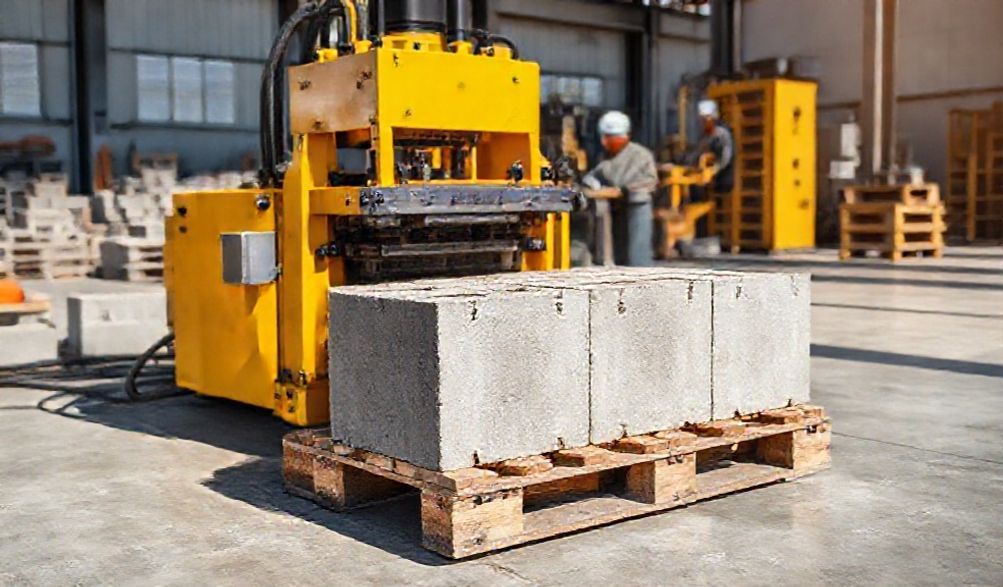
The Ultimate Guide to the QT4-15 Block Making Machine: Efficiency & Profitability
The global construction materials market is under constant pressure. For small-to-medium scale builders, contractors, and entrepreneurs, the twin challenges of volatile material costs and unreliable supply chains can strangle project timelines and profitability. Did you know that in many developing regions, the cost of purchased concrete blocks can constitute up to 30% of a simple building’s structure? The dependency on third-party suppliers often means delayed projects and eroded margins.
There is a proven, pragmatic solution that puts control back in your hands: on-site block production. And at the heart of this empowering shift for countless businesses worldwide is the QT4-15 block making machine. This semi-automatic workhorse is not a futuristic, fully robotic plant; it is a robust, intelligently designed machine that delivers a perfect balance of automation, affordability, and output.
This definitive guide is crafted from deep technical analysis, direct industry operational experience, and real-world economic modeling. Our goal is to move beyond sales brochures and provide you with the comprehensive knowledge needed to make a confident, informed decision. You will learn exactly how the QT4-15 works, its tangible benefits, a realistic cost analysis, crucial operational tips, and the critical factors in choosing a supplier that ensures your long-term success.
What is a QT4-15 Block Making Machine? Core Specifications & Capabilities
The QT4-15 is a specific model within a widely recognized series of concrete block machines. Understanding its fundamental design is key to appreciating its value proposition.
Machine Type & Operational Principle
The QT4-15 is classified as a semi-automatic, hydraulic press, “egg-laying” type block machine. The term “egg-laying” is a vivid industry metaphor for its unique operation. Unlike stationary plants that produce blocks on a conveyor to be moved to a curing rack, the QT4-15 moves itself.
After compacting the concrete mix in its mold, the machine hydraulically lifts itself and moves forward slightly, depositing (or “laying”) the freshly formed blocks directly onto the prepared ground or a pallet. This eliminates the need for complex and expensive pallet transfer systems, forklifts, and massive curing racks, significantly simplifying the production flow and reducing ancillary equipment costs.
Asosiy Texnik Xususiyatlar
Here’s a breakdown of the core technical data that defines the machine’s capacity and requirements:
- Kuch: Typically equipped with a 15 kW (20 HP) electric motor to drive the hydraulic system and vibrators.
- Ishlab chiqarish mahsuloti: It produces 4 pieces of standard 400x200x200mm hollow blocks per cycle. A single cycle, including filling, compaction, and lifting, takes approximately 15-20 seconds. Theoretically, this translates to 8,000 – 10,000 blocks per 8-hour shift. It is absolutely critical to understand that this is a maximum under ideal, continuous operation. Real-world output depends heavily on operator speed, mix preparation efficiency, and workflow organization.
- Pall o‘lchami: The standard pallet size is 850x550mm, which accommodates the block pattern.
- Titrama Tizimi: High-frequency, externally mounted vibration motors (usually 2 x 1.5 kW) provide the essential compaction force. This dual-vibration system ensures dense, strong blocks with a good surface finish.
- O'lchamlar va Og'irlik: The machine is mobile but substantial. Approximate dimensions are 3500x1800x2500mm (LxWxH), with a weight around 3,000 kg. This is important for planning factory floor space and foundation requirements.
What Can It Produce? (Product Range)
Versatility is a major strength. By simply changing the mold, the QT4-15 can produce a variety of concrete products, making it a valuable asset for diversifying your offerings:
- Pustak G'ishtlar: Its primary function. Sizes include 400x200x200mm, 400x150x200mm, etc.
- Qattiq Bloklar: For applications requiring higher load-bearing capacity.
- Interlokli Plitkalar: For landscaping, driveways, and walkways.
- Bordür va Bog' Chegaralari: For road and landscape projects.
- Other Specialty Shapes: Depending on mold availability.
Key Advantages of Choosing the QT4-15 Machine
Why has the QT4-15 become a default choice for startups and small-scale manufacturers globally? The advantages are deeply practical and economically compelling.
Optimal Balance of Automation and Affordability
The QT4-15 occupies the strategic “sweet spot” in the block machine spectrum. Fully manual machines are labor-intensive, slow, and produce inconsistent quality. Fully automatic stationary plants require a massive capital investment (often 5-10x more), complex infrastructure, and higher technical expertise to operate and maintain. The QT4-15 automates the most critical and strenuous parts—compaction and molding—while keeping the feeding and block handling processes manual. This balance maximizes output and quality while minimizing initial and operational costs.
Low Initial Investment & High ROI
The capital outlay for a QT4-15 is a fraction of that for a stationary plant. Furthermore, its operational economics are favorable:
* Lower Electricity Consumption: Compared to larger plants.
* Minimal Ancillary Equipment: No need for expensive forklifts or stackers initially, as blocks can be handled manually.
* Reduced Curing Space: The egg-laying method uses the factory floor itself for initial curing.
This combination leads to a relatively fast return on investment (ROI), often projected within 12-24 months for well-managed operations, which we will explore in detail later.
Flexibility and Ease of Operation
- Mobility: Its design allows it to be towed or lifted to different locations within your yard, offering layout flexibility.
- Simple Control: The control panel is straightforward, typically featuring buttons for mold vibration, pressurization, and lifting. Training a competent operator can often be achieved in a matter of days.
- Moslashuvchanlik: It can be set up on a simple, leveled concrete foundation, avoiding the need for deep, complex civil works.
Robust Construction for Longevity
A quality-built QT4-15 is an investment that lasts for years. Key components that ensure durability include:
* Og'ir vazifali po'lat ramka: Welded from thick steel plates and profiles to withstand constant vibration and load.
* High-Wear Resistant Molds: Made from special alloy steel and precision-machined to withstand abrasion and maintain block dimensional accuracy.
* Reliable Hydraulic System: Utilizing reputable brand pumps and valves to ensure consistent pressure and smooth operation.
* Industrial-Grade Vibrators: Sealed, high-frequency motors designed for continuous duty cycles.
Choosing a machine built with these qualities, rather than the absolute cheapest option, is a decision that builds ishonchillik and protects your investment.
Critical Considerations Before Purchasing a QT4-15
Informed purchasing is successful purchasing. Here are the essential factors you must evaluate.
Assessing Your Project Needs and Scale
The QT4-15 is not a one-size-fits-all solution. Ask yourself:
* Daily Block Requirement: Do you need 5,000 or 15,000 blocks per day? Match the machine’s realistic output (factoring in efficiency losses) to your demand. It’s ideal for startups and projects with daily needs up to ~8,000 blocks.
* Space Planning: You need space for the machine, raw material storage (sand, aggregate, cement), mixing area, production floor, and a curing area where blocks can sit for 14-28 days. Plan for a minimum of 2,000-3,000 sq. meters for a functional setup.
Raw Material Requirements (Concrete Mix Design)
The machine is only as good as the concrete mix you feed it. Consistent quality is non-negotiable.
* Standard Mix Ratio: A common starting point is a 1:3:5 ratio (Cement: Sand: Aggregate, by volume). For higher strength, a 1:2:4 ratio may be used. The aggregate size should typically be between 3-10mm.
* Water-Cement Ratio: This is critical. The mix should be just wet enough to bind when squeezed in your hand, leaving a clear finger impression without excess water dripping. Too wet weakens the block and causes sticking; too dry leads to poor compaction.
* Material Consistency: Variations in sand moisture content or aggregate size will cause fluctuations in block quality and machine performance. Sourcing from reliable suppliers is key.
The Importance of After-Sales Support & Supplier Choice
This is arguably the most critical decision—more important than haggling over the last $500 on the price. A machine without support is a future headache.
When evaluating a supplier, you must ask:
* Do you provide a detailed parts manual and circuit diagrams?
* What is the warranty period and what does it cover?
* Can you provide on-site installation and operator training?
* How quickly can you ship spare parts (molds, vibrator motors, hydraulic seals, control boards)? A 3-month wait for a $50 seal can shut down your entire operation.
* Can you provide contact information for 2-3 previous customers in a similar region?
Ogohlantirish: The lowest-priced machine often comes with the lowest-priced (or non-existent) after-sales service. Prioritize suppliers with a documented track record of support.
Operating and Maintaining Your QT4-15 for Maximum Lifespan
From our operational experience, a disciplined routine is the single biggest factor in preventing costly downtime and extending machine life.
Daily Startup, Operation, and Shutdown Procedures
Startup:
1. Check hydraulic oil level.
2. Inspect for any visible oil leaks or loose bolts.
3. Lubricate all guide rods and moving points as per manual.
4. Ensure the mold is clean and lightly oiled.
5. Run the machine empty for 1-2 minutes to circulate oil.
Operatsiya:
* Maintain a consistent feeding rhythm with a properly proportioned mix.
* Avoid overloading the feed hopper.
* Monitor block quality continuously—it’s your first indicator of a problem.
Shutdown:
1. Thoroughly clean all concrete residue from the mold, hopper, and pallet conveyor.
2. Apply a protective oil film to the mold surfaces.
3. Park the machine on a level surface.
Essential Routine Maintenance Schedule
- Daily: Cleaning, lubrication, visual inspection for leaks/looseness.
- Weekly: Check and tighten all bolts and nuts, especially on vibration motors and the main frame. Inspect hydraulic hoses for wear.
- Monthly: Check hydraulic oil quality (color, smell). Change oil and filter as recommended by the manufacturer (typically every 1000-2000 hours). Inspect electrical connections.
Troubleshooting Common Issues
- Problem: Blocks have poor compaction/strength.
- Potential Causes: Incorrect/dry mix design, insufficient vibration time, worn or underpowered vibrator motors.
- Problem: Blocks stick to the mold.
- Potential Causes: Mold is not clean or properly oiled, concrete mix is too wet, mold is damaged/worn.
- Problem: Hydraulic pressure is low or movement is sluggish.
- Potential Causes: Low hydraulic oil level, dirty/clogged filter, worn hydraulic pump, internal valve leak.
- Problem: Uneven block height.
- Potential Causes: Uneven feeding of the mold, worn mold or tamper feet, unlevel machine setup.
Cost Analysis and ROI Projection for the QT4-15
Let’s build a transparent, hypothetical financial model. Disclaimer: These figures are illustrative. You must substitute local costs for accurate planning.
Breakdown of Initial Investment Costs
- QT4-15 Machine Cost: $12,000 – $18,000 (FOB price, varies by supplier/quality).
- Shipping & Insurance: $2,000 – $4,000 (depends on destination).
- Import Duties & Customs Clearance: Variable (e.g., 5-15% of CIF value).
- Foundation & Setup: $1,000 – $2,000 (simple concrete slab, electrical connection).
- Initial Raw Material Stock: $2,000 – $3,000.
- Estimated Total Startup Capital: $18,000 – $30,000.
Calculating Operational Costs Per Block
Based on a 1:3:5 mix ratio for a standard hollow block (0.01m³ volume):
* Cement (7kg @ $0.10/kg): $0.70
* Sand & Aggregate (0.01m³ @ $15/m³): $0.15
* Electricity ($0.15/kWh, 0.1 kWh per block): $0.015
* Labor ($20/day, 1250 blocks/worker/day): $0.016
* Mold Depreciation & Maintenance: $0.02
* Estimated Production Cost per Block: ~$0.90 – $1.00
Projecting Your Payback Period
Assume the market selling price for a purchased block is $1.50.
* Profit per Block: $1.50 (Sale Price) – $0.95 (Cost) = $0.55
* Daily Profit (at 5,000 blocks/day): 5,000 * $0.55 = $2,750
* Monthly Profit (20 days): $55,000
* Payback on $25,000 Investment: $25,000 / $55,000 ≈ 0.45 months
This simplified model shows potential. However, real-world factors like market absorption, downtime, and management efficiency will impact this. A more conservative and realistic payback period for a new business is often 12-24 months.
Ko'p so'raladigan savollar bo'limi
Q: What is the real, practical production capacity of the QT4-15 per day?
A: While the theoretical maximum is 8,000-10,000 blocks, a well-run, efficient operation can realistically produce 4,000 to 6,000 high-quality blocks in an 8-hour shift. This accounts for operator breaks, mix preparation time, and machine cycling.
Q: Can I use locally available sand and cement with this machine?
A: Absolutely. In fact, that’s one of its main advantages. However, you must test the materials. Sand should be clean, sharp, and free of silt or clay. Cement must be fresh and from a reputable brand. Inconsistent materials lead to inconsistent blocks.
Q: How many workers are needed to operate it efficiently?
A: A typical efficient crew consists of 3-4 people: one machine operator, one person feeding the mixer, and 1-2 people handling the freshly laid blocks (moving pallets, stacking for curing).
Q: What is the lead time for receiving spare parts?
A: This is a vital question for your supplier. With a good supplier, common wear parts (seals, gaskets) might be shipped in 7-14 days. For major components (hydraulic pumps, control systems), it could be 4-8 weeks. This is why maintaining a small local inventory of critical spares is a best practice.
Q: Is the QT4-15 suitable for starting a block manufacturing business?
A: Yes, it is arguably the most popular entry-point machine globally for starting a block yard. Its lower capital risk, operational simplicity, and proven track record make it ideal. Success, however, depends just as much on your business plan, market research, and management skills as it does on the machine itself.
Xulosa
The QT4-15 block making machine stands as a testament to practical, appropriate technology. It is not the fastest nor the most automated machine available, but for small-to-medium scale production—whether for a growing construction business, an entrepreneurial block manufacturing startup, or a large self-build project—it offers an unmatched combination of efficiency, affordability, and reliability.
Our final, evidence-based recommendation is clear: the QT4-15 is an excellent investment if your production scale aligns with its capacity and you commit to proper operation and maintenance. The decisive factor in your success will likely be your choice of supplier. Use this guide as a checklist. Demand detailed specifications, ask for customer references, and secure a comprehensive after-sales service agreement in writing. If possible, visit an existing installation to see the machine in action.
For operations that outgrow the QT4-15, the natural progression is towards a fully automatic stationary block making plant with pallet circulation systems—a topic for another in-depth guide. For now, the QT4-15 remains the dependable workhorse that can build the foundation of your business, literally and figuratively.
<