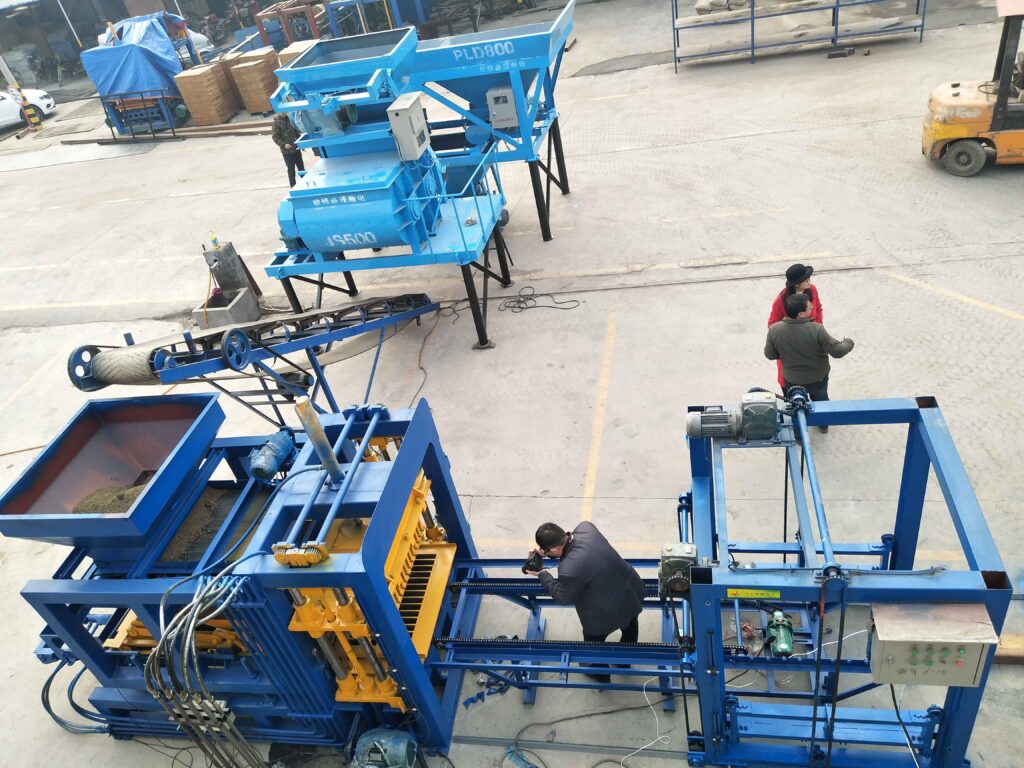
Introduction: The Science of Structural Integrity in Modern Masonry
In an era where building safety, material efficiency, and regulatory compliance dominate construction standards, the fundamental property defining a masonry unit’s quality is its compressive strength. The block brick compression machine stands as the critical nexus where raw materials are transformed into structural components capable of bearing immense loads. For distributors, dealers, and procurement specialists, this technology is not merely about forming shapes; it is about engineering the very backbone of safe and durable structures. This equipment embodies the principle that the ultimate value of a brick or block is not in its appearance, but in its certified ability to perform under stress, a quality that is meticulously engineered during the compression phase.
This machinery category is specialized, focusing on the application of extreme mechanical pressure to consolidate particulate materials into dense, coherent building units. The process is a precise science, balancing raw material composition, moisture content, and applied force to achieve a predetermined and consistent structural performance.
The Engineering Core: Principles of High-Pressure Consolidation
1.1 The Physics of Compression: Beyond Simple Shaping
The action of a compression machine is fundamentally different from simple molding or vibration-based methods. It relies on the application of sustained, immense force to achieve particle rearrangement and interlocking at a microscopic level.
- Particle Rearrangement and Interlocking: The process begins as the semi-dry mix, comprising aggregates, binder (like cement or lime), and other additives, is fed into the mold cavity. The initial application of force causes the particles to slide past one another, filling voids and achieving a denser packing arrangement. As pressure increases, point contacts between particles become areas of significant stress, leading to localized deformation and mechanical interlocking. This drastically reduces porosity and creates a cohesive, monolithic structure.
- The Role of the Binder in Compression: In a cement-based system, the binder and water form a paste that coats the aggregate particles. Under high pressure, this paste is forced into the smallest interstitial spaces. The compaction energy also appears to enhance the initial hydration reactions, leading to the development of higher “green strength” immediately after ejection. This allows the block to be handled without damage, a crucial factor for automated production lines. The final strength is then fully realized through subsequent curing.
1.2 Key Subsystems of a High-Pressure Compression Machine
The ability to deliver consistent, high-pressure force repeatedly is the result of a synergized system of robust components.
- The Hydraulic Power Unit (HPU): This is the heart of the machine. It consists of an electric motor, hydraulic pumps, reservoirs, valves, and actuators. Modern HPUs are designed for efficiency, often incorporating variable displacement pumps and accumulator systems that store energy, delivering high-flow rates for fast cylinder movement and high pressure for the compaction phase while minimizing overall power consumption. The reliability of the HPU directly dictates the machine’s uptime and performance.
- The Press Frame and Mold Assembly: The frame must be an immensely rigid structure, typically fabricated from high-tensile steel plates and reinforcements. Its purpose is to withstand the full compaction force without flexing, as any deflection would lead to variations in block thickness and density. The mold assembly, including the mold box itself and the compression head, is manufactured from specially hardened and wear-resistant alloys to tolerate the abrasive nature of the raw mix and maintain dimensional accuracy over millions of cycles.
- The Control and Feedback System: At the core of a modern compression machine is a Programmable Logic Controller (PLC). This system does more than just initiate the press cycle; it precisely controls the pressure ramp-up, the dwell time at maximum pressure, and the decompression phase. Integrated pressure transducers provide real-time feedback to the PLC, ensuring that every block is compressed with the exact same force, batch after batch. This closed-loop control is the key to unparalleled product consistency.
The Critical Determinants of Final Product Strength
Achieving the target compressive strength is not solely a function of the machine’s power. It is the result of a carefully balanced equation involving several factors.
2.1 The Raw Material Matrix: A Precise Recipe
The quality of the input materials is paramount. The aggregate must be well-graded, meaning a mix of particle sizes that pack together efficiently, minimizing voids. The binder content must be sufficient to coat all aggregate particles and form a strong matrix. The moisture content is arguably the most sensitive variable; too little hinders binder activation and leads to lamination, while too much causes sticking and reduces green strength.
2.2 The Pressure Profile: Force, Dwell, and Release
The machine’s pressure application is not a simple impulse. The “dwell time”—the duration for which maximum pressure is maintained—is critical. It allows for stress relaxation within the material, ensuring the compaction is thorough and not just superficial. The rate of pressure release can also affect the block’s integrity, with a controlled release being preferable to a sudden one.
2.3 Curing and Its Synergy with Compression
While compression gives the block its initial form and density, proper curing is what allows it to achieve its potential strength. The dense, low-porosity structure created by high-pressure compression actually slows down the ingress of water needed for curing. Therefore, steam curing in a controlled chamber is highly synergistic with this production method, as the heat and humidity drive the hydration reaction more effectively, allowing the block to achieve its specified strength much faster.
Strategic Advantages for the Distribution Channel
3.1 Delivering Certified Quality and Market Confidence
For your clients, investing in a compression-focused machine is an investment in market credibility and risk mitigation.
- Guaranteed Compliance with International Standards: Compression machines are engineered to produce blocks that consistently meet or exceed ASTM, ISO, and other national standards for compressive strength (e.g., 15-20 MPa for standard blocks, and much higher for paving units). This provides architects, engineers, and contractors with the confidence that the materials are fit for purpose, facilitating easier approval for large-scale projects.
- Superior Product Performance Characteristics: The high density achieved through compression results in blocks with lower water absorption, higher abrasion resistance, and improved frost durability. This makes them ideal for harsh climates, paving applications, and below-grade construction, opening up premium market segments.
- Enhanced Brand Reputation and Value: A manufacturer known for producing high-strength, certified blocks can command a higher price point and build a reputation for reliability. This brand equity is a powerful business asset, protecting against competition based solely on low cost.
3.2 Technical Evaluation for Procurement Excellence
Guiding clients to the right machine requires a deep dive into specifications that truly matter.
- Evaluating Compaction Force and Consistency: The nominal pressure in tons is a starting point, but the consistency of that pressure is more important. Inquire about the control system’s ability to maintain pressure setpoints and the presence of pressure sensors for feedback. A machine that claims 200 tons but has a variance of ±10 tons is inferior to one rated at 190 tons with a variance of ±1 ton.
- Assessing Structural Rigidity and Durability: Examine the design of the press frame. Look for features like box-type construction, thick steel cross-sections, and finite element analysis (FEA) in the design process. The quality of the hydraulic hoses, fittings, and seals are indicators of the machine’s long-term reliability and resistance to leaks and downtime.
- Analyzing the Total Cost of Ownership (TCO): Beyond the purchase price, consider energy consumption (look for machines with energy-efficient HPUs), the expected lifespan of wear parts like mold liners, and the availability and cost of spare parts. A machine with a slightly higher initial cost but lower operating and maintenance expenses often provides a better TCO.
Conclusion: Engineering the Foundation of Trust
The block brick compression machine is the definitive technology for manufacturers who prioritize structural performance and quality assurance above all else. It represents a commitment to scientific manufacturing principles, where every unit produced is a testament to precision engineering and controlled force. In a market increasingly defined by safety standards and performance specifications, this machinery provides the ultimate tool for compliance and competitive advantage.
For the distribution and procurement network, mastery of this technology segment signifies a move into a high-value, consultancy-led sales approach. By understanding and communicating the intricate relationship between compression force, material science, and final product performance, you empower your clients to build not just structures, but legacies of safety and durability. The future of masonry is being forged under pressure, and it is a future built on a foundation of certified strength.
Tez-tez so'raladigan savollar (FAQ)
Q1: How does a compression machine differ from a vibration-based machine?
A: The primary difference is the dominant force used for consolidation. Vibration-based machines use high-frequency shaking to fluidize the concrete mix, allowing it to settle in the mold. They are often faster but may struggle with very stiff, semi-dry mixes. Compression machines use static, high mechanical pressure to force the particles together, resulting in a denser, less porous, and typically stronger product with higher immediate green strength. Many high-end machines combine both vibration and compression for optimal results.
Q2: What is the “green strength” of a block, and why is it important?
A: Green strength refers to the mechanical strength of a block immediately after it is ejected from the machine, before it has undergone any curing. High green strength is critical for automated production because it allows the block to be handled by robotic arms, stacked on pallets, and transported to the curing area without cracking, deforming, or having its edges break. Compression machines are specifically designed to impart very high green strength.
Q3: Can compression machines produce all types of concrete blocks and bricks?
A: They are exceptionally versatile and can produce a wide range of products, including solid and hollow blocks, paving stones, and interlocking bricks. However, the machine must be specifically configured with the appropriate pressure and mold for each product type. For instance, producing a thick, solid block requires more force and potentially a different pressure profile than producing a thin, hollow block.
Q4: What are the most common maintenance requirements for these machines?
A: Maintenance is focused on the high-wear components and the hydraulic system. Key tasks include:
- Daily: Visual inspection for hydraulic leaks, checking oil levels, and cleaning the mold and press head.
- Weekly: Greasing all bearings and guide columns, checking for loose bolts, and inspecting hydraulic hoses for wear.
- Monthly: Checking and calibrating pressure sensors, inspecting electrical connections, and replacing hydraulic oil filters as needed.
- As Needed: Replacing wear parts like mold liners, seal kits in hydraulic cylinders, and the compression head itself.
Q5: How do we determine the optimal moisture content for the raw material mix?
A: The optimal moisture content is determined through a series of laboratory Proctor tests or, more practically, through factory trials. It is the moisture level at which the mix achieves maximum density under a given compaction effort. A simple field test is the “hand-squeeze” test: a handful of the mix should form a ball that holds its shape without crumbling or leaving excessive moisture on the hand. Precise control is achieved using automated water dosing systems integrated with the mixer.
Q6: What kind of foundation is required for a large compression machine?
A: A massive, reinforced concrete foundation is absolutely mandatory. The foundation must be designed to absorb the dynamic shock loads and vibrations generated during the compression cycle, preventing any movement that could misalign the machine or cause it to settle unevenly. The machine supplier should always provide a detailed foundation drawing specifying the concrete grade, reinforcement, and anchor bolt placements. Improper foundation is a leading cause of machine performance issues and premature failure.