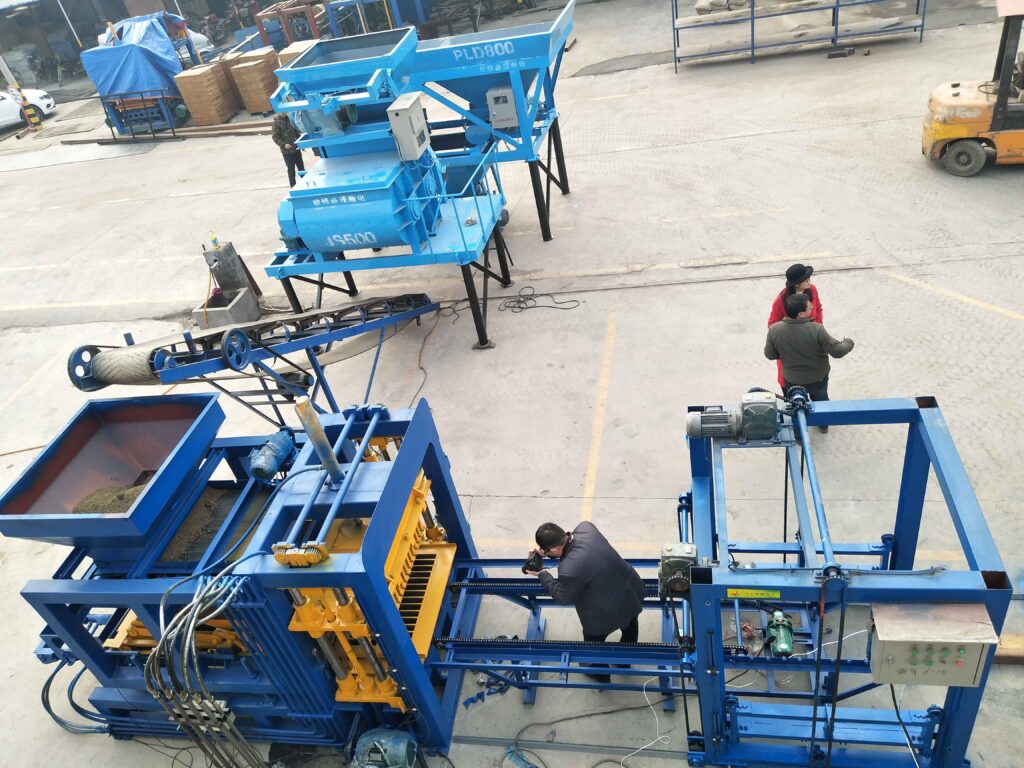
Kirish: Zamonaviy G'isht Ishlarida Tuzilma Mustahkamligi Ilmi
Binolar xavfsizligi, materiallardan samarali foydalanish va qoidalarga rioya qilish qurilish standartlarida ustunlik qilgan bir davrda, devor bloklarining sifatini belgilovchi asosiy xususiyat ularning siqilishga chidamliligidir. Blokli g'isht siqish mashinasi xom ashyolarni ulkan yuklarni ko'tarishga qodir tuzilma komponentlariga aylantiruvchi muhim vosita hisoblanadi. Distribyutorlar, dilerlar va xarid mutaxassislari uchun bu texnologiya shakllarni yaratishdan ko'ra, xavfsiz va bardoshli inshootlarning asosini muhandislik jihatidan loyihalashdir. Ushbu uskuna g'isht yoki blokning yakuniy qimati uning tashqi ko'rinishida emas, balki siqish bosqichida puxta muhandislik yondashuvi bilan yaratilgan, stress ostida ishlashning sertifikatlangan qobiliyatida ekanligi tamoyilini aks ettiradi.
Ushbu mashinalar toifasi ixtisoslashgan bo'lib, zarrachali materiallarni zich, mustahkam qurilish birliklariga aylantirish uchun ekstremal mexanik bosim qo'llashga qaratilgan. Jarayon aniq fan bo'lib, oldindan belgilangan va izchil tuzilma samaradorligiga erishish uchun xom ashyo tarkibi, namlik miqdori va qo'llanilgan kuchni muvozanatlashni o'z ichiga oladi.
Muhandislik yadrosi: Yuqori bosimli konsolidatsiya tamoyillari
1.1 Sıkıştırma Fiziği: Basit Şekillendirmenin Ötesinde
Qisish mashinasining harakati oddiy quyish yoki tebranishga asoslangan usullardan tubdan farq qiladi. U mikroskopik darajada zarrachalarni qayta joylashtirish va o'zaro bog'lanishni amalga oshirish uchun doimiy va kuchli bosim qo'llashga asoslanadi.
- Zarracha qayta joylashtirish va bir-biriga kirishishi:Jarayon yarim quruq aralashmaning qolip bo'shlig'iga yuklanishi bilan boshlanadi. Bu aralashma agregatlar, bog'lovchi (masalan, sement yoki ohak) va boshqa qo'shimchalardan iborat. Dastlabki kuch qo'llash zarralarning bir-biridan sirg'alib o'tishiga, bo'shliqlarni to'ldirishiga va zichroq joylashishiga olib keladi. Bosim oshgan sari zarralar orasidagi nuqtaviy aloqalar katta stress sohalariga aylanib, mahalliy deformatsiya va mexanik o'zaro qulflashni keltirib chiqaradi. Bu porozlikni keskin kamaytiradi va yaxshi bog'langan, yaxlit tuzilmani hosil qiladi.
- Sıxma Jarayonida Bog‘lovchining O‘rni:Sement asosidagi tizimda bog'lovchi modda va suv agregat zarralarini qoplaydigan pastani hosil qiladi. Yuqori bosim ostida bu pasta eng mayda bo'shliqlarga majburan kirib boradi. Siqish energiyasi, shuningdek, dastlabki gidratlanish reaksiyalarini kuchaytirganga o'xshaydi, bu esa chiqarilgandan so'ng darhol yuqori "yashil mustahkamlik"ning rivojlanishiga olib keladi. Bu blokning avtomatlashtirilgan ishlab chiqarish liniyalari uchun muhim omil bo'lgan shikastlanmasdan qayta ishlanishiga imkon beradi. Yakuniy mustahkamlik keyingi quritish orqali to'liq amalga oshiriladi.
1.2 Yuqori Bosimli Kompressor Mashinasining Asosiy Pastki Tizimlari
Izchil ravishda yuqori bosimli kuchni yetkazib berish qobiliyati mustahkam komponentlardan iborat sinergik tizim natijasidir.
- Gidravlik quvvat bloki (HPU):Bu mashinaning yurak qismidir. U elektr motor, gidravlik nasoslar, rezervuarlar, klapanlar va aktuatorlardan iborat. Zamonaviy gidravlik quvvat birliklari samaradorlik uchun mo‘ljallangan bo‘lib, ko‘pincha o‘zgaruvchan siljishli nasoslar va energiyani saqlaydigan akkumulyator tizimlarini o‘z ichiga oladi. Ular tez silindr harakati uchun yuqori oqim tezligini va zichlash bosqichi uchun yuqori bosimni ta'minlaydi, shu bilan birga umumiy quvvat sarfini minimallashtiradi. Gidravlik quvvat birligining ishonchliligi bevosita mashinaning ish vaqti va unumdorligini belgilaydi.
- Matbuot Ramasi va Qoliplar Yig'ilishi:Ramka juda qattiq tuzilishga ega bo'lishi kerak, odatda yuqori kuchlanishli po'lat plitalar va mustahkamlashlar bilan tayyorlanadi. Uning vazifasi to'liq siqish kuchiga egilmasdan bardosh berishdir, chunki har qanday egilish bloklarning qalinligi va zichligida o'zgarishlarga olib keladi. Qoliq yig'ilishi, shu jumladan qoliq qutisi va siqish boshi, maxsus qattiqlashtirilgan va aşınmaga chidamli qotishmalardan tayyorlanadi, bu xom aralashning abraziv tabiatiga bardosh berish va millionlab tsikllar davomida o'lchov aniqligini saqlash uchun mo'ljallangan.
- The Control and Feedback System: At the core of a modern compression machine is a Programmable Logic Controller (PLC). This system does more than just initiate the press cycle; it precisely controls the pressure ramp-up, the dwell time at maximum pressure, and the decompression phase. Integrated pressure transducers provide real-time feedback to the PLC, ensuring that every block is compressed with the exact same force, batch after batch. This closed-loop control is the key to unparalleled product consistency.
The Critical Determinants of Final Product Strength
Achieving the target compressive strength is not solely a function of the machine’s power. It is the result of a carefully balanced equation involving several factors.
2.1 The Raw Material Matrix: A Precise Recipe
The quality of the input materials is paramount. The aggregate must be well-graded, meaning a mix of particle sizes that pack together efficiently, minimizing voids. The binder content must be sufficient to coat all aggregate particles and form a strong matrix. The moisture content is arguably the most sensitive variable; too little hinders binder activation and leads to lamination, while too much causes sticking and reduces green strength.
2.2 The Pressure Profile: Force, Dwell, and Release
The machine’s pressure application is not a simple impulse. The “dwell time”—the duration for which maximum pressure is maintained—is critical. It allows for stress relaxation within the material, ensuring the compaction is thorough and not just superficial. The rate of pressure release can also affect the block’s integrity, with a controlled release being preferable to a sudden one.
2.3 Curing and Its Synergy with Compression
While compression gives the block its initial form and density, proper curing is what allows it to achieve its potential strength. The dense, low-porosity structure created by high-pressure compression actually slows down the ingress of water needed for curing. Therefore, steam curing in a controlled chamber is highly synergistic with this production method, as the heat and humidity drive the hydration reaction more effectively, allowing the block to achieve its specified strength much faster.
Strategic Advantages for the Distribution Channel
3.1 Delivering Certified Quality and Market Confidence
For your clients, investing in a compression-focused machine is an investment in market credibility and risk mitigation.
- Guaranteed Compliance with International Standards: Compression machines are engineered to produce blocks that consistently meet or exceed ASTM, ISO, and other national standards for compressive strength (e.g., 15-20 MPa for standard blocks, and much higher for paving units). This provides architects, engineers, and contractors with the confidence that the materials are fit for purpose, facilitating easier approval for large-scale projects.
- Superior Product Performance Characteristics: The high density achieved through compression results in blocks with lower water absorption, higher abrasion resistance, and improved frost durability. This makes them ideal for harsh climates, paving applications, and below-grade construction, opening up premium market segments.
- Enhanced Brand Reputation and Value: A manufacturer known for producing high-strength, certified blocks can command a higher price point and build a reputation for reliability. This brand equity is a powerful business asset, protecting against competition based solely on low cost.
3.2 Technical Evaluation for Procurement Excellence
Guiding clients to the right machine requires a deep dive into specifications that truly matter.
- Evaluating Compaction Force and Consistency: The nominal pressure in tons is a starting point, but the consistency of that pressure is more important. Inquire about the control system’s ability to maintain pressure setpoints and the presence of pressure sensors for feedback. A machine that claims 200 tons but has a variance of ±10 tons is inferior to one rated at 190 tons with a variance of ±1 ton.
- Assessing Structural Rigidity and Durability: Examine the design of the press frame. Look for features like box-type construction, thick steel cross-sections, and finite element analysis (FEA) in the design process. The quality of the hydraulic hoses, fittings, and seals are indicators of the machine’s long-term reliability and resistance to leaks and downtime.
- Analyzing the Total Cost of Ownership (TCO): Beyond the purchase price, consider energy consumption (look for machines with energy-efficient HPUs), the expected lifespan of wear parts like mold liners, and the availability and cost of spare parts. A machine with a slightly higher initial cost but lower operating and maintenance expenses often provides a better TCO.
Conclusion: Engineering the Foundation of Trust
The block brick compression machine is the definitive technology for manufacturers who prioritize structural performance and quality assurance above all else. It represents a commitment to scientific manufacturing principles, where every unit produced is a testament to precision engineering and controlled force. In a market increasingly defined by safety standards and performance specifications, this machinery provides the ultimate tool for compliance and competitive advantage.
For the distribution and procurement network, mastery of this technology segment signifies a move into a high-value, consultancy-led sales approach. By understanding and communicating the intricate relationship between compression force, material science, and final product performance, you empower your clients to build not just structures, but legacies of safety and durability. The future of masonry is being forged under pressure, and it is a future built on a foundation of certified strength.
Tez-tez so'raladigan savollar (FAQ)
Q1: How does a compression machine differ from a vibration-based machine?
A: The primary difference is the dominant force used for consolidation. Vibration-based machines use high-frequency shaking to fluidize the concrete mix, allowing it to settle in the mold. They are often faster but may struggle with very stiff, semi-dry mixes. Compression machines use static, high mechanical pressure to force the particles together, resulting in a denser, less porous, and typically stronger product with higher immediate green strength. Many high-end machines combine both vibration and compression for optimal results.
Q2: What is the “green strength” of a block, and why is it important?
A: Green strength refers to the mechanical strength of a block immediately after it is ejected from the machine, before it has undergone any curing. High green strength is critical for automated production because it allows the block to be handled by robotic arms, stacked on pallets, and transported to the curing area without cracking, deforming, or having its edges break. Compression machines are specifically designed to impart very high green strength.
Q3: Can compression machines produce all types of concrete blocks and bricks?
A: They are exceptionally versatile and can produce a wide range of products, including solid and hollow blocks, paving stones, and interlocking bricks. However, the machine must be specifically configured with the appropriate pressure and mold for each product type. For instance, producing a thick, solid block requires more force and potentially a different pressure profile than producing a thin, hollow block.
Q4: What are the most common maintenance requirements for these machines?
A: Maintenance is focused on the high-wear components and the hydraulic system. Key tasks include:
- Daily: Visual inspection for hydraulic leaks, checking oil levels, and cleaning the mold and press head.
- Weekly: Greasing all bearings and guide columns, checking for loose bolts, and inspecting hydraulic hoses for wear.
- Monthly: Checking and calibrating pressure sensors, inspecting electrical connections, and replacing hydraulic oil filters as needed.
- As Needed: Replacing wear parts like mold liners, seal kits in hydraulic cylinders, and the compression head itself.
Q5: How do we determine the optimal moisture content for the raw material mix?
A: The optimal moisture content is determined through a series of laboratory Proctor tests or, more practically, through factory trials. It is the moisture level at which the mix achieves maximum density under a given compaction effort. A simple field test is the “hand-squeeze” test: a handful of the mix should form a ball that holds its shape without crumbling or leaving excessive moisture on the hand. Precise control is achieved using automated water dosing systems integrated with the mixer.
Q6: What kind of foundation is required for a large compression machine?
A: A massive, reinforced concrete foundation is absolutely mandatory. The foundation must be designed to absorb the dynamic shock loads and vibrations generated during the compression cycle, preventing any movement that could misalign the machine or cause it to settle unevenly. The machine supplier should always provide a detailed foundation drawing specifying the concrete grade, reinforcement, and anchor bolt placements. Improper foundation is a leading cause of machine performance issues and premature failure.