Analysis of Product Versatility in Brick Manufacturing Machinery
The Engineering Foundation of Product Versatility
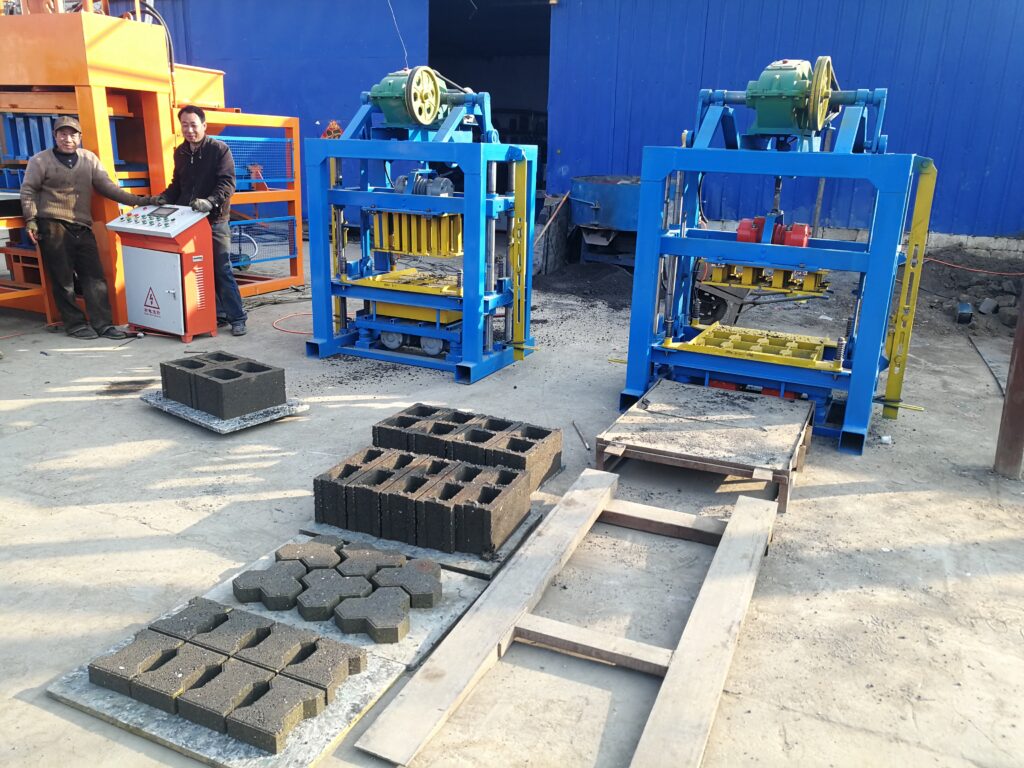
The core capability of a machine to produce different brick types is primarily governed by its mold system and the programmability of its compression cycle. Unlike single-purpose industrial equipment, a well-designed brick press is a platform for forming various shapes from similar base materials.
- The Central Role of Interchangeable Mold Tooling
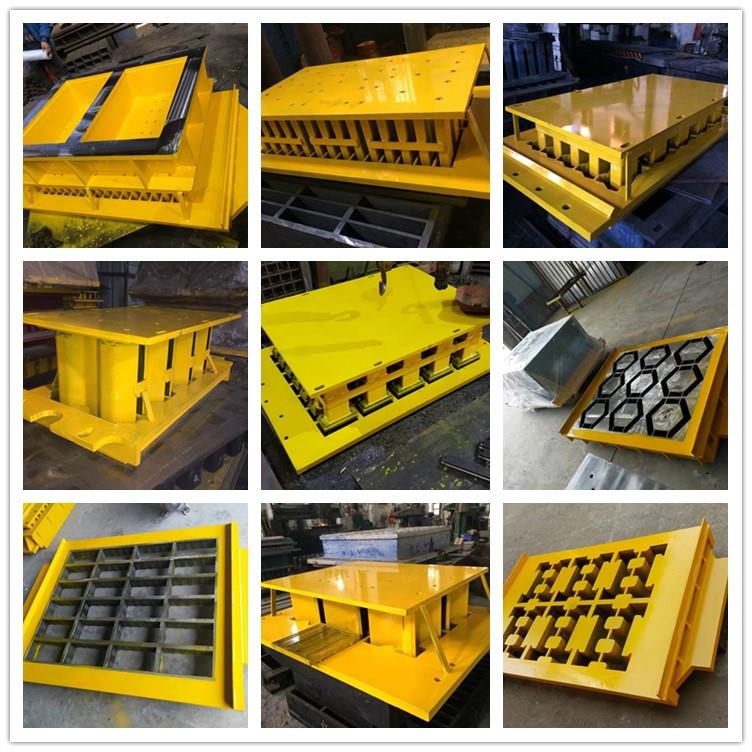
- The mold is the definitive component that imparts geometry to the compacted material. A machine’s versatility is fundamentally linked to its modular mold system. This system typically consists of a robust main mold frame that accepts interchangeable mold boxes, compaction heads (upper molds), and core rods. By swapping these components, the physical cavity in which the brick is formed is completely altered. For instance, replacing a solid-block mold box and head with ones designed for hollow blocks immediately changes the product output. The precision and ease of this changeover process are key differentiators between machines.
- Programmable Logic Control (PLC) and Parameter Adjustment
- Beyond physical shape, different brick types often require specific forming parameters. Modern machines equipped with PLCs allow operators to store and recall unique “recipes” for each product. These recipes can control:
- Compaction Pressure Profile: A dense paving stone may require higher peak pressure than a lightweight hollow block.
- Vibration Duration and Frequency: Essential for ensuring proper flow and density in complex shapes with thin webs or intricate textures.
- Feed Volume: The amount of raw material dispensed into the mold must be precisely calibrated for each product’s volume.
- Ejection Sequence: Complex shapes may require a staggered or slower ejection to prevent damage.
- Beyond physical shape, different brick types often require specific forming parameters. Modern machines equipped with PLCs allow operators to store and recall unique “recipes” for each product. These recipes can control:
- Material Compatibility and Adaptation
- Versatility also depends on the machine’s ability to handle different raw material mixes. While a machine may be optimized for a general range (e.g., cement-stabilized aggregates), producing a very lightweight brick with expanded clay aggregates or a highly colored facing brick with pigment saturation requires assurance that the machine’s feeding and compaction systems can accommodate these variations without clogging or inconsistent performance.
Spectrum of Producible Brick Types and Their Applications
A versatile machine platform can typically address several major product categories, each serving distinct market needs.
- Standard Construction Blocks
- Qattiq Bloklar: The fundamental building unit for load-bearing walls, requiring high compressive strength. Mold design is straightforward, but precise pressure control ensures consistency.
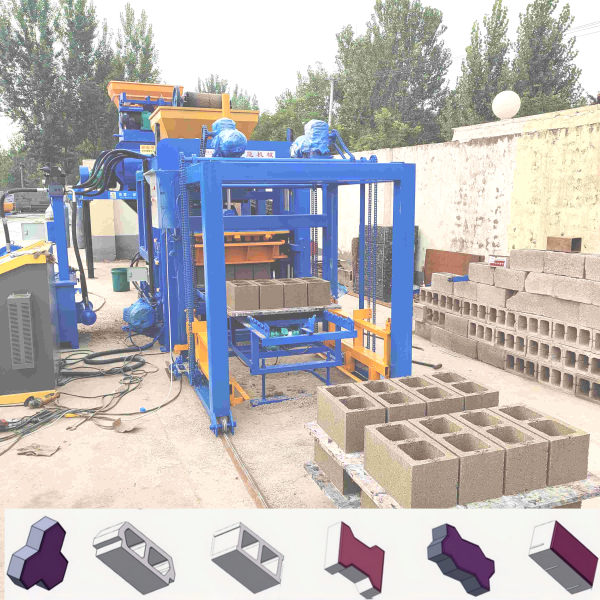
- Pustak G'ishtlar: Including cellular or cavity blocks. These require molds with core rods. They offer reduced weight, improved thermal and acoustic insulation, and material efficiency. The machine must ensure even compaction around the cores to form uniform wall thickness.
- O'zaro bog'langan bloklar: Designed to lock together without mortar or with minimal mortar. These require molds with high precision for the male and female interlocking features. Consistent dimensional accuracy from the machine is non-negotiable to ensure proper fit on-site.
- Paving and Landscaping Products
- Paving Stones (Pavers): Thicker and denser than wall blocks, often requiring higher compaction pressures. Mold shapes can range from simple rectangles to complex interlocking patterns like herringbone, fan, or cobblestone.
- Kerbstones and Edgers: Long, linear products that present a unique challenge for mold design and ejection. Machines may require special support systems or adjustable mold orientations to produce these items efficiently.
- Decorative Wall Units: Such as split-face or tumbled-look bricks, which often involve secondary processing but start with a primary form produced by the machine.
- Specialized and Niche Architectural Products
- Perforated or Screen Blocks: Used for decorative facades and shading. These involve complex mold designs with numerous, sometimes delicate, core rods, demanding excellent material flow and careful ejection.
- Chimney Blocks or Special Shapes: Custom geometric shapes for specific architectural functions. These highlight the ultimate flexibility of a modular mold system but are typically produced in lower volumes.
Practical Realities, Limitations, and Changeover Considerations
While technical versatility exists, its commercial implementation involves practical trade-offs that must be clearly communicated to clients.
- The Critical Factor of Changeover Time
- The time required to switch from producing one brick type to another directly impacts overall plant efficiency and economics. Changeover involves:
- Physically changing mold components (boxes, heads, cores).
- Adjusting machine parameters (pressure, feed, vibration).
- Calibrating and testing the new setup.
- Machines designed for high versatility often feature quick-change clamping systems and centralized adjustment points to minimize this downtime. A machine that takes 4 hours to change over is impractical for short production runs, whereas one with a 30-minute changeover enables agile, just-in-time manufacturing.
- The time required to switch from producing one brick type to another directly impacts overall plant efficiency and economics. Changeover involves:
- Cost Implications of Versatility: Tooling Investment
- Each distinct brick type requires its own set of mold tooling. While the base machine is a one-time cost, the library of molds represents a recurring and sometimes significant capital investment. A client seeking to offer five different paver patterns and three block types must budget for the corresponding molds, which can be a substantial percentage of the initial machine cost.
- Machine Design Constraints on Product Range
- Not every machine can produce every type of brick. Key design constraints include:
- Maximum Pressure: Determines the achievable density and strength, limiting suitability for high-strength products.
- Mold Table Size (Opening Dimensions): Physically limits the maximum block size (length x width) that can be produced.
- Stroke Length and Ejection Travel: Limits the height (depth) of the product.
- Feeder System Capacity: May not handle very large aggregates or fibrous materials needed for some specialty products.
- Not every machine can produce every type of brick. Key design constraints include:
Strategic Business Implications for Equipment Selection
For the distributor, guiding a client through the versatility decision is a strategic exercise.
- Assessing Market Demand and Product Mix Strategy
- Is the client’s market stable and homogeneous, favoring high-volume production of a single block type? Or is it fragmented and fashion-driven (like landscaping), requiring a flexible mix of colors and shapes? The answer dictates the priority between a high-speed, dedicated machine versus a highly versatile, agile one.
- Evaluating Operational Complexity and Skill Requirements
- Managing a multi-product operation is more complex than a single-product line. It requires skilled personnel for changeovers, rigorous inventory management of different molds and raw materials, and more sophisticated production scheduling. The client’s operational maturity must match the technological capability.
- The “Platform” Approach to Business Growth
- A versatile machine can be positioned as a growth platform. A client can start with a basic set of molds for standard blocks to establish market entry. As the business grows and opportunities are identified, they can incrementally invest in new mold sets for pavers, interlocking blocks, etc., to expand their product line without the need for a completely new machine. This lowers the barrier to market diversification.
Xulosa
The question of a brick machine’s ability to make different types of bricks opens a vital discussion on business strategy and operational design. Technologically, modern machinery, through modular molds and programmable controls, offers remarkable versatility. However, this capability is not without its costs—in terms of tooling investment, changeover time, and operational complexity.
For the astute distributor, the objective is to move clients beyond a simplistic “yes, it can” to a nuanced understanding of the “how, when, and at what cost.” The most valuable guidance helps a client align their equipment choice with a clear product-market strategy. Whether recommending a specialized high-output machine for a bulk supplier or a versatile platform for an agile manufacturer serving niche architectural and landscaping markets, this deep understanding of product diversification solidifies the distributor’s role as a strategic partner. It empowers clients to build not just bricks, but a resilient and adaptable business capable of evolving with market demands.
Tez-tez so'raladigan savollar (FAQ)
Q1: How long does it typically take to change molds and switch production from one brick type to another?
A: Changeover time varies dramatically by machine design. Basic machines may require 2-4 hours for a full team using tools. Modern machines designed for versatility feature quick-release clamps, guided mold frames, and tool-less adjustments, potentially reducing changeover to 30-60 minutes for a trained 1-2 person crew. It is crucial to request live demonstrations or documented changeover procedures from the manufacturer when evaluating machines for multi-product use.
Q2: Is there a compromise between versatility and production speed?
A: Often, yes. A machine optimized for speed and dedicated to a single product will have its cycle timed to the second for maximum output. A versatile machine may have a slightly longer cycle time to accommodate more complex vibration sequences or careful ejection for delicate shapes. Additionally, the time spent on changeovers reduces net production time. The trade-off is between peak single-product output and agile multi-product capability.
Q3: Can the same machine produce both concrete blocks and clay bricks?
A: This is one of the more significant limitations. Machines are typically engineered for a specific material processing principle. Concrete/cement-stabilized block machines use vibration and compression for granular mixes. Clay brick machines (especially for fired bricks) often use extrusion or stiff-mud processes with a de-airing pugmill. The material handling, moisture content, and compaction dynamics are too different for one machine to handle both effectively. A client working with both material families would generally need two specialized systems.
Q4: What is the typical lifespan and maintenance requirement for mold tooling?
A: Mold tooling is a wear item. Its lifespan depends on the abrasiveness of the raw materials and production volume. With standard concrete mixes, a high-quality, hardened steel mold set can last for 1 to 3 million cycles before needing re-lining or significant refurbishment. Maintenance involves regular cleaning after each shift, inspection for wear or damage, and proper storage when not in use. Selling spare wear parts for molds is a recurring aftermarket opportunity for distributors.
Q5: How do we advise a client who wants maximum versatility but has a limited initial budget?
A: Recommend a strategic, phased approach:
- Select a Machine Platform: Choose a robust base machine known for compatibility with a wide range of third-party or OEM molds.
- Start with a Core Product: Purchase the machine with only 1-2 mold sets for the product with the most certain and immediate demand (e.g., standard hollow block).
- Plan for Growth: Use the revenue generated to finance the purchase of additional mold sets for pavers or other products in 6-12 months. This spreads the capital cost and allows market testing before committing to a full suite of tooling.