
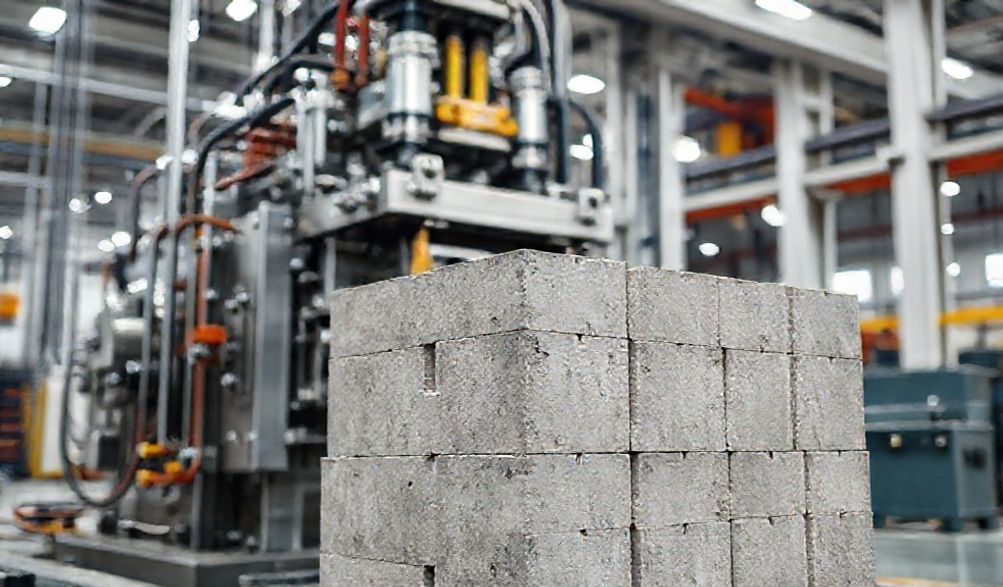
Finding the Best Quality Hollow Block Machine Factories: A 2026 Buyer’s Guide
Kirish
For construction businesses and block manufacturing entrepreneurs, few decisions carry as much weight as selecting the machinery that will form the literal building blocks of your venture. Investing in a hollow block machine is a significant capital expenditure, and the factory you choose as your partner becomes the bedrock of your productivity, product quality, and long-term profitability. The stakes are high: a reliable, efficient machine can propel your business forward, while a subpar choice can lead to crippling downtime, inconsistent output, and reputational damage.
This guide is designed to be your definitive resource. Compiled from industry insights, technical analysis, and evolving market trends, it moves beyond simple directory listings. Our goal is to arm you with a comprehensive framework for evaluation, focusing on the tangible hallmarks of quality, innovation, and support that separate market leaders from the rest. The recommendations and criteria discussed here are based on verifiable factors—manufacturing standards, global client portfolios, and after-sales service structures—not paid placements. Let’s empower you to make an informed, confident decision for your business.
Why Factory Quality is Non-Negotiable for Hollow Block Machines
Choosing a machine factory is not just about buying equipment; it’s about entering a long-term partnership. The quality of the factory directly dictates the performance on your floor.
The Direct Impact on Product Quality & Business Reputation
The precision engineered into a hollow block machine translates directly to the blocks it produces.
- Dimensional Accuracy & Consistency: A high-quality machine ensures every block meets exact specifications for length, width, and height. This consistency is critical for efficient bricklaying, structural integrity, and client satisfaction.
- Tuzilish mustahkamligi: Superior vibration systems and hydraulic pressure ensure optimal compaction. This eliminates voids and weak spots, resulting in blocks that meet or exceed required compressive strength standards.
- The Cost of Failure: Poor-quality blocks lead to waste on your site, rejected deliveries from clients, and irreversible damage to your business reputation. In construction, a reputation for unreliable materials is difficult to overcome.
Total Cost of Ownership (TCO): Beyond the Initial Price Tag
The cheapest machine often becomes the most expensive. True cost is measured over years, not just at purchase.
- Mustahkamlik va Uzoq Muddatli Xizmat Qilish: Factories using premium materials and robust engineering build machines that withstand 24/7 operation for decades, not years. This defers the massive cost of replacement.
- Maintenance & Efficiency: Quality machines are designed for serviceability and use reliable, standard components. They also incorporate energy-efficient motors and hydraulic systems, significantly reducing operational overhead.
- Investment Logic: Viewing a machine as a capital asset shifts the perspective. A higher initial investment in quality is a strategic move for long-term profitability and competitive advantage.
Safety, Compliance, and Operational Smoothness
A well-built machine is a safer, more compliant, and more predictable asset.
- Operator Safety: Robust guarding, fail-safe electrical systems, and stable structures are hallmarks of quality manufacturing, protecting your most valuable asset: your team.
- Regulatory Adherence: Reputable factories design machines to comply with international safety and performance standards (like CE), simplifying your own compliance efforts.
- Ish vaqtining qisqarishi: Precision manufacturing leads to reliable performance. This means fewer breakdowns, less unscheduled maintenance, and a smoother, more predictable production flow.
Key Hallmarks of a Top-Tier Hollow Block Machine Factory
How do you spot a true industry leader? Look for these concrete indicators of excellence.
Advanced Manufacturing Capabilities & R&D Investment
The factory’s own infrastructure speaks volumes.
- In-House Mastery: Top factories control the entire process, from in-house design and CNC machining of critical parts to robotic welding and organized assembly lines. This ensures quality at every stage.
- Commitment to Innovation: Look for evidence of a dedicated R&D department, patents held, and a history of model improvements. This shows they are evolving with technology, not just copying old designs.
Material Selection and Build Integrity
The quality of raw inputs determines the quality of the final product.
- Grade-A Materials: Inquire about the grade of steel used in the frame and mold carriages, the specifications of specialized alloys for wear parts like mixer blades, and the brands of hydraulic pumps and PLCs (e.g., Siemens, Bosch Rexroth).
- Transparency as a Trust Signal: Willingness to provide material certifications, detailed component lists, or even virtual factory tours demonstrates confidence and builds trust.
Keng qamrovli sifat nazorati protokollari
Quality cannot be inspected into a product; it must be built in. Rigorous QC is the proof.
- Multi-Stage Inspection: The process should include raw material checks, in-process inspections during machining/welding, and final performance testing where the machine is run under load to verify cycle time, pressure, and output quality.
- Standartlarga muvofiqlik: Certifications like ISO 9001 for quality management systems are a strong baseline indicator of a systematic approach to quality.
Proven Expertise and Industry Experience
Knowledge is embedded in the organization.
- Factory Heritage: A long-standing presence in the market often correlates with accumulated technical knowledge and refined designs.
- Technical Depth: Evaluate the credentials of their engineering team. Do they have concrete technology specialists?
- Diverse Portfolio: A factory with successful installations across different markets (varying climates, raw materials, and block specifications) demonstrates adaptable, proven expertise.
How to Vet and Evaluate Potential Factories
Turn these hallmarks into an actionable investigation plan.
Conducting Effective Pre-Screening Research
Start your due diligence online and through networks.
- Deep-Dive into Materials: Scrutinize factory websites. Do they provide detailed technical PDFs, engineering drawings, or videos of the manufacturing process? Generic brochures are a red flag.
- Seek Unbiased Insights: Use industry-specific forums, LinkedIn groups, and trade associations. Independent review platforms and case studies with named clients are valuable resources.
The Art of the Inquiry: Asking the Right Technical Questions
Your initial questions separate serious manufacturers from salespeople.
- Performance Specs: “What is the guaranteed cycle time for a standard 5-block mold? What is the maximum hydraulic system pressure (in bar/psi)? What is the vibration frequency and amplitude?”
- Component Origin: “Which brand and model of hydraulic pump, PLC, and electrical components do you use? Can you provide the supply chain for these critical parts?”
- Customization & Design: “Can you customize the mold design for our specific block dimensions and face mix requirements? What is your process for supporting this?”
Assessing After-Sales Support and Service Structure
This is where partnerships are truly tested. The best machine is useless without support.
- Warranty & Parts: What is included in the warranty (parts, labor, travel)? Is there a readily available spare parts inventory? What is the typical lead time for a critical component?
- Training & Support: Do they offer comprehensive on-site training for operators and maintenance staff? What is the structure for technical support—email, phone, remote diagnostics?
- Local Network: For international buyers, the presence of capable local service agents or a dedicated international support team is a critical advantage.
The Importance of Client References and Site Visits (Physical or Virtual)
Nothing replaces real-world validation.
- Reference Checks: Request references from clients in a similar climate or using similar raw materials. Ask them about machine uptime, support responsiveness, and the accuracy of the factory’s claims.
- The Factory Visit: If possible, visit the factory. Look for organization, cleanliness, and skilled workers. Ask to see a machine being tested. A virtual tour is a good alternative; a refusal to show facilities is a major warning sign.
Global Landscape: Notable Manufacturing Hubs and What to Expect
Understanding regional specializations helps set expectations.
European Factories: Precision Engineering and Premium Innovation
- Hallmarks: Renowned for advanced automation, exceptional energy efficiency, and designs built for extreme durability and longevity. Often lead in R&D for sustainable production.
- E'tiborga olinadigan jihatlar: The value proposition is often a higher initial investment offset by lower TCO, superior performance, and strong resale value. Ideal for businesses prioritizing automation, precision, and operating in regulated markets.
Factories in Key Asian Markets: Value and Volume Specialization
- The Spectrum: This region features a vast range. It includes high-volume manufacturers producing cost-effective machines and niche, quality-focused players who compete directly on engineering and materials.
- Due Diligence is Key: The range makes vetting crucial. Focus intensely on the hallmarks in Section 2. Verify material grades, component brands, and QC processes. The best factories here offer exceptional value without compromising core quality.
Regional and Local Manufacturers: Advantages of Proximity
- Asosiy Afzalliklar: They may have superior understanding of local block standards, raw material characteristics, and regulatory environments. Logistics for machine delivery and spare parts can be faster and cheaper.
- Evaluation: Benchmark their technical capabilities against global standards. Do they use modern engineering software? What is their component sourcing strategy? Their size can be an advantage in agility and customization.
Avoiding Common Pitfalls in the Selection Process
Learn from the mistakes of others to safeguard your investment.
- The False Economy of the Lowest Bid: The initial savings are almost always erased by higher maintenance costs, energy consumption, and premature failure.
- Overlooking the Fine Print: Scrutinize warranty and service contracts. What is excluded? Who pays for the technician’s travel and accommodation? Understand the terms completely.
- Misjudging Capacity Needs: Carefully analyze your current and projected demand. Under-specifying leads to bottlenecks; over-buying strains finances. A reputable factory will help you right-size your machine.
- Neglecting the “Soft” Costs: Factor in the costs and plans for installation, foundation work, operator training, and preventative maintenance from day one.
Ko'p so'raladigan savollar bo'limi
Q1: What is the typical price range for a high-quality hollow block machine from a reputable factory?
Prices vary dramatically based on automation level, output capacity, and customization. A high-quality, semi-automatic stationary machine might start in the $25,000-$50,000 range. Fully automatic, high-capacity production lines can range from $100,000 to over $500,000. Focus on the Total Cost of Ownership, not just the sticker price.
Q2: How can I verify a factory’s claims about machine performance and durability?
Request certified test reports from the factory. Insist on speaking to long-term (3+ years) client references. Ask for video evidence of the machine running under load. Check for patents or third-party certifications that validate their engineering claims.
Q3: What are the most important certifications to look for?
* ISO 9001: Indicates a certified quality management system.
* CE Marking (for Europe): Ensures the machine meets EU health, safety, and environmental standards.
* Other Local Standards: Depending on your market, look for certifications from local standards bodies that govern construction equipment.
Q4: Is it better to buy directly from the factory or through a local dealer?
Buying directly often provides better pricing and direct technical communication. A good local dealer, however, provides invaluable on-the-ground support, quicker parts access, and local expertise. Evaluate the dealer’s technical capability as rigorously as you would the factory.
Q5: What should a comprehensive after-sales service package include?
A minimum of 12 months warranty on parts and labor, detailed installation supervision or guidance, thorough on-site operator and maintenance training, a readily available spare parts list with pricing, and access to 24/7 technical support via phone or remote diagnostics.
Q6: How long does it usually take from order to delivery and installation?
For standard models, lead times can range from 30 to 90 days for manufacturing, plus shipping. Customized machines or complex production lines can take 4-6 months. Always get a detailed, written production and delivery schedule as part of your contract.
Xulosa
Selecting a hollow block machine factory is one of the most strategic decisions you will make for your construction or manufacturing business. It is the foundation of your product quality, operational efficiency, and market reputation. The “best” factory is not a universal title, but one that aligns perfectly with your specific business goals, technical requirements, and value expectations.
Use the hallmarks and vetting process outlined here as your definitive checklist. Be patient, ask detailed questions, and trust the evidence of robust manufacturing processes and proven client success over marketing claims. The time and effort invested in this selection process is your first and most critical step toward building a successful, sustainable, and profitable block manufacturing operation.
Begin your journey by detailing your specific block specifications, production goals, and operational constraints. Then, approach potential factory partners with informed, technical inquiries. For a significant investment, consider consulting with an independent industry expert to review your final shortlist. Your future productivity depends on the choice you make today.
<