
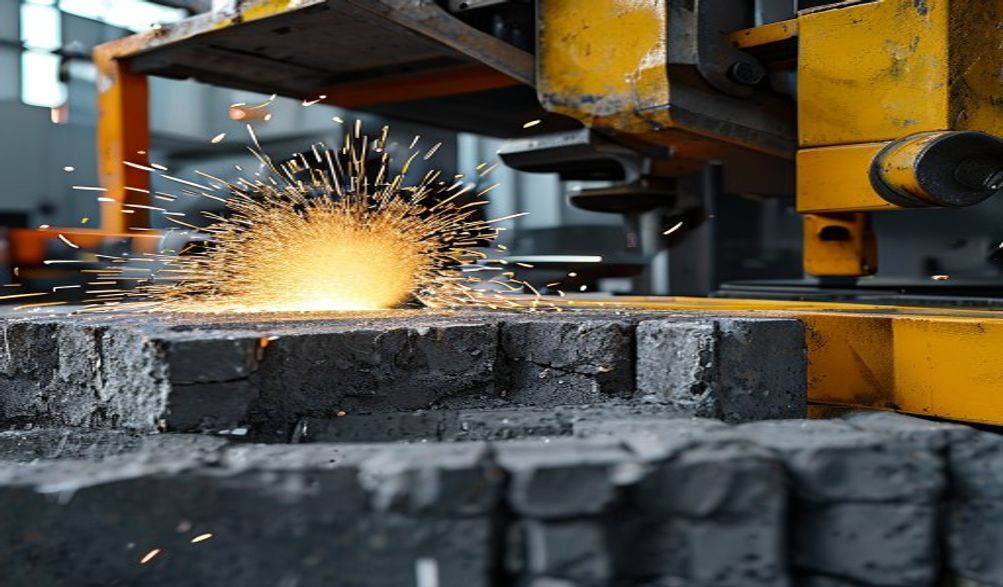
Gidravlik beton g'isht ishlab chiqarish mashinasini qanday tanlash mumkin: Xarid qiluvchi uchun to'liq qo'llanma
Kirish
Qurilishda yakuniy inshootning sifati uning eng asosiy tarkibiy qismlarining sifatiga teng. Blok zavodlari, quruvchilar va tadbirkorlar uchun muvaffaqiyatli operatsiyaning asosi faqat g‘ishtlarning o‘zi emas – balki ularni ishlab chiqaradigan mashinadir. To‘g‘ri gidravlik beton g‘isht ishlab chiqarish mashinasini tanlash – bu ishlab chiqarish quvvati, mahsulot sifati va oxir-oqibatda sizning daromadingizni belgilaydigan muhim sarmoyadir.
Ushbu qo‘llanma savdo taklifi emas. U sanoat tajribasi, chuqur texnik tahlil va haqiqiy operatsion bilimlar asosida yaratilgan strategik yo‘nalishdir. Bizning maqsadimiz – sizni to‘g‘ri savollarni berish, variantlarni tanqidiy baholash va istiqbolli loyihangizni buzishi mumkin bo‘lgan qimmat xatolardan saqlash uchun bilim bilan qurollantirishdir. Ishlab chiqarish ehtiyojlaringizni hisoblashdan tortib, gidravlik tonnajni tushunish, etkazib beruvchilarning obro‘sini baholash va uzoq muddatli haqiqiy xarajatlarni hisoblashgacha bo‘lgan har bir muhim omilni ko‘rib chiqamiz. Oxirida siz maqsadlaringiz, byudjetingiz va o‘sish istiqbollaringizga mos keladigan ideal mashinani tanlashga tayyor bo‘lasiz.
Asosiy talablaringizni tushunish
Bitta texnik xususiyatlar varaqasini ko‘rishdan oldin, o‘zingizni tahlil qilishingiz kerak. O‘z faoliyatingizni aniq tushunish tanlov jarayonidagi eng muhim qadamdir. Bu asos har bir keyingi qarorni yanada aniqroq qiladi.
Ishlab chiqarish maqsadlaringizni belgilash
Sizning talab qilingan mahsulotingiz mashina hajmi va investitsiya uchun asosiy omil hisoblanadi. Bu yerda taxmin qilish og‘ir samarasizlikka olib kelishi mumkin.
- Real Output Needs hisoblashMavhum fikrlamang. Tasdiqlangan buyurtmalar, loyiha rejalari va bozor talabiga asoslanib, bir smena yoki kun uchun kerakli bo‘laklarni hisoblang. Mashinaning “nazariy” quvvati ko‘pincha uning barqaror, amaliy chiqishidan yuqori bo‘ladi.
- O'sish uchun LoyihaSiz bir martalik shartnomani bajaryapsizmi yoki o'n yillik biznes qurmoqdasiz? Hozirgi ehtiyojingizning 100% ga mos keladigan mashinani sotib olish kengayish uchun joy qoldirmaydi. O'sishni ta'minlash uchun dastlabki maqsadingizning 120-150% ni bajara oladigan modelni ko'rib chiqing.
- Shkalalar Ta'riflari:
- Kichik miqyosli:8 soatlik smenada 1000 tagacha standart blok. Ko'pincha qo'lda yoki yarim avtomatik mashinalar yordamida ishlanadi.
- O‘rta miqyosdaSmenada 1000 dan 5000 tagacha blok. Yarim avtomatik va kirish darajasidagi to‘liq avtomatik tizimlar sohasi.
- Katta SanoatBir smenada 5,000+ blok. To‘liq avtomatik, yuqori tezlikdagi zavodlar bilan birga integratsiyalangan material tashish va pallet tizimlarini talab qiladi.
Sizga kerak bo'lgan g'isht va blok turlarini aniqlash
Barcha mashinalar barcha mahsulotlarni ishlab chiqarmaydi. Sizning bozoringiz mahsulot qatoringizni belgilaydi.
- Umumiy Mahsulot Portfeli Solid blocks, hollow blocks (varying cavity percentages), paving stones (interlocking or standard), interlocking bricks for walls, and specialty items like curbstones or grass blocks.
- Machine Implications: The type of product directly affects the machine’s design. Complex interlocking or thin-walled hollow blocks require high, consistent hydraulic pressure and excellent vibration to fill the mold completely. Ensure any machine you consider has a proven track record producing the specific items you want to sell.
Xom ashyoingizni baholash
The machine must be suited to the materials you have available. This is a frequently overlooked compatibility issue.
- Aggregate Size & Mix Design: The size and gradation of your sand, stone dust, or fly ash are crucial. A mix with large, coarse aggregate may require a machine with higher pressure and robust vibration to achieve proper compaction.
- Pressure Requirements: A standard cement-sand mix might need lower pressure (e.g., 150-200 tons) to form a solid block. Using industrial by-products like fly ash, which can be less cohesive, often demands a higher-pressure system (250+ tons) to achieve the required brick density and compressive strength.
Baholash uchun asosiy texnik xususiyatlar
With your needs defined, you can now decode the technical language of manufacturers. These are the core systems that determine performance.
Hydraulic System: The Heart of the Machine
The hydraulic system is what defines this machine class. Its quality is non-negotiable.
- Bosim (Tonaj): This is the force applied to compact the concrete. Higher tonnage generally produces denser, stronger bricks with lower water absorption. For standard hollow blocks, 150-250 tons is common. For high-strength paving stones or large solid blocks, 300+ tons may be necessary.
- Reliability & Components: Inquire about the brand and origin of the hydraulic pump, valves, and cylinders. Reputable, brand-name components (e.g., Bosch Rexroth, Kawasaki, Yuken) signal reliability and easier long-term maintenance. Sealed, well-designed systems prevent the pervasive problem of oil leaks.
Production Capacity & Cycle Time
Capacity is a function of how fast one complete cycle runs.
- The Cycle Breakdown: A single cycle includes mold filling, vibration, hydraulic compression, block ejection, and pallet movement. The slowest step in this sequence dictates your overall speed.
- Automation’s Role: A semi-automatic machine might have a cycle time of 20-30 seconds, requiring manual intervention for feeding or pallet change. A fully automatic machine with synchronized systems can reduce this to 10-15 seconds, with continuous operation. This difference alone can double or triple daily output.
Titrama Tizimi
Vibration ensures the concrete mix flows into every corner of the mold, creating a uniform, void-free block.
- Dual Vibration: High-quality machines employ both table vibration (under the mold) and head vibration (from the press head). This two-directional action is essential for complex block designs and a smooth top finish.
- Vibrator Type:
- Electric Vibrators: Offer high frequency, are energy-efficient, and allow for precise amplitude control. They are common in modern, higher-end machines.
- Hydraulic Vibrators: Powered by the main hydraulic system, they are powerful but less energy-efficient and offer less precise control than electric systems.
Mold Quality and Customization
Molds are the consumable heart of your product shape. Their quality dictates your brick’s precision and your long-term costs.
- Steel Quality & Hardness: Molds should be made from high-chromium alloy steel (e.g., Cr12 or Cr15) and heat-treated for extreme surface hardness. This resists the abrasive concrete mix, ensuring dimensional accuracy for tens of thousands of cycles.
- Aniq Ishlov Berish: Molds must be machined to exact tolerances. Poorly machined molds lead to blocks that stick, have flashing (excess material), or are out of specification.
- Custom Mold Design: Most manufacturers offer custom mold services. Provide a detailed drawing or sample. Understand the lead time, cost, and process for future mold orders or modifications.
Levels of Automation: From Manual to Fully Automatic
Automation is the primary lever for scaling output and controlling labor costs. Choose the level that matches your operational philosophy and budget.
Qo'lda va Yarim Avtomat Mashinalar
- Ideal foydalanish holati: Perfect for entrepreneurs starting with limited capital, for producing small batches of custom or niche products, or in regions with very low labor costs.
- Operatsiya: The operator manually feeds material, initiates the cycle, and removes finished blocks. Labor intensity is high, and output is limited by human speed and endurance.
- Afzalliklari: Lower initial investment, flexibility for product changes, simpler maintenance.
- Kamchiliklari: Higher per-unit labor cost, inconsistent output dependent on operator skill/tiredness, lower maximum capacity.
Fully Automatic Hydraulic Brick Machines
- Xususiyatlar: These are integrated production systems. They include automatic mix feeding (via conveyor or hopper), programmable logic controller (PLC) panels, automatic pallet feeders, and stackers or forklift interfaces.
- Afzalliklar: They deliver maximum, consistent output with minimal labor (often just 1-2 supervisors). Product quality is highly uniform, and the per-unit production cost plummets at scale.
- Investment Considerations: The upfront cost is significantly higher. They require stable, high-capacity electrical supply (often three-phase), more factory space, and a level, heavy-duty concrete foundation. They represent a commitment to high-volume production.
Beyond the Machine: Critical Supplier Factors
The machine is a piece of hardware. The supplier provides the software of success: support, knowledge, and partnership.
Manufacturer Reputation & After-Sales Service
This is where many buyers falter, prioritizing price over partnership.
- Research Diligently: Look for a company with a long track record. Ask for a client list and contact references—especially those in a similar region or business model. Search for independent reviews or forum discussions.
- The Non-Negotiables of Service:
- Oʻrnatish va ishga tushirish: Will they send an engineer to set up the machine and ensure it runs to specification?
- Keng qamrovli o‘qitish: Do they provide thorough training for your operators and maintenance staff?
- Texnik yordam: Is there a direct, responsive support channel (phone, WhatsApp)? What is the average response time? Do they have service agents or a parts depot in your region/country?
- Warranty & Parts: Read the warranty terms carefully. What is covered, and for how long? Most critically, how readily available are spare parts? A machine down for weeks waiting for a $50 valve is a catastrophic loss.
Умумий эгалик нархи (TCO) таҳлили
The purchase price is just the entry fee.
- Look Beyond the Price Tag: A cheaper machine may have exorbitant energy consumption, require frequent, expensive maintenance, or suffer from high downtime.
- Factor In:
- Energiya iste'moli: Get specs on motor power (kW) and estimated consumption per cycle.
- Texnik xizmat ko'rsatish xarajatlari: Request a recommended maintenance schedule and an estimated annual cost for wear parts (seals, hoses, vibration motors).
- Expected Downtime: A reliable machine from a supportive supplier has far lower effective downtime.
- Calculate ROI: Model your return on investment based on: (Selling Price per Block – Cost of Raw Materials & Utilities) x Projected Annual Production. The machine with the higher upfront cost but lower operating costs and higher reliability often delivers a faster and safer ROI.
The Final Selection Checklist
Use this actionable list when comparing your final 2-3 options.
- [ ] Production Match: Does the machine’s practical output meet my current and near-future needs?
- [ ] Mahsulotlar turlari: Can it produce all the block types I want to sell, with proven mold availability?
- [ ] Avtomatlashtirish Darajasi: Does the automation level fit my labor strategy and budget?
- [ ] Technical Health: Are the hydraulic components and vibration system from reputable brands? Is the mold steel high-quality?
- [ ] Supplier Credibility: Does the manufacturer have verified references and a strong regional reputation?
- [ ] Service Package: Is installation, training, and responsive technical support explicitly included and defined?
- [ ] TCO Alignment: Does the total 5-year cost (price + energy + maintenance + estimated downtime) fit my financial model?
Tez-tez so'raladigan savollar (FAQ)
Q1: What is the main advantage of a hydraulic concrete brick machine over a mechanical one?
A: Hydraulic machines provide superior, controllable pressure, resulting in denser, higher-strength bricks with excellent surface finish. They are more versatile for complex designs, offer quieter operation, and generally have fewer moving parts subject to wear and tear compared to mechanical lever and cam systems.
Q2: How much space and what kind of foundation is needed for a fully automatic machine?
A: A full plant needs space for the machine itself, raw material storage (often covered), a curing area, and finished product storage. The machine foundation is critical: it must be a thick, reinforced concrete slab, perfectly level, and designed to the manufacturer’s exact specifications to absorb vibration and prevent settling that can misalign the entire system.
Q3: Can one machine produce multiple sizes and types of bricks?
A: Absolutely, by changing the mold. However, mold changeover can take from 30 minutes to several hours depending on the machine design. Some high-end models feature quick-change mold systems to minimize downtime when switching products frequently.
Q4: What is the typical lead time from order to installation?
A: This varies dramatically from 4 weeks for a standard semi-automatic model to 4-6 months for a large, customized fully automatic plant. Factors include machine complexity, customization level, and the manufacturer’s production queue. Always get a written delivery schedule and clarify shipping terms (FOB, CIF, etc.).
Q5: How do I ensure I get genuine spare parts and support?
A: Purchase directly from a reputable manufacturer or their authorized distributor. Request a list of recommended critical spare parts to purchase upfront. Establish a direct contact in their service department and confirm the process and lead times for ordering parts in the future.
Xulosa
Choosing the right hydraulic brick making machine is a strategic decision that balances technical capability, production ambition, and the crucial element of supplier reliability. It is an investment in the foundation of your business.
Let this guide be your framework. Move forward by requesting live video demonstrations of shortlisted machines in operation. If feasible, visit an existing customer’s site—there is no better due diligence. Finally, ensure all quotations are detailed and in writing, specifying not just the machine price, but every element of the service package.
Prioritize a long-term partnership with a supportive supplier over the seductive lure of the lowest initial price. With careful planning and the right partner, your investment will lay the groundwork for years of productive and profitable operation.
<