
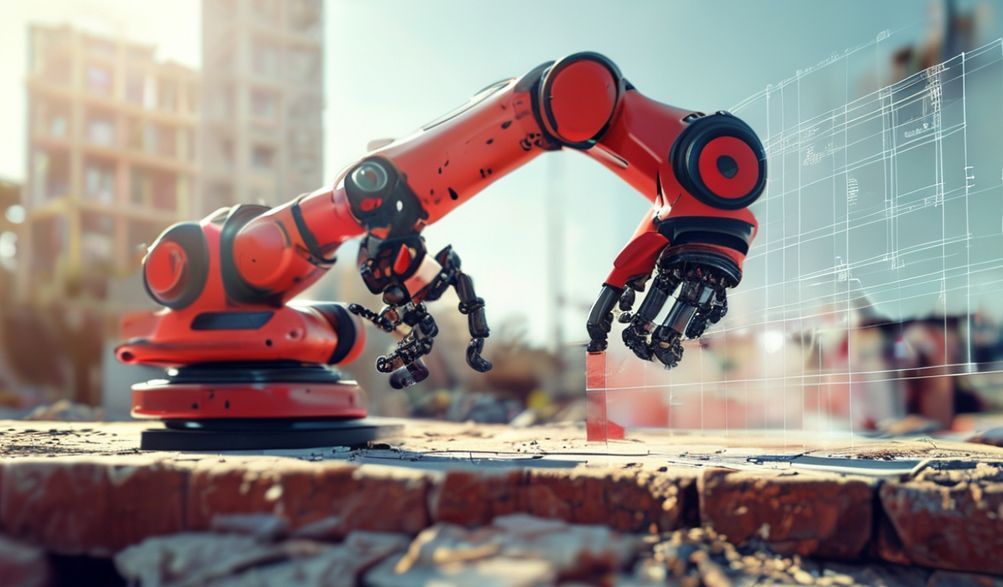
Robot Brick Laying Machines: Revolutionizing Construction with Speed & Precision
The rhythmic tap-tap-tap of a trowel setting brick into a fresh mortar bed is one of the oldest sounds in human civilization. For millennia, masonry has been a craft defined by skilled hands, a keen eye, and physical endurance. But on the cutting edge of today’s construction sites, a new, quieter hum is joining the chorus—the precise whir of robotic arms and automated guidance systems.
Robot brick laying machines have decisively moved from conceptual prototypes and science fiction into practical, operational reality. They are actively addressing some of the construction industry’s most pressing challenges: a chronic shortage of skilled labor, relentless pressure to accelerate project timelines, and the constant pursuit of consistent, high-quality results.
This post is your comprehensive guide to this transformative technology. We will move beyond the hype to provide a grounded, authoritative exploration of how these machines work, their measurable benefits, the honest limitations they still face, and what their growing adoption truly means for the future of building. We’ll ground every claim in real-world applications, technical specifics, and expert analysis, offering a trustworthy look at the automated mason.
How Do Robot Brick Laying Machines Actually Work?
At first glance, a robotic bricklayer might seem like a fantastically complex piece of equipment. In essence, however, it is a highly sophisticated integration of established technologies from manufacturing and robotics, purpose-built for the dynamic environment of a construction site. Understanding its core components demystifies the process.
Core Technologies and Components
The efficiency of a robotic bricklayer stems from the seamless interaction of several key systems:
- Robotic Arm Systems: This is the “mason’s arm.” Typically a multi-axis industrial robotic arm, it provides the dexterity and reach to place bricks. Key specifications include its payload capacity (can it handle heavy concrete blocks?), reach (how wide of a wall can it build from a fixed position?), and degrees of freedom (how flexibly can it maneuver the brick into complex orientations?).
- Mortar and Brick Handling Systems: This is the “mason’s tender.” An integrated system manages the continuous supply of materials. It involves:
- Brick Feeding: Pallets of bricks are loaded into a magazine or conveyor system that orients and presents them to the robotic gripper.
- Mortar/Adhesive Application: A specialized dispensing head applies a precise, consistent bead of mortar or construction adhesive to each brick—a process often called “buttering.”
- Machine Vision & Sensors: This is the “mason’s eye and level.” An array of sensors, including high-resolution cameras, LiDAR, and laser scanners, creates a real-time digital map of the worksite. This system verifies the position of every placed brick, checks for level and plumb alignment, and makes micro-corrections to the robotic arm’s path, ensuring millimeter-perfect accuracy.
- Digital Blueprint Integration: This is the “mason’s plan.” The robot doesn’t work from paper drawings. It is guided directly by Building Information Modeling (BIM)yokiCAD files. This digital twin of the structure tells the robot exactly where to place each brick in 3D space, tying physical construction directly to the digital design.
The Automated Laying Process: Step-by-Step
The construction cycle of these machines is a continuous, automated loop:
- Site Setup & Calibration: The robot is positioned on a stable, level platform (often a track system for mobility). The digital building plan is loaded into its control system, and sensors scan the site to calibrate its position relative to the foundation.
- Material uzatish: Bricks and mortar/adhesive are loaded into the machine’s supply systems, designed for minimal manual replenishment.
- Pick, Butter, and Place: The core cycle begins. The robotic gripper selects a brick, rotates it to the correct orientation, the mortar head applies an exact amount of adhesive, and the arm places the brick in its predetermined location with consistent pressure. This cycle repeats relentlessly.
- Continuous Verification: After placement, the vision system scans the brick to confirm its position. Any deviation from the digital model is calculated, and the system automatically adjusts the placement of the next brick to correct the course, ensuring cumulative errors are eliminated.
Key Benefits of Adopting Robotic Bricklaying
The adoption of this technology isn’t about novelty; it’s driven by compelling, quantifiable advantages that address core business and industry challenges.
Benzeri Olmayan Samaradorlik va Mahsuldorlik
The most immediate impact is on the speed of construction.
* Speed Comparison: While a highly proficient human mason might lay 300-500 bricks in a day, a robotic bricklayer can consistently lay 800 to 1,200+ bricks per hour. This isn’t about working faster than a human for a short burst; it’s about maintaining that optimal speed without breaks, fatigue, or environmental slowdowns for 8, 10, or even 24 hours with proper planning.
* Reduced Project Timelines: This exponential increase in daily output can compress project schedules by weeks or even months. For large-scale projects like housing developments, schools, or commercial warehouses, this means earlier occupancy and faster return on investment.
* Case Study Highlight: In one documented project, a robotic bricklayer constructed the exterior shell of a home in just three days—a task that would traditionally take a crew of masons several weeks. This direct translation of speed to cost and time savings is the primary driver for adoption.
Enhanced Precision, Consistency, and Safety
Beyond speed, robots bring a new standard of quality and site safety.
* Reduced Material Waste: Precise, computer-controlled mortar application eliminates the over-application common in manual work. Studies suggest this can reduce mortar waste by up to 30%, leading to direct material cost savings and less site waste.
* Perfectly Level Courses: Every brick is placed according to the exacting digital model. This results in walls with superior structural integrity, perfect alignment, and a flawless aesthetic finish that simplifies subsequent trades like rendering or cladding.
* Safer Job Sites: Automation removes human workers from the most physically taxing and injury-prone aspects of masonry: repetitive heavy lifting, constant bending, and exposure to vibration and dust. This mitigates risks of chronic musculoskeletal injuries and creates a safer overall work environment.
Addressing the Skilled Labor Shortage
This may be the most significant long-term benefit. The construction industry globally faces a severe and growing shortage of skilled tradespeople.
* Data on the Labor Gap: According to the U.S. Bureau of Labor Statistics and similar bodies worldwide, the gap between labor demand and supply continues to widen, with hundreds of thousands of open positions in trades like masonry.
* Upskilling the Workforce: Robotic bricklayers do not simply “replace jobs.” They transform them. Their operation creates new, higher-tech roles such as robot operators, field technicians, and digital integration specialists. This shift can make the construction trade more attractive to a new generation, moving the workforce from pure manual labor to tech-augmented skilled supervision.
Current Limitations and Practical Considerations
A balanced view is crucial. While the benefits are substantial, robotic bricklaying is not a universal solution for every project or company today. Understanding the barriers is key to strategic adoption.
Financial and Logistical Barriers to Entry
The path to automation requires significant upfront investment and planning.
* High Initial Investment: A single robotic bricklaying unit can represent a six or seven-figure capital expenditure. For small to mid-sized contractors, this can be prohibitive without clear, high-volume project pipelines to justify the ROI. The calculation hinges on long-term labor savings and increased project throughput.
* Site Suitability: These machines excel on large, open, repetitive projects. Confined urban sites, projects with complex footprints, or locations with difficult access can pose major logistical challenges for setup and operation.
* Training and Maintenance: The workforce needs training not in masonry, but in mechatronics, basic programming, and system troubleshooting. Reliable technical support and maintenance infrastructure are critical, as downtime on such a central piece of equipment is costly.
Technological and Design Constraints
The technology, while advanced, still has boundaries defined by its programming and physical components.
* Material Limitations: Most systems are optimized for standard, modular bricks or blocks. Highly irregular, handmade, or specialty stones may not be compatible with the automated gripping and buttering systems.
* Handling Complex Geometries: While improving, robots still struggle with highly complex architectural features—tight curves, intricate decorative patterns, corbelling, and non-standard bond patterns often require human craftsmanship.
* Integration with Other Trades: A robot can build a wall perfectly, but it cannot integrate conduit boxes or plumbing sleeves on the fly. Careful BIM coordination is essential to pre-plan these elements, and seamless scheduling with human crews for these follow-on trades is a new logistical challenge.
The Future Landscape: What’s Next for Robotic Masonry?
The current state of robotic bricklaying is just the foundation. The technology is on a rapid development trajectory, fueled by advances in adjacent fields.
Emerging Innovations and AI Integration
The next generation of machines will be smarter, more adaptable, and more integrated.
* On-Site 3D Printing Convergence: We will see hybrid systems where robotic arms switch tools—laying bricks for structural walls and then using an extruder head for 3D printing of complex architectural features or foundations from concrete, all guided by the same digital model.
* Advanced AI & Machine Learning: Future systems will move beyond simple pre-programmed paths. Using AI and real-time sensor data, they will be able to adapt to minor material variations, identify and avoid obstacles, and even optimize their own laying patterns for maximum efficiency on the fly.
* Swarm Robotics: Instead of one large machine, future sites may deploy multiple smaller, collaborative robots. These “swarms” could work in tandem on different sections of a large structure, dramatically increasing scale and flexibility.
The Evolving Role of the Human Mason
The narrative of “robots vs. humans” is misleading. The future is collaboration.
* From Laborer to Supervisor & Technician: The human mason’s role will evolve into a site supervisor, robot overseer, and quality assurance expert. Their deep knowledge of the craft will be used to program machines, troubleshoot complex issues, and manage the overall construction process.
* Focus on Complex Tasks: Humans will be freed from repetitive, physically demanding tasks to focus on areas where their expertise is irreplaceable: intricate detailing, custom architectural features, restoration work, and the nuanced problem-solving required for unexpected site conditions. This elevates the trade, emphasizing skill, creativity, and management.
Tez-tez so'raladigan savollar (FAQ)
Q: Can a robot bricklayer build an entire house?
A: While they can construct the primary load-bearing masonry shell at incredible speed, a complete house requires many other trades. Finishing work like roofing, window/door installation, electrical, plumbing, drywall, and interior carpentry still largely depend on human (or other specialized robotic) labor. The bricklaying robot is a transformative component of the build, not a total replacement for the construction process.
Q: Are robot bricklayers putting masons out of work?
A: The primary goal is augmentation, not replacement. They are a powerful tool to address the critical skilled labor shortage and increase industry capacity. Their use shifts the workforce demand towards more technical, supervisory, and skilled finishing roles. This evolution can help make the masonry trade more sustainable, safer, and more attractive to new entrants.
Q: How accurate are these machines compared to a master mason?
A: They offer superior mutanosiblik and precision in repetitive, planned tasks, placing each brick with sub-millimeter accuracy relative to a digital model. However, a master mason’s decades of experience provide unmatched expertise in handling complex layouts, artistic detailing, and, most importantly, adapting to unforeseen site conditions that fall outside a pre-set digital plan. The robot executes perfection from a plan; the master mason understands the soul of the craft.
Q: What is the typical ROI (Return on Investment) for a construction company?
A: ROI is highly variable and depends on scale, project type, and utilization. For large-scale volume homebuilders, specialized masonry contractors, or firms working on repetitive projects like warehouses or institutional buildings, the ROI can be compelling. Savings from reduced labor costs, less material waste, faster completion (leading to earlier sale or rental), and competitive bidding advantages can allow the machine to pay for itself within a handful of major projects. For smaller or more custom-focused firms, the financial case is harder to make currently.
Xulosa
Robot brick laying machines represent far more than a new piece of equipment; they symbolize a pivotal shift in construction philosophy, moving the industry firmly from an analog craft into the digital age. They are not a magic bullet that solves all challenges, but they are an undeniably powerful tool that delivers concrete benefits in speed, precision, safety, and labor sustainability.
While significant upfront costs and current technological limitations mean adoption will be strategic and gradual, the trajectory is clear. The future construction site will be a collaborative ecosystem. In this space, robotic muscle and digital precision will handle the repetitive, heavy, and defined tasks, while human skill, creativity, experience, and problem-solving are elevated to oversee, manage, and execute the more complex and nuanced work.
For construction firms and professionals looking to build faster, better, and smarter for the decades to come, understanding, planning for, and strategically integrating this technology is no longer a speculative option—it is becoming a fundamental part of building a resilient and competitive future.
<