
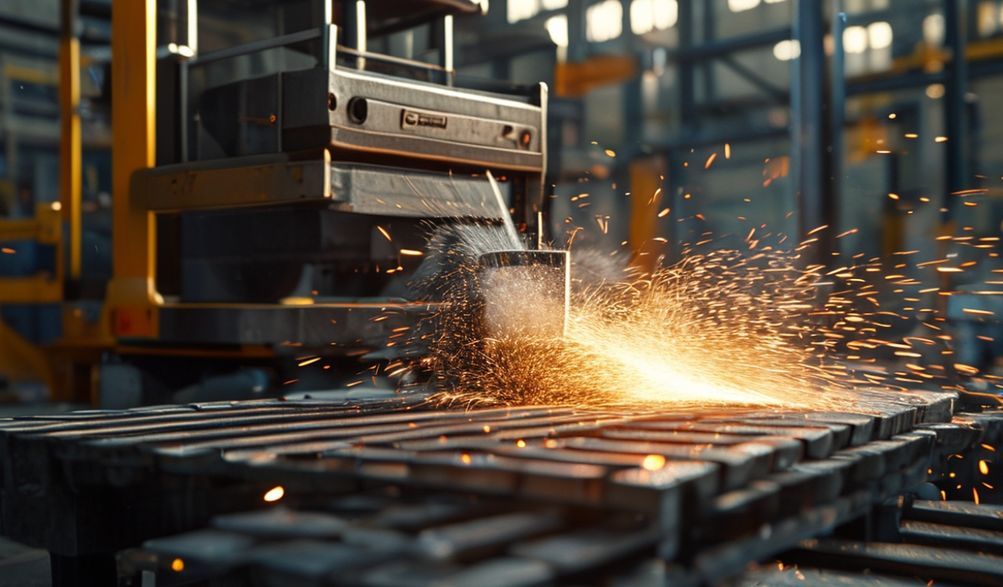
2026 йил учун цементли ғишт блок ишлаб чиқариш машиналарининг тўлиқ қўлланмаси
Kirish
Global qurilish sanoati har yili 10 million tonnaga yaqin asfalt qatlam yotqizadi.Har yili 1,5 trillion g'isht va blokShunga qaramay, ko'plab quruvchilar va pudratchilar hali ham mehnat kuchi yetishmasligi, materiallar sifati nomutanosibligi va foyda marjasining pasayishi bilan kurashmoqda. Agar siz ishonchsiz blok ta'minoti tufayli loyihalarning kechikishi yoki qo'l mehnati xarajatlari tufayli byudjetingizning kamayishi bilan duch kelgan bo'lsangiz, asosiy muammoni tushunasiz. Yechim tobora ko'proq qattiqroq emas, balki texnologiya yordamida aqlliroq ishlashdir.
Ushbu zamonaviy qurilish inqilobining yadrosidasement g'isht blok qilish mashinasiBu nafaqat oddiy bir uskuna, balki sement, qum va to'ldiruvchi aralashmasidan aniq va yuqori mustahkamlikdagi qurilish birliklarini avtomatik tarzda yaratadigan transformatsion ishlab chiqarish tizimidir. Chegaraviy devor qurayotgan uy egasidan tortib, butun shaharni ta'minlaydigan yirik quruvchigacha, bu mashinalar samaradorlik, sifat va masshtabni yangi darajaga ko'tarmoqda.
Ushbu qo'llanma sizga ishonchli, tajribaga asoslangan manba bo'lib xizmat qiladi. U yillar davomidagi soha kuzatuvlari, to'g'ridan-to'g'ri ishlab chiqaruvchi spetsifikatsiyalari va muvaffaqiyatli blok hovlasi egalarining amaliy tajribalaridan tuzilgan bo'lib, maqsad reklama shovqinidan xoli bo'lishdir. Biz sizga ishonchli va asosli qaror qabul qilish uchun zarur bo'lgan asosiy bilim va amaliy tafsilotlarni taqdim etamiz.
Ushbu qo‘llanma oxiriga kelib, siz quyidagilarni aniq tushunib yetasiz:
* Turli xilmashina turlariva qaysi biri sizning o'lchamingizga mos keladi.
* Thecritical technical features that separate a reliable workhorse from a problematic investment.
* Thestep-by-step operational process, including the often-overlooked secrets to perfect block strength.
* A realistic cost and ROI analysis to frame your investment.
* Key questions to ask suppliers to ensure you get the right machine and the necessary support.
Let’s build that knowledge from the ground up.
Sement G'isht Bloklari Tayyorlash Mashinalarini Tushunish
Before investing, it’s crucial to understand what these machines do and the fundamental advantages they offer. This foundational knowledge is key to evaluating your options.
Sementli g'isht bloklari tayyorlash mashinasi nima?
A cement brick block making machine is a mechanical or hydraulic system designed to compress a semi-dry mixture of cement, sand, aggregates (like crushed stone), and water into dense, uniformly shaped bricks or concrete masonry units (CMUs). The core principle involves filling a mold with the raw material mix and then applying immense pressure, often combined with high-frequency vibration, to compact the mix, remove air voids, and form a solid block that holds its shape when ejected.
- Evolutsiya: The journey began with simple manual lever presses, evolved to egg-laying type mobile machines, and has now reached sophisticated, computer-controlled stationary plants that integrate mixing, conveying, pressing, curing, and stacking with minimal human intervention.
Key Benefits of Using a Block Making Machine
Investing in this technology is a strategic move, not just a purchase. Here’s why:
- Nomutanosib Doimiylik va Sifat: Machines produce blocks with identical dimensions and density. This uniformity translates to easier, faster laying for masons, less mortar usage, and structurally sound buildings. You achieve consistent compressive strength (measured in MPa), often exceeding local building code standards.
- Proven Cost-Efficiency: While there’s an upfront capital cost, the long-term savings are substantial. You drastically reduce dependence on manual labor and minimize material wastage through precise batching and compaction.
- Dramatic Speed & Productivity: A single semi-automatic machine can produce more blocks in an hour than a team of skilled laborers can make in a day. Automatic plants can run 24/7, turning raw materials into palletized blocks with breathtaking speed.
- Ajoyib ko'p qirralilik: With interchangeable molds, one machine can produce a product line to meet various market demands: solid blocks for foundations, hollow blocks for walls, paving slabs for landscaping, and even specialized interlocking blocks for dry-stack construction.
- Inherent Sustainability: Modern machines excel at using industrial by-products like fly ash (from coal plants) or slag (from steel production) as partial cement replacements. This reduces the carbon footprint of each block, lowers material costs, and contributes to a circular economy.
Types of Cement Brick Block Making Machines
Your choice of machine type is the most critical decision, as it dictates your capital outlay, operational model, and growth potential. Based on real-world applications, here are the three primary categories.
Qo'lda va Yarim Avtomat Mashinalar
These are the entry point into mechanized block production, perfect for testing the market or serving localized, small-scale needs.
- Mukammal mos keladi: Entrepreneurs, small construction firms, community projects, and low-volume production (e.g., 500-1500 blocks per day).
- Operatsiya: Manual machines use a lever system to apply pressure. Semi-automatic models add an electric motor to power the vibration and compaction, while an operator manually feeds the mix and removes the finished block.
- Afzalliklari:
- Juda kam boshlang'ich investitsiya.
- Ishlatish va texnik xizmat ko'rsatish oson.
- Highly portable, requiring minimal space and no complex foundation.
- Kamchiliklari:
- Labor-intensive, requiring 2-3 dedicated operators.
- Lower output compared to automated systems.
- Product consistency is more dependent on operator skill.
To'liq Avtomatik Statsionar Mashinalar
This is the heart of a serious block manufacturing business. These are complete production systems, often housed in a dedicated shed or factory.
- Mukammal mos keladi: Medium to large-scale block yards, established construction companies supplying third parties, and industrial production.
- Operatsiya: Material is automatically batched, mixed, and conveyed to the machine. A robotic feeder fills the molds, which are then compacted under high pressure and vibration. The machine automatically ejects the green blocks onto pallets, which are then transported (often via forklift or stacker) to the curing area. Many feature Programmable Logic Controller (PLC) systems for precision control.
- Afzalliklari:
- Very high output (4,000 to 20,000+ blocks per 8-hour shift).
- Minimal manual labor (primarily for supervision and maintenance).
- Exceptional product consistency and quality.
- Can be integrated with automated pallet handling and stacking systems.
- Kamchiliklari:
- Yuqori kapital investitsiyasi.
- Requires significant space, a strong concrete foundation, and stable three-phase power.
- Requires more technical knowledge for operation and troubleshooting.
Мобил блок қилиш машиналари
Also known as “egg-laying” machines, these offer a unique advantage: production at the point of consumption.
- Mukammal mos keladi: Large infrastructure projects (dams, roads, large housing estates), remote locations, or businesses that want to eliminate block transportation costs.
- Operatsiya: The machine is mounted on a wheeled chassis or trailer. It produces blocks directly on a level concrete slab or on the ground at the construction site, “laying” them as it moves forward incrementally.
- Afzalliklari:
- Eliminates the cost and breakage associated with transporting finished blocks over long distances.
- Reduces the need for a centralized production yard.
- Faster project startup, as blocks are made on-demand on-site.
- Kamchiliklari:
- Output is generally lower than large stationary plants.
- On-site production requires managing raw material delivery and storage at the project site.
- Curing and protection of blocks on the open ground must be carefully managed.
Critical Features to Consider Before You Buy
Once you’ve identified the machine type, drilling down into these specific features will help you compare models and avoid costly oversights.
Ishlab Chiqarish Quvvati (Soatiga Bloklar)
Don’t just look at the manufacturer’s peak theoretical output. Consider the sustained, practical output over an 8-hour shift, accounting for mold changes, maintenance, and operator breaks. A common mistake is buying an oversized machine that runs at 20% capacity—tying up capital unnecessarily. Conversely, an undersized machine becomes a bottleneck. Forecast your demand realistically and choose a machine that can grow with you.
Block Type and Mold Versatility
The mold is the tool that defines your product. Key considerations:
* Interchangeability: How quickly and easily can molds be changed? A system that allows changeovers in under 10 minutes maximizes flexibility.
* Standard Availability: Ensure the supplier offers a wide range of standard mold designs (e.g., 4″, 6″, 8″ hollow blocks, solid blocks, pavers).
* Custom Mold Potential: Can they engineer custom molds for unique block designs your market might demand? This is a sign of a capable manufacturer.
Power Source and Consumption
This directly impacts your operating costs and site requirements.
* Elektr The most common for stationary plants. Requires reliable three-phase power. Check the total connected load (in kW) to estimate electricity costs.
* Diesel/Hydraulic: Common for mobile machines or sites with unreliable grid power. Offers high torque but has higher fuel costs and requires more maintenance.
* Hybrid Systems: Some machines offer dual-power options for flexibility.
Automation Level and Control System
The control system is the machine’s brain.
* Basic Relay Panels: Found on semi-automatic machines. Simple but less precise.
* PLC with Touchscreen HMI: The industry standard for automatic machines. Allows for storing recipes for different block types, monitoring production counts, diagnosing faults, and ensuring repeatable precision. It’s a worthwhile investment for consistency and ease of use.
Build Quality and Durability
Inspect the core components that endure constant stress:
* Kadr: Should be heavy-duty, welded steel construction, not bolted light-gauge metal.
* Titrama Tizimi: Look for high-frequency, eccentric shaft vibrators mounted on a robust vibration table. This is critical for dense, strong blocks.
* Hydraulic System & Cylinders: For hydraulic machines, check the quality of the pump, valves, and seals. Piston rods should be hard-chromed for wear resistance.
* Surface Treatment: A high-quality epoxy or powder coating is essential to resist rust, especially in humid environments.
The Operational Process: From Raw Material to Finished Block
Owning the machine is only half the battle. Consistent, profitable production depends on mastering the process.
Optimal Raw Material Mix Design
The “recipe” is fundamental. A typical mix for a standard hollow block might be:
* 1 part Portland cement
* 6 parts fine aggregate (sharp, well-graded sand)
* 4 parts coarse aggregate (3/8″ crushed stone)
* Just enough water to achieve a “semi-dry” consistency—the mix should hold its shape when squeezed in your hand but crumble when dropped.
Muhim Eslatma: The quality of your sand (clean, free of clay or silt) is as important as the cement quality. Always conduct trial batches to calibrate for your local materials.
Step-by-Step Production Cycle
- Aralash: Use a pan mixer or planetary mixer to achieve a homogeneous, consistent blend of all raw materials.
- Oziqlantirish: The mix is conveyed or fed into the machine’s hopper.
- Siqish va Vibratsiya: The mix is fed into the mold cavity. Simultaneously, the mold is subjected to intense vibration (to settle the mix and remove air) and hydraulic pressure (up to hundreds of tons) to compact it.
- Qolipga quyish va chiqarish: The compacted “green” block is raised within the mold and then ejected onto a wooden or steel pallet.
- Davolash: This is the most critical and often mishandled stage. Blocks must be kept moist and at a stable temperature for at least 7 days to develop initial handling strength. Proper curing (via water sprinkling, steam, or covered storage) is what allows the cement to fully hydrate and achieve its designed 28-day compressive strength.
- Stacking/Palletizing: After initial curing, blocks are stacked for final air curing and storage before sale or transport.
Essential Safety and Maintenance Protocols
Safety First:
* Never bypass machine guards or safety interlocks.
* Ensure all operators wear PPE: safety glasses, hearing protection, gloves, and steel-toe boots.
* Lock-out/Tag-out procedures must be followed during any maintenance.
Maintenance Checklist:
* Daily: Clean the machine thoroughly, check hydraulic oil levels and for leaks, inspect mold and pallets for wear or damage.
* Weekly: Grease all bearings and pivot points, check belt tensions, inspect electrical connections.
* Monthly: Change hydraulic oil and filters as per manufacturer schedule, check vibration motor mounts and bolts for tightness.
Making the Right Investment: Cost Analysis and ROI
Treat this purchase as a business investment, not just an equipment expense. A clear financial picture is essential.
Breakdown of Investment Costs
| Cost Component | Manual/Semi-Auto | Fully Automatic Plant |
| :— | :— | :— |
| Machine Price | $1,500 – $15,000 | $50,000 – $250,000+ |
| Molds (Set of 3-4) | $500 – $2,000 | $3,000 – $10,000 |
| Pallets (200-500 pcs) | $1,000 – $3,000 | $5,000 – $15,000 |
| Mixer & Conveyor | $1,000 – $5,000 | Included/Additional $10k-$30k |
| Land & Shed | Minimal (can be open) | Significant ($20k-$100k+) |
| Installation & Training | Minimal | $5,000 – $20,000 |
Calculating Your Potential Return on Investment (ROI)
A simplified framework:
1. Calculate Cost Per Block: Add up all fixed (machine depreciation, rent, utilities) and variable (cement, sand, labor, power) costs for a month. Divide by your monthly production volume.
* Example Variable Cost: Cement + Sand + Power + Labor = $0.25 per block.
2. Determine Selling Price: Research the local market price for similar quality blocks (e.g., $0.50 per block).
3. Calculate Gross Profit Per Block: Selling Price – Cost Per Block = $0.25.
4. Estimate Payback Period: (Total Investment Cost) / (Gross Profit Per Block * Monthly Production) = Months to break even.
Key Profitability Factors: Local demand consistency, your operational efficiency (minimizing downtime), and controlling raw material procurement costs.
Tips for Selecting a Reputable Manufacturer/Supplier
- Research History: Look for companies with at least 10-15 years of proven track record. Check for online reviews and industry forum mentions.
- Prioritize After-Sales Service: The machine will need parts and service. Does the supplier have a local service network or trained technicians? What is the warranty period and what does it cover?
- Demand References: A confident supplier will provide contact details for existing customers in a similar climate or market. Call them. Ask about machine reliability, part availability, and support responsiveness.
- Visit a Working Installation: If feasible, visit a factory or block yard using the machine you’re considering. See it run, talk to the operators, and observe the block quality firsthand.
Tez-tez so'raladigan savollar (FAQ)
Q1: What is the average cost of a cement brick making machine?
A: Prices vary enormously. A basic manual machine can start around $1,500, while a high-capacity, fully automatic production line can exceed $250,000. Your budget should be guided by your required output and automation level.
Q2: Can I use fly ash or other waste materials in the mix?
A: Absolutely. Using fly ash (Class F or C) as a 15-25% replacement for Portland cement is common and encouraged. It can reduce costs, improve workability, and enhance long-term strength. Always test your specific mix design to ensure it meets strength requirements.
Q3: How much space is required to set up a small block-making operation?
A: For a semi-automatic setup, plan for at least 5,000 to 10,000 square feet. This should accommodate raw material storage (protected from rain), the production area, a curing zone (where blocks stay for 7-14 days), and storage for finished inventory.
Q4: What is the typical curing time for cement blocks before they can be used?
A: While blocks gain handling strength after 24-48 hours, they should be kept moist for at least 7 days for proper curing. The full specified compressive strength (e.g., 15 MPa, 20 MPa) is achieved at 28 days under standard curing conditions. Blocks can often be sold or used in construction after 14 days if early strength is adequate.
Q5: Is specialized training required to operate these machines?
A: For manual/semi-automatic machines, basic on-site training from the supplier (often 1-2 days) is usually sufficient. For complex fully automatic PLC-controlled plants, formal training (1-2 weeks) at the factory or by a visiting engineer is highly recommended and often included. This is critical for safety, efficiency, and basic troubleshooting.
Xulosa
Choosing the right cement brick block making machine is a pivotal decision that hinges on aligning technology with your specific goals. We’ve navigated the landscape from manual starters to automatic powerhouses, highlighted the non-negotiable features like build quality and mold versatility, demystified the production and curing process, and provided a framework for analyzing costs and ROI.
The final, most authoritative piece of advice is this: The “best” machine is not the cheapest or the most expensive—it is the one that precisely matches your production volume, product mix, budget, and local support infrastructure. Never let price alone dictate your choice; a slightly more expensive machine from a reputable supplier with strong local service will save you money and headaches for years to come.
Use this guide as your checklist. When you speak with suppliers, ask the detailed questions outlined here. Request live or recorded demonstrations of the exact model you’re considering. Most importantly, take the time to contact their existing customers. There is no due diligence more valuable than an unbiased review from a current owner.
Investing in a block making machine is more than purchasing equipment; it’s investing in control, quality, and growth for your construction business or project. With the knowledge you now possess, you are equipped to make that investment a cornerstone of your success in the evolving construction industry of 2026 and beyond.
<