
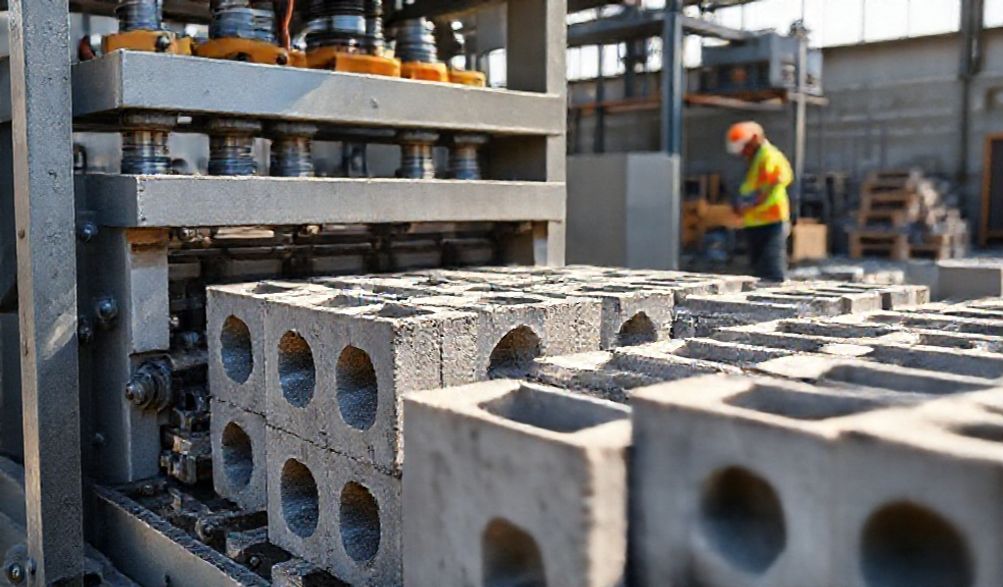
Блок кирпич машиналарининг ҳақиқий қўлланмаси: Тўпламлар, нархлар ва қандай танлаш керак
Kirish
The global construction industry is in a perpetual race against time and budget. From affordable housing projects to sprawling commercial developments, the demand for durable, cost-effective building materials is insatiable. At the heart of meeting this demand is a transformative piece of equipment: the blok g'isht mashinasi. For builders, contractors, and ambitious entrepreneurs, these machines are no longer a luxury but a cornerstone of efficient, scalable, and profitable construction.
This comprehensive guide is designed to be your definitive resource. Our purpose is to cut through the marketing noise and provide an unbiased, technically-grounded overview of block-making machinery. The insights here are synthesized from years of industry observation, analysis of manufacturer specifications, and the practical, hard-won experiences of operators and business owners. We aim to build trust by giving you the clear, detailed information needed to make a confident investment decision.
By the end of this guide, you will have a firm understanding of the different types of block bricks machines, a realistic picture of price ranges and investment, and a clear framework for choosing the right machine for your specific needs and operational best practices to ensure long-term success.
What is a Block Bricks Machine? Core Function and Benefits
At its core, a block bricks machine automates the process of forming raw materials into precise, high-strength construction blocks. It replaces inconsistent, labor-intensive manual molding with speed, accuracy, and repeatability.
Mashinani Aniqlash: Xom Ashyadan Tayyor Blokgacha
Jarayon, avtomatlashtirish darajasiga qarab farq qilsa ham, izchil ketma-ketlikni amalga oshiradi:
- Aralash: Raw materials—typically a blend of cement, sand, aggregates (like gravel or crushed stone), and often industrial by-products like fly ash—are combined with water in precise ratios.
- Qoliplash: This mixed material is fed into a mold cavity on the machine. The mold defines the block’s shape (e.g., hollow, solid, paving, interlocking).
- Siqish: The machine applies immense pressure and high-frequency vibration. This force compacts the material, removes air pockets, and ensures uniform density, which is critical for the block’s final strength.
- Demolding & Curing: The freshly formed (or “green”) block is ejected from the mold. It then undergoes a controlled curing process, usually involving moisture retention, to reach its full structural strength over days.
Key Advantages of Using a Block Making Machine
- Xarajat samaradorligi: Drastically reduces per-unit cost compared to purchasing ready-made bricks or relying solely on manual labor, especially for large projects.
- Consistent Quality & Accuracy: Produces blocks with uniform dimensions, density, and strength (often meeting standards like ASTM C90), leading to better construction quality with less mortar use.
- High Production Speed: Machines can produce hundreds or even thousands of blocks per day, accelerating project timelines.
- Dizaynning ko‘p qirraliligi: By simply changing the mold, a single machine can produce various block types (foundation blocks, hollow blocks for walls, paving slabs, and decorative landscaping blocks).
- Tadbirkorlik imkoniyati: Enables the establishment of a brick manufacturing business, supplying a local market with a constant, in-demand product.
Types of Block Bricks Machines: A Detailed Breakdown
Choosing the right type of machine is your first and most critical decision. The spectrum ranges from purely human-powered to fully robotic systems.
Qo'lda Blok Yasalish Mashinalari
- Operatsiya: Entirely dependent on operator labor. Material is manually loaded into a mold, and a lever is used to apply pressure before demolding.
- Chiqish: Low, typically 300-500 blocks per 8-hour shift, depending on crew size and stamina.
- Mukammal mos keladi: Very small-scale projects, DIY builders, or entrepreneurs testing the market with minimal capital.
- Afzalliklari:
- Eng pastki narx.
- Tushunish va ta'mirlash uchun oddiy.
- No power requirements.
- Kamchiliklari:
- Extremely labor-intensive and slow.
- Inconsistent output quality based on operator fatigue.
- Not viable for commercial production.
Yarim Avtomatik Blok Yasalish Mashinalari
- Operatsiya: Strikes a balance between manual input and mechanical assistance. Operators typically feed material, but the critical processes of vibration, compaction, and sometimes demolding are powered (electrically or hydraulically).
- Chiqish: Medium, ranging from 1,000 to 5,000 blocks per day.
- Mukammal mos keladi: Small to medium-sized construction companies, growing block-making businesses, and municipal projects.
- Afzalliklari:
- Significant productivity boost over manual machines.
- Much better quality consistency.
- More affordable than fully automatic systems.
- Kamchiliklari:
- Still requires a steady labor crew.
- Output is limited by human feeding speed.
To'liq avtomatik blok yasash mashinalari
- Operatsiya: These are integrated production plants. They feature automated batching and mixing systems, conveyor-fed molding, high-pressure compaction, robotic block handling, and programmed curing systems. Often controlled by PLC (Programmable Logic Controller) panels.
- Chiqish: High-volume, from 8,000 to over 30,000 blocks per day.
- Mukammal mos keladi: Large-scale block manufacturing plants, major infrastructure projects, and high-growth businesses targeting regional supply.
- Afzalliklari:
- Maximum output with minimal labor (often just 2-3 supervisors).
- Exceptional product consistency and quality control.
- Highest long-term efficiency and profitability at scale.
- Kamchiliklari:
- Very high initial capital investment.
- Requires technical knowledge for operation and maintenance.
- Needs significant space and stable, high-capacity power supply.
Мобил ва стационар блок машиналари
- Мобил блок машиналари: Mounted on a trailer for easy transport. Perfect for producing blocks directly at a construction site, eliminating transport costs for the finished blocks. Ideal for contractors moving between job sites.
- Стационар блок станоклари: Set up in a fixed location (a factory or yard). Designed for maximum output and stability. They often form the core of a full production line with pallet handling and stackers. Best for dedicated block-making businesses.
Critical Factors for Choosing the Right Block Machine
Selecting a machine isn’t just about budget; it’s about aligning technology with your specific operational reality.
Assessing Your Production Needs and Scale
O'zingizdan so'rang:
* What is my target daily or monthly block output?
* Is this for a single project or continuous business?
* What types and sizes of blocks do I need to produce?
* What is the available space and power infrastructure at my site?
Understanding Machine Specifications
Look beyond the brochure. Key metrics include:
* Sikl vaqti: How many seconds for one complete molding cycle?
* Blocks Per Cycle: How many blocks does the mold produce each cycle? (e.g., 3-block mold, 6-block mold).
* Mold Compatibility: Does the supplier offer a range of standard and custom molds?
* Power & Build Quality: Are the vibration motors powerful enough for dense blocks? Is the frame and mold constructed from high-grade, wear-resistant steel?
Xom ashyo muvofiqligi
Not all machines handle all mixes equally. Ensure your chosen machine is proven to work with the materials most affordable and available in your region—whether it’s standard concrete, fly ash-based mixes, or soil-cement.
Budget Analysis: Initial Cost vs. Total Cost of Ownership
The purchase price is just the beginning. A savvy buyer considers:
* Boshlang'ich xarajat: Machine price, shipping, and installation.
* Operatsion xarajatlar: Power consumption, labor, raw materials.
* Texnik xizmat ko'rsatish xarajatlari: Spare parts (like mold liners), routine service, potential downtime.
* ROI: Calculate based on your local block selling price versus production cost. A slightly more expensive, robust machine with lower failure rates often delivers a better ROI than a cheap, problematic one.
Block Bricks Machine Price Range and Investment Guide
Prices vary dramatically based on type, capacity, brand, and origin. The following are approximate global price ranges—always get local quotes.
Price Spectrum by Machine Type
- Qo'lda blok yasash mashinalari: $1,000 – $5,000. The basic entry point.
- Yarim Avtomatik Blok Yasalish Mashinalari: $5,000 – $25,000. This is the most varied category, with price scaling directly with output capacity and features.
- Тўлиқ автоматлашган блок ишлаб чиқариш станоклари: $25,000 – $150,000+. Large stationary plants with complete automation can reach $250,000 or more.
Muhim Eslatma: These are ballpark figures. A machine’s price is heavily influenced by its build quality, component brands (e.g., German or Japanese hydraulics vs. generic), and the supplier’s after-sales service package.
Factors That Influence the Final Price
- Brand & Support: Established brands with proven reliability and a strong service network command a premium.
- Avtomatlashtirish Darajasi: Each step of automation (auto-feeding, auto-pallet handling, robotic stacking) adds cost.
- Ancillary Costs: Never forget to factor in shipping, import duties (if applicable), installation, and operator training fees.
Financing and Business Viability
For entrepreneurs, explore:
* Equipment financing loans from banks or specialized lenders.
* Supplier-backed leasing programs.
* Government grants or subsidies for small manufacturing businesses (location-dependent).
Your business plan must clearly link the machine’s output capacity to demonstrable market demand in your area to ensure viability.
Operational Best Practices and Maintenance
A machine is a long-term asset. Proper care determines its lifespan and your profitability.
Essential Safety Protocols for Operators
- Always wear personal protective equipment (PPE): safety glasses, gloves, and steel-toe boots.
- Never bypass machine guards or safety interlocks.
- Ensure the machine is completely powered down and locked out (Lockout/Tagout) before performing any maintenance or clearing jams.
Daily and Periodic Maintenance Checklist
- Daily: Clean the mold, hopper, and mixing area thoroughly. Check and tighten all bolts and nuts. Lubricate all moving parts as per the manual.
- Weekly/Monthly: Inspect the vibration motors and mounts. Check hydraulic hoses for leaks and wear. Inspect electrical connections.
- Annually: Consider a full professional service check.
Troubleshooting Common Issues
- Blocks Breaking Easily: Often caused by incorrect water-cement ratio (too much water), insufficient vibration/compaction, or improper curing.
- Poor Surface Finish: Usually indicates a worn-out mold liner, inadequate lubrication of the mold, or a sub-optimal mix design.
- Low Block Density: Results from under-compaction, weak vibration motors, or an incorrect aggregate size gradation.
Ensuring Optimal Block Curing for Maximum Strength
Curing is not “drying.” Blocks need to retain moisture for a chemical reaction (hydration) to occur.
* Steam Curing: Used in high-output plants, it accelerates strength gain in chambers within 24 hours.
* Water Spray & Covering: For most small operations, regularly spraying blocks and covering them with plastic sheeting for 7-14 days is effective.
* Avoid: Exposing green blocks to direct sun and wind, which causes rapid moisture loss and cracking.
Frequently Asked Questions (FAQ) About Block Bricks Machines
Q1: What is the production capacity of a standard block bricks machine?
There is no “standard.” Capacity ranges from ~400 blocks/day for manual machines to over 30,000 blocks/day for large fully automatic plants. Semi-automatic models, the most common choice for businesses, typically produce between 2,000 to 8,000 blocks per 8-hour shift.
Q2: Can one machine produce different sizes and types of blocks?
Yes, absolutely. This is a key advantage. By changing the mold (an additional purchase), a single machine can produce hollow blocks, solid blocks, paving stones, and interlocking blocks in various dimensions.
Q3: How much profit can I make from a block-making business?
Profitability is highly local. It depends on your cost of raw materials, utilities, labor, and the selling price of blocks in your market. A well-run small semi-automatic plant can see healthy margins, but a detailed local market and cost analysis is essential before starting.
Q4: What is the lifespan of a well-maintained block making machine?
With proper maintenance and timely replacement of wear parts (like mold liners), a quality machine can last 10 to 20 years or more. The core frame and structure often outlast many other components.
Q5: What are some established brands in the block machine industry?
While we avoid outright promotion, the industry recognizes manufacturers like Zenith (Germany), Hess Group (Germany), Columbia Machine (USA), and Aimix Group (China) for different market segments. Research brands with a strong presence and service history in your region.
Q6: Is technical training required to operate a semi- or fully-automatic machine?
Yes. While semi-automatic machines are simpler, training on mix design, machine operation, and basic troubleshooting is crucial. For fully automatic PLC-controlled plants, comprehensive training from the supplier is non-negotiable for safe and efficient operation.
Xulosa
To'g'ri tanlashblok g'isht mashinasi is a strategic decision that hinges on honestly assessing your production needs, understanding the total investment beyond the sticker price, and prioritizing build quality and supplier support over the cheapest option.
Our final recommendation is to be a diligent buyer. Conduct thorough research, request videos of machines in operation, and, if possible, visit a working plant. Always ask for customer references from your supplier and speak directly to existing owners about their experiences. Before finalizing any purchase, have a clear plan for your production space, raw material supply, and block curing process.
The block-making industry continues to evolve with trends like the production of eco-friendly blocks using recycled materials and the integration of smarter, more energy-efficient machine controls. By making an informed choice today, you position yourself not just to meet current demand but to adapt and grow in the future of construction.
<