
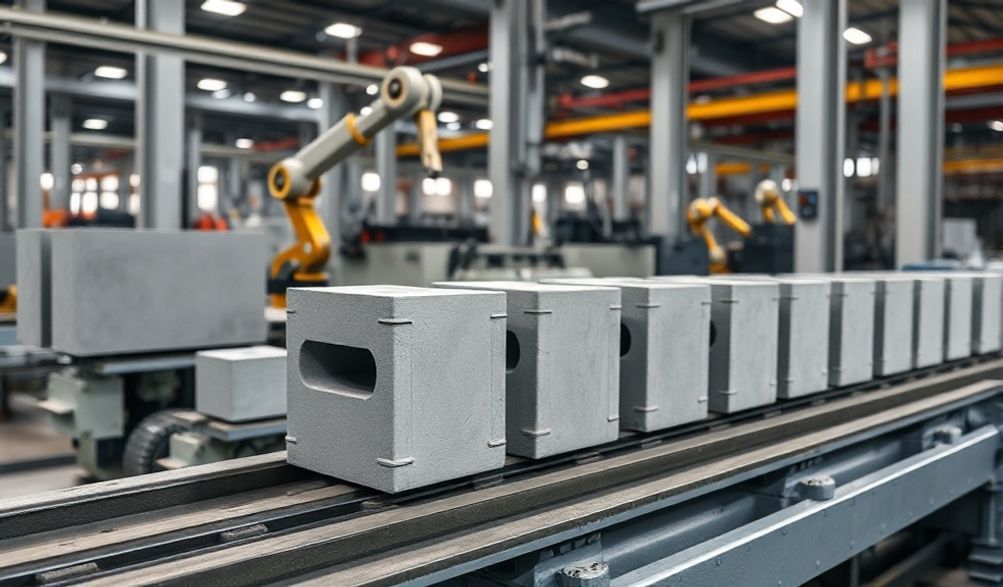
The Ultimate Guide to Block Moulding Machine China Manufacturers in 2024
Kirish
The global construction boom shows no signs of slowing, fueling an insatiable demand for high-quality, affordable building materials. At the heart of producing these materials—from standard concrete blocks to intricate paving stones—lies the block moulding machine. For entrepreneurs and established companies alike, sourcing the right machine is a pivotal, capital-intensive decision that can define business profitability for years to come.
The core challenge is clear: navigating a vast, complex international marketplace to find machinery that is reliable, efficient, and offers genuine value. For countless businesses worldwide, the solution has been to look east. China has firmly established itself as the world’s foremost manufacturing hub for block making equipment, offering an unparalleled spectrum from simple manual presses to sophisticated, fully automatic production lines.
This guide serves as your definitive, expert resource. Our purpose is to cut through the noise and provide an unbiased, trustworthy framework based on deep industry knowledge. We will equip you with the critical insights needed to evaluate block moulding machine China manufacturers, balancing crucial factors like quality, innovation, price, and long-term partnership potential. Let’s begin your informed sourcing journey.
Why Source Block Moulding Machines from China?
Choosing a sourcing region is a strategic business decision. China’s dominance in this sector isn’t accidental; it’s built on foundational advantages that translate into tangible benefits for buyers globally.
Scale and Manufacturing Prowess
China’s industrial ecosystem is second to none. It’s not just about having factories; it’s about integrated industrial clusters. Cities have become specialized hubs for construction machinery, concentrating raw material suppliers, component manufacturers, skilled labor, and technical expertise in one geographic area.
This clustering creates a powerful synergy:
* Zanjir Samaradorligi Samaradorligi: Manufacturers have immediate access to high-quality components (hydraulic systems, PLCs, steel), reducing lead times and costs.
* Doimiy Yangilanish: Intense competition within these hubs drives rapid technological improvement and adaptation to global market needs.
* Proven Infrastructure: Decades of focus on heavy machinery have resulted in sophisticated production facilities and deep institutional knowledge.
Competitive Pricing and Value
The most common attraction is cost, but it’s vital to understand Nima uchun competitive pricing is possible. It’s primarily due to massive economies of scale and a streamlined domestic supply chain, not a compromise on materials.
- Iqtisodiy Miqyos: High production volumes allow manufacturers to spread fixed costs (R&D, tooling) over more units.
- Integratsiyalangan Ta'minot Zanjirlari: Sourcing components locally without multiple international markups keeps input costs lower.
- Qiymat Taklifi: The real advantage is getting more machine for your investment—advanced features, higher automation, or greater capacity at a price point often inaccessible from other regions.
Diverse Product Range
Whether you’re a startup in a developing market or a large corporation expanding an industrial plant, Chinese manufacturers cater to every tier. This diversity is a key strength.
- Entry-Level: Robust manual and semi-automatic machines perfect for small-scale production or specialized products.
- Mid-Range: Affordable automatic machines offering a great balance of output and automation.
- High-End: Fully automatic, computer-controlled production lines with robotic pallet handling, rivaling the best European technology in capability.
- Specialization: Machines dedicated to producing hollow blocks, interlocking bricks, pavers, curbstones, and even porous ecological bricks.
Key Factors When Evaluating Chinese Manufacturers
With thousands of suppliers online, distinguishing a genuine manufacturer from a middleman and a quality producer from a cut-rate assembler is critical. Your evaluation must be thorough.
Assessing Manufacturing Expertise and Experience
Look beyond the website. Dig into the company’s foundational credentials.
- Company History & Tenure: A manufacturer with 15-20 years of history has likely navigated multiple market cycles, improved its designs, and built a reputation. Newer companies can be innovative but may lack proven staying power.
- In-House R&D vs. Trading Companies: A true manufacturer will proudly showcase its engineering team, R&D department, and patent certificates. Be wary of companies that cannot provide detailed technical drawings or videos of their production floor.
- Technical Communication: The quality of their response to your technical inquiry is a telling sign. Expert manufacturers ask detailed questions about your raw materials, desired output, and local conditions to recommend a suitable solution.
Verifying Quality and Compliance
Certificates are the first checkpoint, not the last. They indicate a framework for quality management.
- Xalqaro sertifikatlar: CE (mandatory for the European market) and ISO 9001 are baseline indicators of a commitment to standardized quality processes. Don’t hesitate to ask for the certificate numbers to verify their authenticity.
- Core Component Standards: The machine is only as good as its parts. Inquire specifically about the brands and specifications of key components:
- Hydraulic pumps and valves (e.g., Rexroth, Yuken, Huade).
- PLC and control systems (e.g., Siemens, Mitsubishi, Delta).
- Electrical components (e.g., Schneider, Siemens).
- Steel grade for the frame and moulds.
- Material Certificates & Audit Reports: Request Mill Test Certificates for steel. The most trustworthy suppliers will agree to a third-party pre-shipment inspection or even a virtual factory audit.
Analyzing Production Capacity and Supply Chain
Understanding their operational capability ensures they can deliver your machine on time and support future needs.
- Real Production Capability: A “factory” that is merely an assembly shop is a red flag. Ask about their workshop area, number of employees, and annual production capacity. Can they show you a live video of their assembly line?
- Component Sourcing Stability: How do they manage supply chain disruptions? Established manufacturers have long-term contracts with component suppliers, ensuring consistency.
- Lead Times & Scalability: A realistic lead time (e.g., 30-45 days for a standard model) is more credible than an improbably short one. Consider if they can handle repeat or larger orders as your business grows.
A Deep Dive into Machine Types and Capabilities
Understanding the technology landscape is essential to match the right machine to your business plan.
Manual and Semi-Automatic Block Moulding Machines
These are the workhorses for specific, often lower-volume applications.
- Ideal foydalanish holatlari: Startups with limited capital, small-scale community projects, production of large or specialized blocks (e.g., grass pavers), and markets with very low labor costs.
- Afzalliklari: Lowest capital investment, simple operation and maintenance, high flexibility for changing block designs.
- Kamchiliklari: High labor dependency, lower output, inconsistent product quality if not operated carefully, physically demanding work.
- Asosiy E'tibor: Look for manufacturers known for robust casting and durable moulds. Brands like HongfaваQuangong have strong reputations in this segment.
To'liq avtomatik blok yasash mashinalari
This is where Chinese engineering shines, offering incredible automation at accessible price points.
- Automation Explained: These lines integrate a mixer, conveyor, block machine, pallet feeder, and stacker, all synchronized by a central PLC. The operator’s role shifts from laborer to supervisor.
- Output Capacities: Ranges from lower-end automatics producing ~2,000 blocks per 8-hour shift to high-end lines producing 10,000+ pavers per hour. Your raw material (concrete mix design) is a critical factor in achieving rated output.
- Leading Manufacturers: Companies like Unik Machinery, Wangda MachineryваLontto are recognized for their advanced, reliable automatic lines. They compete directly with European brands on technology.
Specialized Machines for Diverse Products
The right machine is designed for your specific product.
- Pustokor blok mashinalari: Feature a core mould system to create the voids, essential for structural blocks that are lighter and have better insulation.
- Paver & Interlocking Brick Machines: Use high-frequency, multi-layer vibration to produce dense, strong, and aesthetically precise surface finishes.
- Curbstone & Kerb Machines: Often larger machines with specific mould configurations to produce long, heavy products for road edging and landscaping.
The Procurement Process: From Inquiry to Delivery
A structured procurement process minimizes risk and sets the stage for a successful partnership.
Effective Communication and Quotation Analysis
Clarity from the outset prevents costly misunderstandings.
- The Perfect Inquiry: Provide: desired block type/size, target daily output, available raw materials (cement type, aggregate size), local power supply, and your port of destination.
- Decoding the Quotation: A professional quote should be itemized and include:
- Machine Specifications: Detailed tech sheet.
- Price Terms: Clearly stated FOB (you handle shipping/insurance from their port) or CIF (they handle to your port).
- Scope of Supply: What’s included (e.g., spare tool kit, standard moulds)?
- Payment Terms: Standard is 30% deposit, 70% before shipment.
- Delivery Time.
- Yashirin Xarajatlar: Clarify: export packaging costs, documentation fees, and whether the price includes commissioning or training.
The Critical Role of Factory Inspection & Sample Testing
This is your most powerful due diligence tool.
- Virtual Inspection: A live video tour via WhatsApp or Zoom is now standard. Ask to see the machine shop, painting area, and assembly of a machine similar to yours.
- On-Site Visit (If Possible): Nothing beats being there. Observe factory organization, worker skill, and quality control checkpoints. Test the control system of a completed machine.
- Sample Testing: The gold standard. If you cannot visit, ask if you can send your raw materials for them to produce sample blocks and send them to you. This tests both the machine’s capability and the final product quality.
Negotiation, Payment, and Logistics
Finalize the deal with secure, professional practices.
- Payment Terms: T/T (Bank Transfer) is most common. Letter of Credit (L/C) is safer but more complex and costly. Avoid Western Union or direct payments to personal accounts.
- Contract Terms: Ensure the contract mirrors the final quotation, including warranty period (typically 12 months), liability clauses, and dispute resolution mechanisms.
- Logistics: For FOB, you will need a freight forwarder. They will handle booking, customs clearance at your end, and inland transportation. Ensure the manufacturer uses professional, seaworthy wooden crate packaging to prevent damage.
Building a Trustworthy Partnership for the Long Term
Ishlab chiqaruvchi bilan munosabatingiz boshlanadikeyin the machine is paid for and shipped. Prioritize partners who invest in this phase.
After-Sales Service and Technical Support
This is the ultimate test of a manufacturer’s trustworthiness.
- Pre-Departure Support: They should provide foundation drawings, electrical layouts, and a detailed packing list well before shipment.
- Commissioning & Training: Do they offer optional on-site engineer dispatch? At a minimum, they must provide comprehensive manuals, video guides, and 24/7 remote support via video call.
- Kafolat va Ehtiyot qismlar: A clear warranty policy is essential. More importantly, how is their spare parts supply? Do they keep a stock of wear parts (mould liners, seals, vibration motors)? What is the typical delivery time for a critical spare part?
Avoiding Common Pitfalls and Red Flags
Forewarned is forearmed. Be cautious of suppliers who:
- Exhibit Pressure Tactics: Urging immediate payment with “limited-time discounts.”
- Provide Vague Answers: Unable or unwilling to give specific technical details or share client references.
- Lack Verifiable Credentials: No physical address, no certifications, or only stock photos on their website.
- Offer Unrealistically Low Prices: If a quote is 40% below market average, quality has been compromised somewhere.
- Request Unsecure Payments: Always use official company bank accounts for transactions.
Tez-tez so'raladigan savollar (FAQ)
Are block moulding machines from China reliable?
Answer: Yes, many are highly reliable and form the backbone of successful block yards worldwide. Reliability is not a trait of a country, but of a specific manufacturer. Diligent supplier selection—focusing on proven companies with quality certifications, robust engineering, and transparent after-sales support—is the key to securing a reliable machine. Avoid the trap of choosing based on price alone.
What is the typical price range for a machine from China?
Answer: The range is vast, reflecting the variety of machines. A small manual block moulding machine can start from $3,000 – $7,000. A semi-automatic model may range from $10,000 – $25,000. A standard fully automatic block making machine typically falls between $45,000 and $100,000. Large, customized, high-capacity production lines can exceed $200,000. Always request a detailed, itemized quotation.
How do I handle machine installation and maintenance?
Answer: Reputable manufacturers provide extensive support. You will receive detailed installation manuals, electrical diagrams, and often video tutorials. Most offer real-time remote guidance via video call during commissioning. For a fee, you can often arrange for an engineer to visit your site for installation and training. Before purchasing, confirm their process for supplying spare parts and their remote troubleshooting capabilities.
Can I customize a machine for my specific block design?
Answer: Absolutely. Most established manufacturers thrive on customization. You can typically customize:
* Qoliplar: For any block shape, size, or surface texture (splitface, rockface, etc.).
* Machine Configuration: Modifications to vibration systems, hydraulic pressure, or pallet size to optimize for your specific raw materials (e.g., fly ash, slag).
* Color & Branding: Painting to your color scheme. Discuss customization needs in your initial inquiry for an accurate quote.
What are the main advantages of a fully automatic block making machine?
Answer: The advantages are transformative for scaling a business:
1. High Output & Profitability: Dramatically increases production capacity and revenue potential.
2. Izchil Sifat: PLC-controlled processes ensure every block has identical dimensions, density, and strength.
3. Reduced Labor Costs & Dependency: One operator can manage a line that replaces 10-15 manual workers, mitigating labor shortages.
4. Materiallar samaradorligi: Precise batching and vibration reduce waste and improve block strength.
5. Improved Working Environment: Automates the most physically demanding tasks.
Xulosa
Sourcing a block moulding machine from China presents a compelling opportunity: access to world-class manufacturing scale, cutting-edge technology, and competitive value that can accelerate your business growth. However, this landscape requires a navigator, not just a passenger.
As this guide has detailed, your success hinges on a disciplined, informed approach. The sheer volume of choice makes due diligence your most valuable tool. Shift your focus from simply finding the lowest price to identifying a manufacturer that demonstrates verifiable mutaxassislik, uncompromising sifat controls, and a genuine commitment to after-sales trustworthiness.
By using the framework provided—evaluating manufacturing depth, verifying compliance, understanding machine capabilities, and managing the procurement process meticulously—you are equipped to find more than a vendor. You can identify a long-term partner invested in your productivity. Let this guide be your checklist as you move forward with confidence to build the foundation of your success, one block at a time.
<