
Sement blok yasash mashinalari bo'yicha Yakuniy Qo'llanma: Turlari, Narxlari va Qanday Tanlash Kerak
Kirish
Global qurilish sanoati ajoyib darajada o'sishi kutilmoqda,2030 йилга кадар 15.2 триллион доллар, shaharlarning doimiy rivojlanishi va infratuzilma qurilishi bilan yanada kuchaymoqda. Ushbu o'sishning markazida asosiy qurilish materiali: oddiy beton blok yotadi. Biroq, o'nlab yillar davomida bu muhim tarkibiy qismlarni ishlab chiqarishda izchillikning yo'qligi, og'ir mehnat va o'lchamdagi qattiq cheklovlar kabi muammolar mavjud edi. Pudratchilar, quruvchilar va tadbirkorlar uchun muammo aniq edi: o'sib borayotgan talabni qanday qilib bir xil sifat va foydali samaradorlik bilan qondirish mumkin?
Zamonaviy sement blok yasash mashinasi bilan tanishing — bu texnologik sakrash, blok ishlab chiqarishni hunarmandchilik san’atidan aniq va o‘lchovli muhandislik jarayoniga aylantirdi. Xoh u orqa hovlida ombor qurishni xohlovchi DIY ishqibozi bo‘ling, xoh mahalliy uy-joy loyihasiga material yetkazib beruvchi kichik pudratchi yoki keng miqyosli shartnomalarga intilayotgan sanoat o‘yinchisi bo‘ling, mashina variantlarining ko‘pligi sizni chalg‘itishi mumkin. Turlari, narxlari va texnik xususiyatlari haqidagi chalkashlik qimmatbaho noto‘g‘ri investitsiyalarga olib kelishi mumkin.
Ushbu qamrovli qo‘llanma sizning aniq yo‘l xaritaniz bo‘lishi uchun mo‘ljallangan. Sanoat ma’lumotlari, to‘g‘ridan-to‘g‘ri ishlab chiqaruvchi spetsifikatsiyalari va amaliy tajribalardan tuzilgan bo‘lib, bizning maqsadimiz sizga ishonchli va asosli qaror qabul qilish uchun zarur bilimlar bilan qurollantirishdir. Biz texnologiyani soddalashtiramiz, xarajatlarni tahlil qilamiz va muvaffaqiyatingiz asosini yaratish uchun eng mos mashinani tanlashda aniq tizimni taqdim etamiz.
Sement blok yasash mashinasi nima? Asosiy vazifasi va afzalliklari
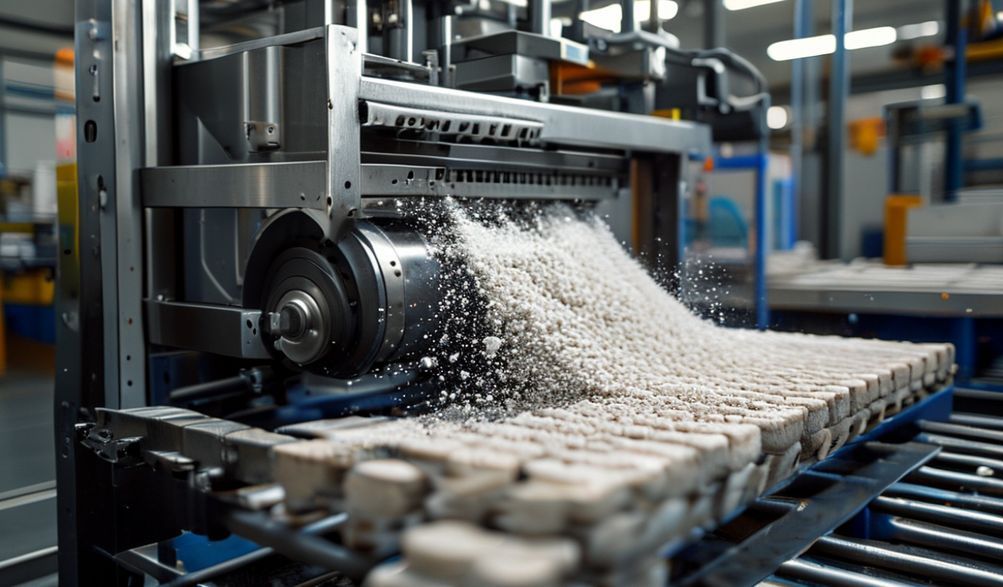
Sement blok yasash mashinasi, sement, agregatlar (masalan, qum va shag‘al) va suv aralashmasini muayyan shakl va o‘lchamdagi qoliplarga siqib, beton bloklar ishlab chiqarish uchun mo‘ljallangan mexanik qurilma hisoblanadi. U blok ishlab chiqarishning eng muhim bosqichlarini avtomatlashtiradi va standartlashtiradi, har bir birlikning aniq o‘lcham va mustahkamlik mezonlariga javob berishini ta'minlaydi.
Asosiy Ishlash Prinsipini
Asosiy jarayon, avtomatlashtirish darajasiga qarab farqlansa ham, izchil ketma-ketlikni amalga oshiradi:
- Aralash: Raw materials are combined in the correct proportions, typically using a pan or planetary mixer, to create a homogeneous, semi-dry concrete mix.
- Oziqlantirish: This mix is fed into the machine’s hopper, either manually or via an automated conveyor system.
- Siqish/Titratish: The mix is distributed into molds. High-frequency vibration (often combined with hydraulic pressure) is applied to remove air pockets and densely compact the material. This step is crucial for the block’s final strength and finish.
- Qolipga quyish va chiqarish: The compacted mix takes the shape of the mold cavity (for hollow blocks, a core enters the mold). The mold is then lifted or stripped away, leaving the “green” block on a pallet or the production floor.
- Davolash: The freshly formed blocks are moved to a curing area. Proper curing—maintaining moisture and temperature for a set period—allows the cement to hydrate fully, achieving its designed compressive strength, often measured in MPa (Megapascals) per standards like ASTM C90.
Key Advantages Over Manual Methods
- Uniform Quality & Strength: Machines deliver consistent dimensions (e.g., 400mm x 200mm x 100mm) and uniform density. This ensures every block meets structural standards, leading to safer, more predictable construction and easier compliance with building codes.
- Yuqori Ishlab Chiqarish Mahsuldorligi: Output skyrockets compared to manual labor. A basic manual machine can produce 300-500 blocks per day, while a semi-automatic model can yield 2,000-5,000, and a fully automatic plant can exceed 20,000 blocks in an 8-hour shift.
- Muhim Mehnat va Xarajatlar Tejashlari: Automation drastically reduces the workforce needed per block. What requires 10 laborers manually might only need 2-3 with a semi-automatic machine, slashing long-term payroll and overhead costs.
- Materiallar samaradorligi: Precise mix control and vibration minimize waste of valuable cement and aggregates. The consistent compaction also means you can potentially achieve target strengths with optimized, leaner mix designs.
- Versatility in Design: With interchangeable molds, a single machine can produce a wide product range: hollow blocks for walls, solid blocks for foundations, paving slabs, interlocking blocks for retaining walls, and even decorative landscaping units.
Types of Cement Block Maker Machines: Find Your Perfect Match
Choosing the right type of machine is the most critical step. Your selection should be dictated by your production volume, budget, and labor availability.
Manual / Hand-Operated Block Making Machines
- Tavsif va Ishlash: These are mechanical, lever-operated presses with no electrical components. An operator manually fills the mold, engages a lever to apply compaction force, and then releases the block onto the ground.
- Mukammal mos keladi: Extremely small-scale projects (e.g., a personal home build), micro-entrepreneurs in remote off-grid locations, NGOs in development work, or as an introductory tool for understanding the block-making process.
- Afzalliklar va kamchiliklar:
- Afzalliklari: Very low initial investment, zero operating power cost, highly portable, simple maintenance.
- Kamchiliklari: Very low output, physically demanding labor, inconsistent quality if operation is not meticulous, limited to simpler block designs.
Yarim Avtomatik Blok Yasalish Mashinalari
- Tavsif va Ishlash: These electrically or diesel-powered machines use a vibrating table to compact the concrete. Operators manually feed material into the hopper and often remove finished blocks, but the core compaction and molding process is powered. Many feature a hydraulic system for mold vibration and block ejection.
- Mukammal mos keladi: Small to medium-scale block manufacturing yards, contractors undertaking housing projects, and businesses looking to graduate from manual production. They represent the “sweet spot” for many growing enterprises.
- Afzalliklar va kamchiliklar:
- Afzalliklari: Excellent balance between cost, output, and quality. Significantly less physical strain than manual machines. Good versatility with available molds. Reasonable energy consumption.
- Kamchiliklari: Still requires a consistent labor crew for feeding and block handling. Output is limited by human speed.
To'liq avtomatik blok yasash mashinalari
- Tavsif va Ishlash: These are complete production lines. Controlled by Programmable Logic Controllers (PLC), they integrate automatic material batching, mixing, conveying, block molding, curing, and pallet handling. Robots or stackers organize the finished blocks.
- Mukammal mos keladi: Large-scale industrial plants, block suppliers for major city developments, government infrastructure projects, and businesses focused on high-volume export or wholesale supply.
- Afzalliklar va kamchiliklar:
- Afzalliklari: Maximum production output and consistency with minimal human intervention. Highest quality control. Can include advanced features like accelerated curing chambers. Lowest labor cost per block over time.
- Kamchiliklari: Very high capital investment. Requires significant space and stable, high-capacity power supply. Needs skilled technicians for operation and maintenance.
Mobile vs. Stationary Block Plants
A secondary consideration is mobility. Stationary plants are set up in a fixed factory and are typical for semi- and fully-automatic systems. Mobile block makers are smaller, trailer-mounted units (often manual or semi-automatic) that can be towed directly to a construction site. This eliminates block transportation costs for large, remote projects like dams or rural housing clusters.
Critical Factors to Consider Before Buying
Moving beyond machine type, a deep dive into your specific needs and the machine’s specs will prevent regret.
Ishlab chiqarish ehtiyojlaringizni baholash
Start with a clear business plan:
* Daily Output: Calculate your current and near-future demand. Do you need 1,000 or 10,000 blocks per day? Always factor in a 20-30% capacity buffer for growth.
* Product Mix: What blocks sell in your market? Standard 4″, 6″, 8″ hollow blocks? Solid blocks? Paving stones? List all required products and ensure the machine can accommodate the necessary molds.
* Project Scale & Growth: Are you fulfilling a single contract or establishing an ongoing supply business? Your machine should be an asset for 5-10 years—plan for tomorrow’s needs today.
Machine Specifications & Features
Scrutinize the technical details:
* Block Capacity: Defined by mold size and the number of cavities (e.g., “6-inch hollow block, 4 cavities per cycle”). More cavities mean higher output per cycle.
* Quvvat Manbai: Electric motors are cleaner and cheaper to run in urban areas. Diesel engines offer independence from the grid, crucial for remote sites.
* Titrama Tizimi: The heart of the machine. Look for powerful, name-brand vibrator motors. Key metrics are frequency (Hz) and amplitude; together, they determine compaction efficiency. A well-compacted block is a strong block.
* Avtomatlashtirish Darajasi: Be honest about your labor situation and technical expertise. More automation means higher cost but lower operational complexity.
* Qurilish Sifati: Inspect the steel frame thickness, welding quality, and brand of critical components (hydraulic pumps, electrical panels). A robust machine from quality steel (e.g., ST-52) will withstand years of vibration and stress.
Cost Analysis: Beyond the Sticker Price
The purchase price is just the entry ticket. True cost includes:
* Boshlang'ich xarajat: Machine price, shipping, import duties (if applicable), and installation.
* Operatsion xarajatlar: Electricity/fuel consumption, labor wages, routine maintenance supplies (grease, hydraulic oil), and mold wear-and-tear.
* Return on Investment (ROI): A simple framework: (Total Project Revenue from Blocks - Total Operational Cost) / Initial Investment = Payback Period. For example, a small contractor might find a $15,000 semi-automatic machine pays for itself in under a year by securing a steady local housing project contract.
Supplier & After-Sales Service Evaluation
Your relationship with the supplier is paramount.
* Reputation & History: Prefer manufacturers with a decade or more of proven track record. Seek out client testimonials and, if possible, visit existing installations.
* Support Services: Does the supplier offer installation supervision, operator training, and readily available technical support via phone or video?
* Warranty & Spares: A comprehensive warranty (1+ years on core components) is a sign of confidence. Crucially, ensure there is a reliable supply chain for spare parts like vibrator motors, hydraulic seals, and control panels.
Operating and Maintaining Your Machine for Longevity
A machine is only as good as its operation and upkeep.
Best Practices for Optimal Operation
- Raw Material Prep: Use clean, well-graded aggregates. Sand should be coarse, with minimal silt or clay. Aggregate size must be appropriate for the block type (typically under 10mm). Control moisture content meticulously; a semi-dry mix is essential for clean demolding.
- Mix Design: A common starting ratio is 1 part cement : 3 parts sand : 5 parts aggregate (by volume), but this must be optimized for your local materials and target strength (e.g., 7-10 MPa for non-load-bearing, 15+ MPa for load-bearing). Consider consulting a concrete technologist.
- Operational Procedure: Follow the manufacturer’s manual strictly: pre-lubricate molds, ensure the mix is evenly fed into the hopper, and allow the vibration cycle to complete fully for proper compaction.
Essential Maintenance Checklist
Preventive maintenance is non-negotiable for uptime and safety.
* Daily: Thoroughly clean all molds and the machine frame after production. Check and tighten any loose bolts or nuts. Listen for unusual noises from vibrators or motors.
* Weekly: Lubricate all moving parts, guide rods, and bearings as specified. Check hydraulic oil levels and look for leaks.
* Monthly/Yearly: Conduct a comprehensive inspection. Replace worn mold liners. Check electrical connections for tightness. For hydraulic systems, change filters and oil as recommended. Have a certified electrician inspect the control panel annually.
Tez-tez so'raladigan savollar (FAQ)
Q1: What is the average price range for a cement block maker machine?
A: Prices vary dramatically. A basic manual machine can start from $1,000, a quality semi-automatic machine ranges from $8,000 to $30,000, and a fully automatic production line can begin at $50,000 and exceed $250,000. The variance is due to automation level, production capacity, build quality, and brand.
Q2: Can I use a block making machine for other products like paving slabs or curbstones?
A: Absolutely. Most machines are designed for versatility. The key is purchasing the correct interchangeable molds. Always confirm the machine’s maximum mold size and pressure/vibration capability with the manufacturer to ensure it can handle denser products like curbstones.
Q3: What is the typical curing time for blocks from these machines?
A: After molding, blocks should cure undisturbed for at least 24 hours before being moved or stacked. They then require moist curing (by spraying water or covering with plastic sheeting) for about 7 days to develop early strength. However, concrete reaches its full design strength (e.g., 28-day strength) over a period of 28 days under proper conditions. Automated plants may use steam curing chambers to achieve handling strength in just hours.
Q4: How much space is required to set up a small block manufacturing unit?
A: For a semi-automatic operation, you should plan for a minimum of 5,000 to 10,000 square feet. This space accommodates the machine, raw material storage (protected from rain), a mixing area, a curing yard, and storage for finished blocks. Fully automatic plants require significantly more space for the production line and logistics.
Q5: Are there any safety precautions I must follow?
A: Yes. Always prioritize safety: 1) Ensure all operators are thoroughly trained, 2) Mandate Personal Protective Equipment (PPE) like safety glasses, gloves, and steel-toe boots, 3) Implement Lockout-Tagout (LOTO) procedures during any maintenance or mold changes, 4) Keep guards on all moving parts, and 5) Ensure the machine is properly grounded to prevent electrical hazards.
Xulosa
Selecting the right cement block maker machine is a strategic decision that hinges on three pillars: a clear understanding of your own production needs, a technical evaluation of machine types and specifications, and a diligent assessment of total cost and supplier credibility. There is no universal “best” machine—only the machine that is perfectly aligned with your specific goals, budget, and local market context.
Begin with a rigorous self-assessment of your output targets and product mix. Use this guide as a checklist when comparing models and suppliers. Remember, the cheapest option can become the most expensive through downtime and poor quality. Prioritize robust construction, reliable after-sales service, and a supplier willing to demonstrate their machine’s capabilities.
As you move forward, request live demonstrations, ask for references from existing clients, and obtain detailed quotations that clearly outline warranty and support terms. The future of construction is efficient, standardized, and sustainable. By investing in the right block making technology today, you’re not just buying a machine; you’re building the foundation for a more productive and profitable tomorrow.
<