
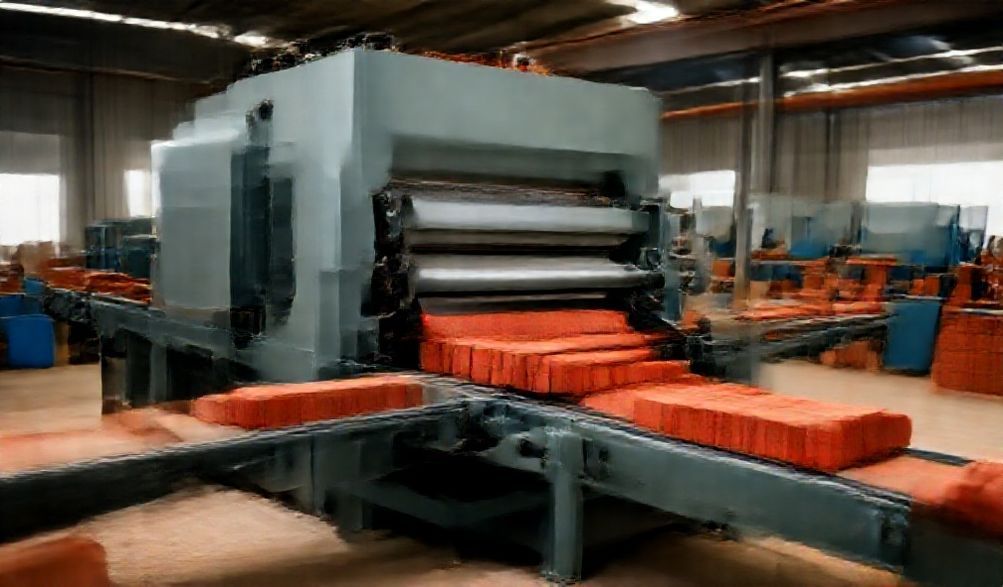
Пенджабда (2026) Лой Кирпич Ишлаб Чиқариш Машинасини Танлаш Бўйича Ёрдамчи Қўлланма
Kirish
Панжобнинг осмонсиёҳи ўсишга гувоҳдир. Лудҳиёна ва Амритсардаги гўдакли турғун жой лойиҳаларидан то шаҳарларини туташтираётган кенг инфратузилма ривожланишларигача, штатнинг қурилиш соҳаси жуда тез ривожланмоқда. Бу ўсиш қурилишнинг энг қадимги ва ишончли материалларидан бири бўлган гишт тайёрлаш учун асосий талабни яратади. Панжобнинг саноат кластерлари бўйлаб гишт печлари эгалари ва кискариб келган ишлаб чиқарувчилар учун бу жуда катта имкониятдир. Бирок, ундан фойдаланиш анаъанавий, меҳнаттабобат усуллардан ташқарига чиқиб, самарадорлик, барқарорлик ва миқёсни қабул қилишни талаб қилади. Мана шу жойда замонавий гишт ишлаб чиқариш учун стратегик сармоя қўйилгандир.Пенжабда лойдан керамика плиткалар ишлаб чиқариш машинасиoʻyin qoidalarini oʻzgartiradigan narsaga aylanadi.
To'liq avtomat zavodlardan yarim avtomat ishchilargacha bo'lgan ko'plab variantlar orasida yo'l topish qiyin bo'lishi mumkin. Jalandhar yoki Patiyalada o'zingizning ishlab chiqarish maqsadlaringizga qanday mos mashinani tanlaysiz? Yashirin xarajatlar nimalardir va mahalliyda ishonchli keyingi xizmatni qanday ta'minlaysiz? Ushbu qo'llanma aynan shu muhim savollarga javob berish uchun yaratilgan. Mashina texnik xususiyatlarini tahlil qilish va Panjobning o'ziga xos ishlab chiqarish va bozor sharoitlarini chuqur o'rganish asosida, bizning maqsadimiz siz uchun ishonchli manba bo'lishdir. Biz bu jarayonni soddalashtiramiz, sizga Panjobning kelajagini qurishga hissa qo'shuvchi ongli va foydali investitsiya qilishda yordam beramiz.
Пенжабда лойли керамик плитка ишлаб чиқаришни тушуниш
Mashinalarni tanlashdan oldin, siz ishlayotgan ekotizimni tushunish muhimdir. Panjobning g'isht sanoati bir xil emas; bu mahalliy talab bilan rag'batlantirilgan va mintaqaviy xususiyatlar bilan shakllangan dinamik sohadir.
Панжаб ҳамёқ саноати: Бозорнинг умумий кўриниши ва имкониятлари
Drayverlar aniq va kuchli. Davlatning doimiy shahar kengayishi, hukumat tomonidan amalga oshiriladigan arzon uy-joy dasturlari (masalan, PMAY) va yo‘l va sanoat infratuzilmasiga katta sarmoyalar sifatli g‘ishtlarga doimiy talabni keltirib chiqarmoqda. Bu faqat hajm haqida emas; zamonaviy qurilish loyihalari bir xil o‘lcham, mustahkamlik va sirtga ega g‘ishtlarni talab qiladi—bu an’anaviy qo‘l usullari uchun qiyinchilik tug‘diradi.
Davlat bo'ylab asosiy g'isht ishlab chiqarish markazlari o'ziga xos afzalliklarga ega bo'lgan holda tabiiy ravishda shakllangan:
* Лудхиана ва Джаландхар: The industrial powerhouses, where demand from both residential and factory construction is consistently high.
* Amritsar: Driven by urban development, tourism-related infrastructure, and its strategic location near the border.
* Patiala & Mohali: Fueled by the expansion of the Tricity region (Chandigarh, Mohali, Panchkula) and institutional projects.
These clusters benefit from established supply chains for raw materials (clay) and easier access to skilled labor and technical support for machinery.
Why Modernize? Benefits of Automated Brick Making Machines
For decades, brick manufacturing relied on manual molding, sun-drying, and bullock trench kilns. While still prevalent, this method faces critical limitations:
* Noto'g'ri chiqish natijasi: Variable brick size and strength.
* High Labor Dependency: Subject to availability and cost fluctuations.
* Low Production Capacity: Inability to scale up to meet large orders.
* Weather Reliance: Extended drying times and seasonal disruptions.
Investing in a gilam g'isht tayyorlash mashinasi directly addresses these pain points:
* Sezilarli darajada Yuqori Natija: Machines can produce thousands of uniform bricks per hour, not per day.
* Superior & Consistent Quality: Automated pressure and vibration ensure every brick meets standard dimensions and compressive strength.
* Reduced Labor Costs: Automation handles the most labor-intensive tasks (molding, pressing), requiring a smaller, skilled workforce.
* All-Weather Production: With integrated drying systems (like tunnel dryers), production continues year-round.
* Enhanced Profitability: Higher efficiency, lower waste, and better-quality bricks command better market prices, improving your bottom line.
Types of Clay Bricks Making Machines Available in Punjab
The market offers a spectrum of machinery. Your choice depends on your scale, budget, and ambition.
To'liq Avtomatik G'isht Tayyorlash Zavodlari
These are the pinnacle of automation, designed for large-scale, high-volume production facilities.
* Tavsif: Integrated systems where raw clay is fed at one end, and finished, dried bricks emerge at the other. They include automatic material handling, computerized controls, and often integrated drying tunnels.
* Capacity: Can produce from 20,000 to over 100,000 bricks per day.
* Mukammal mos keladi: Established manufacturers supplying major contractors, infrastructure projects, or looking to dominate regional supply.
* Afzalliklari: Maximum output, minimal manual intervention, highest consistency.
* Kamchiliklari: Very high capital investment, significant space and power requirements, need for advanced technical oversight.
Yarim Avtomatik G'isht Tayyorlash Mashinalari
This category offers the best balance for most Punjab-based entrepreneurs and medium-scale units.
* Tavsif: Core processes like mixing, molding, and pressing are mechanized, but tasks like feeding raw material or moving green bricks for drying may require manual handling.
* Capacity: Typically ranges from 5,000 to 15,000 bricks per day.
* Mukammal mos keladi: Growing businesses, new entrants with moderate capital, and those supplying local builders and housing projects.
* Afzalliklari: Affordable investment, good efficiency, easier to operate and maintain, flexible for various brick types.
* Kamchiliklari: Lower output than fully automatic plants, higher labor requirement than full automation.
Manual / Fly Ash Brick Making Machines (Relevant Variants)
While focused on manual or alternative materials, understanding these is important.
* Tavsif: These are often lever-operated or small hydraulic presses. They are distinct from clay machines as they are designed for different raw material mixes (like fly ash, cement, slag).
* Asosiy farq: A clay brick machine is engineered to handle the plasticity and moisture content of natural clay. A uchun tuproq g'isht ishlab chiqarish mashinasi is built for a semi-dry, cementitious mix. They are not directly interchangeable without significant compromise.
Key Components: From Mixers to Dryers
A functional unit requires more than just the press. Key auxiliary machinery includes:
* Clay Crusher & Refiner: Breaks down and homogenizes raw clay.
* Pan Aralashtirgich: Thoroughly blends clay with water to achieve the perfect plasticity.
* Konveyer tasmalari: Transport material between stages, saving labor.
* Brick Cutter or Stacker: For shaping and organizing green bricks.
* Drying System: Critical for Punjab’s climate. Can range from simple shaded sheds to advanced chamber or tunnel dryers that control temperature and humidity.
Key Factors to Consider Before Buying Your Machine
This is where due diligence separates a wise investment from a costly mistake.
Ishlab chiqarish talablaringizni baholash
Start by asking yourself:
* What is my target daily output? (Be realistic about current orders and growth over 2-3 years).
* What types/sizes of bricks are in demand in my local market? (Solid, hollow, perforated?).
* What is my total investment budget, including machine, installation, and working capital?
* What is the quality and availability of clay on my site?
Machine Specifications and Features Deep Dive
- Motor Power & Type: Determines capacity and energy use. Compare HP ratings and choose between standard efficiency and high-efficiency motors.
- Operation Principle: Gidravlik machines offer high pressure for very dense, strong bricks. Vibratory machines use vibration to compact the clay. Many modern machines combine both.
- Construction & Durability: Inspect the frame (structural steel is best), mold quality (hardened steel for longevity), and the robustness of moving parts. A heavier machine often indicates better durability.
- Avtomatlashtirish Darajasi: Evaluate what is truly automated. Is it just the press, or does it include auto-feeding and pallet return?
Power Source and Operational Costs
- Electric vs. Diesel: Electric machines have lower running costs and are cleaner but are vulnerable to Punjab’s industrial grid fluctuations. Diesel offers independence but has higher fuel costs and maintenance.
- Umumiy egalik qiymati: Calculate beyond the sticker price. Factor in Punjab State Power Corporation Limited (PSPCL) industrial tariffs, daily running hours, and preventive maintenance costs.
After-Sales Service and Supplier Reliability
This is arguably the most critical factor for long-term success.
* Local Service Network: A supplier based in or near Punjab (e.g., in Ludhiana or Rajpura) can provide faster technical support.
* Spare Parts Inventory: Ensure commonly wearing parts (like seals, molds, liners) are readily available locally to minimize downtime.
* Warranty & Training: A comprehensive warranty (at least 1 year on core components) and thorough on-site operator training are non-negotiable.
Navigating the Supplier Landscape in Punjab
Finding the right partner is as important as choosing the right machine.
Finding Reputable Clay Brick Machine Suppliers in Punjab
- Online Directories & B2B Portals: Search for “brick machinery dealers”yoki“construction equipment suppliers Punjab.”
- Industry Associations: Connect with local manufacturing or construction bodies for referrals.
- Trade Shows: Attend industry expos in cities like Ludhiana or Delhi to meet multiple suppliers and see machines in action.
Questions to Ask Your Potential Supplier
- Do you provide installation and commissioning supervision?
- What is included in the operator training program?
- What is the warranty coverage and process for claiming it?
- Can you provide contact details for 2-3 current clients in Punjab for a reference check?
- What is your typical response time for service calls in my district?
The Importance of Site Visits and Machine Demos
Never buy based on a brochure alone. Insist on visiting the supplier’s workshop to see build quality. More importantly, request a visit to an existing client’s unit in a similar district. Speak to that owner about machine performance, reliability, and the supplier’s service responsiveness.
Investment and ROI Analysis for Punjab Manufacturers
Let’s translate this into financial planning.
Understanding the Cost Structure
A comprehensive budget includes:
* Machine Cost: The base price of the press and auxiliary equipment.
* Installation & Foundation: Civil work for a stable base.
* Xomashyo: Cost of sourcing and preparing clay (consider local availability).
* Mehnat: Wages for operators and helpers.
* Energy: Monthly electricity or diesel bills.
* Land & Shed: Cost of factory space (owned or rented).
Calculating Your Return on Investment (ROI)
Use a simplified framework:
1. Calculate Daily Production Value: (Bricks produced/day) x (Selling price per brick).
2. Calculate Daily Operational Cost: (Raw material + labor + energy + overheads).
3. Determine Daily Gross Profit: (Daily Value – Daily Cost).
4. Estimate Payback Period: (Total Investment Cost) / (Daily Gross Profit). This gives you the number of production days needed to recover your investment.
Misol: A ₹20 lakh semi-automatic unit generating a daily gross profit of ₹8,000 would have a payback period of roughly 250 production days (~10-12 months).
Government Schemes and Financing Options
- MSME Schemes: Punjab and Central Government schemes often offer subsidized interest rates on loans or capital subsidies for new industrial units. Check with the District Industries Centre (DIC).
- Bank Loans: Most nationalized and private banks offer term loans for machinery purchase under the “Priority Sector Lending” category for MSMEs. Prepare a detailed project report.
Tez-tez so'raladigan savollar (FAQ)
Q1: What is the approximate price range for a clay bricks making machine in Punjab?
Prices vary widely. A small manual/semi-automatic machine can start from ₹3-5 lakhs. A robust semi-automatic system typically ranges from ₹10-25 lakhs. Fully automatic plants begin at ₹50 lakhs and can go into crores, depending on capacity and automation level.
Q2: How much space is required to set up a small-scale brick making unit in Punjab?
For a semi-automatic unit with drying space, a minimum of 10,000 to 15,000 square feet (approx. 1-1.5 kanal) is recommended. This accommodates the machine, raw material storage, drying area, and finished stock.
Q3: What is the difference between a clay brick machine and a fly ash brick machine?
The core difference is in the raw material processing. A clay brick machine handles wet, plastic clay and often includes a pug mill for mixing. A uchun tuproq g'isht ishlab chiqarish mashinasi uses a semi-dry mix of fly ash, cement, and sand, employing high-pressure compression with little to no water. They are designed for different material science.
Q4: Can I get a subsidy for installing a brick making machine in Punjab?
Possibly. Subsidies are often tied to specific government schemes (state or central) for MSMEs, promoting specific technologies or first-time entrepreneurs. Eligibility depends on factors like unit location (backward area incentives), entrepreneur category, and project cost. Consult your local DIC for the latest schemes.
Q5: How do I ensure the quality of clay for brick making in my area of Punjab?
Conduct a simple physical test: good brick-making clay is plastic enough to mold when wet, holds shape, and doesn’t crack excessively when dried. For certainty, get a sample tested at a soil lab for composition, shrinkage, and firing characteristics.
Q6: What is the average production capacity of a semi-automatic machine?
A standard semi-automatic clay brick press in Punjab can produce between 2,500 to 4,500 bricks per 8-hour shift, depending on model, brick size, and operational efficiency. This translates to roughly 5,000 to 10,000 bricks per day with two shifts.
Q7: How important is after-sales service, and how can I verify a supplier’s service quality?
It is absolutely critical. Machine downtime means zero production and lost revenue. Verify service quality by speaking directly to the supplier’s existing customers. Ask them about average response time, spare part availability, and the technical team’s expertise.
Xulosa
To'g'ri tanlashПенжабда лойдан керамика плиткалар ишлаб чиқариш машинаси is a strategic decision that hinges on aligning technology with your business reality. It’s about matching the machine’s capacity to your market’s demand, its durability to your operational rigor, and the supplier’s reliability to your need for uninterrupted production. From the fertile clay fields of Patiala to the industrial belts of Ludhiana, the opportunity for brick manufacturers is substantial. However, sustained profitability comes from informed investment—prioritizing quality, service, and a clear financial plan over the allure of the lowest upfront cost.
Let this guide be your first step. Your next step should be grounded, practical action: visit supplier workshops, demand live demonstrations, and have detailed conversations with fellow manufacturers. The foundation of a successful brick manufacturing unit in Punjab is built not just with clay, but with research, due diligence, and the right partnership.
<