
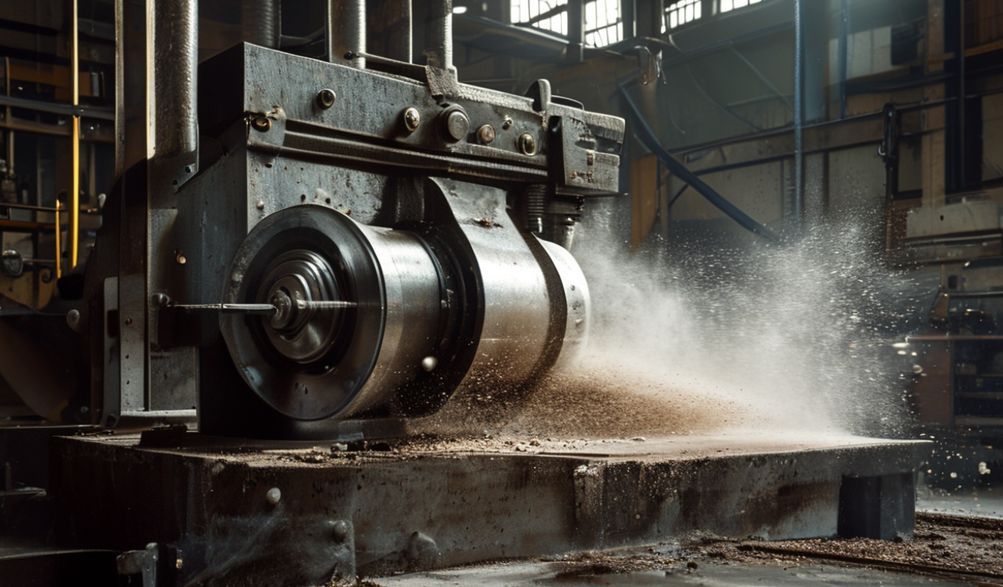
The Ultimate Guide to Hydraulic Press Block Machines: How They Work & Why You Need One
Global qurilish sanoati dunyo bo'ylab tabiiy resurslarning 50% dan ortig'ini ishlatadi.1.5 trillion concrete blocks and bricks annually, a figure driven by relentless urbanization and infrastructure development. How can manufacturers meet this staggering demand while ensuring product strength, consistency, and sustainability? The answer lies in a transformative piece of equipment: the hydraulic press block machine.
A hydraulic press block machine is a specialized industrial machine that uses a high-pressure hydraulic system to compress raw materials—such as concrete, fly ash, or soil—into dense, uniform blocks, bricks, and pavers. It is the cornerstone of modern masonry production, critical for constructing everything from residential homes to commercial landscapes and public infrastructure.
This definitive guide is built on decades of industry expertise and technical knowledge. It will provide you with a comprehensive understanding of hydraulic press technology, from its core principles to practical maintenance. Whether you are a prospective buyer, a plant manager, or an industry learner, you will gain actionable insights into selecting, operating, and optimizing this powerful machinery for a profitable and sustainable operation.
What is a Hydraulic Press Block Machine? Core Principles Explained
At its essence, a hydraulic press block machine transforms loose, dry or semi-dry raw material mix into a solid, precisely shaped block through the application of immense, controlled pressure. This method represents a significant evolution from older techniques, offering unparalleled control over the final product’s characteristics.
The Hydraulic Advantage: Power vs. Vibration
For decades, vibration was the primary force used in block making. While effective, it has inherent limitations:
* Vibration Method: Relies on high-frequency shaking to settle the mix into a mould. It can lead to inconsistent density, lower ultimate strength, and a rougher surface finish.
* Hydraulic Press Method: Applies direct, vertical pressure (often measured in hundreds of tons) to the material. This compacts the mix from the top down, eliminating voids and air pockets.
The result? Hydraulically pressed blocks boast superior compressive strength, lower water absorption, excellent dimensional accuracy, and a smooth, finished surface right out of the machine. This “press-and-hold” action creates a structurally superior product that meets and exceeds international standards like ASTM C90 for concrete masonry units.
Asosiy Komponentlar va Ularining Vazifalari
Understanding the machine’s anatomy is key to appreciating its operation:
* Hydraulic Power Pack (The Heart): This unit consists of an electric motor, hydraulic pump, oil reservoir, valves, and actuators. It generates and regulates the fluid power that drives the entire pressing cycle.
* Mould or Die (Determining Shape & Size): The custom-designed cavity that gives the block its final shape—be it a standard brick, hollow block, paver, or interlocking stone. Mould quality dictates product precision.
* Pressing Head & Ram (Applying Pressure): The ram is the hydraulic cylinder that delivers force. The pressing head is the plate attached to it, which directly compresses the material within the mould.
* Control System (Manual, Semi-Auto, Fully Automatic): The machine’s brain. It can range from simple manual levers to Programmable Logic Controllers (PLCs) that automate the entire cycle—feeding, pressing, ejection, and palletizing.
* Feeding and Conveying Systems: These systems deliver a measured quantity of raw material (mix) to the mould and transport away the finished blocks. They are critical for consistent output and automation.
Types of Hydraulic Press Block Machines
Choosing the right type depends on your production scale, budget, and product portfolio.
By Operation: Manual, Semi-Automatic, Fully Automatic
- Qo'lda Boshqariladigan Mashinalar: Require operator intervention for feeding and block ejection. Lowest capital cost but also lowest output (e.g., 300-500 blocks/hour). Suitable for very small-scale or start-up ventures.
- Yarim avtomat mashinalar: Automate the core pressing and ejection cycle. An operator typically controls the feeding and removal of blocks. Offers a great balance between cost, output (e.g., 800-1,500 blocks/hour), and labor requirements for small to medium businesses.
- To'liq avtomatik mashinalar: Entirely PLC-controlled with automatic feeders, conveyors, and stackers. They deliver the highest output (e.g., 2,000-5,000+ blocks/hour) with minimal labor, ideal for large-scale plants and 24/7 production. The highest initial investment is offset by long-term efficiency.
By Product Output: Brick Making Machines, Paver Machines, Interlocking Block Machines
The core machine is often adapted through specialized moulds and pressure profiles:
* Brick Making Machines: Designed for high-speed production of solid or hollow masonry units. Focus on consistent density and strength for load-bearing walls.
* Plyonka Mashinalari: Produce thinner, decorative paving stones. Often feature multi-layer or color-mix feeding systems and high-pressure for abrasion resistance.
* Interlocking Block Machines: Create blocks with designed profiles that lock together without mortar. Require extreme precision in mould manufacturing and pressing to ensure perfect fit.
By Mobility: Stationary Plants vs. Mobile Block Machines
- Стационар ўсимликлар: Fixed installations designed for high-volume, long-term production. They are heavy, robust, and integrated into a full production line with mixers and curing racks.
- Мобил блок машиналари: Mounted on trailers for on-site production. They reduce transport costs for large projects (e.g., remote infrastructure) and allow production close to the point of use, though typically at a lower output than stationary plants.
Critical Advantages of Using a Hydraulic Press
Investing in hydraulic press technology offers a multitude of benefits that directly impact product quality and business profitability.
Unmatched Product Quality & Strength
The static compaction force creates a homogeneous block structure.
* Yuqori Siqilish Mustahkamligi: Blocks can routinely achieve strengths exceeding 7-10 MPa (1000-1500 psi) and much higher with optimized mixes, suitable for multi-story construction.
* Lower Water Absorption: Denser structure means less porosity, leading to better weather resistance, frost durability, and longevity.
* Aniq Oʻlchovlar Aniqligi: Tolerances within ±1 mm ensure straight walls, easier bricklaying, and reduced mortar usage.
Remarkable Production Efficiency & Output
- Faster Cycle Times: A typical hydraulic press cycle (fill, press, eject) can be as short as 10-20 seconds.
- Izchillik: Every block is pressed with identical force, eliminating batch-to-batch variation.
- High-Volume Suitability: Automated lines can run continuously, maximizing return on investment.
Material Versatility and Sustainability
Hydraulic presses are not limited to traditional cement mixes. They can effectively compact:
* Fly ash (a industrial by-product)
* Crushed recycled construction aggregate
* Quarry dust
* Barqarorlashtirilgan tuproq
This versatility supports eco-friendly “green” building practices and can significantly reduce raw material costs.
Operational Durability and Lower Long-Term Costs
- Mustahkam Qurilish: Built from heavy steel to withstand constant high pressure.
- Reduced Wear: Unlike vibratory machines, which have many rapidly moving parts (motors, springs), the hydraulic press’s primary action is a controlled linear movement, leading to less mechanical fatigue.
- Kamroq texnik xizmat ko'rsatish: With proper hydraulic oil care, the system is remarkably reliable. Maintenance is more predictable and less frequent than maintaining numerous vibration motors.
How to Choose the Right Hydraulic Block Machine: A Buyer’s Checklist
Making an informed purchase decision requires careful analysis of your needs and the machine’s specifications.
Assess Your Production Requirements
Ushbu asosiy savollarga javob berish bilan boshlang:
* What is my required output in blocks per 8-hour shift or per day?
* What specific products do I need to make (solid blocks, hollow blocks, pavers)?
* What raw materials are locally and affordably available to me?
* What is my available factory space and power supply (3-phase voltage)?
Evaluate Technical Specifications
Understand these key specs on a supplier’s datasheet:
* Pressing Force (Tonnage): The maximum pressure the ram can apply. Higher tonnage (e.g., 150 tons vs. 50 tons) generally allows for denser blocks and the use of a wider range of mix designs.
* Sikl vaqti: The time to produce one block. Faster cycles mean higher hourly output.
* Power Rating: Total connected load in kW. Impacts your electricity costs.
* Avtomatlashtirish Darajasi: Determines labor needs and potential output consistency.
Consider Machine Build Quality and Supplier Reputation
The machine’s construction and the company behind it are as important as the specs.
* Look for a robust frame made from thick steel plates and profiles.
* Inquire about the brand of critical hydraulic components (e.g., Bosch Rexroth, Parker, Yuken). Recognized brands ensure reliability.
* The control panel and PLC should be from reputable industrial automation suppliers (e.g., Siemens, Mitsubishi).
Crucially, vet the supplier for Expertise, Authoritativeness, and Trustworthiness (E-E-A-T):
* Mutaxassislik: Do they offer deep technical consultation? Can they provide mix design advice?
* Mualliflik huquqi: Are they compliant with international machinery safety standards (like CE)? Do they have a long track record?
* Ishonchlilik: What is their after-sales service structure? Do they guarantee the availability of spare parts? Can they provide client references or case studies? A trustworthy supplier is a long-term partner, not just a vendor.
Total Cost of Ownership Analysis
Move beyond the sticker price. Consider:
* Installation and foundation costs
* Shipping and import duties
* Cost of operator training
* Estimated energy consumption per month
* Expected annual maintenance and spare parts budget
A slightly more expensive, high-quality machine often has a lower total cost over a 10-year lifespan than a cheaper, less reliable alternative.
Installation, Operation, and Maintenance Best Practices
Proper setup and care are non-negotiable for achieving the machine’s advertised performance and lifespan.
Proper Site Preparation and Installation
- Foundation: Pour a level, reinforced concrete foundation as per the machine manual’s specifications to absorb vibration and prevent settling.
- Quvvat manbai: Ensure a stable, correctly rated 3-phase power connection with proper safety breakers.
- Kosmik makon Allocate ample space not just for the machine, but for material storage, mixing, block curing, and safe operator movement.
Safe and Efficient Operating Procedures
- Develop and enforce Standard Operating Procedures (SOPs) for starting up, running, and shutting down the machine.
- Safety Protocols are mandatory: Use lock-out/tag-out procedures during maintenance. Ensure all safety guards are in place. Operators should wear appropriate PPE (safety glasses, gloves, steel-toe boots).
- Never bypass safety interlocks or operate the machine with known hydraulic leaks.
Essential Routine Maintenance Schedule
Adherence to a schedule prevents costly downtime.
* Daily: Check hydraulic oil level and temperature; inspect for leaks; clean the mould and pressing head; ensure lubrication points are greased.
* Weekly: Tighten all bolts and nuts on the frame and mould; check hydraulic hose condition; clean oil strainers.
* Monthly: Test safety devices; check the condition of the hydraulic oil (color, smell); inspect electrical connections for tightness.
* Annually/Bi-Annually: Change the hydraulic oil and filters completely, as contaminated oil is the leading cause of hydraulic system failure.
Troubleshooting Common Issues
- Low Block Strength: Likely causes include insufficient pressing pressure, incorrect mix design (too much sand, not enough cement/fines), or overly dry mix.
- Sticking Blocks: Usually indicates a worn or dirty mould, insufficient mould release agent, or excessive moisture in the mix.
- Hydraulic Leaks or Pressure Drops: Inspect hoses, seals, and fittings. Check hydraulic oil level and quality. A failing pump or relief valve could also be the culprit.
- Always consult the machine manual first and contact your supplier’s technical support for complex issues.
Frequently Asked Questions (FAQ) About Hydraulic Press Block Machines
Q1: What is the typical production capacity of a hydraulic block machine?
Capacity varies widely. A small semi-automatic machine may produce 800-1,200 blocks per hour, while a large fully automatic plant can produce 3,000-5,000+ blocks per hour of standard size (e.g., 400x200x200mm).
Q2: Can one machine produce different block sizes and shapes?
Yes, by changing the mould (die). Reputable suppliers offer a range of interchangeable moulds for bricks, hollow blocks, and pavers. Changeover time can range from 30 minutes to a few hours.
Q3: How does the block strength from a hydraulic press compare to traditional methods?
Significantly higher. While a vibrated block might achieve 4-5 MPa compressive strength, a hydraulically pressed block from the same mix can easily reach 7-12 MPa or more due to its superior density.
Q4: What are the most common raw materials used, and what is the ideal mix ratio?
Common materials are cement, fly ash, sand, and crushed stone (6-10mm aggregate). A starting point for a standard block mix is roughly 1 part cement, 1-2 parts fine material (sand/fly ash), and 3-4 parts coarse aggregate. However, the ideal ratio depends on your local materials and target strength, and should be developed through testing.
Q5: What is the expected lifespan of a well-maintained hydraulic block machine?
With proper maintenance, a high-quality machine can operate reliably for 15-20 years or more. Critical components like hydraulic cylinders and the main frame are built to last, though wear parts (seals, mould liners) will need periodic replacement.
Q6: How critical is after-sales service and technical support when purchasing?
It is absolutely critical. The machine is a long-term investment. Ensure your supplier offers comprehensive after-sales support, including installation supervision, operator training, a readily available spare parts inventory, and responsive technical assistance (remote or on-site). This support is the backbone of your operational uptime.
Xulosa
Hydraulic press block machines represent the pinnacle of modern masonry production technology. By harnessing controlled high pressure, they deliver unmatched product quality, operational efficiency, and material versatility—key drivers for a profitable and sustainable block manufacturing business.
This guide underscores that success hinges not only on the machine itself but on the expertise behind it. Partnering with a knowledgeable, authoritative, and trustworthy supplier who provides robust technical support is as crucial as the investment in the equipment. Pair this with a commitment to proper operator training and a disciplined maintenance regimen, and you lay a foundation for long-term productivity and growth.
Ready to discuss your specific project requirements and find the ideal hydraulic press solution? Contact our technical engineering team today for a personalized, no-obligation consultation and quote.
<