
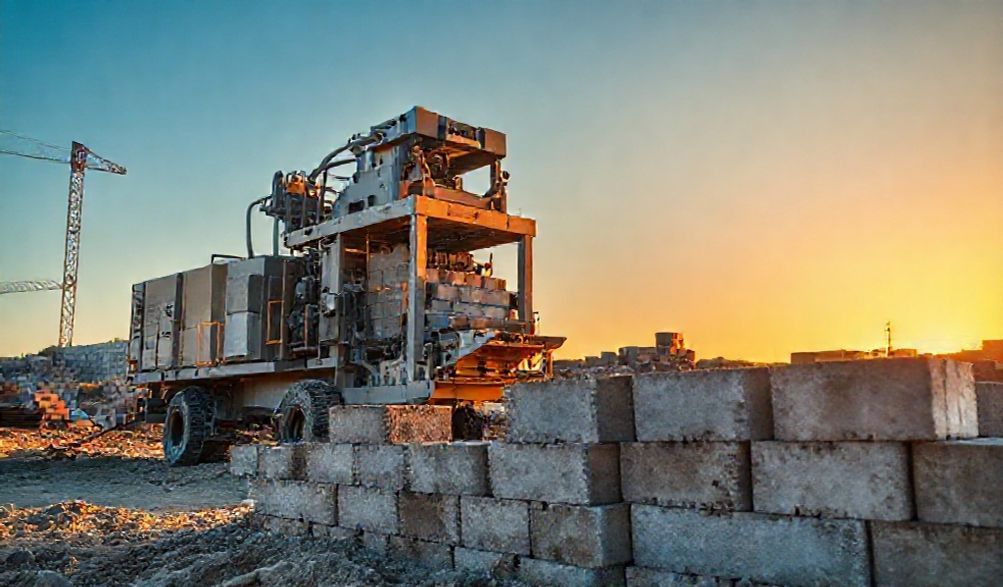
Mobil G'isht Tayyorlash Mashinalari Bo'yicha Yakuniy Qo'llanma: Joyida Samaradorlik va Xarajatlarni Kamaytirish
Tasavvur qiling, siz chekka hududdagi qurilish loyihasini boshqaryapsiz. Byudjet cheklangan, muddatlar yanada qisqa, va sizga g'isht yetkazib berish uchun ulkan narx taklif qilindi. Xarajatlar nafaqat g'ishtlarning o'ziga, balki yoqilg'i, ixtisoslashtirilgan transport va nozik ta'minot zanjiridan kelib chiqadigan kechikishlar xavfiga ham tegishli. Endi boshqa bir stsenariyni tasavvur qiling. Agar siz o'z maydonchangizda, mahalliy materiallardan, ancha arzon va qisqa vaqtda professional darajadagi g'ishtlar ishlab chiqara olsangiz-chi? Bu faraziy emas—bu mobil g'isht yasash mashinasining amaliy, transformatsion kuchidir.
Podratyorchilar, quruvchilar, ishlab chiquvchilar va tadbirkorlar uchun bu texnologiya ishonchdan mustaqillikka asosiy o'tishni anglatadi. Ushbu qamrovli qo'llanma sizning aniq manbaingiz bo'lish uchun mo'ljallangan. Biz sanoat tajribasidan foydalanib, ushbu innovatsion portativ qurilmalar qanday ishlashini, ularning shubhasiz moliyaviy va operatsion afzalliklarini tahlil qilamiz, muhim tanlov mezonlarini belgilaymiz va amaliy eng yaxshi amaliyotlarni taqdim etamiz. Maqsadimiz - sizni keyingi loyihangiz uchun ongli va foydali qaror qabul qilish uchun bilim bilan quvvatlashdir.
Mobil G'isht Tayyorlash Mashinasi Nima? Joyida Ishlab Chiqarishni Qayta Ta'riflash
Uning mohiyati shundaki, mobil g'isht yasash mashinasi g'ildiraklar ustidagi ixcham, yagona ishlab chiqarish zavodidir. U qurilish maydonchasiga bevosita tortib yoki haydab borish uchun mo'ljallangan bo'lib, xom ashyo yuklash, aralashtirish, qoliplash va ba'zan dastlabki quritish jarayonlarini bitta ixcham mobil qurilmada birlashtiradi. Markazlashtirilgan va masofadan amalga oshiriladigan an'anaviy g'isht yasashdan farqli o'laroq, bu texnologiya zavodni xom ashyo va iste'mol nuqtasiga olib keladi.
Asosiy Ta'rif va Mexanizm
Mobil g'isht ishlab chiqarish mashinasi - bu beton bloklar, toshlar yoki mustahkamlangan tuproq g'ishtlarini ishlab chiqarish uchun mo'ljallangan mustaqil, ko'chma ishlab chiqarish tizimidir. Uning asosiy maqsadi qurilishdagi logistika vositachisini bartaraf etishdir. Mobil bo'lishi tufayli u kerakli xom ashyolar bilan tayyorlangan har qanday maydonni darhol, talabga asoslangan g'isht zavodiga aylantiradi. Uning mexanizmi amaliy muhandislikning ajoyib namunasidir, bir nechta statsionar zavod funktsiyalarini joyni tejovchi, yo'l qonunlariga mos ramkaga birlashtiradi.
Asosiy Komponentlar va Ularning Birgalikda Ish Tizimi
Understanding the machine’s components demystifies its operation. Here’s a breakdown of the key parts and the production flow:
- Хоппер: This is the entry point for raw materials like sand, aggregate, and cement.
- Mikser: Integrated or adjacent to the hopper, it blends the dry materials before adding water to create a homogeneous, consistent concrete mix.
- Konveyer Tizimi: Transports the mixed concrete from the mixer to the molding chamber. In simpler models, this may be a manual process.
- Molding System (The Heart): This is a hydraulic or mechanical press that compacts the wet mix into a mold (die) with extreme pressure. The shape of the mold defines the final brick (e.g., solid, hollow, interlocking).
- Boshqaruv paneli: The operator’s interface for controlling the mixing time, vibration, hydraulic pressure, and molding cycle. Automation levels vary here.
- Quvvat birligi: Typically a diesel engine or an electric motor that drives the hydraulics and other mechanical systems.
- Mobility Frame: A heavy-duty chassis with a tow hitch and robust wheels or a self-propelled track/wheel system.
The Production Flow in Text:
Raw Materials (Hopper) -> Mixing -> Conveying -> Molding/Compaction -> Ejection -> Curing (on pallets or ground)
Comparison: Mobile vs. Stationary Brick Plants
Choosing between mobile and stationary setups depends entirely on your business model and project scope. Here’s a clear comparison:
| Feature | Mobile Brick Making Machine | Stationary Brick Plant |
| :— | :— | :— |
| Setup Time & Infrastructure | Minimal. Can be operational on a level site within hours. | Extensive. Requires permanent foundation, shelter, and utility connections. |
| Initial Capital Investment | Significantly lower. Accessible for SMEs and individual contractors. | Very high, often prohibitive for small-scale operators. |
| Operational Flexibility | Excellent. Can be moved between project sites with ease. | None. Production is fixed to a single location. |
| Ideal Project Scale | Small to medium-scale projects, remote locations, multiple sites. | Large-scale, continuous production for a wide market area. |
| Logistical Cost | Eliminates brick transport costs; may incur machine relocation cost. | High, as all finished bricks must be transported to construction sites. |
| Material Sourcing | Can use on-site or locally sourced materials, reducing cost. | Typically requires materials to be transported to the plant. |
Top Advantages of Using a Mobile Brick Making Machine
The benefits of adopting this technology are tangible and directly impact your bottom line and project management capabilities.
Dramatic Reduction in Logistics and Transportation Costs
This is the most compelling advantage. Transporting heavy, bulky bricks over distance is expensive. Costs include:
* Fuel: For multiple heavy truckloads.
* Vehicle Wear & Tear: Increased maintenance.
* Mehnat: Loading, unloading, and driving.
* Breakage: A percentage of bricks are often damaged in transit.
A mobile machine eliminates over 90% of these costs. You transport one machine once, instead of hundreds of truckloads of bricks.
Unmatched Flexibility and Project Adaptability
Your business is no longer geographically limited. You can:
* Accept projects in remote or underserved areas where brick supply is scarce or non-existent.
* Move the machine from a completed site to a new one, maximizing asset utilization.
* Adjust production runs daily based on immediate site needs, reducing waste and storage requirements.
Faster Project Timelines and On-Demand Production
Time is money, and delays are costly. With on-site production:
* No Supply Wait Times: You are not at the mercy of a supplier’s production schedule or delivery delays.
* Prevents Project Stalls: Continuous brick supply means masonry work never has to stop waiting for materials.
* Just-in-Time Manufacturing: Produce exactly what is needed for the next few days, minimizing on-site inventory and handling.
Cost-Effectiveness and Improved ROI for Small to Medium Projects
For many businesses, a stationary plant is not financially viable. A mobile machine offers:
* Lower Entry Barrier: The capital outlay is a fraction of a fixed factory.
* Faster Break-Even Point: Reduced overheads (no factory rent, lower transport costs) mean profits start accruing sooner.
* Project-Specific Financing: The machine’s cost can often be directly billed into a single large project.
Utilization of Local Materials and Sustainability Benefits
This advantage is both economic and environmental.
* Material Cost Savings: Using on-site subsoil or locally quarried sand/aggregate slashes material costs.
* Reduced Carbon Footprint: Eliminating hundreds of kilometers of brick transport significantly cuts the project’s CO2 emissions.
* Less Waste: Local, non-standardized materials can often be used, which might be rejected by a central plant.
Critical Factors to Consider Before Buying
A mobile brick machine is a significant investment. Informed purchasing decisions are built on a clear assessment of your needs.
Ishlab chiqarish talablaringizni baholash
Start by asking:
* Output Needed: Calculate bricks per day required to keep your project on schedule. Machines range from ~800 to 5,000+ bricks per 8-hour shift.
* G'isht turi va o'lchami: What are you making? Standard hollow blocks, solid pavers, or interlocking soil blocks? Ensure the machine has the appropriate molds.
* Project Duration: Is this for a single 6-month project, or will it be a core part of your business for years? This affects your budget and needed durability.
Power Source: Diesel, Electric, or Hybrid?
- Dizel: Ideal for remote sites with no grid power. Offers complete independence but has higher fuel costs and requires ventilation.
- Elektr More cost-efficient to run and quieter, with less maintenance. Requires reliable three-phase grid power or a large generator.
- Hybrid: Offers the flexibility to switch between power sources, providing a good balance but at a higher initial cost.
Key Machine Specifications and Features
Look beyond the price tag. Focus on:
* Avtomatlashtirish Darajasi: Manual (labor-intensive), Semi-Automatic (best balance of cost and output), or Fully Automatic (highest output, highest price).
* Pressure Capacity: Measured in tons or MPa. Higher pressure produces denser, stronger blocks suitable for load-bearing walls.
* Mobility: Check tow hitch rating, tire quality, and overall road-worthiness if frequent moving is planned.
* Qurilish Sifati: Inspect the thickness of steel plates, the quality of hydraulic cylinders, and the reputation of the brand.
Raw Material Compatibility and Preparation
The machine is only as good as the materials you feed it.
* Compatibility: Confirm the machine can handle your local soil/sand/aggregate mix. Some are designed for cement-stabilized earth, others for standard concrete.
* Preparation: Material must be sieved to remove stones and organic matter. Consistent mixing ratios (e.g., 1 part cement to 6 parts aggregate) are critical for quality.
* Professional Maslahat: Always conduct small test batches with your local materials before full-scale production.
Budgeting: Initial Investment vs. Operational Costs
Adopt a Total Cost of Ownership (TCO) view:
* Boshlang'ich investitsiya: Machine price, shipping, import duties (if applicable), and initial spare parts kit.
* Operatsion xarajatlar: Fuel/electricity, routine maintenance, operator wages, raw materials, and mold wear/tear.
* Yashirin Xarajatlar: Factor in operator training time and potential downtime for repairs.
Operational Best Practices for Maximum Efficiency
Owning the machine is step one. Operating it correctly is what delivers the promised return.
Site Preparation and Machine Setup
A proper setup prevents countless operational headaches.
* Foundation: Prepare a level, compacted, and stable ground (often a simple concrete slab or well-compacted gravel).
* Access: Ensure easy access for delivery trucks (raw materials) and for moving the machine onto/off the site.
* Utilities: Have a reliable power source (generator/grid) and clean water supply ready.
* Material Storage: Designate covered, organized areas for cement (must be dry) and aggregates.
Daily Operation and Maintenance Checklist
Consistency is key. Implement a daily routine:
* Pre-Start: Check hydraulic oil levels, lubricate all moving parts (bearings, pivots), inspect for loose bolts.
* During Operation: Listen for unusual noises, monitor hydraulic pressure gauges, ensure the mix consistency remains uniform.
* Post-Shift: Thoroughly clean the mixer, mold, and conveyor of all concrete residue. Perform a visual inspection.
Achieving Consistent Brick Quality
Quality problems usually trace back to a few variables:
* Moisture Content: Too wet = deformation; too dry = weak, crumbly bricks. The mix should hold its shape when squeezed.
* Mixing Time: Ensure thorough, consistent mixing for every batch.
* Siqish Bosimi: Do not alter preset pressure settings arbitrarily.
* Davolash: This is critical for final strength. Keep freshly made bricks moist (by spraying with water and covering with plastic sheeting) for at least 7 days.
Safety Protocols for Operators
Never compromise on safety.
* PPE is Mandatory: Safety glasses, gloves, steel-toe boots, and hearing protection.
* Lock-Out/Tag-Out: Always disconnect and lock the power source before performing any maintenance or clearing a jam.
* Training: Ensure all operators understand the machine’s functions and dangers, especially around hydraulic systems and moving parts.
Troubleshooting Common Issues
- Cracked Bricks: Usually caused by incorrect moisture content (too dry), excessive vibration, or improper curing.
- Poor Demolding (Blocks sticking): Likely due to a worn mold, insufficient release agent, or a poorly balanced mix.
- Pastki chiqish: Check for mechanical issues (low hydraulic pressure), operator inefficiency, or poorly prepared raw materials slowing the cycle.
Frequently Asked Questions (FAQ) About Mobile Brick Making Machines
Q: What is the average production capacity of a mobile brick machine?
A: Capacities vary widely from 800 to 5,000+ bricks per 8-hour shift, depending on the model and automation level. A popular semi-automatic model typically produces 1,500-2,500 bricks in a day with a small crew.
Q: Can I use only soil to make bricks with these machines?
A: For durable, load-bearing construction bricks, “only soil” is generally not sufficient. Most machines require a stabilized mix. This often means local soil combined with a small percentage (5-10%) of a binder like Portland cement or lime to create Stabilized Compressed Earth Blocks (SCEBs).
Q: How many operators are needed to run the machine?
A: Efficient operation typically requires 2-4 people. One feeds materials, one operates the controls and monitors the process, and 1-2 others handle the freshly ejected bricks for palletizing and moving to the curing area.
Q: What is the typical lead time for delivery and setup?
A: After order confirmation, delivery can take anywhere from 4 to 12 weeks, heavily dependent on the manufacturer’s location and any customizations. Physical setup on a properly prepared site is usually accomplished within a single day.
Q: Are there financing options available for these machines?
A: Yes. Many established manufacturers and their dealers offer financing or leasing plans. It is also highly recommended to inquire about equipment loans or grants from local banks, agricultural co-ops, or international development agencies that support small and medium-sized enterprises (SMEs) in construction and manufacturing.
Xulosa
The mobile brick making machine is more than a piece of equipment; it is a strategic investment in autonomy, efficiency, and resilience. It directly addresses the core challenges of cost, time, and logistical complexity that plague modern construction, particularly for projects off the beaten path. By bringing production to the point of consumption, it grants builders and entrepreneurs unprecedented control.
As you consider integrating this transformative technology, let this guide serve as your foundation. Prioritize thorough research, honestly assess your specific needs against the critical factors outlined here, and diligently choose a partner—a manufacturer or supplier—known for quality machinery and robust after-sales support. Taking this informed step can fundamentally position your business for greater profitability and success in a competitive market.
Ready to explore specific models or get a personalized quote? We recommend consulting with established industry associations or requesting detailed specifications, performance data, and customer references from multiple reputable manufacturers. This due diligence is the final, crucial step to finding the perfect mobile solution for your operational goals.
<