Yo'l qoplamasi bloklari ishlab chiqarish mashinalarining san'ati va muhandisligi
Mutaxassislikni aniqlash: Asosiy maqsad va farqlar
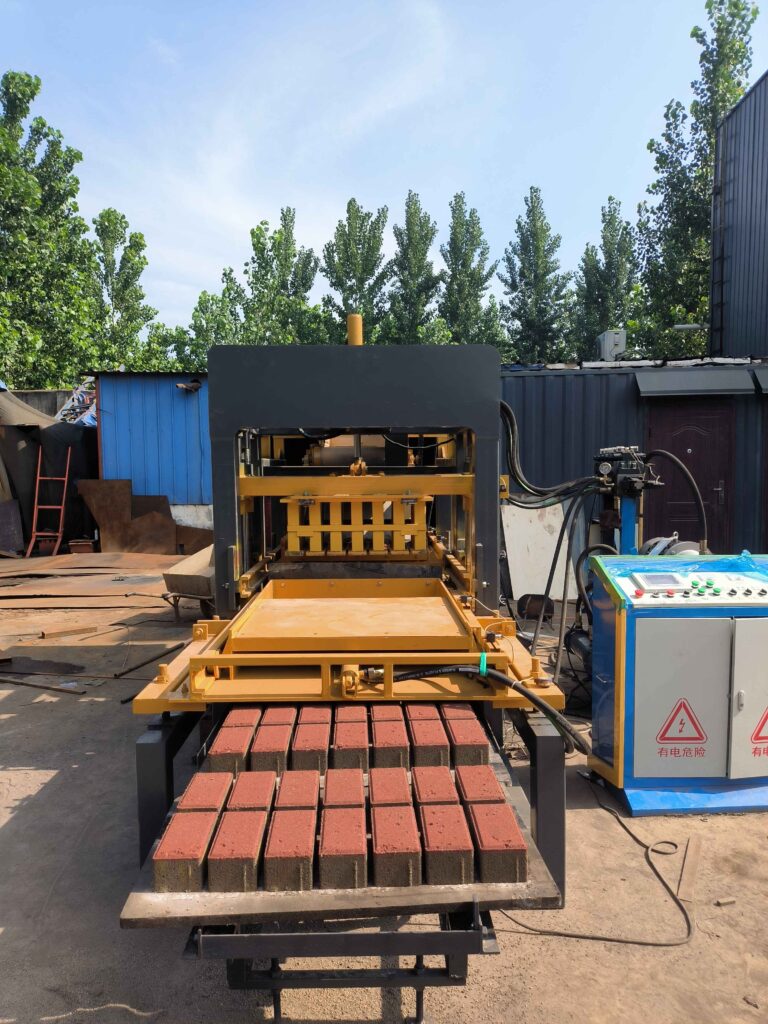
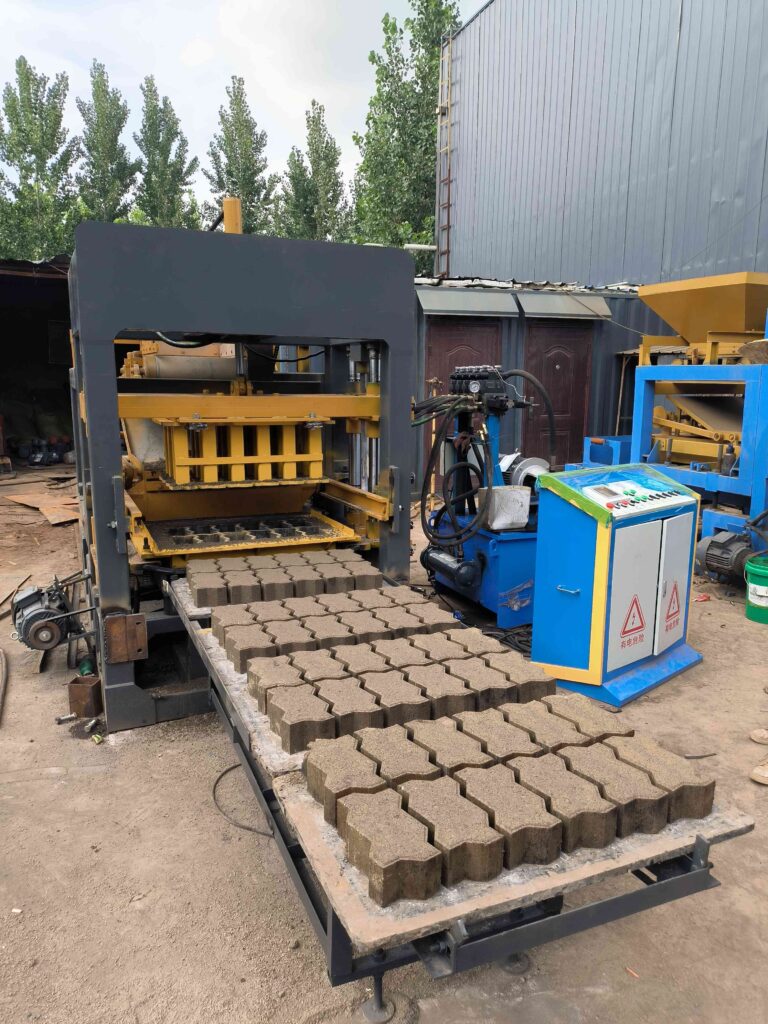
Paving block mashinasi – bu beton plitkalar, plitkalar va tegishli landshaft mahsulotlarini ishlab chiqarishga ixtisoslashtirilgan beton pressning maxsus turidir. U standart blok mashinalari bilan asosiy prinsiplarni, masalan, nol cho'kma beton aralashmasini siqish uchun tebranish va bosimdan foydalanishni baham ko'rsa ham, uning dizayn falsafasi yakuniy mahsulot talablarini qondirish uchun sezilarli darajada farqlanadi.
Asosiy farqlar tosh qoplama materiallarining o‘ziga xos ishlash mezonlaridan kelib chiqadi. Qoplamalar sirtni himoya qiluvchi elementlar bo‘lib, ular yupqa (odatda 50-100 mm), tor birikma oralig‘i uchun yuqori o‘lcham aniqligini talab qiladi, estetika uchun mukammal sirt qoplamasi va rang bir xilligini ta’minlashi kerak, shuningdek, sovuqqa chidamlilik va mexanik mustahkamlik uchun juda yuqori zichlikka ega bo‘lishi lozim. Shuning uchun uskunalar ko‘p miqdordagi materialni siqishga emas, balki aniqlik, sirt sifati va rang va tekstura qo‘shish imkoniyatiga yo‘naltirilgan.
Standart blok mashinalaridan asosiy farqlovchi xususiyatlar:
- Yuzaki tugatish ustuvorligi:Mashina mukammal silliq, bir xil yuqori sirtni ishlab chiqarishi kerak, chuqurchalar yoki notekisliklardan xoli bo‘lishi lozim, chunki bu sirt doimiy ochiq qoladi.
- O'lchovli Tolerantlik:Chidamliliklar millimetrning ulushlarida o‘lchanadi, bu esa o‘rnatish vaqtida bir xil bo‘g‘in kengliklari va uzluksiz naqsh moslashishini ta’minlaydi.
- Color Integration: Most machines are designed to work with color-feeding systems that uniformly disperse dry or liquid pigment into the face mix.
- Mahsulot bilan ishlash: Due to their thinner profile and often more delicate textures, pavers require gentler handling systems post-ejection to prevent chipping or marking.
Core Components and Specialized Subsystems
The architecture of a paving block machine integrates several purpose-built subsystems that collectively achieve these stringent quality targets.
1. The Multilayer or Multideck Press System
This is the most defining technological feature. Unlike a standard single-mold block machine, a paver press often features multiple mold boxes (decks) stacked vertically within a single press frame.
- Operatsiya: During one press cycle, the machine compacts pavers simultaneously on multiple levels. For instance, a 10-deck machine might produce 10 pavers (or a full pallet pattern) per cycle. This multiplies output without increasing cycle time, making it economically viable to produce high volumes of thin products.
- Foyda: Achieves high output of quality pavers, as the long press cycle needed for optimal density is amortized across many units.
2. Precision Mold and Pallet System
- Mold Design: Paver molds are shallow but extremely precise. They are machined from high-grade alloy steel to create sharp, clean edges and can include intricate surface textures (split-face, tumbled, polished, exposed aggregate) via specialized mold liners or rubber inserts.
- Pallet Requirements: The pallet serves as the bottom formwork and must be flawlessly flat and smooth, as it defines the paver’s bedding surface. Steel or composite pallets are common to maintain dimensional stability under high pressure and thermal cycling.
3. Integrated Color Feeding and Mixing Systems
To create the colored wear layer (typically the top 5-10mm of the paver), advanced machines are coupled with automated color dosing systems.
- Jarayon: A base layer of gray concrete is first deposited in the mold. Then, a precisely metered amount of dry pigment or colored sand/cement mix is spread uniformly across the surface. During compaction, the two layers fuse integrally. Some systems use a “facemix” hopper that deposits a pre-mixed colored concrete layer directly.
4. High-Frequency, Low-Amplitude Vibration
Paver compaction relies on a specific vibration regime.
- Xususiyatlari: High-frequency (70-100 Hz) vibration is used to fluidize the fine concrete mix, allowing it to flow into every detail of the textured mold. This is often combined with “press vibration,” where vibration continues during the initial stage of hydraulic pressure application to ensure perfect surface reproduction and eliminate air voids.
5. Automated Handling and Stacking Systems
Given the high output and need to protect surfaces, downstream automation is integral.
- Functions: Systems automatically place empty pallets, transport pressed pallets of green pavers to a curing area, and, after curing, de-palletize and stack the finished pavers using robotic arms or stackers with protective interleaf sheets. This minimizes manual contact and damage.
The Production Workflow: From Raw Material to Finished Paver
The manufacturing process in an automated paving plant is a continuous, synchronized sequence.
- Raw Material Batching & Base Mix Preparation: Aggregates (crushed stone, sand), cement, and water are batched to create a zero-slump concrete mix. Consistency in moisture content and grading is paramount.
- Color Preparation: In a separate line, colored cement or dry pigment is prepared for the face layer.
- Pallet Circulation: Empty pallets are fed from a magazine into the press.
- Layering and Feeding: The machine’s feed system first deposits a layer of base mix into each mold cavity across all decks. Immediately after, the color feeder applies the precise layer of colored material on top.
- Simultaneous Compaction: The press closes, and the multi-deck system applies high hydraulic pressure (often 150-250 tons total force) combined with vibration. This compacts both layers into a dense, homogeneous unit with a distinct colored face.
- Mold Stripping and Ejection: After the press opens, the molds lift, and the pressed pallets, each now carrying a full set of green pavers, are conveyed out.
- Davolash: Pallets enter a controlled curing chamber (often low-pressure steam curing) for 12-24 hours to achieve sufficient handling strength.
- De-palletizing and Stacking: Robots or automated arms lift the cured pavers off the pallets, which are then returned to circulation. Pavers are stacked into cubes, often with plastic sheets between layers, and wrapped for shipment.
Product Versatility: Beyond the Basic Paver
A well-configured paving block machine is a platform for a diverse product portfolio, far exceeding simple rectangles.
- Interlokli Plitkalar: The core product, in shapes like herringbone, cobblestone, fan, and 45-degree designs, which lock together mechanically.
- Permeable Pavers: Special units with larger joints or open cells designed to allow water infiltration for sustainable urban drainage systems (SUDS).
- Slabs and Flags: Larger format units for plazas and pedestrian areas.
- Retaining Wall Units & Edgers: Complementary landscaping products with textured faces, often produced on the same machine with different mold sets.
- Specialty Architectural Units: Custom shapes, colors, and textures for high-design projects.
Market Drivers and Strategic Considerations for Distributors
The demand for paving blocks is fueled by urban development, infrastructure renewal, and a shift towards aesthetically pleasing, durable, and sustainable surfaces. For equipment distributors, several strategic factors emerge.
- Selling a System, Not a Machine: The sale is often a complete production line, including the press, mixer, color system, pallet circulator, and curing system. Technical competency in integrating these components is key.
- Emphasis on ROI Through Product Value: The business case for clients hinges on producing a high-value product. The machine enables premium pricing for colored, textured, and specialty pavers compared to standard concrete or asphalt.
- After-Sales for Precision: Given the tight tolerances, technical support for mold maintenance, calibration, and color system cleaning is a critical value-added service and potential revenue stream.
- Sustainability Alignment: The ability to produce permeable pavers positions clients to access green infrastructure projects and meet environmental regulations, a growing market segment.
Xulosa
The paving block machine is a masterpiece of applied industrial engineering, where the brute force of hydraulic compaction is harnessed to achieve remarkable levels of precision and aesthetic control. It is a technology that transforms raw mineral aggregates into the building blocks of beautiful and resilient landscapes. For the informed distributor or procurement expert, this equipment category represents more than a capital good; it is an enabler of entrepreneurship in the hardscape sector and a critical tool for modern urban development.
Success in this niche requires a dual understanding: the mechanical intricacies of high-frequency vibration and multilayer pressing, and the market dynamics of architectural trends and municipal specifications. By providing clients with the technology to produce consistent, high-quality, and diverse paving products, you equip them to compete not on price alone, but on design, performance, and sustainability. In the final analysis, a paving block machine does more than manufacture units; it fabricates the very surface of our constructed world, and your expertise is fundamental to bringing that potential to market.
FAQ
Q1: Can a standard block machine be used to produce pavers?
A: In a limited capacity, yes, but with significant compromises. A standard machine can produce basic, thick pavers but typically lacks: 1) The multi-deck system, resulting in very low output for thin products; 2) The precision mold and pallet system for perfect surface finish; 3) An integrated color feeding system. The product will be a utilitarian “concrete block” suitable for a warehouse floor but not a commercial landscaping or architectural project. For serious paver production, dedicated machinery is essential.
Q2: What is the importance of the “facemix” or color layer system?
A: The facemix system is crucial for economic and aesthetic reasons. It allows the manufacturer to use expensive pigment only in the top 5-10mm of the paver that is visible, while the majority of the paver’s body uses less expensive gray concrete. This reduces material cost significantly. Technically, it ensures full, rich color on the surface without the risk of color streaking or inconsistency that can occur if pigment is mixed throughout the entire paver thickness.
Q3: How does the machine produce different patterns (e.g., herringbone vs. cobblestone)?
A: The pattern is determined by the physical shape of the mold cavities. A “herringbone” mold has cavities shaped like symmetrical rectangles arranged at 90-degree angles. A “cobblestone” mold has cavities with rounded, irregular outlines. To change the pattern, the entire mold plate on each deck of the machine is changed. Modern machines with quick-change systems allow a full pattern changeover in 30-60 minutes.
Q4: What are the key maintenance challenges specific to paver machines?
A: The primary challenges revolve around precision and wear:
- Mold Maintenance: Textured mold liners must be kept clean and free of concrete buildup to prevent sticking and surface defects. They are also wear items.
- Pallet Flatness: Pallets must be regularly inspected and resurfaced or replaced if they warp, as this directly causes uneven paver thickness.
- Color System Cleaning: Hoppers and feeders for colored material must be meticulously cleaned when changing colors to prevent cross-contamination.
- Vibration System Balance: Unbalanced vibration can lead to inconsistent density and surface quality, requiring regular checks.
Q5: Is the market for paving blocks susceptible to economic cycles?
A: While there is some cyclicality tied to construction generally, the market has proven resilient and diversified. Downturns in new residential construction may be offset by:
- Municipal & Infrastructure Projects: Roadscapes, public plazas, and pedestrian zones are often government-funded.
- Renovation & Repair: The homeowner renovation market for driveways and patios is less volatile.
- Savdo va sanoat: Warehouses, ports, and logistics centers require heavy-duty pavers.
Furthermore, the value proposition of durability and low lifetime maintenance helps pavers compete effectively against asphalt, providing stability across cycles.