
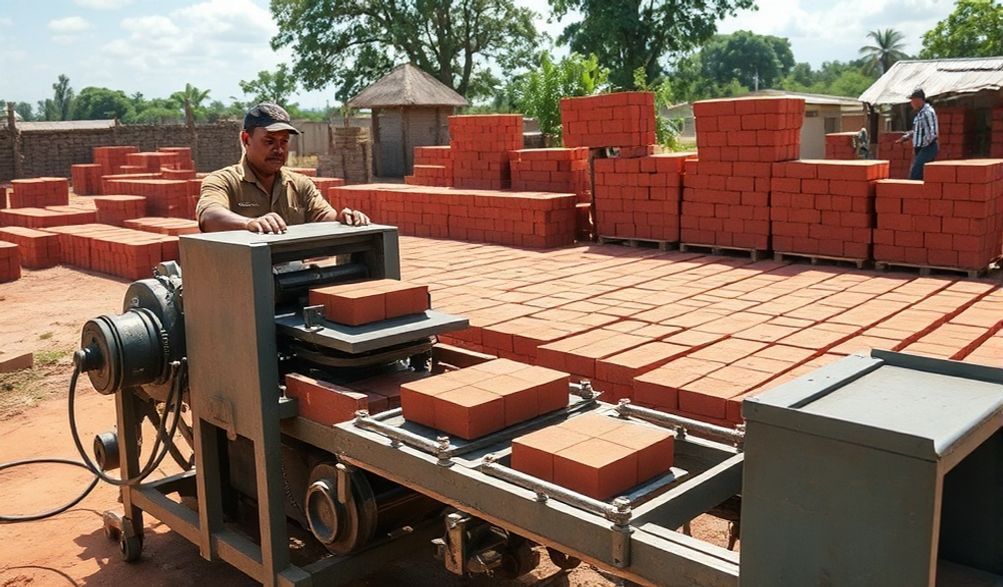
Your Complete Guide to Buying Clay Brick Making Machines for Sale in Uganda
Kirish
Uganda is building its future. With a construction sector growing at over 10% annually and a national housing deficit demanding hundreds of thousands of new units, the demand for affordable, quality building materials has never been higher. At the heart of this development lies a humble yet crucial component: the clay brick.
For decades, brick production in Uganda has been dominated by manual, labor-intensive methods. These processes are slow, yield inconsistent quality, and limit output—creating bottlenecks for construction projects and capping the growth potential of brick-making businesses. The back-breaking work and reliance on unpredictable weather patterns are challenges known all too well to local entrepreneurs.
This is where modern clay brick making machines enter the picture. They are not just tools; they are transformative solutions for scalability, profitability, and quality control. For the ambitious entrepreneur, the forward-thinking construction company, or the community-led development project, investing in the right machinery is a pivotal step toward growth.
This guide serves as your expert, trustworthy, and practical roadmap. Built on a deep understanding of the Ugandan market, local construction needs, and machinery specifications, our goal is to empower you with the knowledge to make a confident and informed investment. We’ll cut through the complexity and provide actionable advice tailored to local conditions.
We are speaking directly to:
* Brick-making entrepreneurs ready to scale from manual to mechanized production.
* Construction firm managers seeking to vertically integrate and control material supply.
* Agricultural cooperatives looking to diversify income streams with value-added products.
* Local government officials involved in sourcing materials for public infrastructure projects.
Let’s build a stronger foundation for your business and for Uganda.
Loy g'isht ishlab chiqarish mashinalarini tushunish: Turlari va texnologiyalari
Choosing the right machine starts with understanding the options. The technology spectrum ranges from simple human-powered presses to fully automated industrial plants. Your ideal choice depends on your scale, budget, and operational context.
Manual Brick Making Machines: Entry-Level Solutions
These are the simplest and most affordable entry points into mechanized brick production. Operated purely by human force, they include lever-operated presses and drop hammer types.
- Ideal foydalanish holatlari: Perfect for small-scale startups, individual builders, community self-help projects, or for producing bricks for a specific, limited-scale construction.
- Afzalliklari:
- Very low initial investment and operating cost.
- No requirement for electricity or fuel.
- Simple to use with minimal maintenance.
- Highly portable and easy to set up.
- Kamchiliklari:
- Output is low (typically 300-800 bricks per day).
- Physically demanding for the operator.
- Quality can vary more with operator fatigue.
Semi-Automatic Brick Making Machines: The Balanced Choice
This category offers the best balance for growing Ugandan businesses. These machines, often hydraulic, require manual feeding of clay but automate the pressing, molding, and ejection processes.
- Ideal foydalanish holatlari: Growing brick-making enterprises, medium-scale production for local hardware shops, and contractors supplying multiple projects.
- Afzalliklari:
- Significantly higher output (2,000 – 8,000 bricks per shift) with consistent quality.
- Reduces physical strain on workers, improving efficiency.
- More professional brick finish and dimensional accuracy.
- Good return on investment for serious businesses.
- Kamchiliklari:
- Requires a reliable power source (single or three-phase electricity or a diesel engine).
- Higher upfront cost than manual machines.
- Requires basic technical knowledge for operation and maintenance.
Fully Automatic Brick Making Machines: For High-Volume Production
These are complete production lines with automated systems for feeding, mixing, pressing, curing, and stacking. They are controlled via computerized panels.
- Ideal foydalanish holatlari: Large brick yards and industrial plants aiming to supply major construction firms, government housing projects, or regional distribution.
- Afzalliklari:
- Maximum output (10,000+ bricks per day) with minimal manual labor.
- Exceptional consistency and quality in every brick.
- Optimized for large-scale, continuous production.
- Kamchiliklari:
- Very high capital investment.
- Significant and stable power supply is critical.
- Requires skilled operators and technicians.
- Complex maintenance and higher reliance on imported spare parts.
Key Machine Components and Their Role
Understanding a few key parts builds your technical knowledge:
* Kalıplar/Ştamplar: The heart of the machine. This steel block defines the brick’s shape and size (standard, interlocking, etc.). Durability is key.
* Gidravlik Tizim: The “muscle.” It provides the high pressure needed to compact the clay. Look for robust pumps and cylinders.
* Mixer/Pugmill: Prepares the clay by mixing it with water to the perfect consistency for molding. A good mixer is essential for quality.
* Konveyer Tizimi: (In semi/full-auto machines) Transports raw material and finished bricks, streamlining the workflow.
Key Factors to Consider Before Buying in Uganda
Your success depends on more than just the machine. These local, practical factors are critical for a sustainable operation in Uganda.
Assessing Your Production Needs and Scale
Begin by asking the right questions:
* What is my current and projected daily brick requirement?
* Who are my target customers (individual homeowners, local builders, large contractors)?
* What are the timelines for the projects I aim to supply?
* What are my growth plans for the next 2-5 years?
Matching your ambition to reality is crucial. A startup is best served by a manual or small semi-automatic press, while a business with a confirmed large contract might justify the leap to a higher-capacity machine.
Clay Quality and Soil Testing in Ugandan Regions
Not all soil is good brick soil. The composition—the ratio of clay, silt, and sand—is vital. Soil with too much sand will crumble; too much pure clay can crack excessively during drying.
- Conduct Simple Tests: The “ribbon test” (rolling moist soil) and “sedimentation test” (shaking soil in a jar of water) can give initial clues.
- Use Local Services: For greater certainty, consult with the Department of Geological Survey and Mines or local agricultural extension officers. They can provide insights into local soil types.
- Machine Compatibility: Some machines are more tolerant of varying soil compositions than others. Discuss your local clay sample with your supplier.
Power Source Availability: Grid, Generator, or Manual?
Uganda’s power grid is expanding, but reliability can vary, especially in upcountry areas.
* Grid Electricity: If stable, an electric motor is cleaner and cheaper to run. Check if you need single-phase or three-phase power for your chosen model.
* Diesel Generator: A necessary backup or primary source in areas with frequent outages. Factor in the ongoing cost of fuel and generator maintenance into your operational budget.
* Qo‘llanma: If power is completely unreliable or unavailable, a manual machine or a diesel-engine-powered model is your only viable option.
Total Cost of Ownership: Beyond the Purchase Price
The sticker price is just the beginning. A smart buyer calculates the full cost:
1. Machine Price: The base cost of the equipment.
2. Shipping & Logistics: Cost from the port or dealer to your site, including any customs clearance if importing.
3. Installation & Foundation: Some machines require a concrete foundation.
4. Spare Parts Kit: An initial inventory of common wear parts (e.g., mold liners, hydraulic seals).
5. Maintenance: Regular costs for lubricants, filters, and replacement parts.
6. Labor & Raw Materials: Wages for operators and the cost of clay, water, and any additives.
The Key Metric: Calculate your estimated cost-per-brick. This will help you understand your profitability and ROI timeline clearly.
Navigating the Ugandan Market: Suppliers, Import, and Support
The supplier you choose is as important as the machine itself. Here’s how to navigate the market.
Local Dealers vs. Direct Import from Abroad
- Local Dealers (e.g., in Kampala or Jinja):
- Afzalliklari: Easier communication, potential for quicker delivery and installation, physical showroom to inspect machines, and—most importantly—local after-sales support and spare parts inventory.
- Kamchiliklari: May have higher markup prices and a more limited selection of models.
- Direct Import (e.g., from China, India, or Turkey):
- Afzalliklari: Potentially lower factory prices and access to a wider range of manufacturers.
- Kamchiliklari: Complex logistics, customs clearance, high shipping costs, no local support, and significant risk if the machine arrives damaged or faulty. Language and time zone barriers can complicate support.
For most Ugandan buyers, a reputable local dealer with a proven service record is the lower-risk option.
Essential After-Sales Services You Must Secure
Never buy a machine without securing these services in writing:
* Oʻrnatishni nazorat qilish: A technician should help set up and commission the machine.
* Keng qamrovli operatorlar tayyorlash: Hands-on training for your team on operation, daily checks, and basic troubleshooting.
* Clear Warranty Terms: Understand what is covered (parts, labor), for how long (e.g., 1 year), and the process for claims.
* Local Spare Parts Availability: Confirm which common parts are stocked in Uganda and their lead times.
* Access to Technical Support: A phone number or contact for when you have questions or problems.
Avoiding Common Pitfalls and Scams
Protect your investment by being vigilant:
* Red Flags: Prices drastically lower than the market average, suppliers with only a P.O. Box address in Uganda, refusal to provide local customer references, pressure to pay full amount upfront before shipping.
* Due Diligence Steps: Always insist on visiting the supplier’s physical office or yard. Request a live demonstration of the exact model you’re interested in. Ask for and actually contact 2-3 of their previous customers to ask about their experience with the machine and after-sales service.
Top Clay Brick Making Machine Models Suitable for Uganda
While specific models change, these categories and examples provide a framework for your search.
Best Manual Presses for Startups
- Makiga Engineering Manual Presses: A popular and durable brand in East Africa, known for producing interlocking soil-stabilized blocks. Ideal for low-cost housing projects.
- Vego Manual Brick Molds: Simple, robust steel molds for producing standard bricks with manual compaction.
- Estimated Output: 300 – 800 bricks per day.
- Narxlar oralig'i: Typically between UGX 1.5 million to UGX 4 million.
Reliable Semi-Automatic Machines for Growing Businesses
- QT Series Hydraulic Presses: A very common and versatile series from various Chinese manufacturers (like Lontto, Wangda). Models like QT4-24 can produce solid, hollow, or interlocking blocks.
- Indian-made Hydraulic Presses: Brands like Everon and Force Engineering offer robust machines suitable for Ugandan conditions.
- Xususiyatlar: Often include a built-in mixer and conveyor, powered by a diesel engine or electric motor.
- Chiqish quvvati: Ranges from 2,000 to 6,000 bricks per 8-hour shift.
- Kuch: Can require 7.5kW to 15kW electric motors or comparable diesel engines.
High-Capacity Automatic Plants for Industrial Production
- Full Plant Setups: These are custom-configured systems from manufacturers like Hongfa, YingfengyokiBess. They include automatic feeders, twin-shaft mixers, computerized presses, and brick stacking systems.
- E'tibor: Purchasing such a plant is a major project. It requires professional site planning, possibly civil works, and comprehensive project management from the supplier. Ensure they offer full “turn-key” service and commissioning.
Maximizing Profitability and Success with Your Machine
Owning the machine is step one. Running a profitable enterprise is the ultimate goal.
Efficient Production Workflow Setup
Plan your brick yard layout for smooth workflow:
1. Clay Storage & Weathering: Store excavated clay to allow it to weather and improve plasticity.
2. Mixing Area: Located near the machine’s feed hopper.
3. Molding/Pressing Zone: Where the machine is installed on a solid, level base.
4. Drying Area: A large, organized space with good air circulation. Consider Uganda’s climate: Protect green bricks from direct, scorching sun initially to prevent rapid drying and cracking, and always have plastic sheeting ready for sudden rain.
5. Curing & Stacking: Area for final drying and storage before transport.
Basic Maintenance for Longevity and Uptime
A well-maintained machine prevents costly downtime.
* Daily: Clean the machine, especially the mold, after each shift. Check hydraulic oil levels and for any leaks.
* Weekly: Grease all moving parts (pivots, bearings) as per the manual. Tighten any loose bolts and nuts.
* Monthly: Inspect the hydraulic hoses and electrical connections for wear. Check the pressure settings.
* Local Sourcing: Identify local suppliers in Kampala for hydraulic oil, grease, and common seals before you need them urgently.
Marketing Your Bricks in the Local Construction Sector
Quality sells itself, but relationships drive business.
* Build a Sample Wall: At your yard, build a small demonstration wall using your bricks. Let customers see and test the quality.
* Network with Local Builders: Connect with building contractors’ associations and attend local trade shows or construction forums.
* Supply Hardware Shops: Offer to supply a few local hardware stores on a consignment or sale basis to increase visibility.
* Your Reputation: Your most powerful marketing tool is consistent brick size, strength, and color. Deliver on time and build trust.
Frequently Asked Questions (FAQ) About Brick Machines in Uganda
Q1: What is the average price range for a clay brick making machine in Uganda?
A: Prices vary widely. A basic manual press can start from UGX 1.5 million. A quality semi-automatic hydraulic machine typically ranges between UGX 8 million to UGX 25 million. Fully automatic plants can start from UGX 50 million and go upwards. Always get detailed, itemized quotes that include delivery and installation.
Q2: Can I get a loan or financing to purchase a brick making machine in Uganda?
A: Yes, options exist. Many SACCOs (Savings and Credit Cooperatives)ваMicrofinance Institutions (MFIs) offer asset financing for SMEs. Banks like Centenary BankyokiStanbic Bank have business equipment loans. The Uganda Development Bank (UDB) also has programs supporting value-addition in agriculture and construction. A solid business plan is essential for any loan application.
Q3: How many bricks can a typical semi-automatic machine produce per day?
A: A standard semi-automatic hydraulic press can produce between 2,000 to 5,000 bricks in an 8-hour shift. The actual output depends on the specific model, the skill of the operators, and the efficiency of your clay preparation and brick handling workflow.
Q4: Is training provided, and how difficult is it to operate these machines?
A: Reputable suppliers must and do provide comprehensive training. Semi-automatic machines are designed to be operator-friendly. With the proper hands-on training (usually 3-5 days), a competent worker can learn the basic operations, safety procedures, and daily maintenance routines effectively.
Q5: Where can I find quality clay for brick making near Kampala, Jinja, or Mbarara?
A: The best approach is to conduct soil tests on land you own or have access to. Consult with local, experienced brick producers in your area—they are often the best source of practical knowledge. You can also engage a local civil engineer or contact the Department of Geological Survey and Mines for regional soil composition maps. Avoid unverified commercial clay pits without testing samples first.
Xulosa
Investing in a clay brick making machine is a significant decision that balances budget, production scale, local conditions, and—most critically—reliable supplier support. It’s a move from subsistence to enterprise, from inconsistency to quality, and from limitation to growth.
This guide has equipped you with the framework to navigate that decision confidently. You now understand the types of machines, the critical local factors like clay and power, how to vet the market, and how to plan for profitability.
Your investment is more than a business purchase; it’s a contribution to solving Uganda’s housing and infrastructure challenge. It’s about creating local employment, fostering industrial skills, and building the nation, literally brick by brick.
Your Next Step: Use this guide as a checklist. Visit supplier showrooms, ask the detailed questions outlined here, and insist on seeing a machine in operation. Speak to other owners. Do your due diligence.
Invest in your future, brick by brick. For further personalized guidance, consider consulting with industry associations like the Uganda Manufacturers Association (UMA) or the Engineers Registration Board (ERB) for referrals to reputable equipment specialists.
<