
Your Ultimate Guide to Block Dressing Machine Manufacturers in 2024
In the world of stone processing, precision isn’t just a preference—it’s the absolute bedrock of profitability and quality. The journey from a rugged, raw stone block to a flawless slab ready for a luxury countertop or iconic façade hinges on one critical piece of equipment: the block dressing machine. Choosing the right partner to build this machine is a decision that echoes through your production line for decades.
This guide serves as your comprehensive, trustworthy resource. We’ll cut through the market noise, providing you with the insights needed to identify and partner with a manufacturer that aligns with your technical needs, budget, and long-term vision, all based on principles of real-world Experience, Expertise, Authoritativeness, and Trustworthiness (E-E-A-T).
What is a Block Dressing Machine? Core Function and Industry Impact
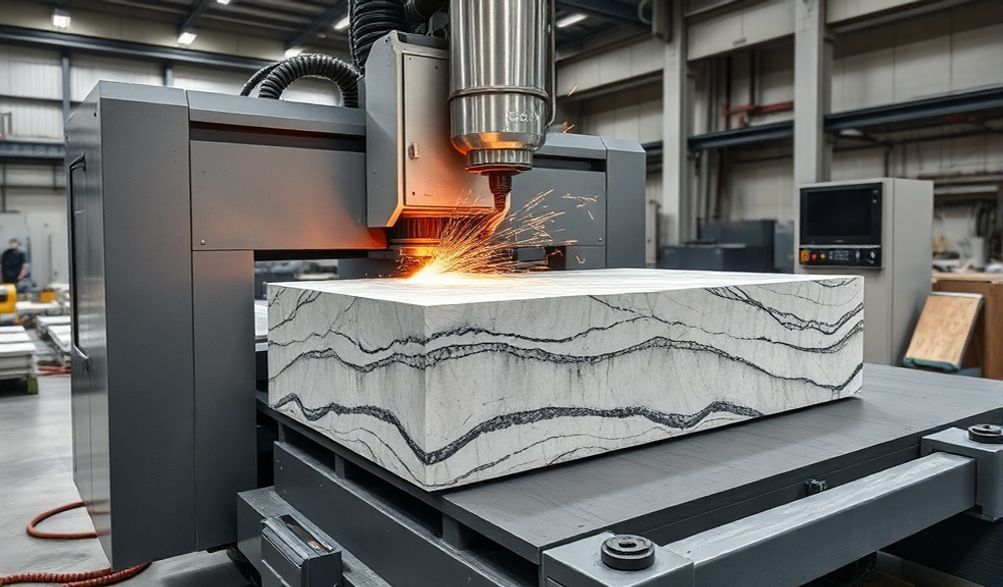
A block dressing machine, often called a block cutter or block trimmer, is a robust industrial saw designed for one primary, crucial task: creating perfectly flat, parallel, and smooth surfaces on one or more sides of a raw stone block. Think of it as the essential “squaring up” phase. Before a block can be efficiently sliced into slabs by a gang saw or multiwire saw, it must be dressed to ensure dimensional accuracy and eliminate natural imperfections.
Defining the Process: From Raw Block to Dressed Surface
The “dressing” process involves passing a block beneath a powerful, stationary diamond blade (or a series of blades) on a reciprocating or bridge-style frame. The machine removes uneven material, saw marks from quarrying, and natural irregularities.
- It is NOT primary cutting: That’s the job of quarry wire saws or chain saws that extract the block from the earth.
- It is NOT secondary processing: Tasks like polishing, calibrating, or edge profiling happen later, after the block is sliced into slabs.
The block dresser sits squarely between these stages, transforming an irregular block into a precise, geometric starting point for all subsequent value-adding operations.
Asosiy sanoat tarmoqlari va ilovalari
The output of these machines fuels several major industries:
- Natural Stone Processing: This is the core application. The machine must be configured for material hardness—from the rugged density of granite to the more delicate veining of marble, and the softer characteristics of limestoneваsandstone.
- Engineered Stone/Quartz: While slabs are often produced using Bretonstone-type systems, block dressers are used in some production lines and are vital for fabricators trimming large sintered blocks.
- Construction & Architectural Fabrication: For producing cladding panels, structural elements, and bespoke architectural features.
- Monumental Work: Preparing large blocks for memorials and sculptures.
Critical Factors When Choosing a Block Dressing Machine Manufacturer
Selecting a manufacturer is about more than buying a machine; it’s about entering a long-term partnership. Your choice will directly impact your productivity, product quality, and total cost of ownership for the next 20+ years.
Technical Specifications and Machine Capabilities
Don’t just look at the brochure picture. Dive into the specs:
- Spindle Power & Motor Type: Determines cutting speed and ability to handle hard materials. Look for high-torque, reliable motors (e.g., AC vector or servo).
- Working Width & Length: Must accommodate your typical block sizes with room for future needs.
- Boshqaruv Tizimi: Traditional manual/PLC controls offer simplicity, while CNC systems provide repeatable precision, complex trimming capabilities, and data logging.
- Avtomatlashtirish Darajasi: Consider automatic blade height adjustment, programmable cutting sequences, and integration with block loaders/unloaders to reduce labor and boost throughput.
Build Quality, Durability, and Materials
A machine is only as good as its weakest component. Prioritize manufacturers who don’t cut corners.
- Каркас қурилиши: Look for stress-relieved, welded steel frames that resist torsion and vibration under heavy loads.
- Guideways & Bearings: Precision-ground or hardened steel guideways with high-quality linear bearings are non-negotiable for smooth, accurate movement and long-term wear resistance.
- Component Sourcing: Reputable manufacturers use branded, industry-proven components for spindles, motors, and PLCs, ensuring reliability and easier servicing.
Precision, Accuracy, and Finish Quality
This is where your ROI on quality becomes visible on every slab.
- Tolerance Levels: Top-tier machines hold parallelism and flatness tolerances within fractions of a millimeter (e.g., ±0.1mm/m).
- Sirt silliqligi: A good dresser leaves a clean, consistent surface, minimizing the amount of material wasted in subsequent polishing.
- Vibration Control: Integrated damping systems, dynamic balancing of moving parts, and a solid foundation are critical for achieving a fine finish and protecting spindle life.
After-Sales Support: The Make-or-Break Factor
This is arguably the most critical differentiator. A machine will eventually need service.
- O‘rnatish va o‘qitish: Does the manufacturer provide comprehensive on-site commissioning and operator training?
- Kafolat: Scope, duration, and what it genuinely covers.
- Ehtiyot qismlar mavjudligi: A global parts network and local inventory can mean the difference between a day of downtime and a month.
- Technical Service Responsiveness: 24/7 remote support and the ability to dispatch engineers quickly are hallmarks of a true partner.
A Global Landscape: Types of Block Dressing Machine Manufacturers
The market is diverse, with clusters of manufacturers offering different value propositions.
Established European and Western Manufacturers
Companies like Italy’s BretonваPedrini are often considered the gold standard. They are synonymous with:
* Ultra-High Precision and advanced automation.
* Extensive R&D, leading in Industry 4.0 integration.
* Premium pricing, reflecting their brand reputation, engineering depth, and superior finish quality.
* They set the benchmark that others are measured against.
Leading Asian Manufacturers (e.g., India, China, Turkey)
This segment has evolved dramatically, moving beyond “cheap alternatives” to become highly competitive.
* Strong Value Engineering: Offering robust performance at a significantly lower capital cost.
* Growing Technological Sophistication: Many now offer full CNC controls and respectable build quality.
* The Key is Vettting: The range here is vast. Due diligence—factory visits, reference checks, material testing—is absolutely essential to separate the quality leaders from the rest.
Specialized vs. Full-Line Suppliers
- Specialized Manufacturers: Focus solely on block dressing/cutting technology. They often offer deep expertise and customization for this specific niche.
- Full-Line/Turnkey Suppliers: Offer block dressers as part of a complete plant solution (gang saws, polishers, etc.). This can simplify procurement and ensure machine compatibility.
How to Vet and Evaluate Manufacturers: A Step-by-Step Guide
Arm yourself with a systematic approach to make a confident, evidence-based decision.
Conducting In-Depth Manufacturer Research
Start with a deep digital dive.
* Analyze Their Digital Footprint: A professional website with detailed technical documentation (manuals, CAD drawings, spec sheets) signals transparency. Review their client portfolio and case studies.
* Verify Certifications: Look for CE marking (mandatory for Europe), ISO 9001 (quality management), and other industry-specific certifications that validate their processes.
The Power of Site Visits and Machine Demonstrations
Never buy a machine of this caliber sight-unseen.
* The Factory Visit: Assess the production facility. Is it organized? Is welding and machining done in-house? Do you see a dedicated R&D or testing area? Look at the assembly line—attention to detail here reflects the final product.
* The Material Test: This is crucial. Bring samples of your own stone. A demonstration on granite tells you little if you process marble. Run your material and evaluate the cut quality, speed, and ease of operation firsthand.
Checking References and Industry Reputation
Go beyond the references a manufacturer provides.
* Contact Past Clients: Ask specific questions about reliability, support response times, and hidden costs. Inquire if they would buy from the same manufacturer again.
* Leverage Industry Networks: Attend major trade shows like Marmomac (Italy)yokiStone+tec (Germany). Engage in industry forums and LinkedIn groups. Unprompted peer recommendations are invaluable.
Future Trends in Block Dressing Technology
Investing in a machine today means considering where technology is headed tomorrow.
Increased Automation and Industry 4.0 Integration
The future is connected and data-driven.
* IoT Sensors will monitor spindle health, vibration, and temperature for predictive maintenance, preventing catastrophic failures.
* Data Analytics will optimize cutting parameters for different stones, maximizing yield and tool life.
* Robotic Integration for fully automated block handling will become standard, creating “lights-out” production cells.
Sustainability and Efficiency Focus
Environmental and operational efficiency are merging.
* Energy-Efficient Motors & Drives reduce long-term power consumption.
* Closed-Loop Water Recycling Systems are becoming mandatory in many regions, minimizing waste and cost.
* Advanced Dust Suppression and collection systems protect worker health and meet stringent air quality standards.
Advancements in Tooling and Software
The machine is only as good as the tools and brains it uses.
* Diamond Tooling: Developments in segment design, bond matrices, and diamond grit will allow for faster cutting speeds and longer life across more material types.
* CNC Software: More intuitive, graphical interfaces with simulation features will reduce programming time, prevent errors, and allow for complex, multi-surface dressing in a single setup.
Frequently Asked Questions (FAQ) About Block Dressing Machine Manufacturers
Q: What is the average price range for a block dressing machine?
A: Prices vary extremely widely based on size, automation, and origin. Basic, manually-operated models from Asian manufacturers can start around $50,000 – $80,000. Mid-range CNC machines typically fall between $150,000 – $300,000. High-end, fully automated lines from top European manufacturers can exceed $500,000+. Always prioritize Total Cost of Ownership (initial price + maintenance + downtime cost + energy use) over the sticker price alone.
Q: How important is after-sales service when selecting a manufacturer?
A: It is absolutely crucial and often the deciding factor. A block dressing machine is a 15-20 year investment. A manufacturer with a responsive, knowledgeable support team and a global spare parts network will minimize expensive production downtime, protecting your investment’s value over its entire lifespan.
Q: Can a block dressing machine handle different types of stone?
A: Most modern machines are versatile, but they require adjustment. The key variables are spindle speed, feed rate, and the diamond blade specification. Processing hard granite requires different parameters than soft marble. Some manufacturers offer machines specifically optimized for one material type (e.g., high-power for granite). Discuss your full material range with the manufacturer.
Q: What are the key differences between a block dressing machine and a multiwire saw?
A: They perform sequential, complementary tasks. A block dresser squares and flattens one or more sides of a raw block, creating a precise starting geometry. A multiwire saw then uses dozens of diamond-wire loops to slice the entire dressed block into multiple thin slabs simultaneously. You typically need both in a full processing line.
Q: How long does it typically take from order to installation?
A: Lead times depend on machine complexity and the manufacturer’s backlog. For a standard model, expect 3 to 6 months. For highly customized or fully automated solutions, lead times can extend to 8-12 months or more. Always confirm and include delivery timelines in your contract negotiations.
Xulosa
Choosing the right block dressing machine manufacturer is a strategic decision that forms the foundation of your stone processing capabilities. It requires looking beyond the initial quotation to evaluate technical prowess, demonstrable build quality, and—most importantly—the strength of the partnership through after-sales support.
By using the framework outlined in this guide—prioritizing hands-on demonstrations, rigorous vetting, and a long-term view on technology and support—you can navigate the global market with confidence. In an industry where precision defines product and profit, partnering with the right manufacturer is your most critical cut of all.
Ready to take the next step in modernizing your stone processing line? Download our comprehensive checklist for evaluating block dressing machine manufacturers to ensure you ask the right questions and make a confident investment.
<