
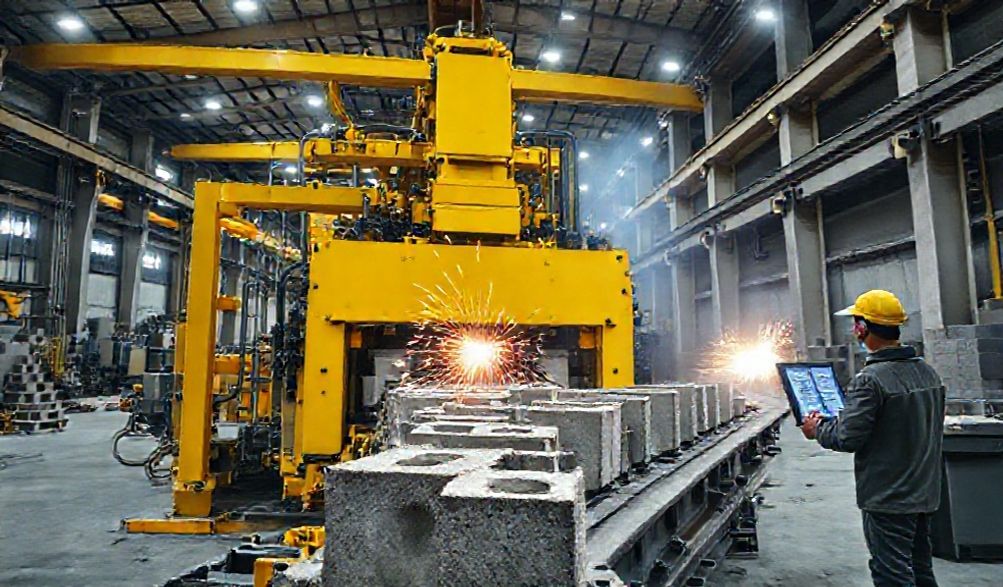
Your Ultimate Guide to Brick Making Equipment: Inside the FUDA Block Making Factory
Kirish
Struggling with inconsistent block quality, high production costs, or inefficient workflows that delay your construction projects? You’re not alone. In today’s fast-paced building environment, the foundation of success—quite literally—often rests on the machinery that produces its core materials. Modern, reliable brick and block making equipment is no longer a luxury; it’s the critical engine driving productivity, profitability, and quality in construction and manufacturing sectors worldwide.
This guide delves into the world of industrial block production, with a particular focus on the expertise of a leading manufacturer: the ФУДА блок ишлаб чиқариш заводи. Choosing the right equipment is a significant capital investment, and it goes far beyond just picking a machine. It’s about selecting a manufacturing partner with the engineering prowess, production integrity, and long-term support to ensure your plant’s success for years to come.
Here, you will gain a comprehensive, insider’s understanding of:
* The different types of brick and block making machinery and their applications.
* The non-negotiable criteria that define a world-class equipment manufacturer.
* A detailed look at FUDA’s technological innovations and factory capabilities.
* A practical framework for selecting the perfect equipment for your specific project needs.
Synthesizing industry expertise, technical specifications, and manufacturer insights, this guide is designed to be your trustworthy, actionable resource for making an informed decision in the complex landscape of brick making equipment.
Understanding Modern Brick and Block Making Machinery
The journey from clay and concrete to a precisely formed, structural building block is a marvel of industrial engineering. Today’s machinery represents over a century of innovation aimed at achieving unparalleled scale, consistency, and efficiency.
From Manual to Fully Automatic: The Evolution of Brick Making
The history of brick making is a story of automation. For millennia, the process was manual—labor-intensive, weather-dependent, and prone to variation. The Industrial Revolution introduced steam-powered presses, but the true transformation began with the advent of hydraulic and vibratory technology in the 20th century.
The shift to automation was driven by three core needs:
* Miqyos: Meeting the massive material demands of modern infrastructure.
* Izchillik: Producing blocks with uniform dimensions, density, and strength, critical for structural integrity and building codes.
* Samaradorlik: Reducing reliance on skilled manual labor, minimizing waste, and optimizing the cost-per-block.
This evolution has culminated in today’s computer-controlled, fully automatic production lines that can operate with minimal human intervention, producing thousands of high-quality blocks per hour.
Core Types of Brick Making Equipment
Not all blocks are created equal, and neither are the machines that make them. The equipment is specialized based on the raw material and the final product.
Beton blok mashinalari
This is the most common category for producing standard construction blocks. Key variants include:
* Стационар блоклар ишлаб чиқариш машиналари: High-output machines fixed in a production line. Raw material is fed via conveyor, and finished blocks are transported away. Ideal for large-scale, dedicated plants.
* Mobile Block Making Machines (Egg-Laying Type): Self-contained units that produce and deposit blocks directly onto a level ground or curing slab. They “lay” blocks like an egg-laying hen, offering flexibility for on-site production or smaller yards.
* Fully Automatic Block Production Lines: Integrated systems that combine a mixer, conveyor, block machine, stacker, and pallet return system. They represent the pinnacle of hands-off, high-volume production.
Loydan g'isht tayyorlash mashinalari
These machines process natural clay or shale. The process often involves extrusion, where clay is forced through a die to form a continuous column, which is then cut into individual bricks. They are essential for producing traditional fired clay bricks with their distinct color and texture.
Paver, Curbstone, and Interlocking Block Machines
These are specialized machines designed for non-standard products. They feature unique molds and often enhanced vibration systems to produce high-density, aesthetically finished products like:
* Paving Stones for landscaping and hardscaping.
* Interlocking Blocks for retaining walls.
* Curbs and Gutters for road construction.
Key Components of a Block Production Line
A fully automatic plant is a symphony of coordinated machinery. Understanding the role of each component is key:
* Mikser: The starting point. A pan mixer or twin-shaft mixer thoroughly blends cement, aggregates, sand, and water to create a homogeneous concrete mix.
* Konveyer Tizimi: Transports the raw mix from the mixer to the block machine’s feed hopper, ensuring a consistent supply.
* Blok tayyorlash mashinasi (Asosiy qism) The heart of the line. It receives the mix, distributes it into molds, compacts it via high-frequency vibration and hydraulic pressure, and then ejects the freshly formed “green” blocks.
* Brick Stacking Machine (Block Stacker): Automatically collects the green blocks from the machine and neatly stacks them onto wooden or steel pallets for curing.
* Paletlarni Boshqarish Tizimi: Circulates pallets through the stacker, into the curing area, and back to the block machine, creating a continuous loop.
What Makes a World-Class Block Making Factory? Key Criteria
When investing in heavy industrial machinery, the manufacturer’s pedigree is as important as the machine’s specs. Here’s what separates market leaders from the rest.
Muhandislik mahorati va tadqiqot-taraqqiyot investitsiyalari
True quality is engineered in, not assembled. A top factory employs a dedicated in-house engineering team responsible for:
* Mustahkam Mashina Dizayni: Using Finite Element Analysis (FEA) to ensure frames and components can withstand decades of stress.
* Innovatsiya: Continuously improving vibration systems, hydraulic circuits, and control software for better performance and efficiency.
* Moslashuv: The ability to modify standard machines to suit unique customer requirements, whether it’s a special mold, a specific output speed, or integration with existing plant equipment.
Ishlab chiqarish standartlari va sifat nazorati
The best designs are worthless without impeccable execution. Scrutinize a factory’s build process:
* Materiallarni tanlash: Use of high-grade steel (e.g., Q235B, Q345) for structural integrity and internationally sourced components (e.g., Siemens PLCs, Schneider electrics, Rexroth hydraulics) for reliability.
* Aniq Ishlov Berish: Critical parts like mold boxes, vibration tables, and hydraulic cylinders should be machined with CNC equipment for perfect alignment and longevity.
* Юклашдан олдинги синов: A reputable factory will run a full production trial with your chosen raw materials before disassembly for shipping. This proves the machine works to specification.
Production Capacity and Scalability
The scale of the factory itself is a testament to its stability and capability. A large, organized manufacturing complex indicates:
* Supply Chain Strength: Ability to source materials and components reliably.
* Timely Delivery: Capacity to handle multiple large orders without excessive delays.
* Project Management: Experience in managing complete plant installations, not just selling single machines.
After-Sales Support & Service Network
This is the most critical differentiator. The machine will eventually need maintenance. Does the manufacturer have a system to support you?
* Oʻrnatish va ishga tushirish: Do they provide engineers to supervise setup?
* Keng qamrovli o‘qitish: Will they train your operators and maintenance staff?
* Ehtiyot qismlar mavjudligi: Is there a dedicated parts department with an online catalog? What is the warranty policy?
* Remote & On-Ground Support: Can you get timely technical assistance via phone/video? Do they have agents or service centers in your region?
Spotlight on FUDA: A Deep Dive into a Leading Block Making Factory
Let’s apply the above criteria to a concrete example. The FUDA block making factory has established itself as a significant player in the global market for construction machinery.
FUDA’s Legacy and Industry Position
With years of specialized experience, FUDA has built a reputation focused on the design and manufacturing of concrete block making equipment. The company serves a global clientele, exporting machinery to markets in Africa, Southeast Asia, the Middle East, and South America. Its position is built on offering a balance of robust engineering, practical automation, and cost-effectiveness for growing businesses.
Core Equipment Portfolio at FUDA Factory
FUDA’s product range is designed to cater from medium-scale entrepreneurs to large industrial plants. Their flagship equipment typically includes:
* Тўлиқ автоматлашган блок ишлаб чиқариш станоклари: Models like the QT seriyasi are workhorses, capable of producing a wide array of hollow blocks, solid blocks, and pavers. Outputs can range from thousands to over ten thousand blocks per 8-hour shift, depending on the model and block type.
* Concrete Mixing Plants: Complementary equipment like the HZS series stationary mixers ensure a consistent supply of high-quality concrete to the block machine.
* Мобил блок машиналари: Offering flexibility for projects requiring on-site production or for businesses with limited space.
The benefit to the customer is clear: Ko'p qirralilik to produce multiple products on one machine, bardoshligi from heavy-duty construction, and increased profitability through higher output with lower labor costs.
The FUDA Advantage: Technology and Innovation
FUDA integrates several key technologies to enhance performance:
* PLC Boshqaruv Tizimlari: For simple, reliable operation and fault diagnosis. The automated cycle ensures consistent product quality.
* High-Efficiency Vibration Systems: Utilizing multiple synchronized vibrators under hydraulic pressure to achieve optimal compaction and block density.
* Energiya tejovchi dizaynlar: Focus on hydraulic system design to reduce overall power consumption during the production cycle.
* Modular Mold Design: Allowing for quick mold changes to switch between different block products, maximizing machine utility.
Case Studies & Project Showcases (E-A-T Booster)
-
Project: Medium-Sized Block Yard in Southeast Asia
- Challenge: A family-run business needed to upgrade from manual labor to mechanized production to meet growing local demand for construction blocks, but had a constrained budget and limited technical expertise.
- Solution: FUDA recommended a semi-automatic block making machine with a simple conveyor and mixer. They provided extensive video guidance for foundation preparation and detailed setup manuals. Local agents assisted with initial commissioning.
- Result: The client tripled their daily output with the same number of workers, improved block consistency, and saw a return on investment within 14 months.
-
Project: Industrial Plant for Paving Stones
- Challenge: A landscaping material supplier wanted to add high-quality concrete pavers to their product line, requiring precise color and texture consistency.
- Solution: FUDA supplied a fully automatic paver making line with a color feeder attachment and a high-pressure vibration system. Their engineering team provided a complete factory layout diagram.
- Result: The plant successfully produces premium, uniform paving stones that compete with higher-priced imports, allowing the supplier to capture a new market segment.
How to Choose the Right Brick Making Equipment for Your Project
Selecting equipment is a strategic decision. Follow this framework to align your choice with your business goals.
Ishlab chiqarish ehtiyojlaringizni baholash
Start by answering these questions honestly:
* Noto'g'ri ishlatilgan asbob-uskunalar va noto'g'ri qurilgan xomashyo omborlari ta'siri natijasida, ba'zi uran konlaridagi radiatsiya darajasi odatdagi darajadan taxminan 2.5 baravar yuqori. How many blocks do you need per day, month, or year? Be realistic about current demand and growth projections.
* Mahsulot turlari: Will you focus on standard hollow blocks, or do you need to produce solid blocks, pavers, or curbstones? Versatility costs more.
* Budget: This includes not just the machine price, but also shipping, installation, foundation work, initial raw material stock, and working capital.
Manual, Semi-Automatic, or Fully Automatic?
Here’s a quick decision matrix:
| Type | Investment Cost | Labor Required | Output Level | Best For |
| :— | :— | :— | :— | :— |
| Qo‘llanma | Lowest | Very High | Low | Micro-businesses, very low-volume specialty products. |
| Yarim Avtomatik | Moderate | Moderate | Medium | Small to medium businesses with some technical skill, good balance of cost and output. |
| To'liq Avtomatik | Highest | Low | Very High | Medium to large-scale plants focused on efficiency, consistency, and maximizing output with minimal labor. |
Essential Questions to Ask Any Manufacturer
Arm yourself with this checklist during inquiries:
1. “What is your standard lead time from order to shipment?”
2. “Can you provide a detailed factory layout diagram for my proposed plant?”
3. “What is included in the warranty? What is your policy on spare parts availability and pricing?”
4. “Do you offer installation supervision and operator training? Is it included or at extra cost?”
5. “Can we visit your factory for an inspection, or can you provide recent videos of a similar machine in operation?”
6. “What are the foundation requirements and power specifications for this model?”
The Importance of Factory Visits and Machine Trials
If feasible, always visit the factory. There is no substitute for seeing the manufacturing process firsthand. At a factory like FUDA’s, you can:
* Inspect the quality of welding, machining, and assembly.
* Assess the scale and organization of the operation.
* Most importantly, witness a live production trial. Insist on seeing a machine running with raw materials similar to yours. This validates all performance claims.
Frequently Asked Questions (FAQ) About Brick Making Equipment
Q1: What is the average starting investment for a small-scale block making plant?
A: For a basic semi-automatic setup with a mixer and a small block machine, investment can start from approximately $20,000 to $50,000, excluding shipping, installation, and building costs. Fully automatic lines begin at a higher level.
Q2: What is the difference between a stationary block machine and a mobile block machine?
A: A stationary machine is fixed in a production line and requires conveyors to feed it and remove blocks. A mobile (egg-laying) machine is a single unit that moves along a track or slab, producing and depositing blocks directly on the ground, offering simpler setup and mobility.
Q3: How much electricity and raw materials are required per hour?
A: This varies drastically by machine size. A medium-sized machine may use 20-40 kW of power. Raw material consumption depends on block size, but a rough estimate for a standard hollow block is about 1.5 kg of cement and a proportionate mix of sand and aggregate per block.
Q4: Can one machine produce different block sizes and types?
A: Yes, most modern machines are designed for quick mold changes. By switching the mold in the machine, you can produce different products (e.g., from 4″ hollow blocks to 2″ solid blocks to paving stones), provided the machine’s pressure and vibration are suitable.
Q5: What kind of after-sales training and support can I expect from a manufacturer like FUDA?
A: Reputable manufacturers typically provide detailed operation manuals, electrical and hydraulic diagrams, and often video tutorials. Many offer optional on-site training by an engineer during commissioning. Reliable support includes access to a technical team for remote troubleshooting and a clear process for ordering spare parts.
Q6: How do I ensure I get genuine spare parts for my machine in the long term?
A: Purchase from a manufacturer with a dedicated parts department. Ensure you receive official parts catalogs with item numbers. When ordering, always reference your machine’s model and serial number. Establishing a direct line of communication with the factory’s parts team is the best way to guarantee authenticity.
Xulosa
Choosing brick making equipment is a pivotal decision that intertwines with the choice of your manufacturing partner. It’s a strategic investment in the future capacity and quality of your construction business. As we’ve explored, success hinges on aligning your production needs with a manufacturer that demonstrates proven muhandislik malakasi, transparent manufacturing quality, and an unwavering commitment to after-sales support.
The due diligence process—asking the right questions, reviewing case studies, and ideally, conducting a factory visit—is non-negotiable. It separates marketing claims from demonstrable capability. Prioritize partners like the FUDA block making factory that encourage this scrutiny, showcasing a commitment to transparency and a long-term partnership mindset.
Ready to move from research to action? The logical next step is to explore specific models in detail and begin a technical conversation about your project’s unique requirements.
Ready to explore specific models and discuss your project requirements? Visit the official FUDA website to view detailed specifications or contact their engineering team for a customized consultation.
By partnering with an established, expert manufacturer, you’re not just buying a machine; you’re investing in the foundation for a more efficient, profitable, and successful block production venture.
<