
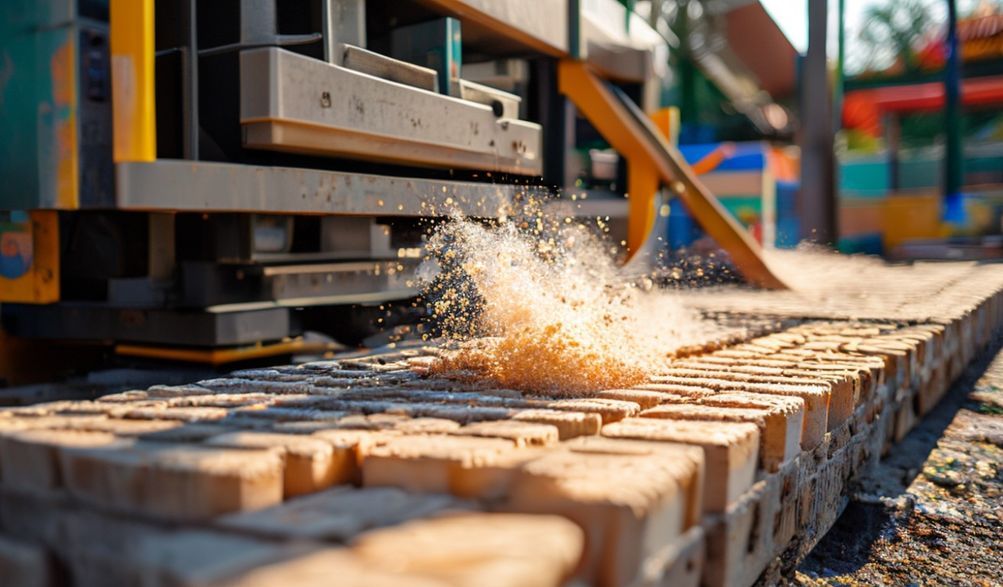
Pilipinada Bo'sh Blok Mashinasini Sotib Olish Uchun Yakuniy Qo'llanma
Kirish
Filippin qurilish sanoati doimiy ravishda yuqoriga intilmoqda. Metro Manila ko'tarilayotgan osmono'par binolaridan tortib arxipelag bo'ylab infratuzilma loyihalarigacha, ishonchli va arzon qurilish materiallariga talab hech qachon shunchalik yuqori bo'lmagan. Ushbu qurilish bumining asosida yotgan muhim tarkibiy qism: beton bo'shliqli blok (CHB) hisoblanadi.
Tadbirkorlar, pudratchilar va investorlar uchun bu talab muhim imkoniyatni taqdim etadi. Biroq, eng muhim birinchi qadam — to'g'ri manbalarni topishdir.Filippinda bo'sh blok mashinasi sotiladi—turli xil narxlar, va'dalar va mashina turlari bilan to'ldirilgan bozorda qanday harakat qilish kerak? Sarmoyangiz ishonchli va kerakli daromadni ta'minlay olishiga qanday ishonch hosil qilishingiz mumkin?
Ushbu qo'llanma sizning ishonchli manbaingiz bo'lish uchun mo'ljallangan. Bizning maqsadimiz - shov-shuvlarni chetlab o'tib, sizga ushbu muhim xarid qilish uchun keng qamrovli, ishonchli va mutaxassislar tomonidan tasdiqlangan reja taqdim etish. Chuqur soha tahlillari, texnik tahliylar va mahalliy bozor sharohitidan tuzilgan ushbu maqola sizga variantlarni baholash, tuzoqlardan qochish va nafaqat g'ishtlarni, balki rivojlanib borayotgan biznesni quruvchi mashinani tanlash uchun zarur bilimlar bilan qurollantiradi.
Bo'shliqli blok mashinalarini tushunish: Turlari va qo'llanilishi
Bozorga kirishdan oldin, sarmoyangiz markazida turgan asbobni tushunish juda muhimdir. Ichiga bo'sh blok mashinasi nafaqat asbob-uskuna, balki ishlab chiqarish liniyangizning dvigatelidir.
What is a Hollow Block Machine?
At its core, a hollow block machine is a device that manufactures concrete hollow blocks through a process of compaction and vibration. It mixes cement, sand, and gravel (aggregates), feeds this mixture into a mold, and then uses powerful vibrations to compress the material, removing air pockets and creating a dense, strong block. Once ejected, the blocks are cured to gain full strength.
The end product—the standard 4”, 5”, or 6” hollow block—is the backbone of countless walls, partitions, and structures across the Philippines due to its strength, insulation properties, and cost-effectiveness.
Main Types of Machines Available in the Philippine Market
The Philippine market offers a spectrum of machines, from simple manual setups to fully automated plants. Your choice will define your production scale, labor needs, and initial investment.
-
Qo'lda boshqariladigan g'ovak blok mashinalari:
- Operatsiya: These are hand-operated machines where mixing, feeding, and compaction are performed manually, often using a lever.
- Afzalliklari: Extremely low initial cost, simple to understand and operate, minimal maintenance.
- Kamchiliklari: Highly labor-intensive, very low output (typically 300-500 blocks per day), inconsistent block quality.
- Mukammal mos keladi: Small-scale projects, startups testing the market, or areas with very low capital and abundant cheap labor.
-
Yarim Avtomatik Ichiga Bo'sh Blok Mashinalari:
- Operatsiya: This popular category introduces key automations, such as an electric-powered vibration system and sometimes an automatic mixer or feeder. The operator typically controls the cycle and handles block removal.
- Afzalliklari: Excellent balance between price and output. Significantly higher production (1,000-3,000 blocks per day) and better consistency than manual machines. Reduces physical strain on workers.
- Kamchiliklari: Still requires a fair amount of operator involvement. Higher upfront cost than manual machines.
- Mukammal mos keladi: Small to medium-sized businesses (SMBs) with steady demand, growing startups, and contractors producing for their own projects.
-
Fully Automatic Hollow Block Machines:
- Operatsiya: These are complete production systems. They automate the entire process: batching, mixing, conveying, molding, compacting, curing, and sometimes even stacking. Often controlled by a Programmable Logic Controller (PLC).
- Afzalliklari: Very high output (4,000-20,000+ blocks per day), exceptional consistency and block quality, minimal labor requirements (often just 1-2 supervisors).
- Kamchiliklari: High capital investment, requires more space and stable utilities, more complex maintenance.
- Mukammal mos keladi: Medium to large-scale commercial block yards, suppliers to major construction firms, and businesses focused on high-volume, high-efficiency production.
-
Мобил блок машиналари:
- Operatsiya: These are compact, often trailer-mounted machines designed for on-site production.
- Afzalliklari: Eliminates the cost and logistical hassle of transporting finished blocks from a central yard to a distant construction site. Ideal for remote projects.
- Kamchiliklari: Limited production capacity compared to stationary automatic plants.
- Mukammal mos keladi: Construction companies working on large, long-term projects in specific locations (e.g., housing subdivisions, remote infrastructure).
Key Features to Consider Before You Buy
To'g'ri tanlashFilippinda bo'sh blok mashinasi sotiladi goes beyond just the type. You must scrutinize specific features that will impact your daily operations, costs, and long-term satisfaction.
Ishlab chiqarish quvvati (soatiga/kuniga mahsulot)
Don’t just buy the biggest machine you can afford. Buy the one that matches your demand.
* Assess Your Needs: Calculate your current project requirements and forecast near-future growth. Are you supplying a single project or aiming to be a community supplier?
* Match the Machine: A machine that runs at 50% capacity is more efficient than one that is constantly overstretched. Under-buying leads to missed opportunities; over-buying strains your finances.
Block Types and Mold Configurations
Versatility can be a key revenue driver.
* Standart o'lchamlar: Ensure the machine can produce the most in-demand CHB sizes (4”, 5”, 6”).
* Almashtiriladigan Kalıplar: The ability to quickly swap molds is a huge advantage. It allows you to produce different block types (solid, cellular) or even diversify into related products like interlocking paving blocks, curb stones, or garden tiles to tap into additional markets.
Power Source: Electric, Diesel, or Hybrid?
Your location dictates the most practical and economical choice.
* Elektr motorlari: Cleaner, quieter, and generally cheaper to operate per hour. Best for areas with stable and affordable grid power.
* Dizel dvigatellari: Offer complete independence from the power grid. Crucial for sites with frequent brownouts or no electrical connection. Higher fuel and maintenance costs.
* Hybrid (Electric/Diesel): Provides flexibility. Use grid power when available, and switch to the diesel engine during outages. A popular and prudent choice for many Philippine businesses.
Build Quality and Durability
This is where upfront cost savings can lead to long-term financial pain.
* Kadr: Look for a robust, heavy-duty steel frame that can withstand constant vibration without cracking or warping.
* Titrama Tizimi: High-quality, name-brand vibration motors (e.g., Italian or German-made) are critical for producing dense, strong blocks.
* Tropical Climate: The machine must be built to resist high humidity and heat. Look for quality paint or powder coating to prevent rust.
After-Sales Support: The Most Critical Factor
In the Philippines, this is non-negotiable. A machine is useless if it breaks down and you can’t get it fixed.
* Local Presence: Does the supplier have a service center or technical team based in the Philippines (with reach in Luzon, Visayas, Mindanao)?
* Spare Parts Inventory: Are common wear-and-tear parts (molds, springs, bearings) readily available in-country, or will you wait months for an overseas shipment?
* Warranty: A clear, comprehensive warranty (at least 1 year on major components) is a sign of a confident supplier. Understand exactly what it covers and excludes.
Navigating the Philippine Market: Suppliers and Price Ranges
Knowing nima to buy is half the battle. Knowing whereваkimdan to buy it is the other.
Where to Find Hollow Block Machines for Sale in the Philippines
- Local Manufacturers/Distributors: Often the best choice. They understand local conditions, can customize machines, and crucially, provide accessible after-sales support and parts. Look for established companies with physical offices and showrooms.
- Heavy Equipment Dealers: Some major dealers include block-making machines in their portfolio. They offer brand credibility but may rely on third parties for specialized technical support.
- Online Marketplaces (e.g., Facebook Marketplace, Lazada):
- Afzalliklari: Wide variety, easy price comparison.
- Kamchiliklari: High risk of scams, misrepresentation, and sellers with zero after-sales support.
- Vetting Tip: Never pay fully upfront. Insist on visiting a physical warehouse or seeing the machine in operation. Check seller history and reviews meticulously.
- Direct Importing: Buying from China or other countries via Alibaba. While potentially cheaper upfront, this route carries massive risks: hidden shipping/importation costs, complex customs clearance, zero local warranty, and immense difficulty in getting technical support or spare parts.
Hollow Block Machine Price Guide in the Philippines
Prices are approximate as of 2024 and can vary significantly based on brand, specifications, and supplier. Always request a formal, detailed quotation.
| Machine Type | Estimated Price Range (PHP) | Key Determinants |
| :— | :— | :— |
| Qo‘llanma | ₱15,000 – ₱50,000 | Build quality, included molds |
| Yarim Avtomatik | ₱150,000 – ₱800,000 | Production capacity, power source, level of automation |
| To'liq Avtomatik | ₱1,000,000 – ₱5,000,000+ | Output level, degree of automation (PLC), brand |
| Mobile | ₱500,000 – ₱2,000,000 | Capacity, features (self-contained mixer) |
Important: The final price is influenced by production capacity, brand reputation, included after-sales package (training, warranty), and payment terms.
Evaluating a Supplier’s Reputation
Use this checklist before signing a contract:
* Years in Business: Longevity often indicates reliability.
* Client Portfolio & References: Ask for contact details of past clients, especially those with similar machine models.
* Physical Address & Showroom: A legitimate business has a real location you can visit.
* Responsiveness: Do they answer technical questions clearly and promptly?
* Clarity of Terms: Is the warranty, delivery, and installation scope clearly defined in writing?
Maximizing Your Investment: Operation and Profitability
Your machine is an asset. Proper setup and operation turn it into a profit center.
Setting Up Your Block Yard: Basic Requirements
- Kosmik makon A leveled, concrete-floored area for the machine, curing area (covered), and raw material storage.
- Utilities: Reliable access to water and the appropriate power connection (220V/380V) or diesel fuel storage.
- Xom ashyolar: Secure a consistent supply of quality cement, sand, and gravel. Inconsistent materials lead to weak blocks.
Calculating ROI and Profit Potential
A simple framework to estimate viability:
1. Daily Output: Estimate blocks produced per day (e.g., 2,000).
2. Cost per Block: Calculate raw material cost + labor + overhead (power, rent) per block. (e.g., ₱12).
3. Selling Price: Determine market price (e.g., ₱18-₱22 per 4″ block).
4. Gross Profit per Block: Selling Price – Cost (e.g., ₱20 – ₱12 = ₱8).
5. Daily Gross Profit: Output x Profit per Block (e.g., 2,000 x ₱8 = ₱16,000).
A higher-quality, more efficient yarim avtomat mashina directly improves this math by increasing output and reducing waste/labor cost per block.
Essential Maintenance Tips for Longevity
- Daily: Clean all concrete residue from the mold, hopper, and platform. Check for loose bolts.
- Weekly: Inspect vibration motors and bearings. Lubricate all moving parts as per the manual.
- Monthly: Conduct a thorough inspection of the entire frame, electrical connections, and hydraulic systems (if any).
Ko'p so'raladigan savollar bo'limi
Q1: What is the average price of a hollow block machine in the Philippines?
A: There is no single “average” price, as it ranges from around ₱15,000 for a basic manual machine to over ₱5,000,000 for a large fully automatic plant. Most small to medium businesses invest between ₱150,000 and ₱800,000 in a robust semi-automatic machine. Refer to our detailed price guide in the Philippines section above for a breakdown.
Q2: Can I start a hollow block business with a manual machine?
A: Absolutely. A manual machine is a common, low-risk entry point for entrepreneurs with limited capital. It allows you to learn the process, establish a small client base, and reinvest profits into a semi-automatic machine for growth. It’s a practical first step on the scalability path.
Q3: How do I choose between a local brand and an imported brand?
A: Weigh the key trade-off: support vs. perception. A reputable local brand offers easier communication, faster service, and readily available parts. Some imported brands may have advanced features, but if their local support is weak, you risk costly downtime. For a core production asset, reliable after-sales service in the Philippines should be your primary deciding factor.
Q4: What are the most common problems with hollow block machines?
A: Common issues include weak block density (from failing vibration motors), blocks sticking in the mold (poor mold finish or lack of release agent), and frame cracks (from low-quality welding). These underscore the importance of buying a quality machine from a trusted supplier and adhering to a strict maintenance schedule.
Q5: Are there financing options available for purchase?
A: Yes. Many established suppliers offer in-house financing or installment plans with a down payment. Additionally, you can explore business or SME loans from banks, cooperatives, or government lending programs like those from the DTI or SB Corporation. Presenting a solid business plan that includes your machine’s profit potential will strengthen your loan application.
Xulosa
Purchasing a Filippinda bo'sh blok mashinasi sotiladi is a strategic decision that lays the foundation for your business’s future. We’ve walked through the essential journey: from understanding the different machine types and their applications, to evaluating critical features like production capacity and after-sales support, and finally, navigating the local market of suppliers and pricing.
This guide was created with one goal: to empower you, the Filipino entrepreneur, with unbiased, detailed, and practical information. By treating this as a checklist, you can approach suppliers with confidence, ask the right questions, and ultimately select a machine that is not just a purchase, but a partner in growth.
Remember, the right investment does more than produce blocks—it builds resilience, reputation, and a lasting legacy in the thriving construction landscape of the Philippines. Do your due diligence, prioritize support and quality, and take the first step toward building your success.
<