
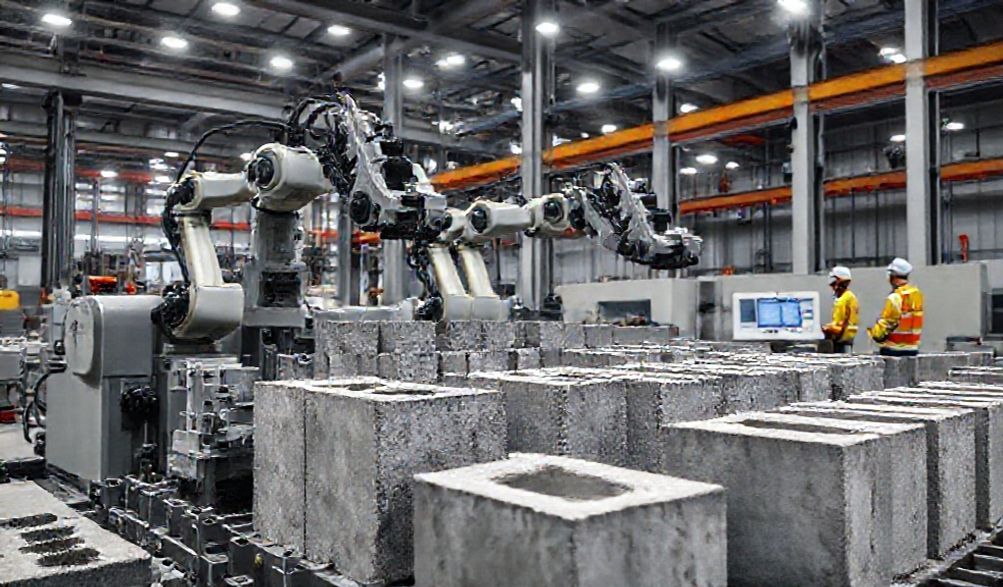
Your Ultimate Guide to Finding a Reliable China Block Machine Supplier in 2024
Kirish
Global qurilish bloklari bozori ortib borayotgan talab va barqaror qurilish materiallariga bo'lgan ehtiyoj tufayli o'sishni davom ettirmoqda.2027 йилга қадар 450 миллиард доллар, fueled by relentless urbanization and infrastructure development worldwide. At the heart of this industry’s supply chain sits a dominant force: China, manufacturing an estimated 70% of the world’s block making machinery. For entrepreneurs and construction firms, this represents a tremendous opportunity for cost-effective, advanced equipment. Yet, it also presents a formidable challenge: navigating a vast, complex marketplace to find a truly reliable partner.
This guide is designed to be your definitive compass. Our purpose is not to provide a simple directory, but to equip you with a data-driven, experience-based framework for selection. The insights herein are synthesized from deep industry analysis, international trade data, and on-the-ground knowledge of manufacturing practices, quality variances, and logistical realities within China.
Our objective is to build your trust through transparency and empowerment. We will highlight the critical red flags and green flags that separate reputable manufacturers from risky vendors. By the end, you will possess the knowledge to make an informed decision that protects your investment and ensures the long-term viability of your block production business. Let’s begin your journey to partnering with the right China block machine supplier.
Why China Dominates the Global Block Machine Market
TushunishNima uchun China is the epicenter for this machinery is key to leveraging its advantages while mitigating risks. Its dominance isn’t accidental; it’s built on a powerful trifecta of scale, innovation, and variety.
Scale and Cost-Effectiveness of Manufacturing
China’s manufacturing prowess is rooted in unparalleled industrial ecosystems.
* Sanoat klasterlari: Cities like Quanzhou, Fujian (for brick machines) and various hubs in Shandong and Henan have dense clusters of manufacturers, component suppliers, and skilled labor. This concentration drastically reduces production time and costs.
* Supply Chain Advantages: Every part, from hydraulic cylinders and PLCs to steel plate and motors, is readily available locally. This integrated supply chain ensures competitive pricing and relative stability, even in fluctuating global markets.
Texnologik taraqqiyot va innovatsiya
The narrative of “cheap Chinese copies” is outdated. The industry has pivoted decisively toward value-added innovation.
* Shift to High-Tech: Leading Chinese suppliers now produce sophisticated machinery rivaling European counterparts. This includes fully automated, computer-controlled production lines, robotic handling systems, and advanced vibration technology.
* Diverse Block Technologies: China is a leader in manufacturing equipment for various block types: standard concrete blocks, paving stones, hollow blocks, and specialized systems for Autoclaved Aerated Concrete (AAC)ваCellular Lightweight Concrete (CLC). This reflects deep R&D investment.
Diversity of Machinery for Every Need
Whether you’re a startup or a national contractor, there’s a machine built in China for your scale.
* Small-Scale & Manual: Affordable manual or semi-automatic machines perfect for small businesses or rural projects with lower output requirements.
* Fully Automated Lines: High-speed, hydraulic stationary machines and entire pallet circulation plants capable of producing thousands of premium blocks per hour with minimal human intervention.
Critical Factors When Vetting a China Block Machine Supplier
This is the core of your due diligence. Moving beyond price to evaluate these factors is what separates a successful purchase from a costly mistake.
Verifying Manufacturer vs. Trading Company
Knowing who you are dealing with is the first critical step.
* The Distinction: A ishlab chiqaruvchi owns the factory, engineers, and production lines. A trading company is a middleman that sources from various (often unknown) factories.
* Pros and Cons: Manufacturers typically offer better pricing, direct technical knowledge, and more control over quality. Trading companies can offer a wider range of machines and sometimes better English communication, but add a layer of cost and can obscure the true source.
* Verification Steps:
* Request the official Business License and check the registered scope of business.
* Insist on a live video tour of the factory floor, showing active production and inventory.
* Ask for factory audit reports from previous international clients or third-party inspectors.
* Use satellite maps to verify the factory’s claimed location and size.
Assessing Technical Expertise and R&D Capability
A machine is only as good as the engineering behind it.
* In-House Engineering Team: A true manufacturer will have a dedicated R&D department. Ask about the size and qualifications of their engineering team.
* Patent Portfolio: Inquire about any patents they hold for machine designs, vibration systems, or control software. This is a strong indicator of innovation.
* Moslashtirish Qobiliyati: Can they modify a standard machine to fit your unique raw materials (e.g., specific aggregate size) or produce a custom block design? Their willingness and speed in providing preliminary drawings is a telling sign.
Quality Control Processes and Standards
This directly impacts machine longevity, output quality, and maintenance frequency.
* Core Materials: Investigate the grade of steel used in the frame and molds. High-tensile steel resists stress and wear far better.
* Asosiy tarkibiy qismlar: Ask for the brands of critical components. Do they use reputable international brands (e.g., Siemens or Schneider for PLCs, ABB for motors, Rexroth for hydraulics) or generic, uncertified alternatives? This is a major differentiator in price and reliability.
* Assembly & Craftsmanship: Look for evidence of precision machining, robust welding (ask about welding standards like ISO 3834), and clean, professional assembly in photos and videos.
* Testing Protocols: Reputable suppliers will run a full factory acceptance test (FAT) before shipment, often allowing you to witness it remotely via video.
After-Sales Service and Support Structure
The service begins keyin the sale. A lack of support can render even the best machine useless.
* O‘rnatish va o‘qitish: Do they provide supervised installation by their engineers at your site? What is the scope and language of operator training?
* Warranty Terms: Scrutinize the warranty. A standard offer is 12 months for the whole machine, excluding wear parts. What is the process for claiming warranty?
* Spare Parts Policy: Is there a guaranteed stock of critical spare parts? What are the prices and typical delivery times?
* Texnik yordam: Is 24/7 remote support (via WhatsApp, Skype, TeamViewer) available? How quickly do they commit to responding?
A Step-by-Step Supplier Selection Process
Follow this actionable framework to methodically narrow your search and make a confident choice.
Step 1: Define Your Precise Requirements
Clarity here prevents you from being swayed by unsuitable offers. Create a project specification document:
* Block Type: Concrete hollow block, solid block, paving stone, interlock, AAC?
* Chiqish quvvati: Blocks per shift or per hour (e.g., 5,000 blocks/8-hour shift).
* Avtomatlashtirish Darajasi: Manual, semi-automatic, fully automatic, with or without robotic pallet handling?
* Budget Range: Be realistic, including a contingency for shipping, installation, and initial spares.
* Site Conditions: Available space, power supply (voltage, phase), and raw material characteristics.
Step 2: Deep-Dive Research and Shortlisting
- Where to Look: Use B2B platforms (Made-in-China, Alibaba.com) but filter aggressively. Search for specific machine model names. Research exhibitors at major industry fairs like Bauma China.
- Analyze Profiles: Look beyond glossy images. Examine company history, production videos, and client testimonials. A 10+ year history is a positive signal.
Step 3: The Inquiry and Communication Phase
Your initial contact is a test of their professionalism.
* Asosiy Savollar:
* “Are you the direct manufacturer? Can I have a video tour of your workshop?”
* “What is your standard warranty and what does it specifically exclude?”
* “Can you provide a list of your main component brands (PLC, hydraulic system, motors)?”
* “Do you offer installation supervision and training? At what cost?”
* Evaluate Responsiveness: Are they prompt, detailed, and technically precise in answers, or vague and solely price-focused?
Step 4: Due Diligence and Verification
- References: Request contact information for 2-3 previous international clients in a region similar to yours. Follow up.
- Third-Party Inspection: For large orders, strongly consider hiring an inspection company like SGS, BV, or TÜV to conduct a pre-shipment inspection. This verifies quality, specifications, and function.
- Contract Scrutiny: Ensure the Proforma Invoice (PI) and subsequent contract detail everything: exact technical specs, payment terms, delivery time, warranty, and responsibilities.
Step 5: Navigating Logistics and Payment Terms
- Incoterms: Understand the responsibilities. FOB (Erkin Bordda) is common: you own the goods once they’re loaded on the ship and you control freight and insurance. CIF (Xarajat, Sug‘urta va Yuk Tashish) means the supplier arranges shipping to your port.
- Freight Forwarder: Even with FOB, engaging your own reliable freight forwarder in China is advisable for oversight.
- Payment Methods: Secure methods are staged. A typical structure is 30% deposit by T/T, 70% against copy of shipping documents. For very large orders, a Letter of Credit (L/C) provides security for both parties.
Red Flags and Green Flags: What to Watch For
These insights, born from hard experience, can save you immense trouble.
Major Red Flags
- Unrealistically Low Price: If a quote is 30-40% below reputable competitors, quality is being sacrificed somewhere—in materials, components, or craftsmanship.
- Opacity: Reluctance to provide a real-time factory video, specific factory address, or direct contact with engineers.
- Vague or No Warranty: A warranty that is unclear, very short (e.g., 3 months), or non-existent.
- Poor Communication: Consistently slow, unclear, or evasive answers to technical questions.
- Payment Pressure: Demands for 100% upfront payment or unusually large deposits (e.g., >50%).
Positive Green Flags
- Transparent & Proactive: Willingly shares factory videos, detailed CAD drawings, and component lists. Asks clarifying questions about your project.
- Problem-Solving Attitude: Focuses on understanding your needs and proposing solutions, not just pushing a standard product.
- Comprehensive Service Plan: Clearly outlines installation, training, warranty, and long-term spare parts support without being asked.
- Stable History: Demonstrates a long track record (e.g., 15+ years) with evidence of a stable management and engineering team.
Beyond the Machine: Total Cost of Ownership (TCO)
The smartest buyers evaluate the decade-long cost, not just the purchase price.
Initial Purchase Price vs. Long-Term Value
A machine that costs 20% more upfront but uses 30% less energy, has 50% lower downtime, and lasts twice as long delivers far greater value.
Operational Costs: Energy Consumption, Labor, and Maintenance
- Energiya samaradorligi: Modern, well-designed hydraulic and vibration systems consume less power. Request estimated power consumption data.
- Mehnat talablari: A fully automated line may have a higher price but can reduce labor costs by 70% compared to a semi-automatic setup.
- Texnik xizmat ko'rsatish xarajatlari: Machines with standard, high-quality components have lower and more predictable maintenance costs. Generic parts fail more often and can be hard to source locally.
The Real Cost of Downtime and Poor After-Sales Service
When your production line stops, you lose revenue and breach contracts. A supplier with poor support can turn a minor fault into weeks of downtime waiting for a spare part or a technician. The “savings” from a cheaper supplier evaporate instantly in this scenario.
Tez-tez so'raladigan savollar (FAQ)
Q1: What is the typical lead time for a block machine from China?
For standard models, expect 30-45 days after deposit. For large, customized production lines, lead times can range from 60 to 90 days.
Q2: Can I get a customized machine for a specific block design or raw material?
Yes, most reputable manufacturers offer customization. You will need to provide detailed block drawings/samples and information about your raw materials (cement, aggregate, fly ash ratios, etc.) for their engineering assessment.
Q3: How do I handle machine installation and worker training?
The optimal solution is to have the supplier’s engineers perform on-site installation and training (typically for 5-10 days). This is usually an extra cost but is invaluable. Ensure this is stipulated in your contract.
Q4: What is the standard warranty for a block making machine, and what does it cover?
A standard warranty is 12 months from the date of shipment or commissioning, covering defects in material and workmanship. It typically excludes wear parts (like mold liners, springs, seals) and damage due to improper operation or maintenance.
Q5: Are spare parts readily available, and how long does delivery take?
Reliable suppliers maintain a stock of critical spares. Delivery times vary: express air freight for urgent parts (5-7 days), sea freight for larger items (30-45 days). Discuss and agree on a spare parts list and pricing before purchase.
Q6: What are the most trusted payment methods when dealing with a Chinese supplier?
The most common and balanced methods are:
1. T/T (Telegraphic Transfer) with Staged Payments: e.g., 30% deposit, 70% before shipment or against B/L copy.
2. Letter of Credit (L/C) at Sight: Provides security but involves bank fees. Suitable for high-value orders.
Xulosa
Finding the right China block machine supplier is fundamentally about selecting a long-term partner for your business’s growth, not just a vendor for a one-time transaction. As we’ve outlined, success hinges on moving beyond the allure of the lowest price and committing to thorough due diligence. Your focus must be on verifiable manufacturing capability, an uncompromising quality ethos, and a robust, long-term support structure.
While the process requires diligent effort, research, and clear communication, the reward is substantial: access to world-class, cost-effective equipment that can define your productivity and competitiveness for the next decade. Use this guide as your actionable checklist.
Call to Action: Begin your research with your precise requirements in hand. When you narrow down your options, don’t hesitate to invest in a video call with the factory’s engineers or a third-party inspection. That final step of verification is the ultimate insurance for your investment and your business’s future.
<