
Hướng dẫn Tối thượng về Máy Đúc Gạch: Các Loại, Giá cả và Cách Lựa Chọn
Giới thiệu
Ngành xây dựng toàn cầu có nhu cầu không thể thỏa mãn đối với các khối xây dựng. Từ các dự án nhà ở đến phát triển cơ sở hạ tầng, nhu cầu về các khối bê tông chất lượng cao, đồng nhất là nền tảng thực sự của sự phát triển hiện đại. Tuy nhiên, việc đáp ứng nhu cầu này một cách hiệu quả lại đặt ra một thách thức lớn. Phương pháp đúc khuôn thủ công truyền thống tốn nhiều lao động, chậm chạp và dễ dẫn đến sự không đồng nhất có thể ảnh hưởng đến tính toàn vẹn cấu trúc.
Đối với các doanh nhân, nhà sản xuất và cán bộ thu mua, việc định hướng trong thị trường máy móc sản xuất gạch block đông đúc có thể không kém phần khó khăn. Việc chọn saimáy đúc khối可以导致严重的停机时间、劣质产品以及低下的投资回报。本指南为您提供明确且可操作的见解,是您消除困惑的权威资源。
Dựa trên nền tảng nghiên cứu ngành, thông số kỹ thuật và kinh nghiệm vận hành thực tế, bài viết toàn diện này được thiết kế như một cẩm nang đáng tin cậy dành cho bạn. Chúng tôi sẽ vượt ra khỏi những tờ rơi quảng cáo để cung cấp cho bạn kiến thức cần thiết nhằm đưa ra quyết định sáng suốt. Bạn sẽ tìm hiểu về các loại máy móc khác nhau, hiểu các yếu tố quan trọng ảnh hưởng đến giá cả và hiệu suất, đồng thời nhận được lời khuyên thực tế về vận hành và bảo trì. Hãy cùng xây dựng kiến thức của bạn từ những điều cơ bản nhất.
Máy đúc khối là gì? Chức năng cốt lõi và lợi ích
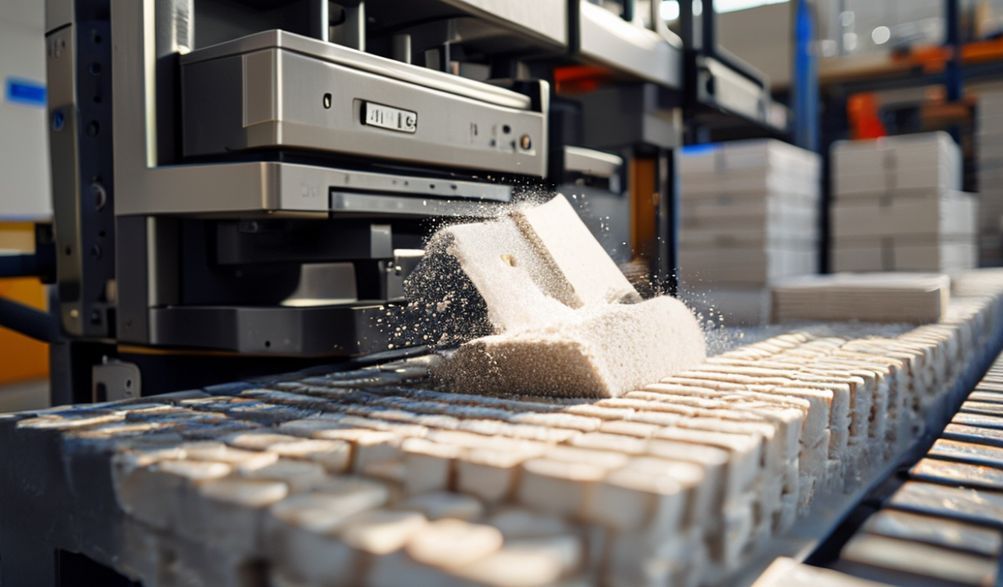
Về cốt lõi, máy đúc khối là thiết bị được thiết kế để tự động hóa và tiêu chuẩn hóa quy trình sản xuất các khối bê tông. Nó biến hỗn hợp ẩm thô gồm xi măng, cát và cốt liệu thành các đơn vị xây dựng đặc, có hình dạng chính xác thông qua sự kết hợp của nén và rung.
Định Nghĩa Máy Móc: Từ Nguyên Liệu Thô Đến Khối Hoàn Chỉnh
Quy trình này mang tính cơ học thanh lịch. Hỗn hợp bê tông đã được chuẩn bị sẵn được đưa vào phễu chứa. Sau đó, hỗn hợp này được dẫn vào khuôn đúc, nơi xác định hình dạng của khối — có thể là khối rỗng, khối đặc hoặc khối lồng ghép. Hoạt động cốt lõi của máy diễn ra tại đây: sự kết hợp giữa áp suất thủy lực và rung động tần số cao nén hỗn hợp, loại bỏ các túi khí và đảm bảo mật độ đồng đều trong suốt khối. Sau khi được nén chặt, khối được tháo ra lên pallet hoặc mặt đất, sẵn sàng cho quá trình bảo dưỡng. Chu trình cơ học này thay thế phương pháp đầm tay không đồng nhất của các kỹ thuật thủ công.
Các ưu điểm chính so với phương pháp thủ công
The shift from manual to mechanized production isn’t just a minor upgrade; it’s a transformation in capability and business potential.
- Unmatched Efficiency & Output: A single machine can produce in an hour what might take a manual crew days, dramatically increasing production capacity.
- Superior Consistency and Quality: Every block is identical in dimensions and density. This uniformity is critical for structural strength, ease of laying, and professional finish.
- Tiết kiệm đáng kể lao động và chi phí: While the initial investment is higher, the reduction in required manpower and the increase in output lead to a much lower cost per block over time.
- Enhanced Block Strength: The controlled, high-pressure compaction creates a denser block with better compressive strength, directly contributing to safer, more durable structures.
- Khả năng Mở rộng Kinh doanh With a reliable machine, you can confidently take on larger contracts and scale your production to meet market demand.
Types of Block Moulding Machines: A Detailed Breakdown
Understanding the categories of machines is the first step in aligning technology with your project goals. The spectrum ranges from simple, human-powered units to fully automated production lines.
Máy Đúc Khuôn Khối Thủ Công
These are the most basic type, requiring physical effort to operate the lever or mechanism that compresses the mix in the mould.
- Trường hợp sử dụng lý tưởng: Perfect for very small-scale projects, community initiatives, or entrepreneurs testing the market with minimal capital. They are also useful for producing specialty blocks in low volumes.
- Ưu điểm: Very low initial cost, minimal maintenance, no power requirement, and highly portable.
- Nhược điểm: Extremely low output (typically 100-400 blocks per day), physically demanding, and product consistency heavily depends on the operator’s skill.
Máy Đúc Khối Bán Tự Động
This category strikes a balance, mechanizing the critical compaction and vibration processes while requiring manual intervention for feeding mix and removing finished blocks. Common types include static “egg-laying” machines that produce blocks on the ground.
- Trường hợp sử dụng lý tưởng: Small to medium-sized block production yards, growing businesses, and contractors needing reliable on-site production.
- Ưu điểm: Good output (e.g., 500-2,000 blocks per 8-hour shift), consistent quality, reasonable price point, and often mobile. They represent a strong balance of cost and capability.
- Nhược điểm: Still requires a small crew for operation, output is not continuous.
Fully Automatic Block Moulding Machines
These are industrial-grade systems. They integrate mix feeding, moulding, compaction, block ejection, and pallet handling into a seamless, computer-controlled cycle with minimal human oversight.
- Trường hợp sử dụng lý tưởng: Large-scale block manufacturing plants, high-volume suppliers to major construction firms, and operations where labor costs are high and consistency is paramount.
- Ưu điểm: Very high and continuous output (e.g., 4,000-10,000+ blocks per shift), exceptional consistency, minimal labor requirements per block produced.
- Nhược điểm: High capital investment, significant space and foundation requirements, complex maintenance, and requires a steady, high-volume market for a viable ROI.
Máy ép gạch di động so với máy ép gạch cố định
This distinction cuts across automation levels.
- Máy đúc khối di động: Typically semi-automatic “egg-laying” or smaller hydraulic presses mounted on wheels or trailers. Their prime advantage is the ability to produce blocks directly on the construction site, eliminating transport costs for the finished product. Ideal for remote projects or large sites like housing estates.
- Máy Định Vị Khối Cố Định: These are fixed installations, from large semi-automatic to fully automatic lines. They form the heart of a dedicated block yard or factory, optimized for centralized, high-volume production. They often require concrete foundations and fixed power hookups.
Critical Factors to Consider Before Buying
Choosing a machine is a strategic investment. Rushing this decision based on price alone is the most common and costly mistake. Based on industry feedback and operational experience, here is your essential checklist.
Assessing Your Production Needs: Output Capacity (Blocks per Hour)
Be brutally realistic. Calculate your current and near-future (12-24 month) demand. A machine operating at 20% capacity is a waste, while one running at 110% capacity will break down prematurely. Match the machine’s rated output (e.g., blocks per hour under ideal conditions) to your practical, sustained needs, factoring in downtime for maintenance.
Block Type and Size Versatility: Hollow, Solid, Interlocking, Pavers
What does your market need? A machine that only makes solid 9″x9″ blocks is limiting. Many modern semi-automatic and automatic machines offer interchangeable moulds. Consider the potential for diversifying your product line to include:
* Hollow blocks (for lighter walls)
* Solid blocks (for foundations)
* Interlocking blocks (for dry-stack construction)
* Paving stones (for hardscaping)
Verify the cost and availability of these additional moulds from the supplier.
Power Source: Electric, Diesel, or Hybrid?
Your location’s infrastructure dictates this choice.
* Điện: Cleaner, quieter, and lower operating cost where grid power is stable and affordable. Requires a proper electrical connection.
* Đi-ê-zen Essential for sites with no reliable electricity. Offers mobility and consistent power but has higher fuel costs, noise, and emissions.
* Lai tạo: Some models can switch between power sources, offering valuable flexibility for variable site conditions.
Machine Durability and Key Components
Inspect the build quality. This is where cheap machines fail.
* Độ Bền Khung The chassis must be heavy-duty steel to withstand constant vibration without cracking or warping.
* Chất Lượng Khuôn Moulds should be made from hardened, high-chrome steel for longevity and a smooth block finish. Cheap mild steel moulds wear out rapidly.
* Hệ thống Rung This is the heart of the machine. Look for robust, isolated vibration motors with adjustable frequency for optimal compaction of different mixes.
After-Sales Support: Availability of Spare Parts and Technical Service
A machine is a long-term partner. The supplier’s reputation for support is as important as the machine itself. Ask: Do they stock critical spare parts (like moulds, vibration motors, hydraulic seals)? Do they offer training? Is technical assistance just a phone call away, or will you be stranded? Prioritize suppliers with a proven track record of support in your region.
Understanding Block Moulding Machine Prices and Investment
Transparency about cost is key to building trust. Prices vary wildly, and understanding Tại sao protects you from overpaying or buying an unfit machine.
Price Range Spectrum: From Manual to Fully Automatic
- Máy Móc Thủ Công: $500 – $3,000. The cost is in the steel and moulds.
- Máy Bán Tự Động: $3,000 – $25,000. Price increases with output capacity, level of automation (e.g., hydraulic vs. mechanical), and brand reputation.
- Máy Móc Tự Động Hoàn Toàn: $25,000 – $150,000+. This is for complete production lines. The price reflects the complexity, speed, and degree of automation (e.g., robotic pallet handling).
What Influences the Cost? Brand, Automation, Capacity, and Features
A $5,000 machine and a $15,000 machine may look similar in a photo, but the difference is in the details:
* Brand & Origin: Established brands with quality control command a premium.
* Mức độ Tự động hóa: Each step automated (feeding, pressing, ejecting) adds cost.
* Năng lực sản xuất: A 1,000-blocks-per-hour machine costs more than a 500-blocks-per-hour model.
* Chất Lượng Xây Dựng & Linh Kiện: As discussed, the quality of steel, motors, hydraulics, and bearings is a major cost driver.
Calculating Your Return on Investment (ROI)
Think beyond the price tag. A simple ROI framework:
1. Total Investment: Machine cost + delivery + setup + initial spare parts.
2. Operational Cost Per Block: (Cost of materials + labor + power/fuel + maintenance) / Number of blocks produced.
3. Revenue Per Block: Your selling price.
4. Gross Profit Per Block: Revenue – Operational Cost.
5. Break-Even Point: Total Investment / Gross Profit Per Block. This tells you how many blocks you need to sell to recover your machine investment.
Expert Advice: The cheapest machine often has the highest long-term cost due to downtime and low output. Prioritize value—reliability, support, and suitable capacity—over the lowest initial price.
Operation and Maintenance Best Practices
Owning a machine is a commitment to proper care. These best practices, drawn from operator manuals and field experience, will ensure safety, quality, and longevity.
Safe and Efficient Machine Operation: A Step-by-Step Overview
- Pre-Start Check: Inspect for loose bolts, hydraulic leaks, and clear the work area. Ensure all safety guards are in place.
- Mix Preparation: Use a consistent, correct ratio of cement, sand, and aggregate. The moisture content is critical—too dry and blocks crumble; too wet and they slump.
- Machine Warm-up: Run the machine empty for a minute to ensure vibrations and hydraulics are working smoothly.
- Feeding & Moulding: Feed the hopper consistently. Avoid overfilling the mould cavity.
- Regular Monitoring: Check the first few blocks for proper shape, density, and finish. Adjust mix or vibration time if necessary.
Essential Daily and Weekly Maintenance Checklist
- Hàng ngày: Clean the machine thoroughly at the end of the shift, removing all concrete residue. Check and tighten any visible loose nuts and bolts. Lubricate all moving parts as per the manual.
- Hàng tuần: Inspect the mould for wear or damage. Check hydraulic oil levels and hose condition. Inspect the vibration motors and their mounts.
Troubleshooting Common Issues
- Poor Block Quality (Crumbling): Usually indicates a dry mix, insufficient vibration time, or low compression pressure.
- Blocks Sticking in Mould: Often caused by a worn mould, insufficient release agent, or a wet mix.
- Uneven Block Height: Can be due to an uneven feeding of the mix, worn mould edges, or an unlevel machine setup.
Maximizing the Lifespan of Your Moulds
Moulds are high-wear items. To extend their life:
* Clean them meticulously after every production run.
* Apply a recommended release agent (like diesel or specialized oil) to prevent concrete adhesion.
* Store them in a dry place to prevent rust when not in use.
* Never use tools to pry blocks out, as this scratches the steel.
Các Câu Hỏi Thường Gặp (FAQ)
Q1: What is the average production output of a standard block moulding machine?
There is no single “standard.” Output ranges dramatically: manual machines produce 100-400 blocks per day, semi-automatic machines 500-3,000 per 8-hour shift, and fully automatic lines can produce 5,000-15,000+ blocks in the same period. Always refer to the specific model’s technical sheet.
Q2: Can one machine produce different types and sizes of blocks?
Yes, most semi-automatic and automatic machines are designed with interchangeable moulds. You can purchase additional mould sets for hollow blocks, pavers, etc. However, changing moulds takes time (from 30 minutes to a few hours), so it’s best for batch production, not constant switching.
Q3: What is the typical lifespan of a well-maintained block moulding machine?
A quality machine from a reputable brand, following a strict maintenance regimen, can last 10 to 20 years. Key wear components like moulds, vibration motors, and hydraulic seals will need replacement during this time, but the main frame should endure.
Q4: How much space is required to set up a block production yard with a machine?
For a small to medium semi-automatic operation, you need space for: the machine itself (approx. 4m x 2m), raw material storage (sand, aggregate, cement), a mixing area, and a large, level curing area for the freshly produced blocks. A minimum of 500-1000 square meters is a practical starting point.
Q5: Are there eco-friendly or waste-reusing block moulding machines available?
Absolutely. The process itself is adaptable. Many successful operations use machines to produce blocks from fly ash, crushed construction waste, or laterite soil, stabilized with a small percentage of cement. The machine doesn’t change; the input mix does. This is a significant trend towards sustainable construction.
Conclusion
Chọn đúngmáy đúc khối is a pivotal decision that hinges on a clear understanding of your production scale, budget, and product goals. From the simplicity of a manual press for a startup to the formidable output of a fully automated line for an industrial plant, the correct choice balances your immediate needs with your vision for growth.
Let this guide serve as your foundational checklist. When you engage with suppliers, use the factors outlined here—output, versatility, durability, and support—to ask the right questions. Insist on seeing a machine in operation, if possible, and always calculate the total cost of ownership, not just the purchase price. The most profitable investment is a reliable machine backed by a reliable partner.
As the industry evolves, we see a clear trajectory towards smarter automation and more sustainable material use. By making an informed choice today, you position your operation not just to compete, but to lead in building the future.
<