
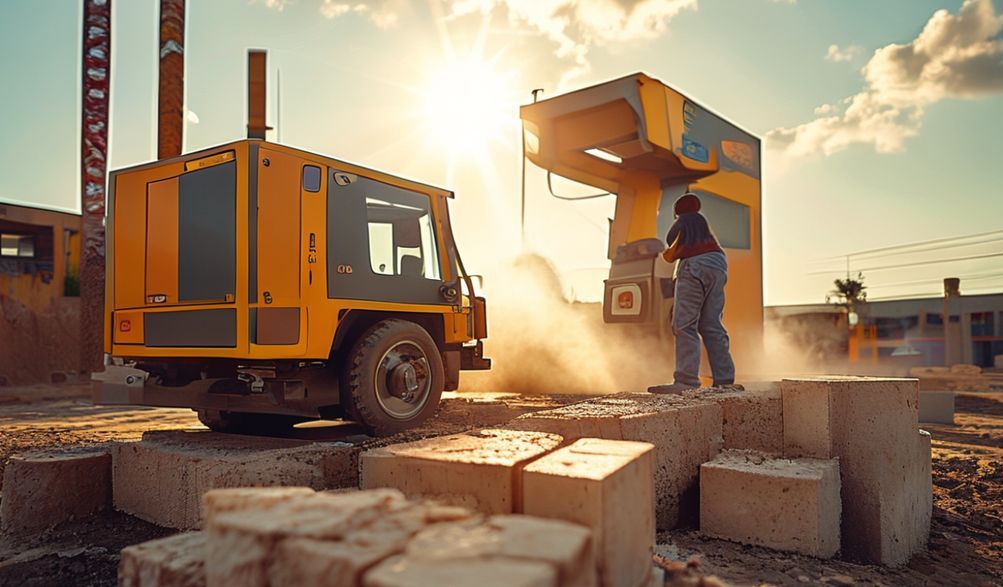
Hướng Dẫn Toàn Diện Về Máy Sản Xuất Gạch Bán Tại Ghana | Điểm Nhấn Về Nhà Máy FUDA
Giới thiệu
Ghana’s skyline is transforming. From the bustling streets of Accra to the burgeoning towns across the regions, a construction boom is underway, fueled by housing demands, infrastructure projects, and rapid urban development. At the very foundation of this growth—quite literally—are concrete blocks. The choice of machinery to produce these blocks is not just a purchase; it’s a pivotal investment in the future of any construction business. For entrepreneurs, contractors, and developers, navigating the market for block making machines in Ghana requires insight, precision, and a focus on long-term value.
With over a decade of experience supplying and advising on construction machinery within the West African market, we understand the unique challenges and opportunities here. This guide is crafted to cut through the noise. We’ll provide you with the actionable knowledge needed to make an informed decision, with a detailed examination of the FUDA block making factory—a prominent name in the industry. You will learn how to assess your needs, compare critical machine features, understand the total cost of ownership, and ultimately, select equipment that will drive profitability and growth for years to come.
Hiểu Biết Thị Trường Máy Sản Xuất Gạch tại Ghana
The demand for block making machines is a direct reflection of Ghana’s economic and developmental trajectory. Choosing the right machine isn’t just about the equipment; it’s about understanding the landscape it will operate in.
Các Động lực Nhu cầu: Nhà ở, Cơ sở Hạ tầng và Phát triển Đô thị tại Ghana
Ghana’s significant housing deficit, estimated in the millions, continues to drive relentless demand for residential construction. Concurrently, government and private sector investments in roads, schools, hospitals, and commercial real estate create a steady market for building materials. This dual demand makes block production a resilient and potentially lucrative venture. A reliable block making machine positions you at the heart of this value chain, supplying a fundamental product for countless projects.
Những Điều Quan Trọng Người Mua Cần Lưu Ý: Mức Độ Tự Động Hóa, Công Suất Đầu Ra và Hỗ Trợ Tại Địa Phương
When evaluating machines, Ghanaian buyers must balance ambition with practicality. The primary considerations are:
* Mức độ Tự động hóa: Ranges from manual (labour-intensive, low output) to semi-automatic (a balance of human operation and mechanical assistance) to fully automatic (computer-controlled for maximum output and consistency). Your choice should align with your capital, labour costs, and production targets.
* Công suất đầu ra: Measured in blocks per hour (BPH) or per day. A small-scale contractor might thrive with a 1,000 BPH machine, while a large supplier might need 5,000 BPH or more. Overestimating capacity leads to idle capital; underestimating it leaves money on the table.
* Hỗ trợ tại địa phương: This is arguably the most critical factor. The availability of spare parts, accessible technician training, and responsive after-sales service within Ghana will determine your machine’s uptime and lifespan. A machine without local support is a liability.
Những Thách Thức Phổ Biến và Cách Vượt Qua
Operating in Ghana presents specific hurdles that your machine choice must address:
* Biến động nguồn điện: Unstable electricity can damage motors and electronics. Giải pháp: Opt for machines with robust power stabilizers or consider diesel/hybrid-powered models that offer independence from the grid.
* Raw Material Variability: The quality and granulometry of local sand and aggregates can differ. Giải pháp: Choose machines known for adaptability—those with adjustable vibration frequency and pressure can compensate for material differences to produce consistent blocks.
* Maintenance Knowledge Gap: A lack of local expertise can turn a minor fault into a prolonged shutdown. Giải pháp: Prioritize suppliers who offer comprehensive on-site training and have a clear protocol for technical support, whether remotely or via local agents.
Why Choose a FUDA Block Making Machine?
While numerous brands compete in the Ghanaian market, FUDA has established itself as a significant global manufacturer. Here’s what makes them a contender for your investment.
Company Profile: FUDA’s Manufacturing Expertise
FUDA Machinery is a Chinese-based manufacturer with considerable experience in the design and production of construction machinery, including a wide range of block making machines. They have built a reputation for exporting to markets worldwide, which indicates a capacity to meet varied international standards. When researching any manufacturer like FUDA, key indicators of reliability include:
* Years of operation in the industry.
* Certifications for quality and safety standards.
* A diverse and proven product portfolio.
* Evidence of a functional global supply and support network.
Core Strengths of FUDA Machines
Based on industry analysis and user feedback, FUDA machines are often noted for several key attributes that resonate in markets like Ghana:
* Độ bền: Constructed with reinforced steel and robust components to withstand continuous production cycles.
* Hiệu suất Năng lượng: Many models incorporate efficient hydraulic systems and vibration motors designed to deliver high output with optimized power consumption—a crucial cost-saving factor.
* Adaptability: Their machines are frequently engineered to work effectively with locally available raw materials and can be configured for various block types, which is essential for meeting Ghanaian construction specifications.
Range of Machines Offered
FUDA typically offers a spectrum of machines to cater to different business scales:
* Máy Thủ Công & Bán Tự Động Ideal for startups, small builders, or community projects. They require more manual labour but have a lower initial investment.
* Máy Móc Tự Động Hoàn Toàn: These are the productivity powerhouses. They automate the feeding, compaction, molding, and stacking processes, requiring minimal manual intervention and ensuring consistent, high-volume output for serious commercial ventures.
Key Features to Compare When Buying a Block Machine
Moving beyond brand names, your decision must hinge on a detailed comparison of specifications. Here’s what to scrutinize, drawing from hands-on experience with machinery in the field.
Công Suất Sản Xuất (Khối Mỗi Giờ)
Don’t just look at the theoretical maximum. Consider the bền vững output. A machine rated for 2,000 BPH might only achieve that with perfect conditions and materials. Ask about real-world, tested outputs with typical Ghanaian raw material mixes. Match this number directly to your current orders and projected growth.
Block Types and Molds
Versatility opens more revenue streams. Ensure the machine can produce the blocks in highest demand in your target region:
* Gạch rỗng: (6-inch, 5-inch) The standard for most wall constructions.
* Khối Đặc Used for foundations and heavy-load areas.
* Khối Gạch Lắp Ghép:Được ưa chuộng nhờ tốc độ thi công nhanh và giảm thiểu việc sử dụng vữa.
* Gạch lát nền: For driveways, walkways, and landscaping projects.
A good supplier should offer a range of standard molds and the option for customization.
Yêu cầu về Nguồn điện
Your local infrastructure dictates this choice:
* Điện: Cleaner and often cheaper to run, but reliant on grid stability.
* Đi-ê-zen Offers complete independence and consistent power, ideal for areas with unreliable electricity or remote sites. Higher fuel costs and maintenance are trade-offs.
* Lai tạo: Some models offer the flexibility to switch between power sources, providing valuable adaptability.
After-Sales Service: The Non-Negotiable
The quality of after-sales support will make or break your investment. Before purchasing, you must verify:
* Sẵn có Phụ tùng Thay thế: Is there a local warehouse in Ghana or West Africa? What is the typical lead time for critical parts?
* Technical Training: Does the supplier provide comprehensive on-site training for your operators on use, daily maintenance, and basic troubleshooting?
* Service Warranty: What is covered, for how long, and what are the response time guarantees? Get this in writing.
A Practical Buyer’s Checklist for Ghana
Arm yourself with this step-by-step guide to navigate the purchasing process with confidence.
Step 1: Define Your Project Scope and Budget
Be brutally honest. Calculate your current and 3-year projected block demand. Determine your available capital, not just for the machine, but for installation, raw material inventory, and operating costs for the first few months.
Step 2: Research and Shortlist Reputable Suppliers
Use online platforms, industry directories, and local trade references to create a list of 3-5 suppliers. Include FUDA if their profile matches your needs. Look for companies with a verifiable physical presence and a history of installations in West Africa.
Step 3: Request for Quotation (RFQ) and Compare Total Cost of Ownership
Send a detailed RFQ to your shortlisted suppliers. The comparison must go beyond the machine price. Include:
* Shipping, insurance, and customs clearance costs to Ghana.
* Installation and commissioning fees.
* Cost of initial spare parts package.
* Projected costs of operation (power/fuel, maintenance).
Step 4: Verify Supplier Credentials
Conduct due diligence:
* Ask for References: Request contacts for 2-3 previous clients in similar markets. Call them and ask about machine performance and support.
* Visit if Possible: If the supplier or a current user has a showroom or installation within reach, inspect the machine in person.
Step 5: Understand Warranty, Delivery, and Installation Terms
Clarify every detail: Warranty start date (upon delivery or commissioning?), what parts and labour are covered, Incoterms for delivery (e.g., CIF Tema Port), and who is responsible for in-country installation. Ambiguity here leads to future disputes.
Maximizing Your Investment: Operation and Maintenance Tips
Your machine’s productivity and longevity are in your hands. Here are field-tested practices.
Best Practices for Machine Operation and Worker Safety
- Ensure all operators complete the supplier’s training.
- Enforce strict safety protocols: no loose clothing, use of safety glasses and gloves during mold changes.
- Follow the recommended mix design (cement-sand-aggregate-water ratio) precisely for optimal block quality and machine health.
Routine Maintenance Schedule to Ensure Longevity
- Hàng ngày: Clean the machine thoroughly after each shift, check hydraulic oil levels and for leaks, tighten any loose bolts.
- Hàng tuần: Grease all moving parts as per the manual, inspect mold liners and pallets for wear.
- Monthly: Check vibration motor mounts, inspect electrical connections, and replace filters.
Sourcing Quality Raw Materials in Ghana
The best machine cannot produce good blocks with poor materials. Build relationships with reliable suppliers of:
* Xi măng: Use fresh, properly stored cement from reputable brands.
* Cát Well-graded, clean river or quarry sand with minimal silt or clay content.
* Aggregate: Crushed stone of consistent size (typically 1/4″ or 1/2″).
Các Câu Hỏi Thường Gặp (FAQ)
Q1: What is the price range for a FUDA block making machine in Ghana?
A: Prices vary significantly based on automation and capacity. A small manual machine may start from a few thousand dollars, while a high-output, fully automatic production line can cost tens of thousands. We strongly advise against focusing solely on the lowest price. Instead, obtain official quotations from authorized distributors that detail all costs, and base your decision on the total value—quality, output, and after-sales support—over the machine’s lifetime.
Q2: Does FUDA have an authorized dealer or service center in Ghana?
A: The distribution network for international manufacturers can change. We recommend contacting FUDA directly through their official international contact channels to inquire about their current authorized distributors, agents, or service partners in Ghana. A reputable manufacturer should be transparent about their local support structure.
Q3: What kind of training is provided with the machine?
A: Comprehensive training is essential. You should expect, and request, on-site training covering: machine assembly (if required), daily operation procedures, safety protocols, routine maintenance tasks, basic troubleshooting for common issues, and proper mold changing techniques. Confirm the duration and language of training before purchase.
Q4: Can FUDA machines produce the specific block types popular in my region of Ghana?
A: Most established manufacturers like FUDA offer a variety of standard molds for common block types (hollow, solid, interlocking). The key is to specify the exact block dimensions and types you need during the quotation process. Many also offer custom mold fabrication for unique specifications, though this may involve additional cost and lead time.
Q5: What is the typical lead time for delivery and installation?
A: Lead time depends on the machine model (standard or customized), manufacturer’s production schedule, and shipping logistics. It can range from 4 to 12 weeks or more. Always get a written estimated timeline for production, sea freight to Ghana (e.g., Tema Port), and in-country installation. Factor this into your project planning.
Conclusion
Investing in a block making machine in Ghana is a strategic step toward securing your stake in the nation’s construction future. The journey requires diligent research, a focus on total cost of ownership, and an unwavering emphasis on local after-sales support. While brands like FUDA offer proven engineering and global experience, your ultimate success hinges on aligning the machine’s capabilities with your specific business goals and ensuring you have a reliable partner for the long haul.
This guide has equipped you with the framework to make a confident, informed decision. You are now prepared to ask the right questions, compare options effectively, and prioritize the factors that truly matter for sustainable profitability.
For the most accurate and current specifications, pricing, and to verify authorized dealerships, we strongly advise contacting FUDA Block Making Factory directly through their official website or visiting a verified exhibition.
<