
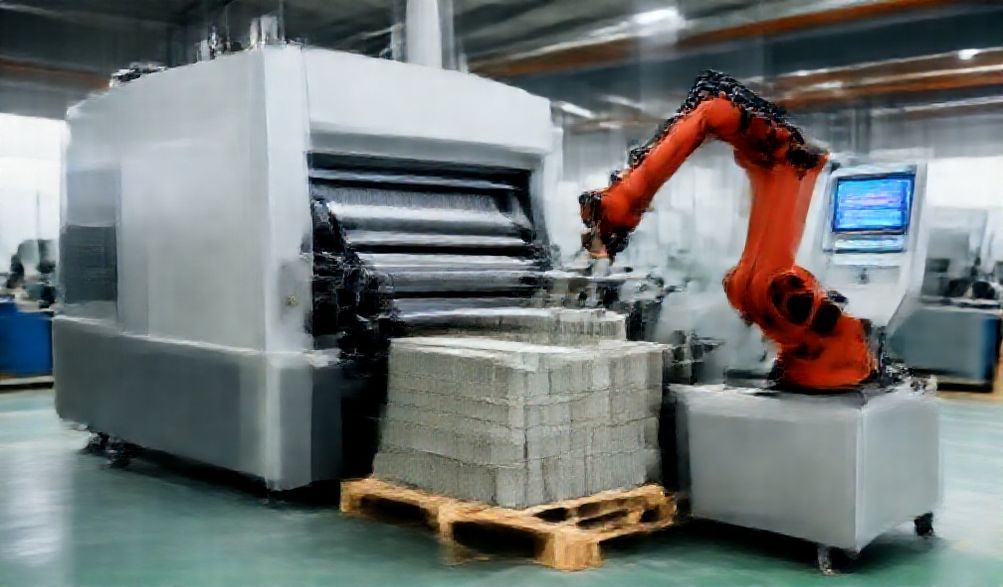
Your Ultimate Guide to Finding a Reliable China Automatic Brick Making Machine Supplier
Giới thiệu
The global construction industry is in a perpetual state of growth, demanding smarter, faster, and more cost-effective solutions. At the heart of this evolution is the humble brick, now produced at staggering scales by sophisticated automatic machinery. For businesses looking to invest in this technology, China has emerged as the undisputed manufacturing hub, offering a compelling blend of innovation and affordability. However, with a vast sea of suppliers, finding a truly reliable partner can feel like searching for a needle in a haystack.
The core challenge isn’t a lack of options, but an overwhelming abundance. How do you distinguish a reputable manufacturer with engineering excellence from a middleman with glossy brochures? Concerns about hidden costs, machine durability, communication barriers, and non-existent after-sales support are common and valid. A wrong choice can lead to costly downtime, production bottlenecks, and a machine that becomes a liability rather than an asset.
This guide is designed to be your definitive roadmap. Drawing on over a decade of experience in the construction equipment sector and direct partnerships with leading manufacturers, we will demystify the process. We’ll equip you with the knowledge to identify, evaluate, and confidently partner with a trustworthy China automatic brick making machine supplier, turning a complex procurement journey into a strategic investment for your business.
Tại sao nên nhập khẩu máy làm gạch tự động từ Trung Quốc?
Sourcing from China is not merely about finding the lowest price; it’s about accessing a mature, highly competitive ecosystem built to serve the global market. The advantages are systemic and significant.
Hiệu quả Chi phí và Định giá Cạnh tranh
China’s manufacturing prowess is built on economies of scale and integrated supply chains. This environment translates into direct benefits for you:
* Giảm Chi Phí Sản Xuất: Concentrated access to raw materials (steel, electronics, hydraulics) and components reduces input costs.
* Intense Market Competition: A high number of manufacturers fosters competitive pricing, ensuring you get advanced technology at a fraction of the cost compared to many Western counterparts.
* Lợi tức đầu tư vượt trội: The initial capital savings allow for a faster return on investment, improving the overall profitability of your brick production venture.
Năng Lực và Công Nghệ Sản Xuất Tiên Tiến
Gone are the days of associating Chinese manufacturing solely with low-tech replication. Today’s leading suppliers are at the forefront of industrial automation.
* Heavy R&D Investment: Top manufacturers invest significantly in developing more efficient, durable, and intelligent machines.
* Integration of Advanced Controls: Modern machines feature precise Programmable Logic Controller (PLC) systems, touch-screen interfaces, and automated material handling systems.
* Focus on Innovation: You’ll find continuous improvements in vibration technology, hydraulic systems, and energy efficiency, driven by both domestic and international market demands.
Diverse Product Range and Customization
Whether you need to produce standard hollow blocks, decorative pavers, or interlocking bricks for landscaping, Chinese suppliers offer unparalleled variety.
* Wide Spectrum of Machines: Choose from fully hydraulic, pneumatic, stationary, or mobile block making machines.
* Tailored Solutions: Reputable suppliers excel at customization. They can modify molds, adjust output capacities, and configure machines to work optimally with your specific raw materials—be it clay, concrete, fly ash, or cement.
* Khả năng mở rộng: From semi-automatic models for small businesses to fully automated production lines, you can find a machine that matches your exact scale of operation.
Established Global Supply Chain
China has spent decades optimizing its export logistics for heavy machinery.
* Efficient Port Infrastructure: Major ports are experienced in handling the documentation and physical logistics of shipping large equipment.
* Experienced Freight Forwarders: A network of specialized forwarders understands the intricacies of customs clearance for industrial machinery in destination countries.
* Proven Pathways: The route from a factory in Shandong or Fujian to a worksite in Africa, South America, or the Middle East is a well-trodden and reliable path.
Key Factors When Choosing Your Supplier
Selecting a supplier is a technical and commercial evaluation. Look beyond the salesperson and assess the entity behind the product.
Assessing Manufacturer Experience and Expertise
A supplier’s history is a strong indicator of stability and knowledge.
* Years in Business: Prioritize suppliers with a track record of 8-10+ years. It demonstrates resilience and accumulated experience.
* Industry Certifications: Valid ISO (Quality Management) and CE (safety for the European market) certifications are non-negotiable baselines. They indicate adherence to international standards.
* Process Knowledge: The best suppliers don’t just sell machines; they understand brick production. They should be able to advise on raw material mix ratios, curing processes, and plant layout.
Evaluating Production Capacity and Quality Control
Is your supplier a true manufacturer or just a trader? This distinction is critical for quality and long-term support.
* Factory Audit: Request a live video tour of the production facility. Look for organized assembly lines, modern welding and machining equipment, and in-house testing areas.
* Chất Lượng Linh Kiện Inquire about the brands of core components. The use of reputable parts (e.g., Siemens or Schneider PLCs, Rexroth hydraulics, NSK bearings) is a hallmark of a quality-focused manufacturer.
* Testing Protocols: Machines should undergo rigorous running tests before shipment. Ask for videos of the final product test with your specified block molds.
Analyzing Machine Specifications and Performance
Compare suppliers based on hard data. Key specifications to scrutinize include:
* Công suất đầu ra: Measured in blocks per hour (or per 8-hour shift). Ensure this is a realistic, tested figure.
* Tiêu thụ điện năng: A major operational cost. More efficient machines have a lower total cost of ownership.
* Mức độ Tự động hóa: Does it include automatic pallet feeding, stackers, and mixers? Higher automation reduces labor costs.
* Tính Linh Hoạt của Khuôn Mẫu: How quickly can molds be changed? Are custom molds available?
* Construction & Durability: Assess the thickness of the steel frame, the quality of the vibration table, and the robustness of the hydraulic system.
After-Sales Service and Technical Support
This is where many suppliers fall short, and where the best distinguish themselves.
* Bảo hành Toàn diện: Look for a clear warranty (typically 12-24 months) that covers major components and workmanship.
* Chính sách Linh kiện Thay thế: Ensure they maintain an inventory of critical spare parts and can ship them promptly via international courier.
* Support Channels: They should provide detailed English manuals, wiring diagrams, and video tutorials. Access to responsive technical support via WhatsApp, email, or video call is essential.
* Training: Provision of operational and maintenance training, either remotely or via on-site engineers, is a key value-add.
A Step-by-Step Supplier Vetting Process
A structured approach minimizes risk and leads to a better decision.
Initial Research and Shortlisting
- Start on B2B Platforms: Use Alibaba, Made-in-China, or Global Sources to create a broad longlist. Pay close attention to supplier transaction history and verified certifications on these platforms.
- Go Beyond Platforms: Conduct a Google search for suppliers with professional, content-rich English websites. This often indicates a deeper commitment to the international market.
- Check Industry Presence: Look for suppliers who participate in international construction machinery exhibitions (online or physical).
Effective Communication and Inquiry
Your first inquiry email should separate serious manufacturers from casual traders. Include these questions:
* Can you provide a detailed quotation for [Model Name/Type] configured for [Your Voltage]?
* What is the recommended raw material mix ratio and particle size for optimal performance?
* What brand of PLC, hydraulic pumps, and electrical components are used?
* Can you share a video of a similar machine in production and the final testing procedure?
* What is included in the standard delivery (e.g., spare tool kit, standard molds)?
Requesting and Verifying Documentation
A professional supplier will readily provide:
* A detailed proforma invoice with a clear breakdown of costs.
* A copy of their business license.
* Product certification documents (ISO, CE, etc.).
* High-resolution factory and machine photos/videos.
* Contactable references from past international clients (with their permission).
The Importance of a Sample or Factory Visit
- Sample Order: For high-volume purchases, consider ordering a single machine or key component (like a mold) as a sample to evaluate quality firsthand.
- Factory Visit: If feasible, an in-person visit is invaluable. If not, insist on a comprehensive, real-time video conference walkthrough of the factory, not a pre-recorded promo video.
Understanding Costs and the Buying Process
Transparency in costing and process prevents unpleasant surprises.
Breakdown of Machine Costs
The price is influenced by several factors:
* Mức độ Tự động hóa: A fully automatic line with robotic handling costs more than a standalone block maker.
* Thành phần cốt lõi Machines with imported German or Japanese parts command a premium over those with domestic components.
* Năng lực sản xuất: Higher output machines require more robust engineering.
* Tùy chỉnh: Custom molds, special paint, or unique electrical configurations add cost.
Incoterms and Logistics Explained (FOB, CIF, etc.)
- FOB (Free On Board): You pay for the machine loaded on the ship at the Chinese port. You are responsible for and control the main shipping cost and insurance. This is common and offers more flexibility.
- CIF (Cost, Insurance, and Freight): The supplier arranges and pays for shipping and insurance to your nearest port. It’s simpler but often includes a margin for the supplier.
Payment Terms and Financial Security
- Standard Terms: A common and balanced term is 30% deposit via T/T (Telegraphic Transfer), 70% balance against copy of shipping documents before delivery.
- Payment Protection: Using Alibaba’s Trade Assurance provides a layer of protection by holding payment until you confirm satisfactory delivery.
From Order to Installation
A typical timeline:
1. Contract & Deposit: Finalize contract, pay deposit (5-7 days).
2. Sản xuất: Manufacturing and in-factory testing (30-45 days).
3. Pre-Shipment Inspection: You or a third-party agent inspects the machine (Optional but recommended).
4. Shipping & Customs: Sea freight (30-45 days), followed by your local customs clearance.
5. Lắp đặt & Vận hành: The supplier provides remote guidance; some offer on-site engineer dispatch for a fee.
Common Pitfalls and How to Avoid Them
Falling for “Too Good to Be True” Prices
An abnormally low price is the biggest red flag. It almost always indicates:
* Inferior, substandard materials and components.
* Zero meaningful after-sales service.
* A potential scam where the company disappears after the deposit.
Overlooking the Total Cost of Ownership (TCO)
The purchase price is just the beginning. Consider:
* Hiệu suất Năng lượng: A slightly more expensive but efficient machine saves thousands in electricity over its lifespan.
* Spare Parts Cost & Availability: Cheap machines often use proprietary or hard-to-find parts.
* Durability & Maintenance: A robust machine has less downtime and lower repair costs.
Neglecting the Importance of Compatible Raw Materials
A machine is designed for specific material properties (size, moisture content, hardness). Using the wrong mix will cause poor block quality, machine jams, and excessive wear. A reliable supplier will provide precise material specifications.
Incomplete Contracts and Warranty Agreements
A vague contract is a future dispute. Ensure your contract explicitly lists:
* Technical Specifications: All agreed-upon specs, component brands, and output capacities.
* Delivery Timeline: Clear milestones and penalties for delays.
* Payment Schedule: Linked to tangible milestones.
* Warranty Terms: Exact duration, what is covered, and the process for claiming.
Frequently Asked Questions (FAQ)
Q1: What is the average lead time for an automatic brick making machine from China?
A: Typically 30-60 days after receipt of deposit, depending on the complexity of the machine and the level of customization required.
Q2: Can the supplier provide training for our operators?
A: Yes, reputable suppliers typically provide comprehensive operation and maintenance manuals, video guides, and remote/virtual training sessions. On-site training by an engineer can usually be arranged for an additional cost.
Q3: How do I handle machine maintenance and spare parts sourcing?
A: A trustworthy supplier will provide a detailed maintenance schedule and a list of recommended critical spare parts. They should have an efficient system for supplying genuine parts to your country via international courier services.
Q4: Are Chinese automatic brick machines compatible with international voltage standards?
A: Absolutely. Reliable manufacturers can configure the machine’s electrical system to meet the specific voltage and frequency requirements of your country (e.g., 380V/50Hz, 415V/50Hz, or 440V/60Hz).
Q5: What is the minimum order quantity (MOQ) for these machines?
A: For automatic brick making machines, the MOQ is typically 1 unit. Be cautious of suppliers who insist on a large MOQ without a strong technical justification.
Conclusion
Sourcing an automatic brick making machine from China presents a tremendous opportunity for value, innovation, and business growth. However, unlocking this value requires moving beyond price alone and employing a diligent, structured vetting process. By focusing on the principles of Chuyên môn (technical know-how), Kinh nghiệm (proven track record), Tính thẩm quyền (quality and reputation), and Đáng tin cậy (transparent communication and reliable support), you can navigate the market with confidence.
Prioritize partners who act as long-term consultants to your production success, not just one-time sellers. Use this guide as your checklist to ask the right questions, demand the necessary proof, and build a partnership that will power your productivity for years to come. Begin your informed search today, and take the first step toward transforming your brick production capabilities.
<