
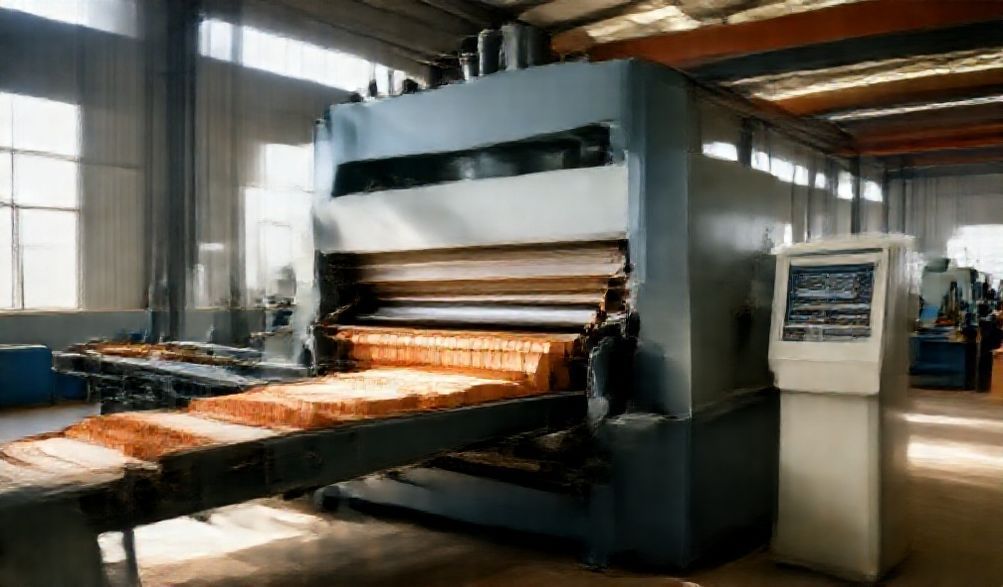
Ấn Độ Sản Xuất Máy Làm Gạch Đất Sét: Cái Nhìn Bên Trong Nhà Máy Làm Gạch FUDA
Giới thiệu
Ngành xây dựng Ấn Độ là một cường quốc, một động cơ chính thúc đẩy sự tăng trưởng kinh tế của quốc gia. Ở trung tâm của mỗi dự án cơ sở hạ tầng đang phát triển, khu phức hợp nhà ở và phát triển đô thị là một khối xây dựng cơ bản: viên gạch. Trong nhiều thế kỷ, việc làm gạch là một quy trình thủ công, tốn nhiều lao động. Ngày nay, một cuộc cách mạng thầm lặng đang diễn ra, được thúc đẩy bởi sự đổi mới công nghệ đã biến đất sét thành một sản phẩm có độ chính xác và quy mô. Cuộc cách mạng này được hỗ trợ bởi một hệ sinh thái mạnh mẽ củaCác nhà sản xuất máy làm gạch đất sét ở Ấn Độ.
Những nhà sản xuất này là những anh hùng thầm lặng, cung cấp sức mạnh công nghệ biến đất sét thô thành những viên gạch đồng nhất, chất lượng cao với tốc độ chưa từng có. Trong bối cảnh năng động này, một số cái tên nổi bật nhờ cam kết về kỹ thuật và độ tin cậy. Một ví dụ đáng chú ý như vậy làNhà máy sản xuất gạch FUDA, một nhà sản xuất chuyên biệt thể hiện rõ năng lực của lĩnh vực này.
Hướng dẫn toàn diện này phục vụ một mục đích rõ ràng: giáo dục các chủ doanh nghiệp, công ty xây dựng và doanh nhân. Chúng tôi sẽ phân tích ngành công nghiệp máy móc gạch đất sét Ấn Độ, sử dụng Nhà máy sản xuất gạch FUDA làm nghiên cứu điển hình chi tiết. Mục tiêu của chúng tôi là cung cấp cho bạn phân tích thực tế và những hiểu biết quan trọng cần thiết để đưa ra quyết định mua hàng tự tin và sáng suốt cho doanh nghiệp của bạn.
Ngành công nghiệp máy móc sản xuất gạch đất sét ở Ấn Độ
对制砖机械的需求与印度的发展轨迹密不可分。理解这一市场背景,是认识制造商在其中作用的关键所在。
Market Overview and Growth Drivers
India is one of the world’s largest producers of bricks, with an industry valued in the billions. This demand is fueled by consistent, powerful drivers:
- Sáng kiến của Chính phủ: Massive pushes in infrastructure (roads, highways, metros) and affordable housing schemes (Pradhan Mantri Awas Yojana) create sustained demand.
- Đô thị hóa nhanh chóng: The migration to cities necessitates new residential and commercial spaces.
- Tăng trưởng Công nghiệp: Expansion of factories, warehouses, and industrial parks requires durable construction materials.
This demand has fostered specialized manufacturing hubs across the country, with clusters in states like Gujarat, Punjab, Maharashtra, and Tamil Nadu. These hubs are hotbeds of engineering talent and industrial activity dedicated to heavy machinery.
Types of Machines Prevalent in India
The Indian market caters to businesses of all scales, offering a spectrum of automation:
- Máy Làm Gạch Thủ Công: Low-cost, lever-operated presses suitable for very small-scale or rural operations. Output is limited and labor-dependent.
- Máy Làm Gạch Bán Tự Động: The sweet spot for many small to medium enterprises (SMEs). These machines automate the critical pressing and molding processes but may require manual handling of raw material feeding or brick removal. They offer an excellent balance between output, cost, and labor.
- Nhà máy sản xuất gạch tự động hoàn toàn: These are complete production lines designed for large-scale, high-volume output. They integrate processes like mixing, conveying, pressing, curing, and stacking with minimal human intervention, ensuring maximum efficiency and consistency.
Spotlight on FUDA Brick Making Factory: A Manufacturer’s Profile
To move from abstract industry analysis to concrete understanding, let’s examine a specific player. FUDA Brick Making Factory provides a clear window into the standards and specializations of a dedicated Indian manufacturer.
Company Background and Legacy
Founded with a vision to modernize brick production, FUDA Brick Making Factory has established itself as a focused manufacturer within the niche of brick and block making machinery. With its operational base in one of India’s prominent industrial corridors, the company has built its reputation over years of operation. Their core mission typically revolves around empowering brick kiln owners and construction material producers with robust, efficient, and adaptable technology. This long-term focus on a single industry vertical is a testament to their depth of experience.
Manufacturing Expertise and Technological Capabilities
FUDA’s credibility is rooted in its manufacturing ethos. Their facility is likely equipped with:
- Advanced Fabrication Units: For precision cutting and shaping of high-grade steel frames.
- CNC Machining Centers: Ensuring accuracy in critical components.
- Robust Assembly Lines: Where hydraulic systems, electrical panels, and mechanical parts are integrated.
A focus on in-house Research & Development (R&D) allows them to adapt designs for local clay compositions and evolving market needs. Quality control is not an afterthought but a phased process, involving:
* Material inspection
* In-process checks during welding and assembly
* Final performance testing under load before dispatch
Của họchuyên môn is showcased in the range of machines they manufacture, which often includes hydraulic press machines, clay extruders, and complete automatic production lines.
Product Portfolio for Clay Brick Production
A manufacturer’s range reveals its ability to serve diverse client needs. FUDA’s portfolio generally encompasses:
Nhà Máy Sản Xuất Gạch Tự Động Hoàn Toàn
Designed for investors targeting the mass market. These turnkey plants can produce thousands of bricks per hour (e.g., 10,000-30,000 bricks per 8-hour shift). They feature automated material handling, programmable logic controller (PLC) systems, and sometimes robotic pallet stackers.
Máy Bán Tự Động
The workhorse for growing businesses. FUDA’s semi-automatic models might include:
* Hydraulic Brick Presses: For high-pressure molding of solid, hollow, or paving bricks.
* Clay Extrusion Machines: For producing wire-cut bricks.
These machines offer significant output improvements over manual methods while keeping capital investment manageable.
Key Machine Components & Customization
The true flexibility lies in customization, a critical service offered by manufacturers like FUDA.
* Khuôn có thể thay thế lẫn nhau: This allows a single machine to produce various products:
* Solid Clay Bricks
* Hollow Blocks (for load-bearing and partition walls)
* Perforated Bricks
* Pavers and Landscape Blocks
* Thiết bị phụ trợ: They may also manufacture or supply complementary machinery like pan mixers for clay preparation, crushers, and conveyor systems.
* Kỹ thuật Tùy chỉnh Adapting machine parameters (pressure, speed) to suit specific local clay properties is a valuable service.
Why Source from Indian Manufacturers Like FUDA?
Choosing an Indian manufacturer over an international supplier presents distinct advantages, especially for the domestic market.
Hiệu Quả Chi Phí Mà Không Ảnh Hưởng Đến Chất Lượng
Indian manufacturers offer a compelling value proposition. You avoid hefty import duties, international shipping costs, and currency exchange volatility. The local supply chain for components and raw materials (steel, etc.) keeps costs competitive. This does not mean a compromise on quality; it means greater value for money and a faster return on investment (ROI).
Adaptation to Local Raw Materials and Conditions
Indian clay varies significantly from region to region in its composition, plasticity, and moisture content. A machine designed in Europe for a specific clay type may underperform here. Manufacturers like FUDA engineer their machines based on decades of experience with these local conditions. Their machines are built to handle the variability and are often designed for easier maintenance in the Indian operational environment.
Robust After-Sales Support and Service Network
This is perhaps the most critical advantage. Local presence builds trustworthiness.
* Quick Service Response: A technician can often be on-site within days, not weeks.
* Phụ tùng thay thế sẵn có: An inventory of commonly needed parts reduces machine downtime dramatically.
* Local Operator Training: Installation and training are provided in the local language and context.
* Understanding of Local Challenges: The service team inherently understands common operational issues faced by Indian brick kilns.
Critical Factors for Choosing a Manufacturing Partner
Selecting a machinery partner is a major capital decision. Look beyond the brochure and assess these critical factors.
Assessing Technical Specifications and Output Capacity
Move beyond vague promises. Get precise data:
* Năng lực sản xuất: Bricks per hour, per shift, on a sustained basis.
* Yêu cầu về nguồn điện: Voltage (V), phase, and total connected load (kW).
* Mức độ Tự động hóa: Exactly which processes are automated? Feeding? Pressing? Stacking?
* Thời gian chu kỳ: Time taken for one complete molding cycle.
* Áp suất vận hành: Hydraulic pressure (in tons) which determines brick density and strength.
Evaluating Build Quality and Durability
The machine’s longevity depends on its construction. Ask pointed questions:
* Frame Material: What grade and thickness of steel is used for the main frame and pressing head?
* Critical Components: Which brands are used for hydraulic pumps, valves, cylinders, and PLCs? Reputed brands (e.g., Siemens, Bosch Rexroth, Yuken) indicate quality.
* Hàn & Gia công kim loại tấm Can you see the welds? They should be clean, continuous, and done using qualified procedures.
* Paint & Finishing: Is it a basic coat or a multi-layer anti-corrosion treatment?
Verifying Credentials and Industry Reputation
Due diligence is non-negotiable. It establishes the manufacturer’s authoritativeness and trustworthiness.
* Factory Visit: This is the single most important step. See the production floor, quality checks, and inventory.
* Client References & Testimonials: Speak directly to existing customers, especially those with 2+ years of machine operation.
* Case Studies: Ask for documented examples of successful installations.
* Chứng chỉ: Check for relevant industrial or quality certifications, though in this sector, a proven track record often speaks louder than paper.
The Future of Brick Making in India: Trends and Sustainability
The industry is not static. Forward-thinking manufacturers are already adapting to the next wave of changes.
Embracing Automation and Industry 4.0
The future is connected. The next generation of machines may feature:
* IoT Sensors: To monitor production counts, hydraulic pressure, temperature, and motor health in real-time.
* Predictive Maintenance: Alerts for component wear before a breakdown occurs, minimizing unplanned downtime.
* Data Analytics: Dashboards to analyze production efficiency and identify bottlenecks.
The Shift Towards Eco-Friendly Production
Environmental regulations and green building norms (like GRIHA) are driving change. The demand is growing for:
* Máy Sản Xuất Gạch Từ Tro Bay: Utilizing industrial waste (fly ash from thermal plants) as a primary raw material.
* Resource-Efficient Designs: Machines that reduce water consumption during mixing and lower energy consumption per brick.
* Emission Control: Technologies integrated into kiln designs to reduce pollution.
Manufacturers innovating in this sustainable space are positioning themselves for long-term leadership.
Các Câu Hỏi Thường Gặp (FAQ)
Q1: What is the typical price range for a clay brick making machine from an Indian manufacturer?
A: Prices vary widely based on automation and capacity. A basic semi-automatic hydraulic press can start from ₹5-10 lakhs. A mid-range semi-automatic line may cost ₹15-30 lakhs. Fully automatic turnkey plants can range from ₹50 lakhs to several crores. Always request a detailed quotation based on your specific output needs.
Q2: Can machines from manufacturers like FUDA produce different brick sizes and types?
A: Absolutely. This is a key advantage. Through interchangeable molds, a well-designed machine can produce:
* Solid Clay Bricks (standard and modular sizes)
* Hollow Blocks (for load-bearing and partition walls)
* Perforated Bricks
* Paving Blocks and Landscape Bricks
Confirm the mold changeover process and cost with the manufacturer.
Q3: What kind of after-sales support should I expect?
A: A reputable manufacturer should provide a comprehensive package:
* Lắp đặt & Vận hành: Supervision by an engineer at your site.
* Operator Training: Hands-on training for your machine crew.
* Bảo hành: Typically 1-2 years on major components.
* Phụ Tùng Thay Thế: A guaranteed supply of critical spares.
* Service Support: A defined response time for technical assistance.
Q4: How do I determine the right machine capacity for my project needs?
A: Follow this simple framework:
1. Calculate Daily Demand: Estimate bricks needed per day for your projects or market sales.
2. Assess Investment Budget: Determine your comfortable capital expenditure range.
3. Factor in Labor: Decide on your desired level of automation vs. manual handling.
4. Kế Hoạch Phát Triển: Choose a machine that can meet near-future demand, allowing for 20-30% capacity buffer.
Q5: Are Indian-made machines reliable for long-term, heavy-duty use?
A: Yes, provided you choose an established manufacturer. The perception has shifted significantly. Leading Indian manufacturers now use:
* Computer-aided design for structural integrity.
* High-grade materials and internationally sourced critical components.
* Rigorous testing protocols.
The reliability is proven by the thousands of machines operating continuously in demanding Indian conditions. The key is selecting a partner with a documented track record, not just the lowest price.
Conclusion
India’s clay brick making machinery sector is a vital cog in the nation’s construction engine, offering technology that ranges from foundational to cutting-edge. Manufacturers like Nhà máy sản xuất gạch FUDA exemplify the sector’s strengths: deep technical chuyên môn, adaptive engineering, and a commitment to empowering local businesses.
When making your investment decision, prioritize a balanced approach. Weigh technical specifications against the manufacturer’s proven experience, the robustness of their after-sales service, and the overall long-term value they offer. The cheapest machine can become the most expensive if it leads to constant downtime and lost production.
We encourage you to use this guide as a starting point for your own thorough due diligence. Visit factories, inspect machines in operation, and speak to multiple existing clients. Request detailed catalogs and performance data sheets. An informed investment in the right machinery partner is an investment in the foundation and future growth of your business.
<