
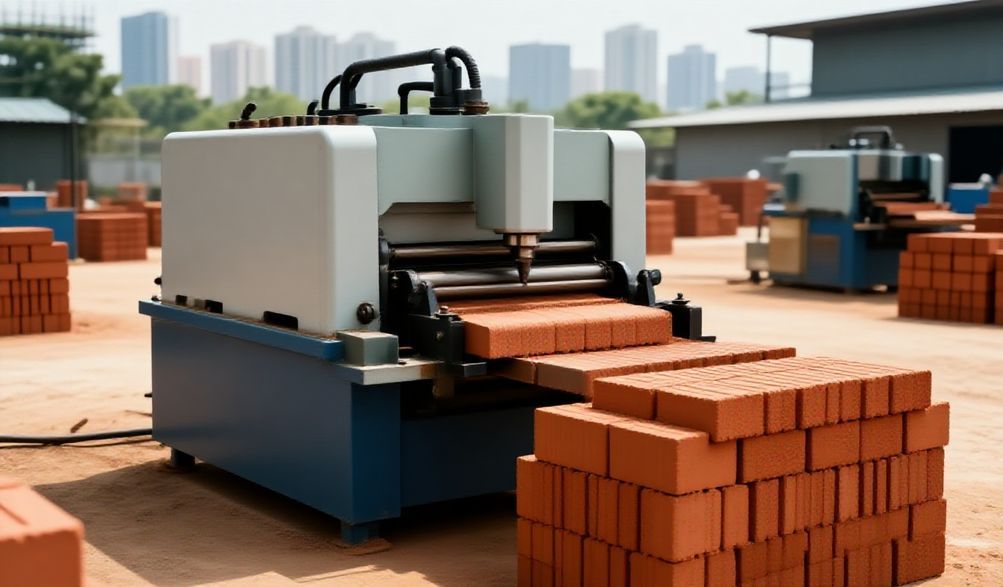
Hướng Dẫn Toàn Diện Về Máy Sản Xuất Gạch Đất Sét Tại Hyderabad (2026)
Giới thiệu
Skyline của Hyderabad là minh chứng cho sự phát triển không ngừng. Từ những hành lang CNTT trải dài ở HITEC City đến các dự án cơ sở hạ tầng đầy tham vọng và những khu đô thị dân cư không ngừng mở rộng, cơn sốt xây dựng tại Telangana không hề có dấu hiệu hạ nhiệt. Trái tim của mỗi công trình đang vươn lên ấy đều nằm ở một thành tố cơ bản: viên gạch khiêm tốn. Làn sóng này tạo ra một nhu cầu ổn định và khổng lồ đối với gạch chất lượng, mở ra cơ hội vàng cho các nhà xây dựng, nhà thầu và doanh nhân.
Tuy nhiên, việc tận dụng nhu cầu này đầy rẫy thách thức. Nhiều người vẫn phải vật lộn với những bất ổn của sản xuất gạch thủ công—kích thước không đồng đều, độ bền bị tổn hại, và sự phụ thuộc vào lao động bấp bênh. Những chậm trễ trong chuỗi cung ứng có thể làm đình trệ các dự án quan trọng, trong khi chi phí leo thang gặm nhấm lợi nhuận. Hơn nữa, ngành xây dựng hiện đại ngày càng ưu tiên tính bền vững và chất lượng tiêu chuẩn hóa, những lĩnh vực mà phương pháp truyền thống thường không đáp ứng được.
Giải pháp cho những vấn đề hiện đại này là một công cụ hiện đại:máy làm gạch đất sétĐối với thị trường sôi động của Hyderabad, những chiếc máy này không chỉ đơn thuần là thiết bị; chúng là một khoản đầu tư chiến lược vào hiệu quả, độ tin cậy và lợi nhuận dài hạn. Hướng dẫn này được xây dựng từ phân tích ngành sâu sắc, đánh giá kỹ thuật và những hiểu biết cụ thể về khu vực Hyderabad và Telangana. Mục tiêu của chúng tôi là trang bị cho bạn kiến thức cần thiết để tự tin vượt qua thị trường.
Đến cuối hướng dẫn này, bạn sẽ hiểu các loại máy móc có sẵn, biết cách chọn loại phù hợp với nhu cầu, xác định các nhà cung cấp chính ở Hyderabad, và học cách vận hành khoản đầu tư của mình để đạt lợi nhuận tối đa. Hãy cùng xây dựng nền tảng cho thành công của bạn.
Tìm hiểu về Máy Sản Xuất Gạch Đất Sét
Cách Máy Sản Xuất Gạch Hiện Đại Hoạt Động
Gone are the days of entirely manual molding and sun-drying. A modern clay brick making machine automates the process into a seamless, efficient cycle:
- Cho ăn & Trộn thức ăn: Raw clay (often mixed with additives like fly ash) is fed into a hopper. An integrated mixer blends it with the optimal amount of water to achieve perfect plasticity.
- Nén & Đúc khuôn: The prepared mix is conveyed into a mold chamber. Here, a powerful hydraulic system applies immense pressure (measured in tons) to compact the clay into a dense, uniform block.
- Đẩy ra: The freshly molded, “green” brick is automatically ejected onto a pallet or conveyor belt.
- Chữa bệnh: While the machine handles molding, the bricks are transferred to a drying area and later for curing (often in a kiln), where they gain their final strength.
This automated process stands in stark contrast to traditional methods, offering unparalleled consistency, speed, and labor savings.
Types of Clay Brick Making Machines Available in Hyderabad
The market caters to various scales of operation. Here are the primary types you’ll find:
-
Máy Thủ Công/Bán Tự Động:
- Lý Tưởng Cho: Small-scale startups, rural entrepreneurs, and specific on-site project needs.
- Hoạt động: Require some manual intervention for feeding or brick removal. Often lever-operated or use smaller hydraulic systems.
- Lợi thế: Lowest capital investment, low power consumption, and simplicity. Output can range from 1,000 to 5,000 bricks per 8-hour shift.
-
Máy Móc Tự Động Hoàn Toàn:
- Lý Tưởng Cho: Medium to large-scale commercial brick manufacturing plants supplying major construction projects.
- Hoạt động: Feature automated material handling, molding, and brick stacking. Controlled via a programmable logic controller (PLC) panel.
- Lợi thế: High output (10,000 to 50,000+ bricks per day), minimal manual labor, and exceptional consistency in every brick.
-
Máy Sản Xuất Gạch Di Động:
- Lý Tưởng Cho: Large infrastructure projects (dams, roadways), remote site construction, or businesses wanting to reduce clay transport costs.
- Hoạt động: Mounted on a trailer, these units can be driven directly to the source of raw material or the construction site.
- Lợi thế: Eliminates logistics costs for raw material and finished bricks, enabling true on-site production.
Các Thành Phần Chính và Chức Năng của Chúng
Understanding the core parts demystifies the machine:
* Máy trộn & Máy trộn: The entry point for raw materials; ensures a homogenous, workable mix.
* Khuôn/Khuôn mẫu: The heart of the machine. It defines the brick’s shape (solid, hollow, paver) and size. Interchangeable molds offer product flexibility.
* Hệ thống thủy lực: Provides the high pressure needed for compaction. Its quality directly impacts brick density and machine durability.
* Bảng điều khiển: (Especially in automatic models) The brain of the operation, allowing for precision control over the production cycle.
Tại sao nên đầu tư vào máy làm gạch ở Hyderabad?
Đáp Ứng Cơn Sốt Xây Dựng Tại Hyderabad
Hyderabad’s growth narrative is powerful. With projects like the Regional Ring Road, expansion of the Metro, and continuous development in financial districts and residential hubs, the demand for construction materials is structural and long-term. Investing in brick production positions you directly within this supply chain, offering a business model with built-in demand.
Economic Advantages: Cost Savings & ROI
The financial case is compelling:
* Reduced Per-Unit Cost: Automation drastically cuts labor costs, which can constitute up to 50% of traditional brick production expenses.
* Faster Production Cycles: Machines work tirelessly, unaffected by weather or fatigue, ensuring timely order fulfillment.
* Return on Investment: A well-utilized semi-automatic machine can often see ROI within 12-18 months. Larger automatic plants, with higher output, can achieve it in 2-3 years based on market conditions and operational efficiency.
Chất Lượng Vượt Trội và Đồng Đều
Machine-made bricks are engineered for performance:
* Kích thước và Hình dạng Đồng nhất Ensures faster, neater construction with less mortar usage.
* Độ Bền Nén Cao: Hydraulic pressure creates denser bricks that often exceed the IS 1077 standard, leading to safer, more durable buildings.
* Market Preference: Builders and contractors actively seek out consistent, high-quality bricks to maintain their own construction standards and timelines.
Environmental and Sustainability Benefits
Modern machines align with green practices:
* Hiệu suất vật liệu: Precise mixing and molding minimize raw material waste.
* Fly Ash Utilization: Many machines can produce high-quality fly ash bricks, utilizing a thermal power plant byproduct readily available in Telangana. This promotes a circular economy.
* Giảm Dấu Chân Carbon Efficient production and local on-site manufacturing (with mobile units) cut down on transportation emissions.
How to Choose the Right Machine in Hyderabad: A Buyer’s Checklist
Đánh Giá Nhu Cầu Sản Xuất Của Bạn
Begin with your business plan. Ask:
* Are you supplying a specific large project?
* What is the daily demand from your target market (local dealers, contractors)?
* Calculate: Target Bricks Per Day (BPD) = (Monthly Sales Goal / 26 working days). Choose a machine with a capacity 20% higher to allow for growth and maintenance.
Key Technical Specifications to Scrutinize
Do not compromise on evaluating these:
* Năng lực sản xuất: Bricks per hour (BPH). Ensure it matches your calculated BPD.
* Loại & Kích thước Gạch: Can it produce solid, hollow, interlocking, or paver blocks? Are mold changes easy?
* Yêu cầu về nguồn điện: Electric (3-phase is standard for automatics), Diesel (good for areas with unstable power), or Hybrid options.
* Mức độ Tự động hóa: Balance your budget with your available skilled labor. A semi-automatic might be perfect for a controlled start.
Space, Power, and Raw Material Considerations
- Không gian You need area for the machine, raw material storage, drying yards, and curing. A semi-automatic setup may need 5,000-10,000 sq. ft.
- Quyền lực: Ensure your facility has the necessary electrical load. A 20-25 HP motor is common for mid-range machines.
- Raw Clay: Test your local soil. Hyderabad’s surrounding areas have varied soil profiles. A simple test at a local agricultural university or engineering lab can analyze clay, silt, and sand content to determine suitability.
The Importance of After-Sales Service & Support
This is non-negotiable in Hyderabad’s industrial landscape.
* Local Technicians: Does the supplier have a service team based in or near Hyderabad for rapid response?
* Spare Parts Inventory: Are common wear-and-tear parts (hydraulic seals, mold liners) readily available in their Hyderabad warehouse?
* Bảo hành: What is covered (parts, labor) and for how long? A minimum of 12 months on the core hydraulic system is standard.
Finding Reliable Suppliers & Manufacturers in Hyderabad
Top Factors When Evaluating a Supplier
Use the E-E-A-T framework (Experience, Expertise, Authoritativeness, Trustworthiness):
- Experience & Expertise: Look for companies with a proven track record of 8-10+ years. They should understand regional clay characteristics and local construction demands.
- Tính thẩm quyền Check for industry certifications, membership in associations like the Brick Industry Association, and genuine client testimonials or case studies from the Telangana region.
- Đáng tin cậy: Prioritize suppliers with transparent, detailed quotations, clear contract terms, and a willingness to connect you with existing customers.
The Value of Factory Visits and Machine Demos
Never buy based on a brochure alone.
* Visit the Supplier’s Unit: Assess their manufacturing quality and professionalism.
* Request a Live Demo: See the machine running. Observe the brick quality, noise levels, and ease of operation.
* Ask to Visit an Existing Client: A confident supplier will arrange this. Speak to the operator about performance and after-sales service.
Understanding Pricing and Financing Options
- Price Ranges (Approximate):
- Thủ công/Bán tự động:₹ 3 Lakhs to ₹ 15 Lakhs
- Nhà Máy Cố Định Hoàn Toàn Tự Động:₹ 20 Lakhs to ₹ 1.5 Crores+
- Máy Móc Di Động:₹ 15 Lakhs to ₹ 50 Lakhs
- Financing: Many nationalized and private banks in India offer MSME equipment loans. Some manufacturers also have tie-ups for leasing options or provide their own installment plans.
Operational Best Practices and Maintenance
Daily Operation for Optimal Output
- Raw Material Prep: Ensure clay is clean (free of stones, organic matter) and properly weathered. Consistency in moisture content is key.
- Machine Warm-up: Run the machine idle for a few minutes before starting production.
- Safety First: Operators must wear safety gear. Never clear jams or perform adjustments while the machine is powered on.
Essential Maintenance Schedule
A little care prevents major downtime.
* Hàng ngày: Clean the machine thoroughly after shift. Check hydraulic oil levels and for any visible leaks. Lubricate all moving parts as per manual.
* Hàng tuần: Tighten all bolts and nuts. Inspect the mold for wear. Check electrical connections.
* Monthly: Change or clean hydraulic oil filters. Conduct a thorough inspection of the hydraulic cylinders and hoses.
Troubleshooting Common Issues
- Poor Brick Formation/Chipping: Usually incorrect moisture content in clay. Adjust water input.
- Low Brick Density: Insufficient hydraulic pressure. Check pump and valve settings.
- Hydraulic Oil Leak: Identify source (seal, hose fitting) and replace immediately.
- Machine Not Starting: Check main power supply, circuit breakers, and emergency stop buttons.
Các Câu Hỏi Thường Gặp (FAQ)
Q1: What is the average price of a clay brick making machine in Hyderabad?
A: Prices vary significantly based on automation and capacity. You can expect a broad range from ₹ 3-4 lakhs for a basic manual/semi-automatic model to over ₹ 1 crore for a high-capacity, fully automatic plant with auxiliary equipment.
Q2: What is the production capacity I can expect?
A: Capacity scales with automation. A robust semi-automatic machine can produce 2,500 to 6,000 bricks per 8-hour shift. A standard fully automatic plant can easily produce 15,000 to 30,000 bricks per day.
Q3: Are there government subsidies or schemes for brick making machines?
A: It is advisable to check with the Telangana State MSME Department, Telangana State Industrial Infrastructure Corporation (TSIIC)vàKVIC (Khadi and Village Industries Commission). Subsidies and schemes are periodically updated and can offer significant financial benefits.
Q4: How do I ensure the quality of raw clay for brick making?
A: Conduct a soil plasticity test. Institutions like the Professor Jayashankar Telangana State Agricultural University or private soil testing labs in Hyderabad can analyze your sample and recommend the ideal mix proportions.
Q5: Can I get training on how to operate the machine?
A: Absolutely. Any reputable supplier in Hyderabad will provide comprehensive hands-on training for your operators at the time of installation. This is a standard part of the service and crucial for safe, efficient operation.
Conclusion
Investing in a clay brick making machine in Hyderabad is more than a purchase; it’s a strategic decision to future-proof your business against inefficiency and inconsistency. It places you at the core of the region’s construction revolution, enabling you to deliver quality, sustainability, and value.
Success hinges on informed selection. Use this guide as your checklist: define your needs, scrutinize technical specs, prioritize local after-sales support, and partner with a supplier whose expertise and trustworthiness are beyond question. The right machine becomes the foundation not just for bricks, but for a stronger, more profitable enterprise.
Ready to transform your brick production? Use this guide as your roadmap. Contact reputable suppliers in Hyderabad, insist on detailed demonstrations, and make the choice that builds the foundation for your long-term success.
<