
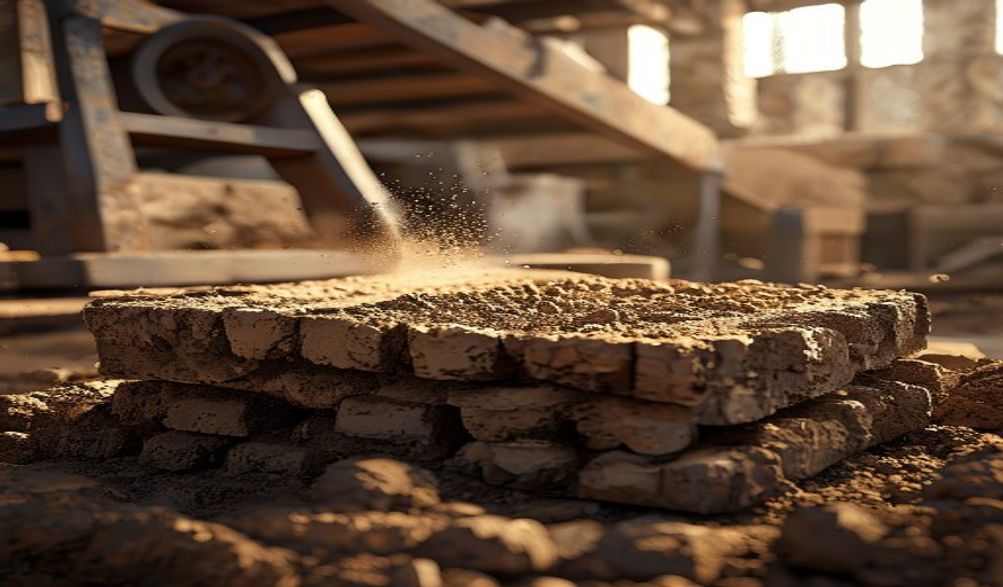
How to Choose a Dirt Brick Making Machine: A Comprehensive Buyer’s Guide
Giới thiệu
Imagine building a home, a school, or a community center with the very earth beneath your feet. Compressed Earth Blocks (CEBs) and soil-cement bricks offer a path to construction that is profoundly sustainable, remarkably cost-effective, and inherently durable. The cornerstone of this transformative process isn’t just the soil—it’s the machine that brings it to life.
Choosing the wrong machine, however, can turn this dream into a costly lesson. A mismatched press can lead to weak bricks, stalled projects, and a significant financial loss. This guide, distilled from engineering principles and hands-on experience in earth-based construction, is your blueprint to avoid those pitfalls.
We will walk you through a clear, step-by-step framework. We’ll move from analyzing your unique soil to defining your production goals, demystifying machine mechanics, and calculating true long-term costs. Whether you’re a DIY enthusiast, a small contractor, or spearheading a community project, this guide is designed to equip you with the knowledge to make a confident, informed investment.
Hiểu Rõ Yêu Cầu Dự Án (Nền Tảng Cho Sự Lựa Chọn Của Bạn)
Before you look at a single machine spec sheet, you must define the parameters of your project. This foundational step ensures your choice is driven by need, not just features.
Defining Scale: Production Volume & Project Timeline
Your required output is the primary filter for machine type.
-
Small-scale (DIY, Personal Home): Think garden walls, small outbuildings, or a single-family home built over a longer period. Your focus is on affordability and simplicity.
- Machine Fit: Manual or small, low-power electric presses.
- Đầu ra: 100-500 bricks per day, dependent on labor.
-
Medium-scale (Small Business, Community Project): This covers multiple homes, a small commercial building, or a community housing initiative. Balance between output, quality, and investment is key.
- Machine Fit: Semi-automatic or standard hydraulic presses.
- Đầu ra: 500-3,000 bricks per day.
-
Large-scale (Commercial Production): For supplying bricks as a product for the market or for very large, time-sensitive construction projects.
- Machine Fit: Fully automatic, high-output hydraulic machines with integrated feeding systems.
- Đầu ra: 3,000+ bricks per day.
Brick Specifications: Size, Shape, and Strength Needs
Not all bricks are created equal. Your architectural and structural plans dictate your machine’s mold requirements.
- Standard vs. Custom Sizes: Most machines offer standard molds (e.g., 300x150x100mm). Custom molds are possible but add cost and lead time.
- Interlocking Designs: Many modern CEB presses produce interlocking bricks. These allow for mortar-less construction, saving time and material while increasing seismic resistance. Ensure your chosen machine offers this design if needed.
- Cường độ nén: This is critical. A non-load-bearing partition wall may only need 300-400 PSI. A load-bearing structural wall often requires 700+ PSI. Your machine’s pressure capacity and your soil mix will determine this.
Soil Availability and Analysis: The Most Critical Input
The machine is just the tool; the soil is the raw material. Its quality dictates everything.
- The Non-Negotiable Soil Test: You must test your soil. A simple “jar test” can give a basic clay/silt/sand ratio, but for serious projects, a professional lab analysis is a wise investment.
- The Ideal Composition: A good brick soil is typically 15-30% clay (binder), 10-20% silt, and 50-75% sand and gravel (aggregate). Pure clay will shrink and crack; pure sand will not bind.
- Stabilized vs. Unstabilized: Will you add a stabilizer like cement (5-10%) or lime?
- Ổn định: Essential for durability in exposed, load-bearing, or wet conditions.
- Unstabilized: Suitable only for protected, dry, non-structural applications.
- Processing Needs: Your soil may need crushing to break up clumps, screening to remove rocks and organic matter, and consistent mixing with stabilizer and water. Factor in the cost of this ancillary equipment (crusher, sieve, pan mixer).
Core Machine Types and Mechanisms Explained
Hiểu biếtlàm sao these machines work is key to understanding which one fits your operation.
Manual Press Machines (The Entry Point)
These are the simplest and most affordable entry point into earth brick production.
- Chúng Hoạt Động Như Thế Nào: A lever or mechanical screw system is operated by hand to generate compression, compacting the soil into a mold.
- Ưu điểm:
- Chi phí ban đầu rất thấp.
- Không cần điện hoặc nhiên liệu.
- Highly portable and simple to maintain.
- Nhược điểm:
- Very low output (50-150 bricks per person, per day).
- Physically demanding labor.
- Inconsistent pressure can lead to variable brick quality.
- Tốt Nhất Cho: Experimentation, educational projects, very small DIY builds, or contexts with zero power access.
Hydraulic Press Machines (The Workhorse)
This is the most versatile and popular category for serious small-to-medium scale production.
- Chúng Hoạt Động Như Thế Nào: An electric motor or diesel engine powers a hydraulic pump. This system delivers high, consistent, and adjustable pressure through a hydraulic ram to compact the soil.
- Ưu điểm:
- High, consistent pressure for superior brick density and strength.
- Good production output with a small team.
- Can handle a wider variety of soil mixes, especially with stabilizers.
- Nhược điểm:
- Higher initial purchase price.
- Requires a power source and more complex maintenance.
- Heavier and less portable than manual presses.
- Tốt Nhất Cho: The vast majority of owner-builder homes, small construction businesses, and community development projects.
Fully Automatic Machines (For Maximum Output)
These are integrated production systems designed for volume.
- Chúng Hoạt Động Như Thế Nào: They automate the entire cycle: soil is fed from a hopper, measured, pressed, and ejected onto a pallet, often with minimal human intervention.
- Ưu điểm:
- Very high, consistent output with minimal labor per brick.
- Ultimate consistency in brick quality.
- Nhược điểm:
- Very high capital investment.
- Complex operation and maintenance require skilled technicians.
- Less flexibility for short production runs or frequent mold changes.
- Tốt Nhất Cho: Large commercial brick yards supplying to the construction market or massive, time-bound institutional projects.
Key Features and Specifications to Compare
When comparing machines within your chosen category, these specs are your decision-making toolkit.
Pressure Capacity (Tons)
This is arguably the most critical mechanical specification.
- Tại Sao Điều Này Quan Trọng: Pressure directly compacts the soil particles, creating density. Higher density translates directly to higher compressive strength (PSI) and water resistance.
- Typical Range: Manual presses might apply 5-10 tons. Hydraulic machines range from 15 tons (light-duty) to 40+ tons (heavy-duty). For strong, stabilized load-bearing blocks, 20+ tons is a common benchmark.
Công Suất Sản Xuất (Số Gạch Mỗi Giờ/Ngày)
View manufacturer claims with a practical eye.
- Theoretical vs. Operational Output: A spec sheet may say “400 bricks per hour.” This is often a maximum cycle speed under perfect conditions. A sustainable operational output factors in time for loading material, moving finished bricks, and operator breaks. Deduct 25-40% for a realistic daily figure.
Power Source: Electric, Diesel, or Manual
This choice is dictated by your site context.
- Điện: Cleaner, quieter, and cheaper to run if grid power is reliable. Requires a stable electrical supply (often three-phase for larger machines).
- Đi-ê-zen Offers complete independence from the grid, ideal for remote sites. Higher noise, fuel cost, and emissions are the trade-offs.
- Hướng dẫn sử dụng: As discussed, for minimal power and scale.
Mobility and Footprint
Consider your workspace.
- Stationary Units: These are bolted to a solid concrete foundation for heavy-duty, long-term production.
- Mobile/Trailer-Mounted Units: A fantastic option for contractors or projects where the machine needs to move between sites. Ensure your towing vehicle is adequate.
- Workspace: You need ample space not just for the machine, but for material stockpiles, brick curing areas, and safe operation.
Tổng Chi Phí Sở Hữu: Vượt Xa Giá Niêm Yết
The purchase price is just the first chapter in the cost story.
Initial Purchase Price
- Ranges: Manual presses: $1,000 – $5,000. Hydraulic presses: $8,000 – $50,000+. Fully automatic: $60,000+.
- What’s Included? Clarify this! Does the price include molds (and how many?), a mixing system, spare parts kit, or on-site training? A cheaper base price that excludes essentials can quickly become more expensive.
Operational and Maintenance Costs
- Power/Fuel: Calculate daily running costs based on your projected output.
- Phụ Tùng Thay Thế: Hydraulic seals, hoses, and wear parts on molds will need replacement. Inquire about the cost and local availability of these “consumable” parts.
- Support: The ease of maintenance (e.g., are grease points accessible?) and the quality of local technical support will impact your downtime and long-term costs.
Input Material Costs
Don’t forget the cost of the bricks themselves.
- Chất ổn định: Cement is typically the largest ongoing material cost. Calculate based on your mix design (e.g., 8% cement by volume).
- Ancillary Equipment: The true start-up cost includes the soil crusher, rotary sieve, and mechanical pan mixer needed to prepare consistent, high-quality feed material for the press.
Vetting Manufacturers and Ensuring Quality
Your relationship with the manufacturer is a long-term partnership. Vet them thoroughly.
Research and Due Diligence
- Specialization is Key: Seek out companies with a proven, dedicated history in earth/soil/compressed earth block machinery. A manufacturer of concrete block machines may not understand the nuances of soil compression.
- Technical Scrutiny: Request detailed engineering drawings, specifications, and compliance certificates. A reputable company will be transparent.
The Importance of Testing and Warranties
- The Soil Test Request: The single best vetting tool. Send a sample of your soil to your shortlisted manufacturers. Ask them to produce test bricks and report on the strength and quality achieved. This tests their expertise and your soil’s suitability.
- Warranty Depth: A 1-year warranty on the entire machine is standard. Understand what’s covered (frame, hydraulics, electrical) and what’s considered wear-and-tear (molds, seals).
- Customer References: Ask for and actually contact past customers, especially those with projects similar to yours.
After-Sales Support: The Deal-Breaker
A machine is useless if you can’t operate it or get it fixed.
- Training & Documentation: Are clear manuals, video tutorials, or (ideally) on-site training provided?
- Hỗ trợ Kỹ thuật: Is there a direct phone line or responsive email for troubleshooting? What are their response time commitments?
- Parts Logistics: How quickly can they ship a critical replacement part to your location? Local dealer support is a massive advantage.
Making the Final Decision: A Step-by-Step Checklist
Follow this sequence to transform overwhelm into a clear decision.
- Step 1: Complete a professional soil analysis. Know your raw material.
- Step 2: Finalize your brick specifications (size, interlocking, strength) and set a realistic daily production target.
- Step 3: Determine your total budget, including the machine, all necessary ancillary equipment, and 6 months of running costs.
- Step 4: Based on Steps 1-3, shortlist 3-4 machine models from specialized manufacturers.
- Step 5: Contact manufacturers. Send your soil sample for testing and request comprehensive, itemized quotes.
- Step 6: Evaluate the intangibles: quality of customer communication, warranty terms, and verifiable customer reviews.
- Step 7: Make your informed purchase, prioritizing long-term partnership and support over the absolute lowest price.
Các Câu Hỏi Thường Gặp (FAQ)
Q: Can I use any soil to make bricks with these machines?
A: No. The soil must have a suitable blend of clay (binder), silt, and sand/gravel (aggregate). Pure clay will crack; pure sand will not cohere. A simple jar test is the absolute minimum; a professional analysis is recommended for construction.
Q: What’s the difference between a dirt brick machine and a concrete block machine?
A: While both use compression, dirt brick machines are engineered for semi-dry, low-moisture soil mixes. They often apply higher pressure to properly compact cohesive soil particles and are built to handle the more abrasive nature of soil compared to concrete aggregate.
Q: Do I absolutely need to add cement to the soil?
A: For any exposed, load-bearing, or wet-area application, yes—stabilization (typically 5-10% cement) is highly recommended for durability and strength. Unstabilized bricks are only suitable for protected, dry, non-structural uses like garden walls.
Q: How long do the bricks take to cure?
A: Cement-stabilized bricks require careful curing. They should be kept moist under plastic sheeting or burlap for at least 7-14 days to gain proper strength. They continue to harden and reach full strength over several weeks.
Q: What is the typical lifespan of a quality hydraulic dirt brick machine?
A: With proper operation, routine maintenance, and timely replacement of wear parts, a well-built machine from a reputable manufacturer can have a productive lifespan of 10 to 20 years. The quality of the hydraulic system and structural frame are the primary determinants.
Conclusion
Choosing the right dirt brick making machine is not about finding the most powerful or the cheapest option. It is a systematic, informed process that begins with understanding your soil and ends with securing a reliable partnership with a manufacturer. It’s an investment in the success of your sustainable building project.
The long-term value lies in the synergy between a suitable machine, proper soil preparation, and quality after-sales support. This trifecta pays dividends in the form of consistent, high-quality bricks, efficient project timelines, and a machine that serves you for years to come.
Your next step is the most important one: start with a soil test. With your analysis in hand, you can begin conversations with manufacturers from a position of knowledge. Have a specific project in mind or a question about your unique situation? Share it in the comments below—let’s continue the conversation on building a better future from the ground up.
<