
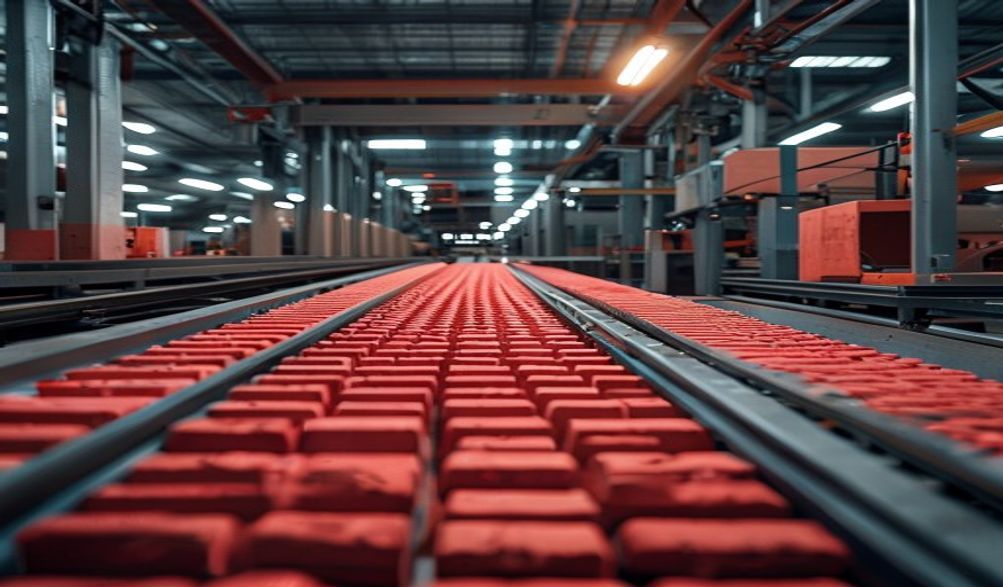
Hướng dẫn chọn máy làm gạch phù hợp để mua tại Trung Quốc: Cẩm nang cho người mua năm 2026
Giới thiệu
Thị trường vật liệu xây dựng toàn cầu được dự báo sẽ vượt 1,3 nghìn tỷ đô la vào năm 2026, với gạch vẫn là khối xây dựng cơ bản. Trung Quốc, với vai trò là cường quốc sản xuất thế giới, cung cấp hơn 60% máy móc sản xuất gạch trên hành tinh. Sự thống trị này mang đến cơ hội tuyệt vời để tiếp cận thiết bị hiệu suất cao, chi phí hợp lý — nhưng cũng là một mê cung phức tạp cho những người mua chưa chuẩn bị.
Với hơn một thập kỷ kinh nghiệm trong việc mua sắm, kiểm tra và vận hành máy móc hạng nặng từ các trung tâm công nghiệp Trung Quốc, tôi đã tận mắt chứng kiến những thành công và thất bại của quy trình này. Đội ngũ của tôi đã vận hành các nhà máy trên ba châu lục, và nhận ra rằng khoảng cách giữa một khoản đầu tư sinh lời và một công cụ đắt tiền vô dụng nằm ở các chi tiết của việc lựa chọn và thẩm định kỹ lưỡng.
挑战的核心显而易见:在阿里巴巴上搜索,会发现数千家供应商提供规格相似但价格天差地别的机器。如何从海量信息中筛选出有效内容,在相距一万公里之外验证质量,并确保所购机器正是你所需的那一款?
Hướng dẫn này chính là giải pháp dành cho bạn. Nó kết tinh nhiều năm kinh nghiệm thực tiễn trong ngành thành một khuôn khổ đáng tin cậy, từng bước một. Chúng tôi sẽ vượt ra khỏi những tờ rơi hào nhoáng để đi vào thực tế của các thông số kỹ thuật, việc thẩm định nhà cung cấp, và hậu cần. Dù bạn là một công ty khởi nghiệp mở xưởng sản xuất gạch block hay một doanh nghiệp xây dựng mở rộng sản xuất nội bộ, tài liệu này được thiết kế để đảm bảo một khoản đầu tư mang lại lợi nhuận trong nhiều năm tới.
Hiểu rõ nhu cầu của bạn: Nền tảng của một giao dịch mua thông minh
Bỏ qua việc tự đánh giá này là sai lầm phổ biến và tốn kém nhất. Bạn phải xác định rõ các giới hạn của mình.trước you look at a single machine listing. This internal clarity is your primary defense against persuasive sales tactics for over- or under-specified equipment.
Define Your Production Goals & Output Capacity
Your business plan must drive the machine specification, not the other way around.
- Định Lượng Kết Quả Đầu Ra Của Bạn Be specific. Is your target 5,000 solid blocks per day for a local housing project, or 50,000 pavers per week for commercial supply? Calculate based on proven market demand, not optimistic guesses.
- Identify Brick Types: The required brick type dictates the machine’s mechanism.
- Gạch rỗng: For load-bearing walls, requiring high pressure.
- Khối Đặc For foundations and heavy-duty construction.
- Paving/Interlocking Bricks: For landscaping and hardscaping, often requiring color mixing capabilities.
- Gạch Chuyên Dụng: (e.g., curbstone, grass blocks) require specific mold designs.
- Scale Your Vision: A small, semi-automatic machine may suffice for a local venture. Supplying regional contractors demands a fully automatic, high-uptime production line.
Assess Raw Material Availability
The machine must be compatible with the materials you have, not the ones you wish for.
- Primary Material Analysis: What is abundantly and cheaply available locally?
- Đất sét Traditional material, requires high-temperature kilns (if fired).
- Bê tông (Xi măng, Cát, Cốt liệu): The most common for block making machines.
- Fly Ash/Cement: Eco-friendly option, utilizing industrial by-products.
- Đất Nén: For low-cost, soil-based bricks in certain regions.
- Cost & Consistency: Fluctuations in cement or sand quality can affect brick strength. Your machine should have some tolerance for material variance.
Budget and Financial Planning
Think in terms of Total Landed Cost (TLC), not just the FOB price on a website.
- The Full Cost Breakdown:
- Machine Cost (FOB)
- Shipping & Insurance (CIF)
- Import Duties & Taxes (Varies by country)
- Inland Transportation & Handling
- Installation, Foundation, & Utilities Setup
- Initial Spare Parts Kit (Crucial!)
- Operator Training
- Cost vs. Value: A $15,000 machine that breaks down monthly and has no local support is far more expensive than a $25,000 machine that runs reliably for years. Allocate your budget for reliability and after-sales support.
Các Thông Số Kỹ Thuật Chính Cần Đánh Giá
This is where expertise separates the professionals from the amateurs. Understanding these specs prevents you from buying a machine that looks impressive but performs poorly for your specific needs.
Loại Máy và Cấp Độ Tự Động Hóa
Your choice here dramatically impacts labor costs, output consistency, and initial investment.
- Máy Móc Thủ Công: Operated entirely by hand. Very low cost, low output (300-500 blocks/day), high labor intensity. Suitable for micro-enterprises.
- Máy Bán Tự Động: Material feeding and brick compaction are mechanical, but block ejection and pallet movement are manual. Good mid-range output (1,000-2,500 blocks/day) with a moderate price.
- Máy Móc Tự Động Hoàn Toàn: Computer-controlled from feeding to stacking. High output (5,000-30,000+ blocks/day), consistent quality, and minimal labor. Requires higher investment, stable power, and skilled maintenance.
- Đứng yên so với Di động: Stationary plants are for high-volume, fixed-site production. Mobile block makers (often on a trailer) are excellent for producing bricks directly on a construction site.
Core Performance Metrics
These numbers are non-negotiable. Demand them in writing.
- Thời gian chu kỳ: The time to produce one cycle of bricks (e.g., 15-20 seconds). Combined with the number of blocks per cycle, this gives you the Blocks Per Hour (BPH) capacity. Be wary of “theoretical maximum” figures; ask for realistic, sustainable output.
- Lực Ép (Tấn Lực): This determines brick density and compressive strength. For standard solid blocks, 150-250 tons is common. Higher tonnage (300+ tons) is needed for high-strength or thick pavers. Insufficient pressure leads to weak, crumbly bricks.
- Tùy chỉnh Khuôn mẫu: Can the supplier provide custom molds for your unique brick design? What is the lead time and cost? A versatile machine allows you to pivot your product line as market demands change.
Power Requirements and Operational Costs
The purchase price is just the entry fee. Calculate the running costs.
- Nguồn điện: Most are electric (requiring stable 3-phase power). Some are diesel or hybrid, crucial for regions with unreliable electricity.
- Consumption: A fully automatic line can draw 30-75 kW. Calculate your local electricity cost per operating hour. This is a key part of your production cost per block.
- Long-Term Efficiency: A well-designed machine with quality components (e.g., German or Japanese hydraulics, premium PLCs) will have lower downtime and energy consumption per block, saving money over its 10+ year lifespan.
探索中国供应商版图
Finding a supplier is easy. Finding a đối tác đáng tin cậy is the real challenge. This phase is all about systematic due diligence.
Where to Find Reputable Suppliers
- B2B Platforms (Alibaba, Made-in-China): The starting point for most. Use filters for “Verified Suppliers,” “Trade Assurance,” and “Assessed Suppliers.” Look for suppliers with 5+ years of gold membership.
- Industry Trade Shows:CáiCanton Fair (Guangzhou)vàChina International Building Materials Fair are unparalleled. You can see machines running, feel the build quality, and talk face-to-face with engineers. It’s the best way to shortlist serious manufacturers.
- Direct Manufacturer vs. Trading Company: Always aim for the nhà máy. Trading companies add a markup and complicate communication and technical support. Verify manufacturing capability by asking for a virtual factory tour and specific photos of the production floor.
Vetting Suppliers for Reliability
Trust, but verify. Every single claim.
- Licenses and Certifications:
- Business License: Ask for a copy. A legitimate supplier will provide it.
- ISO 9001: Indicates a quality management system.
- Dấu CE: Crucial for exporting to Europe, signifying compliance with EU safety standards. Note: Some suppliers obtain “self-declared” CE for machinery. For critical equipment, seek machines with EC Type Examination certificates from a notified body.
- Customer References: Don’t settle for testimonials. Ask for contact information for 2-3 past clients in your region or a similar one. A confident supplier will provide this. Contact these references and ask about machine performance, after-sales service, and problem resolution.
- The Factory Audit (Virtual or In-Person):
- Request a live video call walkthrough of the assembly workshop.
- Look for organization, skilled welders, quality raw materials (steel plate), and testing areas.
- Ask to see their quality control process for core components like hydraulic cylinders and control systems.
The Critical Role of Communication
Miscommunication is the root cause of most failed shipments.
- Technical Clarity: Communicate your needs using the technical terms outlined in this guide (cycle time, tonnage, BPH). Provide written, detailed specifications.
- Dedicated Contact: Ensure you have a direct line to an English-speaking sales engineer or project manager, not just a salesperson. They must understand both the language and the technology.
The Purchase Process: From Inquiry to Delivery
This is your execution playbook. Follow these steps methodically to protect your investment.
Requesting and Comparing Quotations (RFQ)
A professional RFQ gets professional responses.
- Your RFQ Should Include: Required brick type/size, target daily output, raw material details, voltage/power source, and preferred automation level. Attach drawings if you have custom designs.
- Analyzing Quotes: Understand the incoterms!
- EXW (Giao tại xưởng): You own the goods at the factory gate. You handle all shipping, insurance, and risk. Most control, most complexity.
- FOB (Giao hàng lên tàu): Supplier gets the machine to the port and loaded on your ship. You handle sea freight and insurance. Most common balance of control.
- CIF (Cost, Insurance, Freight): Supplier arranges and pays for shipping and insurance to your nearest port. Less work for you, but less control over the shipping process.
Negotiation and Contract Safeguards
The contract is your shield. Do not rely on promises.
- Negotiation Points: Price, payment terms (see FAQ), warranty period (aim for 18-24 months on core parts), and a discount on the initial spare parts kit.
- Essential Contract Clauses:
- Detailed Technical Annex: All specs (model, capacity, power, weight, dimensions) must be listed.
- Warranty Terms: Explicitly state what is covered, what is excluded, and the process for claiming (e.g., supplier sends parts, you cover labor).
- Penalty for Delay: A clause for liquidated damages if delivery is significantly late.
- Dispute Resolution: Specify the location (e.g., CIETAC in China) for arbitration.
Quality Control and Pre-Shipment Inspection
Never, ever skip this step. It is your last line of defense.
- Third-Party Inspection: Hire a reputable inspection company (e.g., SGS, Bureau Veritas, or a local agent) to perform a Pre-Shipment Inspection (PSI). They will check materials, workmanship, assembly, and perform a test run to verify it meets the contracted specs. The fee (typically $300-$800) is insignificant compared to the cost of receiving a faulty machine.
- Sample Approval: If possible, request a sample batch of bricks made from your local raw material (you may need to send a sample to China) to approve the quality before full production begins.
Logistics, Shipping, and After-Sales Support
The journey isn’t over when the machine leaves the factory.
- Shipping & Customs: Work with a experienced freight forwarder. They will handle Bill of Lading, customs clearance in your country, and inland trucking. Ensure the machine is properly crated for ocean freight.
- Dịch vụ hậu mãi: This is the ultimate test of your supplier.
- Installation Guidance: Will they provide detailed manuals, videos, or (ideally) send a technician? Who pays for the technician’s travel?
- Operator Training: Is training material provided?
- Phụ Tùng Thay Thế: What is the lead time for critical spare parts? A good supplier stocks key components and can ship them via DHL/UPS within days.
Common Pitfalls and How to Avoid Them
Learn from the mistakes of others so you don’t pay for them yourself.
- The “Too Good to Be True” Price Trap: A quote 40% lower than the market average is a massive red flag. It indicates substandard materials, copied designs, or hidden costs. Quality has a real cost.
- Overlooking Local Technical Support and Spare Parts: Before you buy, identify a local mechanic or engineer who can service hydraulic and electrical systems. Ensure you have the electrical diagrams and parts list in your language.
- Ignoring Local Building Standards and Regulations: The bricks produced must meet your country’s construction standards (e.g., ASTM, BS, IS). Provide these standards to your supplier and get written confirmation the machine can produce compliant bricks.
- Underestimating Total Landed Cost (TLC): Revisit the budget section. Failing to account for duties, port fees, and heavy-duty transport from the port to your site can cause severe financial strain.
Các Câu Hỏi Thường Gặp (FAQ)
Q1: What is the average price range for a brick making machine from China?
A: Prices range dramatically from $5,000 for a small manual machine to $100,000+ for a high-capacity, fully automatic production line. The variance is due to automation level, output capacity (blocks per hour), build quality, and brand reputation of core components. A robust semi-automatic machine typically starts around $15,000-$25,000.
Q2: Is it safe to pay a 100% advance payment to a Chinese supplier?
A: Absolutely not. This exposes you to extreme risk. The industry standard for reputable deals is 30% deposit upon signing the contract, 70% balance against copy of Bill of Lading. Always use secure payment methods like Alibaba Trade Assurance (which holds funds until you confirm delivery) or a Letter of Credit (L/C) for large orders.
Q3: How long is the typical warranty, and what does it cover?
A: A standard warranty is 12-24 months for core components like the hydraulic system, mainframe, and electrical controller. Wear parts (molds, seals, mixing blades) are often covered for 6 months or less. The critical step is to have the exact warranty terms, including response time and parts/labor responsibility, written into your contract.
Q4: Can I get custom molds for specific brick designs?
A: Yes, most manufacturers offer this service. You will need to provide detailed drawings or a sample. Lead time is typically 2-4 weeks, and costs range from $500 to $2,000+ per mold set depending on complexity. This flexibility is a key advantage of sourcing from China.
Q5: What are the most reputable brick making machine brands or regions in China?
A: Focus less on “brands” and more on manufacturing hubs and supplier reputation. Key industrial clusters are in Fujian, Shandong, Guangdong, and Henan provinces. Look for suppliers who are members of the China Construction Machinery Association and have a long track record of exporting to markets with high quality standards, like Europe or Australia.
Conclusion
Choosing the right brick making machine from China is a significant but manageable investment when approached systematically. The process rests on five pillars: precisely defining your production needs, meticulously researching technical specifications, rigorously vetting suppliers, securing a watertight contract, and enforcing strict quality control.
Remember, in this arena, the cheapest option is almost invariably the most expensive in the long run. Your goal is not to find the lowest price, but the greatest value—defined by robust build quality, transparent supplier reliability, and clear, actionable after-sales support.
Ready to take the next step with confidence?
- Primary CTA (Expertise): [Download our comprehensive Brick Machine Supplier Checklist and RFQ Template] to ensure you miss no critical step.
- Secondary CTA (Experience): Have a specific project in mind? [Contact our sourcing consultants] for a personalized review of your requirements and supplier shortlist.
- Engagement CTA: Navigating the Chinese market is a shared journey. Share your experiences or questions in the comments below—let’s learn from each other.
Author Bio: With over 12 years of direct experience in construction machinery procurement and plant commissioning, [Author Name] has led sourcing delegations to major industrial fairs across China and overseen the installation of more than 30 brick and block production lines worldwide. His expertise lies in translating technical specifications into real-world production efficiency and ROI. He is a regular contributor to International ConstructionvàGlobal Cement Magazine.
Company Credentials: [Company Name] has been a trusted partner in industrial equipment sourcing for 8 years, facilitating over 200 successful client projects across 45 countries. We hold partnerships with vetted manufacturers in key Chinese industrial zones and are proud recipients of the [Name of Industry Award] for excellence in international trade facilitation.
Disclaimer: This guide is based on professional experience and market knowledge as of 2026. Prices, shipping regulations, and import policies are subject to change. This information is for educational purposes and should not replace professional legal or financial advice. Always conduct your own thorough due diligence before finalizing any purchase agreement.
<