1. Giải phẫu một Hệ thống Sản xuất Tự động
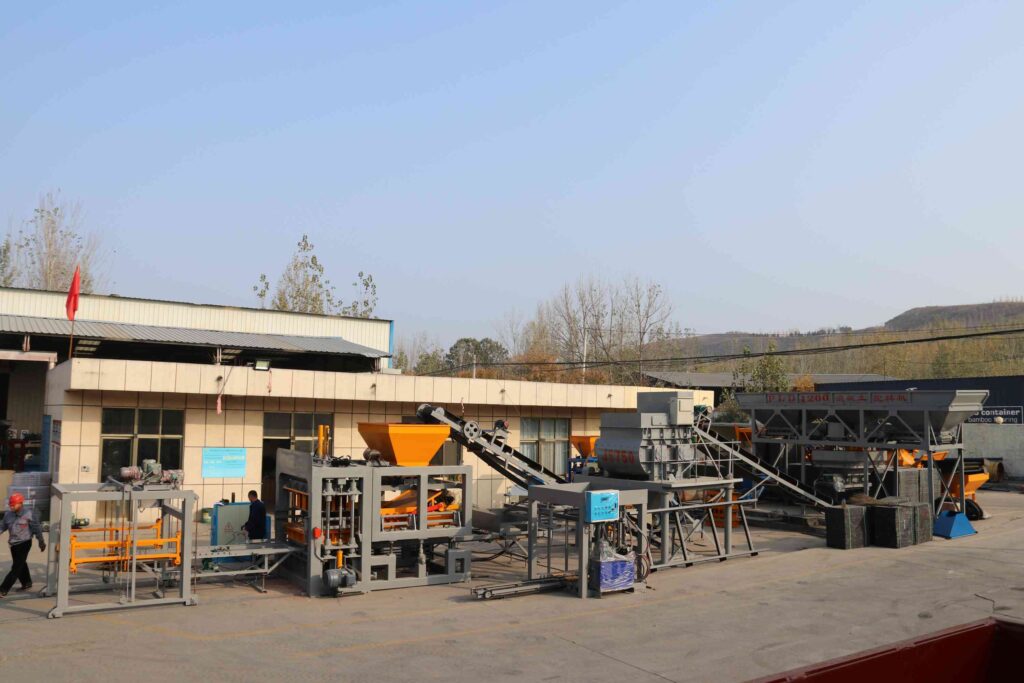
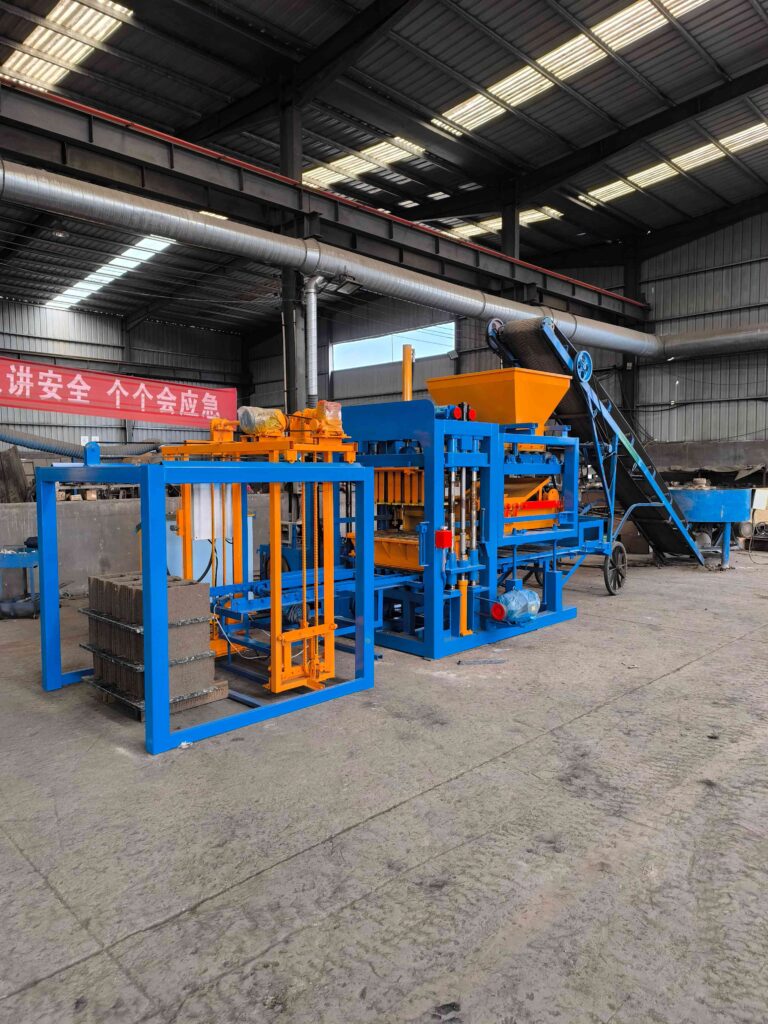
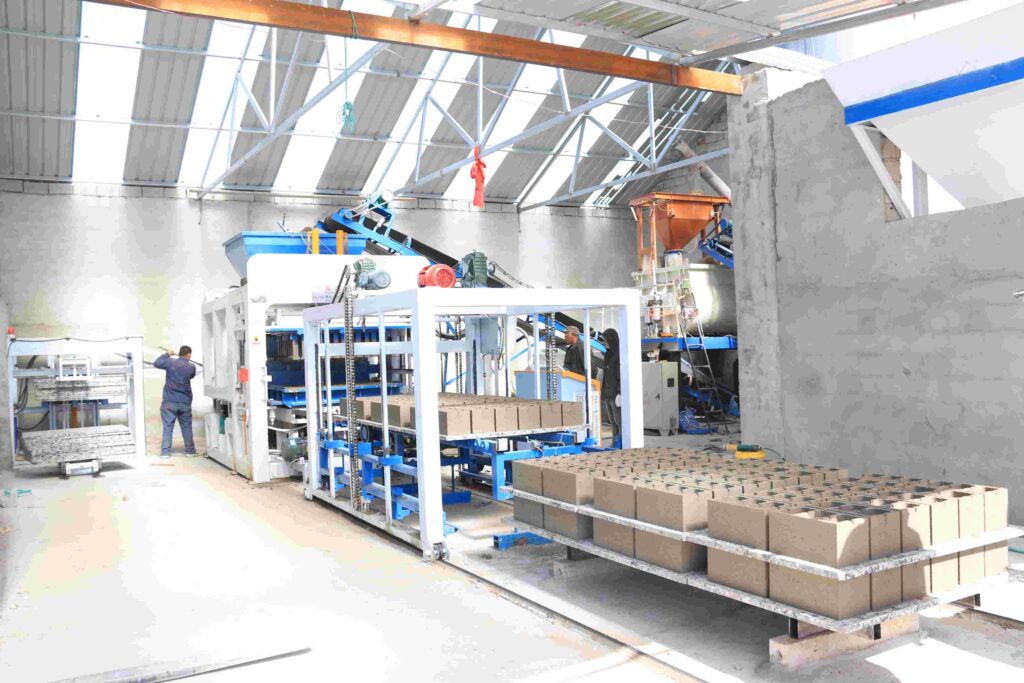
Một máy sản xuất gạch block tự động không phải là một đơn vị đơn lẻ mà là sự tích hợp tinh vi của nhiều hệ thống con hoạt động nhịp nhàng. Hiểu rõ cấu trúc này là bước đầu tiên để đánh giá đúng giá trị và cơ cấu chi phí của nó.
1.1. Các Hệ Thống Con Cốt Lõi và Chức Năng của Chúng:
- Hệ Thống Điều Khiển Trung Tâm:Bộ não của quy trình vận hành. Một Bộ điều khiển Logic Khả trình (PLC) với màn hình cảm ứng Giao diện Người-Máy (HMI) điều phối mọi hoạt động. Nó lưu trữ các công thức cho các sản phẩm khác nhau, giám sát dữ liệu sản xuất và cung cấp thông tin chẩn đoán.
- Hệ Thống Xử Lý và Định Lượng Vật Liệu:Điều này bao gồm các thùng chứa cốt liệu, silo xi măng, băng tải vít và hệ thống cân định lượng chính xác. Nó đảm bảo tỷ lệ chính xác của các nguyên liệu thô (cát, cốt liệu, xi măng, tro bay, nước) được cung cấp đến máy trộn, nhờ đó đảm bảo chất lượng sản phẩm đồng nhất.
- Hệ thống Trộn:Thông thường, một máy trộn chảo công suất lớn được sử dụng để đồng nhất hỗn hợp bê tông bán khô. Độ sệt của hỗn hợp này rất quan trọng đối với độ bền và bề mặt hoàn thiện của khối thành phẩm.
- Máy Tạo KhốiTrái tim của dây chuyền. Nó tiếp nhận bê tông đã trộn, phân phối vào khuôn và đồng thời chịu tác động của rung tần số cao và nén áp suất cao. Hành động kép này làm đặc hỗn hợp, tạo ra khối bê tông chắc chắn và có hình dạng chính xác.
- Hệ Thống Tuần Hoàn Pallet:Một hệ thống băng tải xích chuyển pallet (tấm thép) theo vòng lặp liên tục—từ máy đẩy khối, qua mạch hồi lưu, và trở lại bên dưới khuôn cho chu kỳ tiếp theo.
- Hệ Thống Tích Hợp Chữa Bệnh:Trong khi không phải lúc nào cũng được bao gồm trong giá máy cơ bản, một hệ thống tích hợp để xử lý quá trình bảo dưỡng là đặc trưng của tự động hóa hoàn toàn. Điều này có thể bao gồm các máy xếp tự động đặt các khối gạch mộc lên giá bảo dưỡng và nạp chúng vào các buồng được kiểm soát khí hậu.
1.2. Quy Trình Sản Xuất:
Quá trình này là một vòng lặp kín liên tục:
- Nguyên liệu thô được tự động định lượng và trộn.
- Hỗn hợp được chuyển đến phễu của máy đúc khối.
- Máy đổ khuôn, rung và ép khối.
- Khối hoàn thiện được đẩy ra ngoài lên pallet.
- Pallet vận chuyển khối đến máy xếp tự động.
- Các khối xếp chồng được chuyển đến khu vực bảo dưỡng.
The entire sequence is managed by the PLC, requiring only supervisory personnel.
2. Decoding the Price List: A Tiered Analysis of Investment Levels
The market for automatic machines is segmented into distinct tiers, each defined by its level of integration, output, and sophistication. The following price list provides a realistic framework for budgeting and sales positioning.
2.1. Tier 1: Entry-Level Automatic Machines
This tier is designed for entrepreneurs ready to move beyond semi-automatic production but with a more constrained capital budget. These systems automate the core block-forming and pallet circulation but may lack integrated batching or stacking.
- Typical Configuration:
- Automatic block machine with hydraulic system and PLC control.
- Basic pallet circulation conveyor.
- Does not include cement silo, automatic batching, or stacker.
- Sản lượng sản xuất 4,000 – 8,000 blocks per 8-hour shift.
- Estimated Price Range: $12,000 – $20,000
- Primary Cost Drivers:
- Machine size and cycle speed.
- Quality of the hydraulic power pack and PLC.
- Inclusion of a basic color feeder for paving stones.
2.2. Tier 2: Standard Fully Automatic Production Lines
This is the most commonly deployed solution for commercial block yards and growing businesses. It represents a complete, turnkey production cell.
- Typical Configuration:
- Fully automatic block machine with multi-directional vibration.
- Complete pallet circulation and return system.
- Automatic planetary or pan mixer.
- Automatic stacker with layer sheets.
- Cement silo and screw conveyor.
- Aggregate storage hoppers with weighing belts.
- Sản lượng sản xuất 10,000 – 25,000 blocks per 8-hour shift.
- Estimated Price Range: $20,000 – $40,000
- Primary Cost Drivers:
- Công suất đầu ra: The single largest factor.
- Level of Sophistication: Features like an automatic mold change system, robotic pallet brush/oiler, and more advanced HMI.
- Auxiliary Equipment Quality: The capacity and durability of the mixer, silo, and conveyors.
2.3. Tier 3: High-Capacity Industrial Plants with Integrated Curing
For the large-scale investor targeting regional supply contracts, this tier includes complete automation of the production and curing processes.
- Typical Configuration:
- All components of a Tier 2 line.
- Fully automated rack transfer system for curing.
- Automated feeding of racks into a steam curing tunnel or chamber.
- Larger, more robust material handling systems.
- Advanced production software with data logging.
- Sản lượng sản xuất 30,000 – 100,000+ blocks per 24-hour period.
- Estimated Price Range: $50,000 – $80,000+
- Primary Cost Drivers:
- Curing System Technology: The type (tunnel vs. chamber), size, and automation level of the curing system.
- Plant-Wide Control System: Integration of SCADA or MES for overall plant management.
- Civil Works and Infrastructure: The scale of the building and foundations required.
3. Strategic Financial Analysis: Justifying the Capital Expenditure
For an end-user, the decision to invest in an automatic machine is a major financial commitment. Distributors must be equipped to present a clear business case.
3.1. The Direct and Indirect Cost Savings:
- Tối ưu hóa lao động: A Tier 2 line can replace 30-40 manual laborers with a crew of 4-6 skilled operators and technicians, resulting in massive long-term savings and reduced management complexity.
- Material Yield: Precision batching eliminates human error, reducing cement consumption by 5-10% and ensuring optimal use of every raw material input.
- Reduced Rejects and Waste: Automated consistency leads to a defect rate of less than 0.5%, compared to 5-10% in manual operations, directly boosting profitability.
- Energy Efficiency per Unit: While total energy consumption is high, the cost per block is minimized due to the high output and efficiency of modern electric and hydraulic systems.
3.2. The Revenue Enhancement Drivers:
- Chất Lượng Sản Phẩm Vượt Trội: The ability to produce consistent, high-strength blocks allows manufacturers to command premium prices and secure contracts with quality-conscious clients like government bodies and large construction firms.
- Production Scalability and Reliability: The ability to reliably fulfill large, time-sensitive orders builds a reputation for dependability, which is a powerful competitive advantage.
- Đa dạng hóa sản phẩm: Quick mold changeovers enable a single line to produce a diverse portfolio (e.g., hollow blocks, solid bricks, pavers, curbs), allowing the business to adapt to market trends.
3.3. Framework for ROI Calculation:
A simplified calculation for a Tier 2 line might look like this:
- Annual Additional Revenue: (Increased Daily Output × Selling Price × Operating Days) + (Premium Price for Quality)
- Annual Cost Savings: (Reduced Labor Cost) + (Reduced Material Cost) + (Lower Waste Disposal Cost)
- Annual Operating Cost: (Energy + Maintenance + Labor for line)
- Net Annual Profit: (Additional Revenue + Cost Savings) – Operating Cost
- Simple Payback Period: (Total Machine Investment) / (Net Annual Profit)
For a well-utilized Tier 2 line, payback periods of 2-4 years are common.
4. Essential Procurement and Partnership Criteria
Sourcing automatic machinery is a strategic partnership that will impact your business for years.
4.1. Vetting the Manufacturer:
- Technical Documentation: Request detailed electrical, hydraulic, and mechanical drawings. A professional manufacturer will have comprehensive documentation.
- Factory Audit and Reference Checks: If possible, visit the manufacturing facility. Speak to existing clients who have operated the equipment for over a year to understand its real-world performance and reliability.
- Warranty and Service Level Agreement (SLA): Scrutinize the warranty terms. What is covered and for how long? What is the guaranteed response time for technical support?
4.2. Key Questions for the Supplier:
- “What is the expected ‘up-time’ percentage for this machine?”
- “Can you provide a list of recommended spare parts for the first two years of operation and their costs?”
- “What is the training curriculum for our clients’ operators and maintenance staff?”
- “How does the control system handle fault diagnostics and alarms?”
Conclusion: Leading the Market through Strategic Equipment Sourcing
The proliferation of automatic brick block manufacturing technology is a definitive trend shaping the future of the global construction materials industry. For distributors and procurement agents, this represents a significant opportunity to move beyond commodity transactions and become enablers of industrial-scale success for their clients. The price list for this equipment is a direct reflection of its potential to drive down operational costs, ensure unmatched product quality, and create a scalable, profitable business model.
Success in this field demands a consultative approach. It requires the ability to guide clients through the capital investment decision, backed by a thorough understanding of the technology’s financial mechanics and a commitment to a long-term support partnership. By mastering the introduction and cost structures of automatic brick block manufacturing machines, your business can cement its role as a vital link in the value chain, empowering builders and entrepreneurs to construct the future, block by perfect block.
Các Câu Hỏi Thường Gặp (FAQ)
Q1: We see machines with similar output specifications at vastly different price points. What are the hidden factors behind this?
The discrepancy often lies in component quality, engineering precision, and design lifespan. A lower-priced machine may use generic hydraulics, a simpler PLC, and lighter-gauge steel, aiming for a 5-7 year lifespan. A premium machine will use branded, industrial-grade components, feature more robust engineering to minimize vibration and wear, and be designed for 15-20 years of continuous service. The true “cost” is the total expense over the machine’s operational life, including maintenance and downtime.
Q2: How critical is the availability of local technical support and spare parts?
It is absolutely critical. An automatic production line is the core of your client’s business. A single day of downtime can result in significant financial loss. Therefore, the supplier’s ability to provide rapid spare parts delivery and dispatch qualified service engineers is a top-tier consideration. A slightly higher initial cost from a supplier with excellent local support is almost always a better investment than a lower cost from a supplier with poor support infrastructure.
Q3: What are the typical infrastructure and utility requirements for a Tier 2 automatic line?
Clients must prepare for substantial requirements:
- Không gian A minimum of 5,000 to 10,000 sq. ft. of covered, high-ceilinged space.
- Quyền lực: A stable, high-capacity 3-phase electrical connection (typically 100-300 KVA).
- Foundation: A massive, reinforced concrete foundation engineered to handle dynamic loads.
- Nước: A consistent, clean water supply.
- Compressed Air: For pneumatic controls on the stacker and other auxiliaries.
Q4: How versatile are these lines in producing different products, and what is involved in a product changeover?
They are highly versatile, but changeover complexity varies. Switching between products of the same height may require only a software recipe change. A full mold change to produce a different product type (e.g., from a 6-inch hollow block to a paving stone) is a mechanical process that requires trained personnel and can take 1-3 hours. More expensive machines often feature quicker mold-change systems to minimize downtime.
Q5: What is a realistic timeline from placing an order to achieving full production?
For a Tier 2 system, a realistic timeline is 4-6 months. This includes manufacturing, sea freight, customs clearance, installation, and commissioning. For Tier 3 plants, the timeline can extend to 8-12 months. It is crucial to manage client expectations regarding this timeline from the outset.
Q6: Beyond the machine price, what are the other significant costs a client must budget for?
The total project cost often exceeds the machine price. Key additional costs include:
- Shipping, Insurance, and Import Duties.
- Civil Works: Factory building, foundation, and utility connections.
- Installation and Commissioning: Travel and labor costs for the installation team.
- Initial Spare Parts Inventory.
- Operator and Maintenance Training.
- Working Capital for raw materials and operating expenses until revenue stabilizes.