
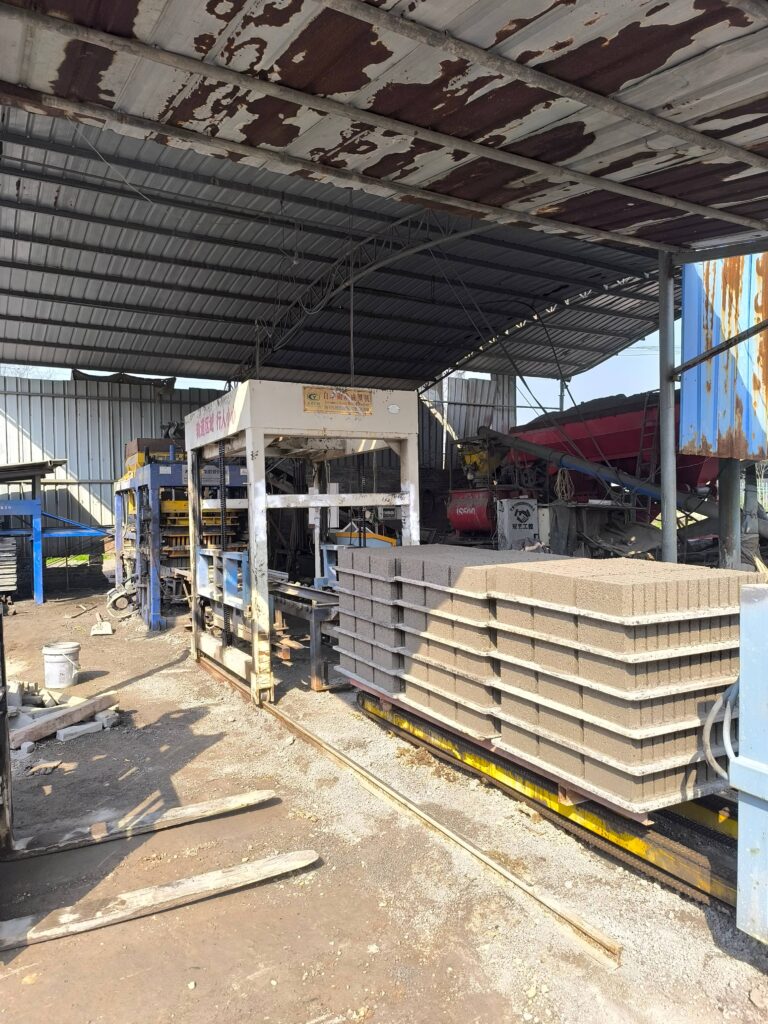
Máy Sản Xuất Khối Rắn
Giới thiệu
Trong hệ sinh thái đa dạng của thiết bị sản xuất gạch và khối xây, máy sản xuất khối đặc chiếm một vị trí then chốt, được thiết kế để sản xuất số lượng lớn một thành phần xây dựng cơ bản: khối bê tông đặc. Đối với các nhà phân phối, đại lý và chuyên gia thu mua, việc hiểu sâu sắc về phân khúc máy móc cụ thể này là điều cần thiết để đáp ứng một thị trường ổn định và có nhu cầu cao. Khối đặc đóng vai trò là xương sống cho móng tường, tường chịu lực, vỉa hè và các dự án hạ tầng, nơi yêu cầu về cường độ chịu nén tối đa và độ bền là không thể thương lượng.
Định Nghĩa Cốt Lõi và Chuyên Môn Hóa Chức Năng
Máy ép khối đặc là một loại máy ép thủy lực hoặc rung chuyên dụng, được thiết kế riêng biệt hoặc chủ yếu để sản xuất các đơn vị xây dựng bằng bê tông (CMU) dạng đặc, không có lỗ rỗng. Đặc điểm xác định của nó là không có cơ chế tạo lõi bên trong khuôn, tập trung toàn bộ năng lượng tác động vào việc làm đặc đồng đều khối vật liệu nguyên khối. Khác với các máy đa năng có thể thích ứng để sản xuất nhiều loại sản phẩm rỗng khác nhau, thiết bị này thường được thiết kế để đạt hiệu suất tối đa trong việc tạo ra một loại sản phẩm đơn lẻ có giá trị cao.
- Sự Cần Thiết của Việc Tối Đa Hóa Mật Độ
- Mục tiêu kỹ thuật chính là đạt được khối lượng thể tích cao nhất có thể trong khối thành phẩm. Các khối đặc rắn có được giá trị kết cấu từ khối lượng và sự liên kết chặt chẽ giữa các hạt cốt liệu. Do đó, máy móc được thiết kế để tạo ra và duy trì áp lực nén cực cao—thường vượt quá mức được sử dụng trong sản xuất khối rỗng tiêu chuẩn—nhằm loại bỏ lỗ rỗng, giảm độ xốp và kích hoạt chất kết dính xi măng trong toàn bộ đơn vị. Điều này mang lại cường độ chịu nén vượt trội, độ thấm nước thấp hơn và khả năng chống va đập và chống chịu thời tiết được nâng cao.
- Tối Ưu Hóa Hệ Thống Vật Liệu
- These machines are typically paired with a specific range of concrete mix designs. The optimal mix for solid block production often features a well-graded aggregate blend with a controlled sand-to-cement ratio, optimized for maximum density under pressure rather than for flow around cores. The machinery’s feeding and compaction systems are calibrated to handle this stiffer, often zero-slump mix efficiently, ensuring consistent fill and uniform pressure distribution across the entire mold cavity.
- Distinction from Hollow Block and Paver Machinery
- While overlapping in basic technology, key differentiators exist:
- Vs. Hollow Block Machines: The absence of complex core rods and related ejection mechanisms simplifies the mold design and maintenance. The machine’s full pressing force is directed onto a solid material column, allowing for different frame and hydraulic system optimizations.
- Vs. Paver Machines: Pavers require high pressure but are typically thinner. Solid block machines are built to compact a much deeper mass of material, requiring longer stroke lengths, greater platen stability, and sometimes modified vibration protocols to ensure density is consistent from top to bottom of the block.
- While overlapping in basic technology, key differentiators exist:
Technical Architecture and Operational Dynamics
The efficiency of a solid block machine is a product of its integrated subsystems, each contributing to the goal of producing a flawless, high-density unit.
- The Press Frame and Stability System
- Given the extreme forces involved, the structural integrity of the machine’s frame is paramount. It is constructed from heavy-duty steel plate or reinforced box sections to resist deflection under full load. This rigidity ensures that the compaction force is applied perfectly vertically and evenly, preventing minute distortions that could lead to variations in block height or density. A stable, massive frame is the non-negotiable foundation for precision.
- High-Pressure Hydraulic and Compression System
- The heart of the machine is a high-tonnage hydraulic system. It features a powerful pump, large-diameter cylinders, and a robust valve block capable of generating and holding pressures significantly higher than those used for lighter units. The compression cycle often includes a pre-compaction phase to settle material, followed by a sustained main pressure phase with a “dwell time” to allow stress relaxation within the compacted matrix, resulting in a more stable green block.
- Mold Design for Solid Block Production
- The mold assembly is simplified yet must be exceptionally robust. It consists of a solid-walled mold box and a single, flat, or slightly profiled compression head. The internal surfaces are hardened and often chrome-plated to reduce friction with the sticky concrete mix and facilitate smooth ejection. Without cores, the focus is on achieving perfect internal corners and consistent block dimensions across the entire production run. Quick-release mechanisms allow for efficient mold changes between different solid block sizes (e.g., 4-inch, 6-inch, 8-inch thicknesses).
- Feeding and Material Metering Mechanism
- Consistency begins with the feed. The machine employs a volumetric feeder—a feed drawer or box—that travels over the empty mold, depositing an exact amount of the dry or semi-dry concrete mix. The accuracy of this metering is critical; too little material results in an under-filled, weak block, while too much can cause over-pressurization, mold damage, or inconsistent block height. Advanced systems may include a pre-compaction or leveling device within the feeder to ensure an even initial distribution of material in the mold.
Product Output and Application Spectrum
The specialization of this machinery yields a product with distinct advantages for targeted construction applications.
- Foundation and Sub-Structural Work
- Solid blocks are the material of choice for footing courses, basement walls, and retaining structures due to their high load-bearing capacity and resistance to moisture penetration from soil. The machine’s output is engineered to meet the stringent strength requirements (often ASTM C90 Grade N or S) for these critical, below-grade applications.
- High-Strength Load-Bearing Walls
- In multi-story construction or industrial buildings, solid blocks provide the necessary compressive strength for load-bearing walls. The uniformity and dimensional accuracy from a dedicated machine ensure level courses and predictable structural performance.
- Paving, Flooring, and Heavy-Duty Surfaces
- Solid blocks produced on these machines, when formulated with wear-resistant aggregates, are used as heavy-duty paving blocks, factory flooring units, and in port or logistics yard surfacing. Their monolithic structure withstands point loads and abrasion far better than hollow units.
- Specialized Infrastructural Components
- The machinery can be adapted to produce solid blocks for specific infrastructural uses, such as sound barrier walls, security barriers, or large-format landscaping units, where mass and durability are key functional requirements.
Strategic Commercial and Operational Considerations
For the distributor, positioning a solid block machine requires highlighting its specialized value proposition.
- Economic Rationale for Specialization
- A client whose primary market is foundational work or heavy construction may find a dedicated solid block machine more efficient and cost-effective than a versatile machine that compromises on peak solid block performance. The higher output rate, lower maintenance (no core systems), and optimized wear parts for a single product type can lead to a lower cost per unit and faster return on investment for this specific niche.
- Operational Simplicity and Reliability
- The relative mechanical simplicity compared to hollow block machines—with fewer moving parts in the mold area—often translates to higher uptime, easier operator training, and reduced maintenance complexity. This reliability is a powerful selling point for production environments where consistent output is critical to fulfilling large contracts.
- Quality Assurance and Market Reputation
- A machine dedicated to solid blocks is perceived as a tool for producing a premium, high-specification product. This enhances the manufacturer’s reputation for quality and reliability in the market, allowing them to command better prices for a superior structural component. Distributors can leverage this to help clients build a strong brand in the construction sector.
Conclusion
The solid block machine exemplifies the principle of optimization through specialization in construction equipment. It is not a generic press but a precision instrument engineered to solve a specific problem: the efficient, high-volume production of maximally dense and strong concrete masonry units. Its value lies in its focused design—from its massively stable frame and high-pressure hydraulics to its simplified yet robust mold system—all converging to deliver a product of uncompromising structural integrity.
For the astute distributor, success lies in identifying clients whose business strategy aligns with this specialization. This includes foundation contractors, suppliers to large-scale infrastructural projects, and manufacturers aiming to dominate the market for high-strength building components. By articulating the technical advantages, operational efficiencies, and superior product economics of a dedicated solid block machine, distributors provide more than just equipment; they offer a strategic pathway to capturing a loyal and profitable segment of the construction materials market. In an industry where strength and reliability are paramount, this machinery stands as a foundational technology for building the physical world.
Các Câu Hỏi Thường Gặp (FAQ)
Q1: Can a solid block machine also produce hollow blocks with a simple mold change?
A: Generally, no. A true solid block machine lacks the mechanical and control systems necessary for hollow block production. These include:
- Core Rods and their attachment points within the mold.
- The synchronized ejection system to retract cores before lifting the mold box.
- Specific vibration settings to ensure material flows around cores.
Converting a solid block machine to produce hollow blocks would require extensive, costly redesign, essentially building a new machine. It is purpose-built for solid products.
Q2: What is a typical compressive strength range for blocks produced on a dedicated solid block machine?
A: With a proper mix design (adequate cement content and well-graded aggregates) and sufficient machine pressure, dedicated solid block machines can consistently produce blocks with compressive strengths ranging from 7 MPa (1000 psi) to over 20 MPa (2900 psi). For comparison, this often meets or exceeds the strength of standard hollow blocks and is suitable for the most demanding structural applications.
Q3: Does the lack of cavities affect the curing process of solid blocks?
A: Yes, it requires careful management. Solid blocks have a much larger mass-to-surface-area ratio than hollow blocks. This means moisture trapped in the center takes longer to equilibrate with the environment. Proper curing—keeping the blocks moist under cover for a sufficient period (often 7-14 days)—is even more critical to prevent surface cracking from rapid drying and to ensure full strength development throughout the entire depth of the block.
Q4: Is the energy consumption per block higher for a solid block machine compared to a hollow block press?
A: Typically, yes, on a per-unit basis. Compacting a solid mass of material to very high density requires more mechanical energy than compacting a hollow block of the same face dimensions. However, this is offset by the higher product value and the fact that the machine may have a faster cycle time for a solid block (no complex core movements), potentially leading to higher overall energy efficiency in terms of production output per kilowatt-hour.
Q5: What are the key maintenance focus areas for this type of machine?
A: Maintenance priorities center on the systems承受ing extreme stress:
- Hệ thống thủy lực: Regular monitoring of fluid quality, filter changes, and inspection of hoses and seals for high-pressure leaks.
- Mold and Compression Head: Inspection for wear on the hardened surfaces and ensuring all clamping mechanisms are secure to prevent flash.
- Hệ thống cấp liệu: Ensuring the volumetric feeder delivers consistent amounts and does not wear unevenly.
- Guide Columns and Bushings: Regular lubrication and inspection for alignment, as any play here directly affects block dimensional accuracy.
