
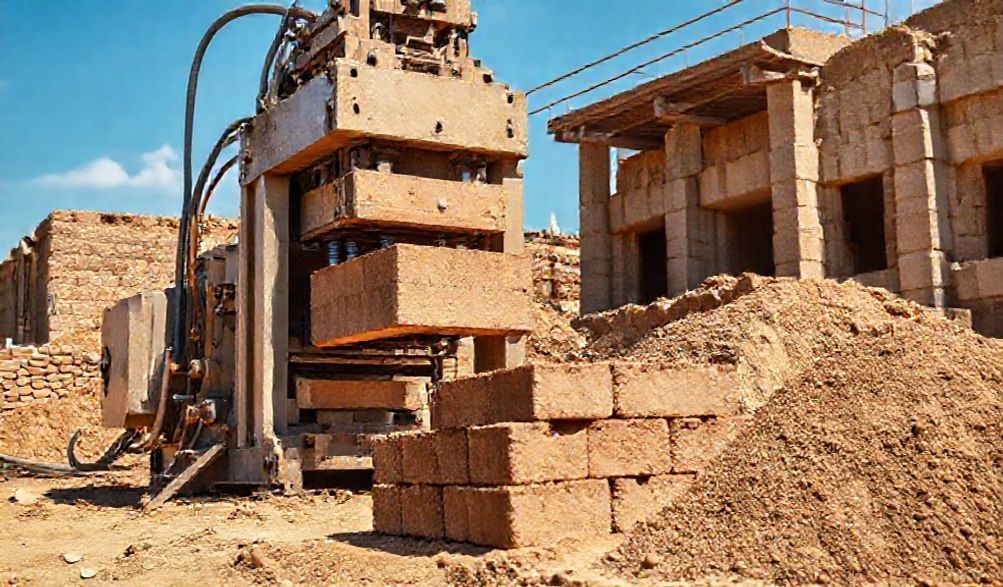
The Ultimate Guide to Mud Brick Making Machines: Types, Benefits & How to Choose
For millennia, humans have built shelters from the very earth beneath their feet. Mud bricks, or adobe, represent one of the oldest and most sustainable building materials known to civilization, offering natural insulation, thermal mass, and a profound connection to local landscapes. Yet, for all its timeless appeal, traditional adobe construction has always been constrained by one formidable challenge: the sheer, back-breaking labor and time required to produce bricks by hand. The process is not only slow but often yields inconsistent results, making it difficult to scale for modern projects or commercial ventures.
Nhậpmud brick making machine—the powerful fusion of ancient material wisdom and modern engineering. This technology revolutionizes adobe production, transforming it from a painstaking craft into a streamlined, efficient, and highly repeatable process. Whether you’re a self-builder, an eco-entrepreneur, or a development project manager, understanding this equipment is key to unlocking the full potential of earth construction.
This comprehensive guide is built on industry knowledge, technical specifications, and practical insights. We will explore the different types of machines, detail their undeniable benefits, walk you through critical selection factors, and outline operational best practices. By the end, you’ll be equipped to make an informed decision that bridges your vision for sustainable building with the realities of production and performance.
What is a Mud Brick Making Machine? Core Function & Evolution
Về cốt lõi, mộtmud brick making machine is a mechanical or hydraulic device engineered to compress a specific mixture of soil, stabilizers, and water into uniform, high-density bricks or blocks. It automates the most labor-intensive part of adobe making—the compression—ensuring each brick has consistent size, shape, and structural integrity.
The evolution of this technology marks a significant leap from tradition. For centuries, bricks were formed in wooden molds and dried by the sun, a method entirely dependent on manual effort and climatic conditions. The mid-20th century saw the first major innovation with mechanical lever presses like the iconic Cinva Ram, developed in Colombia. This simple yet effective tool allowed for greater pressure than hand-tamping. Today, we have advanced hydraulic presses and fully automated production lines that apply precise, repeatable pressure at the push of a button.
The fundamental working principle remains consistent across most machines:
1. Pha trộn: Preparing a homogenous blend of soil (with the right clay, silt, and sand ratio), a stabilizer (like cement or lime), and water.
2. Cho ăn: Placing this mixture into a dedicated mold or chamber within the machine.
3. Nén: Applying high mechanical or hydraulic pressure to compact the mix and remove air pockets.
4. Đang đẩy ra: Releasing the newly formed “green” brick for curing.
Key Benefits of Using a Machine for Mud Brick Production
Switching from manual to machine production isn’t just about saving time; it’s a holistic upgrade that impacts quality, cost, and design possibilities.
Unmatched Efficiency & Speed
- A single manual laborer might produce 100-150 bricks in a day. A basic manual press can triple that output. A hydraulic machine can produce 500 to 2,000+ uniform bricks in an 8-hour shifttùy thuộc vào mô hình và phi hành đoàn.
- This dramatic increase enables the scaling of projects from a single home to entire communities or a viable commercial brick-making business.
Superior Brick Quality & Consistency
- Machines eliminate human variability. Every brick is identical in dimension, which simplifies construction and reduces mortar use.
- The high, calibrated pressure creates a far denser brick with significantly higher compressive strength (often meeting or exceeding local building code requirements for single-story construction) and better resistance to erosion.
Significant Cost Reduction & Labor Savings
- While there’s an upfront investment, the long-term reduction in labor costs and time is substantial. It minimizes the physical strain on workers.
- Precise mixture control and consistent brick size lead to less material waste, optimizing your use of soil and stabilizers.
Enhanced Design Versatility
- Modern machines offer molds for interlocking blocks, enabling mortar-less construction that is faster and often more seismically resilient.
- You can produce bricks in various standard sizes, with textured faces, or even incorporate mineral oxides for colored bricks, expanding architectural possibilities.
Promotes Sustainable Construction
- The primary material—soil—is typically sourced locally, drastically reducing transportation emissions.
- Compared to fired clay bricks or concrete blocks, compressed earth bricks have a very low embodied energy, as they require no kiln-firing and only a small percentage of cement stabilizer.
Types of Mud Brick Making Machines: Which One is Right for You?
Choosing the right type of machine is the most critical decision. Your choice should be dictated by your project scale, budget, and available resources.
Manual Press Machines (e.g., Cinva Ram style)
- Cách thức hoạt động: A lever-operated mechanism uses human force to compress the soil mix in a mold. It’s a simple, mechanical advantage system.
- Tốt Nhất Cho: Small-scale DIY projects, community-led housing initiatives, NGO development work, and those with a very limited budget.
- Ưu điểm:
- Very low cost and minimal maintenance.
- Completely portable, requires no electricity or fuel.
- Excellent for training and community empowerment projects.
- Nhược điểm:
- Still physically demanding. Output is limited by operator stamina.
- Lowest production rate among machine options.
- Brick strength, while good, is less consistent than with powered machines.
Mechanical/Hydraulic Press Machines
- Cách thức hoạt động: An electric motor or diesel engine powers a hydraulic pump. This system applies consistent, high pressure (often measured in tons) to the soil mix via a ram. Operation is typically via a manual valve or push-button control.
- Tốt Nhất Cho: Small to medium-sized businesses (SMEs), regular construction companies, and serious owner-builders undertaking larger projects.
- Ưu điểm:
- Excellent balance of output, quality, and affordability.
- Produces high-strength, professional-grade bricks consistently.
- Many models are semi-portable and can be set up on-site.
- Nhược điểm:
- Requires a power source (specific electrical phase or fuel).
- Higher initial investment than manual presses.
- Requires basic maintenance of hydraulic systems.
Fully Automatic Production Lines
- Cách thức hoạt động: These are integrated industrial systems. They automatically mix raw materials, convey the mix to the press, compress bricks, and sometimes even stack and palletize them. They often feature multiple molds and continuous operation.
- Tốt Nhất Cho: Large-scale commercial brick manufacturing plants supplying the market with thousands of bricks per day.
- Ưu điểm:
- Extremely high, continuous output with minimal manual labor.
- Ultimate consistency and quality control.
- Lowest per-brick labor cost at high volumes.
- Nhược điểm:
- Very high capital cost and infrastructure requirements.
- Requires skilled operators and technicians.
- Not suitable for small projects or on-site production.
Critical Factors to Consider When Choosing Your Machine
Beyond the machine type, drill down into these specifics to find your perfect match.
Production Capacity & Scale Needs
- Be realistic about your bricks-per-day requirement. A machine’s capacity is usually listed as “bricks per cycle” and “cycles per hour.” Remember to factor in time for mixing, loading, and curing.
- Match the output to your goal: A small homestead project has very different needs than a business plan to supply a local construction market.
Brick Specifications & Design
- Size & Shape: Determine the finished brick dimensions you need (e.g., 300mm x 150mm x 100mm). Do you want standard rectangular bricks or interlocking blocks?
- Sức mạnh: Check your local building codes for required compressive strength (measured in MPa or PSI). Ensure the machine you choose can achieve this with your local soil mix.
Power Source & Operational Requirements
- Electricity: What is available on your site? Many hydraulic machines require a robust three-phase power supply. Single-phase options exist but may have less power.
- Diesel Alternatives: For remote sites, a diesel-engine-driven machine is essential.
- Space & Portability: Consider the machine’s footprint, weight, and whether it needs to be moved between sites. Does it require a solid, level concrete pad?
Soil Compatibility & Mix Preparation
- This is non-negotiable. Not all soil is perfect. Conduct simple field tests (ribbon test, jar sedimentation test) to understand your soil’s clay, silt, and sand composition.
- The machine must be capable of effectively compressing your specific soil type, often with the aid of stabilizers like 5-10% cement or lime. Some suppliers offer soil testing services or can advise based on a sample.
Budget & Total Cost of Ownership
- Look beyond the sticker price. Consider:
- Shipping and import duties (if applicable).
- Cost of foundation/preparation for the machine.
- Ongoing costs for spare parts (like wear plates on the mold), hydraulic oil, and maintenance.
- Availability of local technical support. Can you get help if something breaks? Are spare parts readily available?
Operating Your Mud Brick Machine: A Step-by-Step Workflow
Success depends as much on the process as it does on the machine. Follow this workflow for optimal results.
Step 1: Soil Testing & Mixture Preparation
- Test: Perform basic soil composition tests. The ideal mix typically has 15-30% clay, with the remainder being sand and silt.
- Trộn: Use a mechanical mixer (e.g., a pan mixer) for consistency. A common starting formula is: Soil (90-95%) + Portland Cement (5-10%) + Water (optimum moisture content). The mix should hold its shape when squeezed but not be soggy. A common mistake is over-wetting, which leads to cracks during curing.
Step 2: Machine Setup & Safety Checks
- Install the machine on a level, stable base as per the manufacturer’s instructions.
- Safety First: Always wear sturdy gloves, safety glasses, and closed-toe shoes. Keep hands clear of moving parts and the compression chamber. Ensure all operators are trained.
Step 3: The Compression & Ejection Cycle
- Load: Fill the mold cavity with the prepared mix, often slightly overfilling it.
- Nén: Activate the press (pull the lever, turn the valve, push the button). Hold pressure for a few seconds as specified.
- Đẩy ra: Release the pressure and eject the solid, green brick onto a pallet or curing rack.
Step 4: Curing & Storage for Optimal Strength
- Curing is crucial for strength. Immediately cover the stacked green bricks with plastic sheeting to retain moisture. For cement-stabilized bricks, lightly sprinkle with water 1-2 times daily for the first week.
- Cure for a minimum of 2-4 weeks in a shaded area before use in construction.
- Store cured bricks off the ground on a flat, dry surface and protect them from direct rain until they are mortared into a wall.
Frequently Asked Questions (FAQ) About Mud Brick Machines
What is the typical cost range for a mud brick making machine?
Costs vary widely by type, capacity, and region. As a rough guide:
* Máy Ép Thủ Công: $500 – $2,000 USD
* Hydraulic Presses: $3,000 – $15,000+ USD
* Dây chuyền tự động hoàn toàn: $25,000 – $100,000+ USD
Always request detailed quotes from suppliers that include shipping and duties.
Can any type of soil be used?
While many soils can be adapted, not all are ideal. The best soils have a balanced mix of clay (binder), silt, and sand (aggregate). Pure clay will crack; pure sand will not bind. Simple testing is essential. Unsuitable soils can often be amended by blending with another soil or adjusting stabilizer content.
How strong are machine-made mud bricks compared to traditional ones?
Properly made, machine-compressed stabilized earth bricks are significantly stronger. Traditional sun-dried adobe might have a compressive strength of 1-2 MPa. A machine-made brick stabilized with cement can easily achieve 3-10 MPa or more, making it suitable for load-bearing walls in single and even multi-story construction, subject to engineering approval.
Is special training required to operate these machines?
Formal training isn’t usually required, but thorough, hands-on instruction is critical. Reputable suppliers should provide clear operational manuals and basic training. The key is understanding the mix preparation, machine safety, and the curing process—not just operating the lever or button.
Where can I buy a reliable mud brick making machine?
Research is key. Look for established manufacturers with a track record. Seek out customer testimonials and video evidence of their machines in operation. Attend building exhibitions if possible. Prioritize suppliers who offer good after-sales support and spare parts availability. Local or regional suppliers are often preferable for easier logistics and support.
Conclusion
Cáimud brick making machine is more than just a tool; it’s a catalyst that transforms the sustainable vision of earth construction into a practical, efficient, and quality-assured reality. It bridges the gap between venerable tradition and modern demand, enabling faster builds, stronger walls, and viable eco-businesses.
Investing in the right machine, paired with a solid understanding of soil science and process, is the cornerstone of success. We encourage you to use this guide as a framework: start by clearly defining your project scale, budget, and brick specifications. From there, you can navigate the types and features with confidence.
As the world seeks affordable and low-carbon building solutions, machine-made compressed earth bricks stand out as a proven, resilient, and beautiful answer. They allow us to build from local resources, reduce environmental impact, and create healthy, durable homes.
Ready to take the next step? Consult with a local soil engineer for a professional analysis of your site’s material, and reach out to several machine suppliers with your specific requirements. Your journey to building with the earth, powerfully and efficiently, begins now.
<