
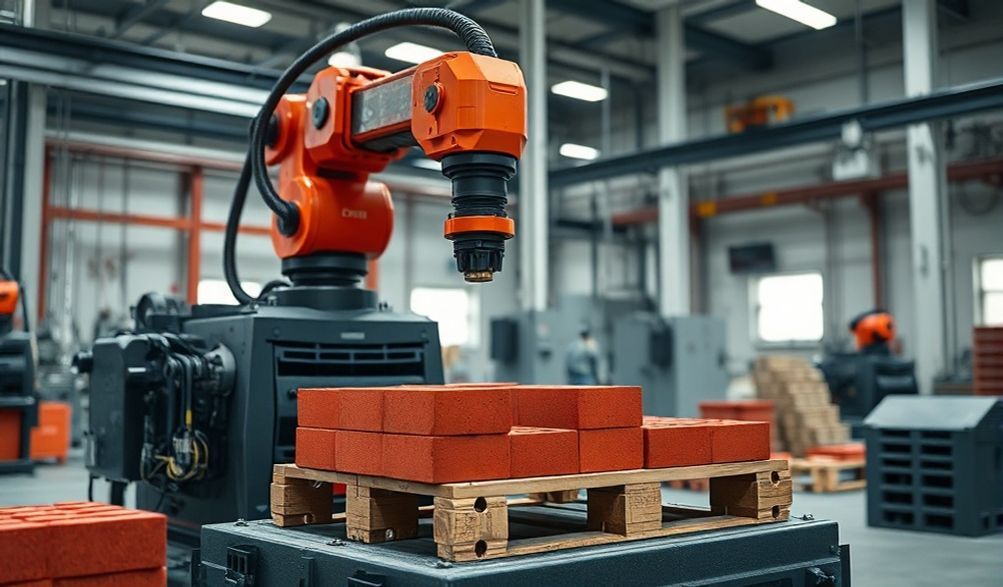
Brick King Machinery: Hướng Dẫn Toàn Diện Về Giải Pháp Sản Xuất Gạch Hiện Đại
Gạch là xương sống thầm lặng và vững chãi của thế giới xây dựng. Từ những bếp lửa cổ xưa đến những tòa nhà chọc trời hiện đại, vai trò của chúng mang tính nền tảng. Tuy nhiên, nghệ thuật sản xuất gạch đã trải qua một cuộc cách mạng, chuyển từ lao động thủ công nặng nhọc sang quy trình sản xuất cơ khí hóa tinh vi. Sự tiến hóa này đã mở ra những cấp độ chất lượng, tính đồng nhất và quy mô chưa từng có. Ở tuyến đầu của sự chuyển đổi này là một dòng thiết bị quan trọng đến mức nó đã được trao một danh xưng mang tính vương giả trong ngôn ngữ ngành:Brick King Machinery.
Thuật ngữ này đã trở thành đồng nghĩa với công nghệ hàng đầu trong thiết bị sản xuất gạch - đại diện cho dòng máy móc thể hiện hiệu suất vượt trội, độ bền bỉ tuyệt đối và sự đổi mới không ngừng. Cẩm nang toàn diện này được xây dựng dành cho các chủ doanh nghiệp, quản lý xây dựng và những doanh nhân đầy tham vọng đang tìm kiếm đầu tư vào máy móc sản xuất gạch. Được xây dựng dựa trên phân tích ngành, thông số kỹ thuật và các phương pháp vận hành tối ưu, mục tiêu của chúng tôi là trang bị cho bạn kiến thức để đưa ra quyết định chiến lược và sáng suốt.
Đến cuối bài viết này, bạn sẽ có hiểu biết rõ ràng về các loạiBrick King Machinerysẵn có, các tiêu chí lựa chọn chính, quy trình bảo trì thiết yếu, và một khuôn khổ để chọn thiết bị hoàn hảo phù hợp với quy mô dự án và tham vọng kinh doanh của bạn.
What is Brick King Machinery? Defining the Industry Standard
“Brick King Machinery” is not just a brand name; it’s a benchmark. It refers to the category of industrial-grade equipment designed to automate and optimize the brick production process. This machinery represents the pinnacle of engineering in this field, focusing on maximizing output, ensuring precise quality control, and delivering a robust return on investment. Investing in such equipment means investing in the very foundation of your construction business or project.
The Evolution of Brick Manufacturing: From Hand-Molding to Automation
For centuries, brick-making was a labor-intensive craft. The process was slow, highly dependent on skill, and produced inconsistent results. The industrial age introduced mechanization, but today’s technology represents a quantum leap. Modern Brick King Machinery integrates automation, computer-controlled systems, and advanced material science. This evolution means:
- Tính nhất quán vô song: Every brick meets exact dimensional and strength specifications.
- Exponential Productivity: Machines can produce in an hour what might take a manual crew days.
- Tối ưu hóa lao động: Shifts the workforce from strenuous molding to skilled machine operation and supervision.
- Hiệu suất vật liệu: Precise control reduces raw material waste significantly.
Core Components of a Modern Brick-Making Plant
A full-fledged brick-making plant is an ecosystem of interconnected machines. Understanding the key components is crucial:
- Mixers: Where raw materials (soil, cement, aggregates, water) are blended into a homogeneous mix.
- Conveyors: Automated belts that transport raw mix to the press and green bricks to curing areas.
- Brick Presses: The heart of the operation. This is the core “Brick King” machine, using vibration or hydraulic force to compact the mix into molds.
- Curing Systems: Chambers or racks where bricks gain strength through controlled temperature and humidity, often using steam.
- Palletizers: Automated robots or systems that stack finished bricks onto pallets for storage and shipment.
Types of Brick King Machinery: Choosing the Right Press for Your Needs
The choice of press technology is the most critical decision you’ll make. It defines your product range, quality, and business model.
Vibrating Press Machines: Ideal for Hollow Blocks and Pavers
Vibrating presses use high-frequency vibration combined with mechanical pressure to compact the concrete or soil-cement mix into molds.
- Principle: Vibration removes air pockets and settles the mixture before a descending head applies final compaction.
- Ưu điểm:
- Tiết kiệm chi phí: Generally lower initial investment than hydraulic presses.
- Excellent for Medium Density: Perfect for producing hollow blocks, paving stones, and interlocking bricks.
- Tiết kiệm năng lượng: Often consume less power per cycle.
- Applications: Ideal for standard construction blocks, landscaping products, and medium-scale production facilities.
Hydraulic Press Machines: For High-Strength Solid Bricks and Special Shapes
Hydraulic presses use immense, controlled fluid pressure to compress the raw material within a mold.
- Principle: A hydraulic ram applies steady, high pressure (measured in tons), creating incredibly dense and uniform bricks.
- Ưu điểm:
- Superior Strength & Density: Produces bricks with higher compressive strength, suitable for load-bearing and premium construction.
- Shape Versatility: Excellent for producing complex shapes, solid bricks, and thin-veneer products.
- Chất Lượng Đồng Đều: Hydraulic pressure ensures every brick is identical.
- Applications: Essential for high-strength solid bricks, specialized architectural shapes, and large-scale industrial production.
Automatic vs. Semi-Automatic Brick Making Machines
This distinction relates to the level of human intervention required in the production cycle.
-
Máy Móc Tự Động Hoàn Toàn:
- Đầu ra: Very high (e.g., 10,000+ blocks per 8-hour shift).
- Lao động Minimal. Requires only a few operators for monitoring, feeding, and maintenance.
- Đầu tư: Higher capital cost.
- Tốt Nhất Cho: Large-scale plants with consistent, high-volume demand.
-
Máy Bán Tự Động:
- Đầu ra: Moderate to high (e.g., 2,000 – 8,000 blocks per shift).
- Lao động Requires operators to feed molds or remove green bricks.
- Đầu tư: More accessible for small and medium businesses.
- Tốt Nhất Cho: Startups, medium-scale businesses, and operations with variable product types.
Key Features to Look for in Premium Brick Making Equipment
Beyond the type of press, scrutinize these features to ensure you’re getting true Brick King quality.
Production Capacity (Blocks/Shifts): Matching Output to Demand
Don’t just look at the “blocks per hour” spec in isolation. Calculate your projected demand and choose a machine that can meet it with room for growth, without forcing you to run at unsustainable, continuous maximum capacity.
Power Source & Energy Efficiency: Diesel, Electric, and Hybrid Models
- Điện: Most common for fixed plants, offering cleaner operation and stable power.
- Đi-ê-zen Crucial for mobile operations or sites without reliable grid power.
- Lai tạo: Offers flexibility. Prioritize models with energy-saving features like automatic shut-off during idle cycles.
Durability & Build Quality: The Role of High-Grade Steel and Robust Engineering
The frame, mold, and vibration table/hydraulic components must be built to withstand constant stress. Look for:
* Reinforced steel frames.
* Hard-chromed or specially treated mold liners for longevity.
* Reputable brand-name components (e.g., Siemens, Bosch, Parker for hydraulics).
Automation Level and Ease of Operation: Reducing Labor Costs and Human Error
Features like programmable logic controllers (PLCs), touch-screen interfaces, and automatic lubrication systems not only reduce labor but also minimize errors and enhance safety.
The Operational Workflow: From Raw Material to Finished Brick
Understanding the end-to-end process highlights where your machinery fits and its impact on quality.
Raw Material Preparation: Soil, Cement, Fly Ash, and Aggregate Ratios
The quality of the brick is born here. The mix must be consistent and appropriate for the machine type. Common mixes include:
* Concrete Blocks: Cement, sand, and aggregate (e.g., 1:3:6 ratio).
* Gạch Tro Bay: Fly ash, lime, gypsum, and sand.
* Clay Bricks: Selected clay with minimal impurities.
The Molding and Compaction Process: How the Machine Forms the Brick
This is where your Brick King press earns its keep. The prepared mix is fed into the machine’s hopper, precisely measured into molds, and then subjected to intense vibration or hydraulic pressure. This compaction is what gives the “green brick” its initial shape and density.
Curing and Drying: Essential Steps for Achieving Maximum Strength
After molding, bricks are not yet ready for use. They require curing:
* Steam Curing: Bricks are placed in a chamber and exposed to steam for 8-12 hours, rapidly accelerating strength gain.
* Water Curing: Bricks are sprayed with water and covered for 7-14 days.
* Air Drying: A final period of drying ensures the brick reaches its optimal moisture content and strength (often 28 days for full strength).
Maximizing Your Investment: Maintenance and Best Practices
A machine is only as good as its upkeep. Proactive maintenance is non-negotiable.
Daily, Weekly, and Monthly Maintenance Checklists
- Hàng ngày: Clean excess material from molds, hopper, and conveyor. Check hydraulic oil levels and for leaks. Inspect belts and chains for tension.
- Hàng tuần: Lubricate all moving parts as per manual. Tighten bolts and fasteners. Inspect mold liners for wear.
- Monthly: Perform a comprehensive inspection of hydraulic hoses, electrical connections, and vibration motors. Replace worn components.
Common Operational Issues and Troubleshooting Tips
- Bricks Breaking After Ejection: Often caused by incorrect moisture content in the raw mix or insufficient compaction pressure.
- Surface Cracks: Usually indicates too-rapid drying. Adjust curing environment humidity.
- Machine Jamming: Typically due to oversized aggregate in the mix or a foreign object. Always screen raw materials.
Sourcing Quality Spare Parts and Ensuring Long-Term Support
Before purchasing, verify the supplier’s after-sales support. Do they keep a local inventory of common wear parts (mold liners, seals, vibration motors)? What is their technical support response time? This support is a critical part of the “Brick King” value proposition.
Cost Analysis and ROI of Investing in Brick King Machinery
View this purchase as a capital investment, not just an expense.
Understanding the Initial Investment: Machine Cost, Installation, and Training
The machine’s price tag is one component. Factor in:
* Site preparation and foundation.
* Installation and commissioning fees.
* Initial operator training.
* Cost of auxiliary equipment (mixer, conveyor, pallets).
Operational Costs vs. Manual Labor: A Comparative Breakdown
Create a simple spreadsheet comparing a manual production team to a mechanized setup over 3-5 years. Include:
* Hướng dẫn sử dụng: High and variable labor costs, lower output, higher waste, inconsistent quality.
* Mechanized: Lower per-unit labor cost, predictable output, reduced waste, guaranteed quality. The savings on labor and material often justify the investment.
Calculating Your Break-Even Point and Profit Potential
Break-Even Point (in months) = Total Initial Investment / (Monthly Revenue from Machine – Monthly Operational Cost of Machine)
Once you pass this point, the increased production capacity and efficiency translate directly into higher profit margins.
Frequently Asked Questions (FAQ) About Brick King Machinery
Q1: What is the average production capacity of a standard Brick King machine?
Capacity varies widely. A semi-automatic vibrating press may produce 2,000-4,000 blocks per 8-hour shift, while a fully automatic hydraulic line can produce 15,000+.
Q2: Can one machine produce different types and sizes of bricks?
Yes, absolutely. This is a key advantage of modern machinery. By using interchangeable molds, a single press can produce hollow blocks, solid bricks, pavers, and more, offering tremendous operational flexibility.
Q3: What raw materials can be used with modern brick-making machines?
Modern machines are highly versatile. They can process:
* Traditional materials like clay and concrete (cement, sand, aggregate).
* Industrial by-products like fly ash and slag.
* Even certain types of construction and mineral waste, supporting eco-friendly production.
Q4: How much space is required to set up a small-scale brick plant?
A minimum of 5,000 to 10,000 square feet is typically needed for the machinery, raw material storage, curing area, and finished product yard. Proper layout planning is crucial for workflow efficiency.
Q5: What is the typical lifespan of a well-maintained brick press?
With rigorous maintenance and proper operation, a high-quality Brick King Machinery press can have a productive lifespan of 10 to 20 years. The longevity is directly tied to the quality of upkeep.
Q6: Is technical training provided when purchasing industrial-grade machinery?
Reputable suppliers always provide comprehensive training. This should cover machine operation, routine maintenance, basic troubleshooting, and safety protocols for your on-site team.
Conclusion
Chọn đúngBrick King Machinery is a strategic decision that will fundamentally impact your product quality, operational efficiency, and long-term business profitability. It’s an investment in the foundation of your enterprise. As an expert recommendation, we strongly advise prioritizing total cost of ownership and long-term partnership over the initial purchase price alone. Partner with reputable manufacturers who offer robust after-sales support, insist on live machine demonstrations, and always request client references.
Ready to build your brick-making capability on a royal foundation? Your next step is clear:
* For serious buyers: Contact 3-4 trusted suppliers for a detailed quotation and, crucially, to schedule a live machine demonstration.
* For researchers: Download our free comprehensive checklist for evaluating and comparing brick-making machine suppliers.
* For everyone: Share this guide with your network or leave a comment below with your specific questions. Let’s build stronger, smarter.