
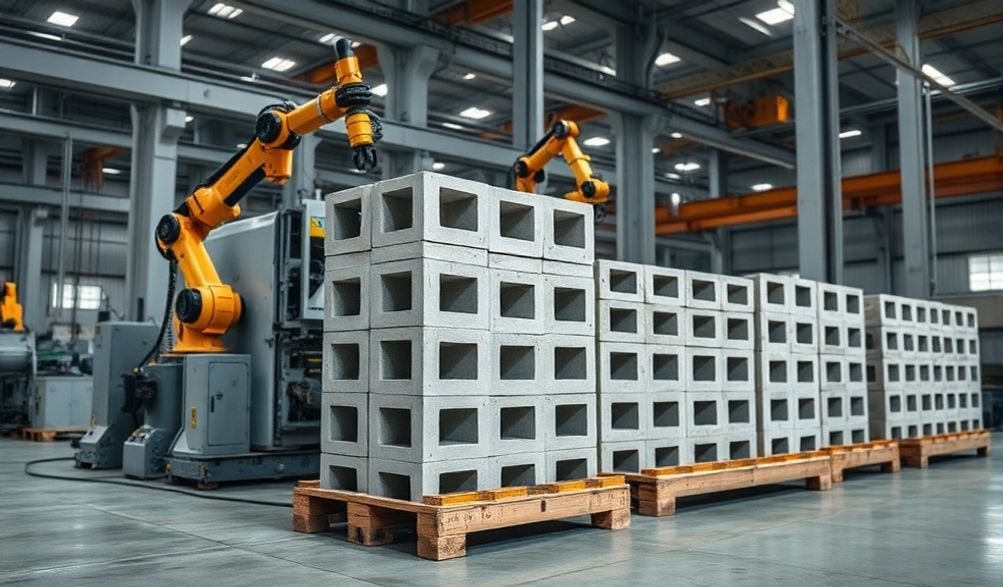
Hướng Dẫn Toàn Diện Về Máy Sản Xuất Gạch Block Trung Quốc: Chất Lượng, Phân Loại và Cách Lựa Chọn
Từ những khu đô thị mở rộng đến cơ sở hạ tầng cộng đồng thiết yếu, các khối bê tông là những anh hùng thầm lặng của ngành xây dựng hiện đại. Tính đồng nhất, độ bền và khả năng ứng dụng linh hoạt của chúng đã biến chúng thành nền tảng cho các dự án xây dựng trên toàn cầu. Đằng sau nhu cầu toàn cầu này là động lực sản xuất mạnh mẽ: ngành công nghiệp sản xuất máy ép gạch của Trung Quốc. Đối với bất kỳ ai, từ một doanh nhân khởi nghiệp đến một quản lý thu mua của một công ty xây dựng lớn, việc tìm hiểu thị trường này có thể là một thách thức. Liệu mức giá thấp hơn là một cái bẫy hay một cơ hội? Làm thế nào để đánh giá chất lượng từ cách xa cả một lục địa?
Hướng dẫn tối thượng này đóng vai trò là nguồn tài nguyên đáng tin cậy, dựa trên kinh nghiệm thực tế. Chúng tôi sẽ loại bỏ mọi yếu tố gây nhiễu, tập trung vào xu hướng ngành, thông số kỹ thuật và góc nhìn thực tiễn từ người mua. Trọng tâm của chúng tôi là中国砌块机—một thuật ngữ đại diện cho một phổ công nghệ và giá trị rộng lớn. Đến cuối cùng, bạn sẽ có một lộ trình rõ ràng để hiểu các loại khác nhau, đánh giá chất lượng thực sự, kiểm tra nhà cung cấp hiệu quả và đưa ra quyết định mua hàng mang lại sự tự tin và lợi nhuận cho hoạt động của bạn.
Tại sao Trung Quốc là Nhà Lãnh đạo Toàn cầu trong Sản xuất Máy Khối
Sự thống trị của Trung Quốc trong lĩnh vực sản xuất máy ép gạch không phải là ngẫu nhiên. Đó là kết quả của sự hội tụ có chủ đích, kéo dài hàng thập kỷ giữa chính sách công nghiệp, các lực lượng thị trường và năng lực kỹ thuật. Hiểu được bức tranh tổng thể này là bước đầu tiên để đánh giá đúng đề xuất giá trị.
Quy mô và Chuyên môn Công nghiệp
- Decades of Development: China’s construction boom, one of history’s largest, created an immense domestic demand for building materials and the machinery to produce them. This fueled decades of focused R&D and practical, on-the-ground engineering experience.
- Cụm Công nghiệp: Manufacturing is concentrated in specific industrial hubs (like Fujian, Shandong, and Henan provinces). These clusters create hyper-efficient ecosystems with readily available raw materials (steel, hydraulics, electronics), specialized component suppliers, and a deep pool of skilled labor and technical knowledge.
Đổi mới và Ứng dụng Công nghệ
- Rapid Technological Evolution: The industry has rapidly evolved from basic manual presses to sophisticated, computer-controlled production lines. Chinese manufacturers are quick to adopt and integrate global technologies.
- Smart and Efficient Systems: Modern machines from leading Chinese suppliers now routinely feature Programmable Logic Controller (PLC) systems, touch-screen interfaces, energy-saving hydraulic systems, and even IoT connectivity for production monitoring and diagnostics, rivaling Western counterparts in functionality.
Competitive Pricing and Value
- Kinh tế quy mô: The sheer volume of production allows manufacturers to source components at lower costs and optimize assembly processes, savings that are passed down the chain.
- The Value Proposition: This creates a compelling balance between cost and capability. Buyers can access advanced automation and robust production capacity at a price point that significantly lowers the barrier to entry and improves return on investment (ROI).
Understanding the Different Types of China Block Machines
The term “block machine” encompasses a wide range of equipment. Choosing the right type is critical to matching your business model, budget, and production goals.
Manual and Semi-Automatic Block Machines
- Lý Tưởng Cho: Startups, small-scale projects, rural construction, or businesses with lower capital and higher labor availability.
- Hoạt động: The mixing and feeding of concrete are done manually. The machine itself (often a simple egg-layer or table vibrator) forms the block.
- Ưu điểm: Very low initial investment, simple operation and maintenance, portability.
- Nhược điểm: High labor intensity, lower and inconsistent output, dependent on operator skill.
Máy Làm Khối Tự Động Hoàn Toàn
- Lý Tưởng Cho: Medium to large-scale commercial block yards, supplying major construction projects, or businesses focused on high-volume, consistent output with minimal labor.
- Hoạt động: These are complete production lines. They automatically mix concrete, convey it to the hopper, form blocks under high-pressure vibration, cure them on a pallet system, and stack the finished products.
- Tính năng chính: Central PLC control panel, automatic material batching, synchronized pallet circulation, and robotic stackers.
- Đầu ra: Can produce thousands of blocks per shift with a crew of just 2-3 people.
Máy Đúc Khối Di Động
- Lý Tưởng Cho: On-site production for large projects (like dams, remote housing developments), eliminating the high cost and breakage associated with transporting blocks over long distances.
- Thiết kế: Mounted on a trailer or truck bed for easy relocation.
- Ưu điểm: Dramatically reduces transport costs and carbon footprint, provides just-in-time production.
- Hạn chế: Typically have lower output than stationary automatic plants and require a prepared, stable site for operation.
Specialized Machines for Diverse Products
Beyond standard hollow blocks, the market offers machines for niche products:
* Máy Sản Xuất Gạch Rỗng: The most common type, producing blocks with cavities for insulation and weight reduction.
* Máy Đúc Gạch Block & Gạch Lát Vỉa Hè Liền Mạch: Designed for high-pressure molding to create dense, durable paving stones, retaining wall blocks, and interlocking systems.
* Curbstone Machines: Produce long, heavy concrete curbs and gutters for road construction and landscaping.
* Special Shape Machines: Many manufacturers offer custom mold design services for unique architectural blocks.
Key Factors to Evaluate Quality in a China Block Machine
Price should not be the sole deciding factor. True value lies in durability, consistency, and operational efficiency. Here’s what to scrutinize.
Core Components and Build Material
The machine’s longevity is determined by its bones and muscles.
* Frames & Mold Materials: Look for frames constructed from heavy-duty steel plates and profiles. Molds must be made from high-chromium, hardened alloy steel for wear resistance and long life.
* Hệ thống Rung The heart of block density. High-frequency, dual-vibration systems (with motors mounted under the mold table and on the press head) ensure compact, strong blocks. Check the power (kW) and brand of vibration motors.
* Hydraulics & Electronics: Don’t accept generic components. Reputable machines use known-brand hydraulic pumps, valves, and cylinders, as well as electrical components from suppliers like Siemens, Schneider, or Omron. This ensures reliability and easier servicing.
Production Capacity and Output Consistency
- Reading Specs: Look beyond the “blocks per hour” headline. Understand the thời gian chu kỳ (time to produce one mold of blocks) and the mold size (how many blocks per cycle). A machine with a 15-second cycle and a 10-block mold has a different output than one with a 20-second cycle and a 6-block mold.
- Consistency is Key: A quality machine produces blocks with uniform dimensions, density, and finish, cycle after cycle. This reduces waste and ensures your end product meets construction standards.
Energy Efficiency and Operational Cost
The purchase price is just the beginning. Consider the total cost of ownership.
* Tiêu thụ điện năng: Compare the total connected load (in kW) of different models. An energy-efficient design with well-matched motors can save thousands in electricity over the machine’s lifespan.
* Design for Minimal Waste: Features like precise batching systems reduce raw material waste. Efficient pallet return systems minimize downtime. A robust design reduces frequency of breakdowns and maintenance pauses.
A Step-by-Step Guide to Selecting the Right Supplier
Finding the right machine is half the battle; finding the right partner to buy it from is the other, more critical half.
Research and Shortlisting
- Platforms vs. Direct: B2B platforms like Alibaba and Made-in-China are excellent for discovering suppliers. Use filters for “Verified Suppliers,” “Trade Assurance,” and “On-site Checked.” Cross-reference these findings by searching for the company’s name directly and looking for their independent website.
- Initial Verification: Immediately check for a business license, years in operation, and whether they are a true factory or just a trading company. Trading companies can be useful but may lack deep technical knowledge.
Deep Due Diligence
- Request Evidence: Ask for a detailed product catalogvàspecification sheets. Demand a list of tham chiếu khách hàng, preferably in your region or for similar projects. Ask for photos or videos of their machines in operation at customer sites.
- Chứng chỉ: Look for CE certification (indicating compliance with EU safety standards) and ISO 9001 quality management certification. These are strong signals of a structured manufacturing process.
Communication and Quotation Analysis
- Ask Probing Questions:
- “What is the warranty period and what does it cover?”
- “What is your after-sales service structure? Do you offer remote video support?”
- “Can you provide a list of recommended spare parts for the first two years?”
- “Do you provide installation supervision and on-site training?”
- Decode the Quote: Understand the trade terms.
- FOB (Giao hàng lên tàu): You pay for the machine loaded on the ship. You arrange and pay for shipping and insurance.
- CIF (Cost, Insurance, Freight): The supplier arranges and quotes for shipping and insurance to your nearest port. Clarify exactly what is included (machine, standard molds, spare parts kit, manuals).
Navigating the Purchase and After-Sales Process
Securing Your Transaction
- Use Secure Payment: Never use wire transfers for the full amount upfront. A standard method is 30% deposit via T/T, with 70% balance against copy of shipping documents. Always use the platform’s Trade AssurancehoặcEscrow service if available.
- The Contract: Insist on a detailed, signed Commercial InvoicevàSales Contract that specifies the machine model, technical parameters, warranty terms, delivery time, and payment schedule.
Pre-Shipment Inspection (PSI)
- Why It’s Non-Negotiable: For any significant investment, hiring a third-party inspection company (like SGS, BV, or Intertek) to conduct a PSI is crucial. They will verify the machine exists, is assembled, matches the specifications, and undergoes a test run before crating.
- Inspection Scope: It should cover workmanship, material quality, electrical safety, hydraulic pressure tests, and a live production test to verify output and block quality.
Installation, Training, and Long-Term Support
- Knowledge Transfer: Expect comprehensive operation and maintenance manuals (in English) and video guides. The best suppliers will offer to send an engineer for installation and training or provide extensive remote guidance.
- Lifeline Support: Ensure you have a direct line for technical support (WhatsApp, WeChat, email). Confirm the supplier stocks and can quickly ship wear parts like mold liners, seal rings, and vibration motor mounts.
Frequently Asked Questions (FAQ)
Q1: What is the average price range for a China block machine?
A: The range is vast, from around $5,000 for a basic manual machine to over $200,000 for a high-capacity, fully automatic production line. Semi-automatic models typically fall between $15,000 and $50,000. The final price depends on automation level, production capacity, brand of components, and customization. Always request a detailed, itemized quotation.
Q2: Can I get a machine customized for a specific block design?
A: Absolutely. Most reputable manufacturers have in-house mold workshops and offer custom mold design and fabrication as a core service. You will need to provide detailed drawings or a sample of the block you wish to produce. Discuss lead times (usually 2-4 weeks extra) and costs for the custom molds separately from the base machine.
Q3: How do I handle machine maintenance and repair?
A:Cáiprovided manual and initial training are your first resources. For common wear parts, you should source locally or keep a small inventory shipped with the machine. For technical issues, your supplier should provide remote diagnostic support via video call. They should also be able to ship critical spare parts via air freight within days. Building a good relationship with a local mechanic familiar with hydraulics and PLCs is also wise.
Q4: What are the main challenges of importing machinery from China?
A: Key challenges include navigating international logistics and customs clearance in your country, potential language and time zone barriers, and ensuring quality control from afar. Mitigate these by: hiring a reliable freight forwarder, using clear and simple written communication, and most importantly, investing in a third-party Pre-Shipment Inspection.
Q5: Are China block machines as durable as those from Europe or America?
A: While European and American brands have a long-standing reputation, the gap has narrowed dramatically. Top-tier Chinese manufacturers now use international-standard materials (like German steel for molds) and components (Siemens PLCs, Rexroth hydraulics). They offer comparable durability and technology, often at a significantly better value. The critical differentiator is no longer the country of origin, but the diligence of your supplier selection process.
Conclusion
Navigating the world of China block machines is a journey from global industry understanding to meticulous technical evaluation. We’ve explored why China leads in manufacturing, decoded the different machine types for every need, and outlined the concrete factors that separate quality from compromise. Most importantly, we’ve provided a step-by-step framework for supplier vetting and transaction security.
Remember, the goal is not simply to find the cheapest machine, but to secure the most reliable and productive partner for your business growth. An informed, diligent purchase unlocks tremendous value, turning a capital investment into a long-term competitive advantage.
Call to Action: Use this guide as your checklist. Start conversations with 3-5 shortlisted suppliers. Ask the detailed questions outlined here. Prioritize clear communication, evidence of quality, and a robust after-sales promise over the absolute lowest price. Your future productivity depends on the decisions you make today.
<