
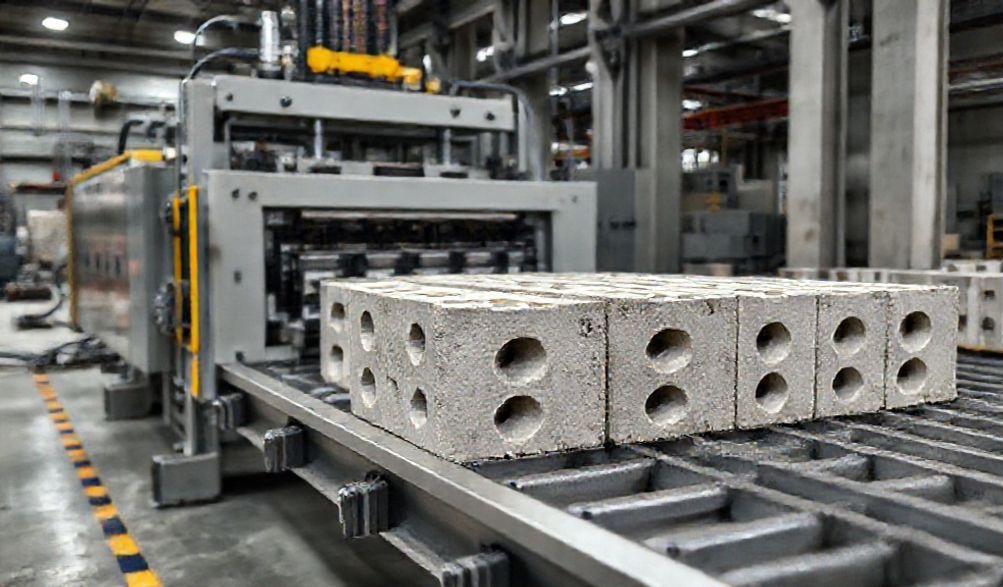
The Ultimate Guide to Sourcing a Reliable Block Making Machine from China
Giới thiệu
The global construction boom shows no signs of slowing. From urban housing projects to critical infrastructure, the demand for reliable, affordable building materials is insatiable. At the heart of producing these materials—concrete blocks, pavers, and bricks—lies a critical piece of equipment: the block making machine. For businesses looking to enter this market or scale their production, the choice of machinery is the single most important investment decision.
And one destination dominates the global conversation for this equipment: China. As the world’s manufacturing powerhouse, China produces a staggering volume of block making machines, catering to every market segment from small entrepreneurs to industrial giants. However, the path to sourcing heavy machinery from halfway across the globe is fraught with potential pitfalls. How do you navigate a sea of suppliers, distinguish genuine quality from clever marketing, secure reliable after-sales support, and manage complex international logistics?
This comprehensive guide is your solution. Built not on speculation but on extensive market analysis, direct industry engagement, and a deep understanding of manufacturing processes, this article provides a trustworthy roadmap. We’ll cut through the noise, offering you the expertise needed to find a high-quality, cost-effective block making machine in China, transforming a daunting international purchase into a confident, successful investment for your business.
Why China Dominates the Global Block Making Machine Market
Hiểu biếtTại sao China is the epicenter for this industry is the first step to sourcing wisely. Its dominance isn’t accidental; it’s the result of decades of focused industrial development.
Scale and Manufacturing Expertise
China’s strength lies in its concentrated industrial ecosystems. Key manufacturing clusters for construction machinery are located in provinces like:
* 福建与山东: Renowned for their focus on brick and block making machinery, hosting hundreds of specialized factories.
* Guangdong & Jiangsu: Known for advanced manufacturing and technological integration.
These clusters create an optimized ecosystem. Suppliers, skilled welders, hydraulic component vendors, and electrical system integrators are all within proximity. This results in:
* Efficient supply chains that reduce component lead times and costs.
* A deep pool of experienced labor specialized in heavy equipment fabrication.
* Rapid iteration and improvement based on collective market feedback.
Competitive Pricing and Value
The cost advantage is significant, but it’s crucial to reframe this beyond mere “cheap prices.” China’s pricing power comes from:
* Kinh tế quy mô: Massive production volumes drive down the cost of raw materials and components.
* Chuỗi Cung Ứng Tích Hợp As mentioned, having every supplier nearby minimizes intermediate costs.
* Market Tiers: Chinese manufacturers expertly serve all market segments:
* Budget Tier: Basic, often manual/semi-automatic machines for entry-level businesses.
* Mid-Range Tier: The most competitive segment, offering robust semi- and fully-automatic machines with excellent reliability.
* Premium Tier: Machines featuring top-tier international components (like Siemens PLCs or Rexroth hydraulics), competing directly with Western brands on quality with a remaining price advantage.
The key is to match the machine tier to your specific production needs and budget.
Ứng dụng và Đổi mới Công nghệ
Gone are the days of purely manual, low-tech clones. Leading Chinese manufacturers are at the forefront of innovation:
* Tự động hóa & Điều khiển: Modern machines feature Programmable Logic Controller (PLC) systems with touch-screen interfaces, allowing for precise control over vibration time, pressure, and cycle counts.
* Hiệu suất Năng lượng: New designs focus on reducing power consumption through optimized hydraulic circuits and high-efficiency vibration motors.
* Versatility through R&D: Significant investment is poured into developing multi-purpose machines that can produce a wide array of products—hollow blocks, solid blocks, interlocking pavers, curbstones—simply by changing the mold. This maximizes return on investment for buyers.
Key Types of Block Making Machines Made in China
Chinese factories produce the full spectrum of block making machines. Identifying the right type for your operation is critical.
Máy Làm Khối Tự Động Hoàn Toàn
Ideal for large-scale, high-volume production plants.
* Tính năng: Fully automated from raw material feeding to block stacking and palletizing. Often integrated with automatic batching plants and conveyor systems.
* Đầu ra: Can produce from 10,000 to over 30,000 standard blocks per 8-hour shift.
* Lao động Requires minimal manual intervention, typically just for supervision and maintenance.
* Đầu tư: Highest upfront cost, justified by unparalleled productivity and consistency.
Máy Làm Khối Bán Tự Động
The most popular choice for medium-scale businesses and new entrants aiming for growth.
* Tính năng: Automates the core molding and compaction process. Loading of raw material and removal of finished blocks is often manual or semi-mechanized.
* Đầu ra: Ranges from 2,000 to 8,000 blocks per shift, depending on model.
* Balance: Offers an excellent balance between productivity, initial investment cost, and operational control. Allows owners to scale labor with demand.
Mobile / Egg Laying Block Making Machines
Perfect for small-scale projects, start-ups, or on-site production where blocks are cured and used in the same location.
* Tính năng: Portable, no need for a permanent foundation. The machine “lays” the finished blocks directly onto the ground or a concrete slab before moving to the next position.
* Đầu ra: Lower output, suitable for community projects or small businesses.
* Lợi thế: Very low capital investment and operational simplicity. Lower logistics cost as blocks are not transported.
Specialized Machines for Concrete, Cement, and Fly Ash Blocks
The core technology adapts to the raw material.
* Máy Sản Xuất Gạch Bê Tông: Designed for high vibration and pressure to handle standard concrete mixes (cement, sand, aggregate).
* Cement Block Machines: May refer to machines for finer mixes or soil-cement blocks, often requiring slightly different compaction.
* Fly Ash Block Machines: Optimized to utilize fly ash (a by-product of coal power plants) as a primary raw material, focusing on specific mixing and curing parameters. Always discuss your exact raw material composition with the supplier.
How to Identify and Vet Reputable Chinese Manufacturers
This is the most critical phase of your journey. Diligence here prevents immense future headaches.
Essential Due Diligence Checklist
-
Business License & Certifications: A legitimate manufacturer will readily provide their business license. Look for relevant international certifications:
- ISO 9001: Indicates a certified quality management system.
- Dấu CE: Shows the machine meets EU health, safety, and environmental standards (critical for export to many regions).
- These are not guarantees of perfection, but they are a baseline filter for serious suppliers.
-
Factory Audit & Production Capability: Never skip this.
- Virtual Tour: Insist on a live video tour via WhatsApp or Zoom. Don’t settle for pre-recorded marketing videos.
- What to Look For: A clean, organized workshop; dedicated quality control stations; proper storage of materials and components; and, ideally, machines in various stages of assembly.
-
Technical Documentation: Professionalism is evident on paper. A trustworthy supplier will provide:
- Detailed CAD drawings of the machine and foundation.
- A comprehensive parts list with brand names.
- A clear, well-translated operation and maintenance manual.
Evaluating Product Quality and Performance
Move beyond sales talk to tangible evidence.
-
Scrutinize Core Components: The machine is only as good as its parts. Ask specifically about:
- Hệ thống thủy lực: Pumps, valves, cylinders. Brands like Bosch Rexroth or Yuken indicate higher investment.
- Động cơ rung: The heart of compaction. Ask for the brand and power rating.
- PLC & Hệ thống Điện: Siemens, Mitsubishi, or Schneider Electric are top-tier. Domestic brands can be reliable but verify.
- Khuôn mẫu: High-hardness, precision-machined steel molds (e.g., 45# steel, hardened) are essential for block quality and longevity.
-
Request Verified Performance Data: Ask for:
- Cycle time (seconds per cycle).
- Actual output in blocks/hour for a specific block type.
- Power consumption (kW/h).
- Cement consumption per block.
-
Sample and Testing: If feasible:
- Order a sample mold to test the block dimensions and finish quality.
- For large orders, plan a visit to conduct a live production test using a sample of your local raw materials.
Assessing After-Sales Service and Support
Service quality separates market leaders from the rest.
- Warranty Terms: Standard is 12-24 months for core components like the hydraulic system and frame. Ensure the warranty terms are explicitly stated in the contract.
- Hỗ trợ Kỹ thuật: Confirm:
- Availability of English-speaking engineers for remote support (via phone, video call).
- Policy for providing software/firmware updates.
- Response time guarantees for technical inquiries.
- Chính sách Linh kiện Thay thế: A major red flag is exorbitant spare parts pricing. Before ordering, ask for a price list for common wear parts (seals, vibration motors, hydraulic hoses). Check their policy on emergency part shipments.
Navigating the Purchase Process: From Inquiry to Delivery
A structured process protects both parties and ensures clarity.
Crafting a Precise Inquiry and Getting an Accurate Quotation
A vague inquiry gets a vague quote. Use this template:
“Dear Sir/Madam,
We are interested in a block making machine and request a quotation based on the following specifications:
* Block Type: (e.g., 6″ Hollow Block, 60mm Interlocking Paver)
* Đầu ra mong muốn: (e.g., 4,000 blocks per 8-hour shift)
* Mức độ Tự động hóa: (e.g., Semi-Automatic with automatic feeding)
* Nguồn điện: (e.g., 380V / 50Hz / 3 Phase)
* Nguyên liệu thô: (e.g., Cement, Sand (0-3mm), 10mm Aggregate)
* Preferred Shipping Terms: (e.g., FOB Shanghai)Please provide a detailed quotation including machine specifications, component brands, warranty, and delivery timeline.”
Understanding Incoterms and Logistics (FOB, CIF, etc.)
- FOB (Free On Board) [Most Common]: You pay for the machine loaded on the ship at the Chinese port. You are responsible for and control the main sea freight, insurance, and import clearance. Recommended for greater control and often lower overall cost.
- CIF (Chi phí, Bảo hiểm và Cước phí): The supplier arranges and pays for sea freight and insurance to a port in your country. You handle import customs and onward transportation.
- Action: Engage a freight forwarder in your country early. They can handle everything from the Chinese port to your factory door.
Secure Payment Methods and Contract Essentials
- Standard Payment Terms: 30% deposit via T/T (Telegraphic Transfer), 70% balance before shipment after receiving photos/videos of the finished, crated machine. For very large orders, a Letter of Credit (LC) is safer.
- Contract Must-Haves:
- Detailed technical specifications as an annex.
- Clear delivery timeline (production + shipping).
- Comprehensive warranty clauses.
- Penalty clauses for significant delivery delays.
- Dispute resolution mechanism (e.g., arbitration).
Maximizing Your Investment: Installation and Operational Tips
Your responsibility begins once the machine arrives.
Foundation and Site Preparation
A poor foundation destroys machine accuracy and lifespan. Before the machine arrives:
* Pour a level, reinforced concrete foundation according to the supplier’s CAD drawings.
* Ensure your site has adequate space for raw material storage, block curing, and finished product storage.
Efficient Raw Material Formulas
While suppliers provide basic ratios, local material testing is non-negotiable.
* General Starting Point for Hollow Blocks: 1 part cement : 6-8 parts mixed sand/aggregate.
* Key Practice: Send samples of your local sand and aggregate to your supplier for testing and formula recommendations. Consistent raw material gradation is vital for block strength and machine health.
Routine Maintenance for Longevity
Preventative maintenance is cheap; breakdowns are expensive.
* Hàng ngày: Lubricate all moving parts (bearings, guide rods), check hydraulic oil level and for leaks, clean the machine.
* Hàng tuần: Check and tighten all bolts and nuts, inspect mold and pallets for wear.
* Monthly: Change hydraulic oil and filters as per manual, thoroughly inspect electrical connections.
FAQ Section
Q1: What is the average price range for a block making machine from China?
A: Prices vary dramatically based on type and capability. A small mobile machine can start around $5,000, a robust semi-automatic model may range from $15,000 to $40,000, and a large fully automatic production line can exceed $150,000. Always obtain a detailed, specification-based quotation.
Q2: Can Chinese machines use local raw materials in my country?
A: Absolutely. Reputable manufacturers design machines to be adaptable. The critical step is to provide samples of your local sand, aggregate, and cement to the supplier before purchase so they can test and recommend the optimal machine settings and mold design.
Q3: How long does it take from order to delivery?
A: Typically, production takes 30-45 days after deposit receipt. Sea shipping then takes 30-60 days depending on your destination port. Always get a confirmed timeline from your supplier and freight forwarder.
Q4: Do suppliers provide installation and training?
A: Most provide detailed installation manuals, videos, and remote video guidance. Dispatching an engineer for on-site installation and training is almost always available for an additional fee, covering their travel, accommodation, and daily rate. Ensure this is clarified in your contract.
Q5: What are the most common issues and how are they resolved?
A: Common startup issues include block breakage (wrong mix or vibration time), dimensional inaccuracy (worn mold or incorrect pressure), or hydraulic leaks (fitting issues). A reliable supplier will have a troubleshooting guide and offer immediate remote support to diagnose the problem, often resolving it via a settings adjustment or by express shipping a necessary spare part.
Conclusion
Sourcing a block making machine from China presents a compelling opportunity: access to cutting-edge technology, a vast selection, and significant value. However, this opportunity is unlocked not by chasing the lowest price, but by pursuing tổng giá trị—a combination of proven quality, robust engineering, and dependable, long-term service and support.
This guide serves as your strategic checklist. Use it to methodically shortlist 3-5 suppliers, ask the hard questions, verify their claims, and build a relationship with a manufacturer that views you as a partner, not just a transaction. By investing time in diligent due diligence, you transform the complex process of international machinery sourcing into the foundation for a profitable and sustainable block manufacturing business. Your journey begins with research; let this be your first, most reliable resource.
<