
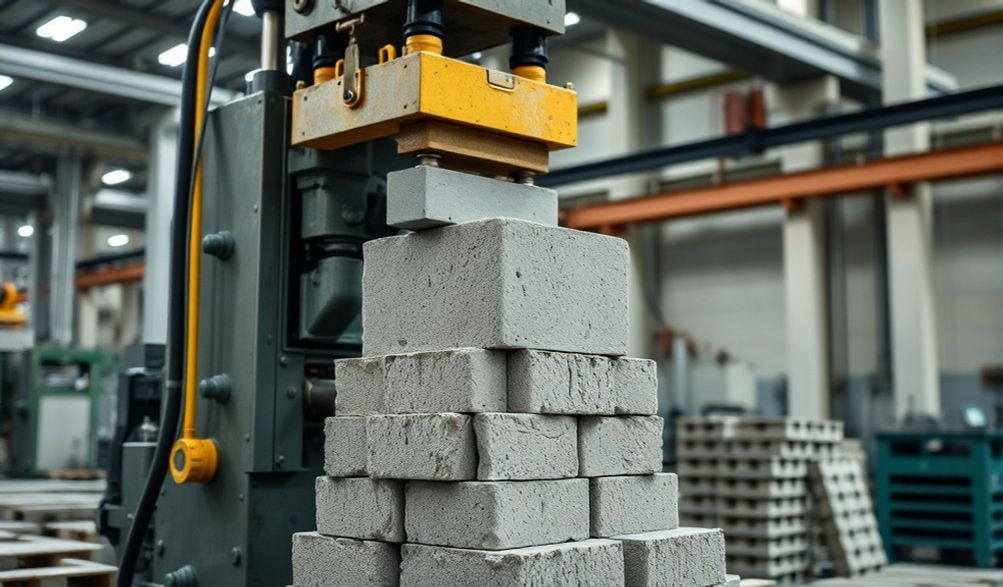
Hướng Dẫn Toàn Diện Về Máy Làm Gạch: Các Loại, Chi Phí và Cách Lựa Chọn
Từ những bức tường cổ xưa của Babylon đến những đường chân trời hiện đại ngày nay, gạch đã là viên đá xây dựng nền tảng của nền văn minh. Sự phổ biến lâu dài của chúng bắt nguồn từ sức mạnh, độ bền và tính linh hoạt. Tuy nhiên, phương pháp truyền thống đúc gạch thủ công là một câu chuyện về lao động nặng nhọc, chất lượng không đồng đều và sản lượng chậm đến đau đớn. Trong một thời đại được định nghĩa bởi sự bùng nổ xây dựng toàn cầu và nhu cầu cấp thiết về nhà ở và cơ sở hạ tầng giá cả phải chăng, cách tiếp cận thủ công này đơn giản là không thể theo kịp.
Máy sản xuất gạch: động cơ chuyển đổi của ngành xây dựng hiện đại. Đối với các doanh nhân, công ty xây dựng và dự án phát triển bền vững, những chiếc máy này không chỉ là công cụ; chúng là nền tảng cho một hoạt động sinh lời, hiệu quả và có khả năng mở rộng. Hướng dẫn này sẽ loại bỏ mọi yếu tố gây nhiễu. Được tổng hợp từ dữ liệu ngành, thông số kỹ thuật của nhà sản xuất và những hiểu biết thực tiễn về vận hành, nó sẽ là nguồn tài liệu đáng tin cậy giúp bạn hiểu rõ, đánh giá và lựa chọn được giải pháp hoàn hảo.máy làm gạchcho nhu cầu của bạn. Chúng ta sẽ khám phá những lợi ích cốt lõi, phân tích từng loại chính, cung cấp một bảng phân tích chi phí thực tế, và trang bị cho bạn kiến thức để đưa ra quyết định đầu tư tự tin.
Hiểu về Máy Sản Xuất Gạch: Khái Niệm Cốt Lõi và Lợi Ích
Trước khi đi sâu vào thông số kỹ thuật, điều quan trọng là phải hiểu những cỗ máy này làm gì và tại sao chúng đại diện cho một bước tiến lớn như vậy.
Máy làm gạch là gì?
Về cốt lõi, máy làm gạch là một thiết bị cơ khí hóa được thiết kế để tự động hóa và chuẩn hóa quá trình biến nguyên liệu thô—như đất sét, bê tông (xi măng, cát, cốt liệu), hoặc phụ phẩm công nghiệp như tro bay—thành những khối gạch rắn chắc và đồng đều. Quy trình này thường tích hợp nhiều giai đoạn quan trọng:
- Pha trộn:Kết hợp nguyên liệu thô với nước để tạo ra hỗn hợp đồng nhất và dễ thi công.
- Đúc khuônHỗn hợp này được đưa vào khuôn định hình để tạo ra hình dạng và kích thước của viên gạch.
- Nén chặt:Áp dụng áp lực mạnh (thủy lực hoặc cơ khí) và thường kết hợp rung động để làm đặc vật liệu, loại bỏ các túi khí và đảm bảo tính toàn vẹn cấu trúc.
- Đẩy & Đóng rắn: Releasing the green (unfired or uncured) brick for subsequent drying and curing, which is critical for achieving final strength.
Các ưu điểm chính so với phương pháp thủ công
The shift from manual to mechanized production isn’t just incremental; it’s revolutionary. Here are the compelling benefits:
- Dramatically Increased Production Output & Speed: A single manual laborer might produce a few hundred bricks per day. A basic semi-automatic machine can produce 1,000-2,000 in an 8-hour shift, while fully automatic plants can output tens of thousands.
- Superior Consistency, Shape, and Compressive Strength: Machines apply precise, repeatable pressure. This results in bricks with uniform dimensions, smooth surfaces, and consistently high compressive strength, which is vital for meeting building codes (like ASTM standards) and ensuring structural safety.
- Significant Reduction in Labor Costs and Physical Strain: Mechanization reduces dependency on large, skilled labor crews. One or two operators can manage a machine that does the work of dozens, lowering long-term wage bills and eliminating much of the physically taxing work.
- Material Efficiency and Waste Reduction: Precise mixing and molding minimize spillage and material waste. You get more bricks per ton of raw input, directly improving your profit margins.
- Versatility in Brick Types and Designs: With interchangeable molds, one machine can produce a variety of bricks—solid, hollow, interlocking, or pavers—allowing you to cater to diverse market demands and architectural trends.
Types of Brick Making Machines: A Detailed Breakdown
The market offers a machine for every scale and purpose. Understanding the categories is your first step toward a smart choice.
By Operation Mechanism
This classification is primarily about the level of human involvement required.
- Máy Làm Gạch Thủ Công: These are human-powered, often using a lever mechanism to compress material in a mold. They are incredibly low-cost and portable, making them ideal for micro-enterprises, community projects, or very low-volume needs. However, output is low, and consistency heavily depends on the operator’s skill.
- Máy Bán Tự Động: This is the most popular category for small to medium-sized enterprises (SMEs). Key processes like compression and vibration are automated, but tasks like feeding raw material or removing finished bricks may be manual. They offer an excellent balance between affordability, improved output, and quality. In our observations, a well-operated semi-automatic machine provides the best entry point for most new business owners.
- Nhà máy sản xuất gạch tự động hoàn toàn: These are industrial-grade systems. They feature computerized controls and automated lines for feeding, mixing, molding, stacking, and palletizing bricks. Requiring minimal human intervention, they are designed for high-volume, continuous production for large construction firms or dedicated brick supply companies. The investment is substantial, but the per-unit production cost is very low.
By Brick Output Type
The end product defines the machine’s design.
- Máy Sản Xuất Gạch Rỗng: These produce bricks with cavities (holes). Hollow blocks are lighter, provide better thermal and acoustic insulation, and use less raw material, making them cost-effective for walls and partitions.
- Solid Block Making Machines: Designed for maximum density and strength, these produce solid bricks or heavy-duty paving blocks. They are essential for load-bearing structures, foundations, and high-traffic areas like driveways or industrial floors.
- Máy Sản Xuất Gạch Khóa Liên Kết: A growing trend in sustainable construction. These bricks are designed with grooves and tongues that lock together without mortar (or with minimal mortar). This speeds up construction, reduces material costs, and can create earthquake-resistant structures.
- Máy làm gạch lát: Specialized for producing decorative, non-porous paving slabs, tiles, and landscaping blocks. They often have high-pressure capabilities and textured mold options to create aesthetically pleasing finishes.
By Raw Material Processed
The raw material dictates the machine’s technology.
- Máy Sản Xuất Gạch Đất Sét: Traditionally, these use an extrusion process where soft clay is forced through a die to form a continuous column, which is then wire-cut into individual bricks before firing in a kiln.
- Máy Sản Xuất Gạch Bê Tông: The most common type today. They use a combination of vibration and high hydraulic pressure to compact a semi-dry concrete mix into molds. The bricks are then cured, not fired.
- Máy Sản Xuất Gạch Tro Bay: An eco-friendly alternative that uses fly ash (a waste product from coal plants), lime, and gypsum. These machines use hydraulic compression to form bricks that are cured by steam. They are strong, smooth, and help reduce industrial waste.
Critical Factors for Choosing the Right Machine
Selecting a machine is a strategic decision. Align your choice with these critical factors.
Đánh Giá Nhu Cầu Sản Xuất Của Bạn
Start with a clear business plan.
* Required Daily/Weekly Output: Be realistic. Calculate your current and projected demand. A machine operating at 50% capacity is inefficient, while one at 110% capacity will break down. Match the machine’s “bricks per hour” rating to your needs with room for growth.
* Types of Bricks to be Produced: Refer to section 2.2. Will you focus on standard solid blocks for general construction, or is there a high local demand for decorative pavers or interlocking bricks for housing projects?
* Available Raw Materials Locally: Your most affordable material source defines your machine type. If you have access to good-quality clay, a clay brick machine makes sense. If cement and aggregate are cheap and fly ash is plentiful from a nearby power plant, a concrete or fly ash machine is the logical choice.
Thông số kỹ thuật và tính năng của máy
Dig into the technical details.
* Cycle Time and Mold Capacity: This is the heart of output. How many bricks does it produce in one press cycle (e.g., 3, 6, 10)? How long is each cycle? Multiply to get your hourly output.
* Nguồn điện: Options include Electric, Diesel, or Hydraulic (which itself can be electric or diesel-powered). Consider your local grid reliability and fuel costs. Electric machines are cleaner and quieter but require stable power.
* Key Components Quality: Don’t just look at the paint. Ask about:
* Mold Steel: High-chromium steel molds last far longer and produce better-finished bricks.
* Hệ thống thủy lực: Reputable brand names (e.g., Bosch Rexroth, Parker) indicate reliability.
* Động cơ rung: A powerful, balanced vibration system is crucial for dense, strong concrete blocks.
* Automation Level & Ease of Operation: How many operators are needed? What skill level is required? Consider the availability and cost of skilled labor in your area.
Budget and Investment Analysis
Think in terms of total investment, not just purchase price.
* Giá mua ban đầu: This is your capital expenditure (CapEx). Get quotes for the machine, essential spare parts, and any special tools.
* Operating Costs: Your ongoing expenses (OpEx). Factor in electricity/fuel, labor, raw materials, and routine maintenance.
* Return on Investment (ROI) Calculation: Use a simple framework:
1. Estimate annual production (bricks/year).
2. Determine your net profit per brick (Sale price – total cost per brick).
3. Calculate annual profit (Step 1 * Step 2).
4. Divide total machine investment by annual profit to get a rough payback period. A typical target for SMEs is 12-24 months.
The Investment: Brick Making Machine Price Guide & Considerations
Let’s demystify the costs. All figures are approximate global ranges and can vary significantly by region, brand, and negotiation.
Price Range Overview
- Máy Móc Thủ Công: $1,000 – $4,000. Ideal for testing a market or very small-scale production.
- Máy Bán Tự Động: $4,500 – $25,000. This wide range covers small single-mold machines to large, multi-mold stationary models. The $10,000-$18,000 range is where most serious small businesses find robust options.
- Cây Trồng Tự Động Hoàn Toàn: $30,000 – $250,000+. Price scales directly with automation, output capacity, and sophistication. A mid-range plant might cost $70,000-$120,000.
What Influences the Cost?
The price tag is a sum of its parts:
* Brand & After-Sales Service: Established brands with strong local service networks command a premium, which is often worth it for reduced downtime.
* Automation & Capacity: More automation and higher output mean more motors, sensors, conveyors, and complex controls.
* Chất Lượng Xây Dựng: A machine built with commercial-grade components and a robust frame will cost more than one using lighter materials.
* Ancillary Costs: Never forget shipping, import duties (if applicable), installation, and operator training. These can add 15-30% to the landed cost.
Beyond the Sticker Price: Total Cost of Ownership
The cheapest machine can become the most expensive.
* Warranty and Spare Parts: A comprehensive warranty (1+ years on core parts) is vital. Check the availability and lead time for spare parts like molds, hydraulic seals, and vibration motors.
* Cost of Maintenance vs. Downtime: Regular, inexpensive maintenance is non-negotiable. The cost of a day’s downtime—in lost production and missed orders—can far exceed a year’s maintenance budget.
Setting Up for Success: Installation, Operation, and Maintenance
Your machine’s performance depends on its environment and care.
Site Preparation and Installation Requirements
- Không gian You need space for the machine, raw material storage, mixing area, brick drying/curing area, and finished product storage. A clear, level, concrete-floored shed is ideal.
- Foundation: Larger machines require a solid, leveled concrete foundation to absorb vibration and ensure stability.
- Utilities: Ensure access to the required power supply (voltage/phase) and a reliable water source for mixing.
Raw Material Preparation Basics
- Mix Ratios: This is a science. For concrete blocks, a common starting mix is 1 part cement to 6-8 parts aggregate (sand/stone). The water-cement ratio is critical—too wet weakens the brick; too dry causes poor compaction. Always follow manufacturer guidelines and test mixes.
- Chữa bệnh: Proper curing is what gives concrete bricks their strength. This usually involves keeping the green bricks moist and at a stable temperature for 7-14 days. Steam curing chambers are used in high-volume fly ash production.
Essential Maintenance Checklist for Longevity
- Hàng ngày: Clean all molds and the feeding hopper thoroughly after use. Check for loose bolts or nuts.
- Hàng tuần: Inspect hydraulic hoses for leaks. Check oil levels. Lubricate all moving parts as per the manual.
- Monthly: Conduct a more thorough inspection of the vibration table bearings, electrical connections, and the compaction head. Replace worn seals.
Các Câu Hỏi Thường Gặp (FAQ)
Q1: What is the average production capacity of a standard brick making machine?
A: There is no single “standard.” Capacity varies dramatically. A small semi-automatic machine might produce 800-2,000 bricks in an 8-hour shift. A medium-sized stationary semi-auto can produce 3,000-6,000. Large fully automatic plants can easily exceed 10,000-20,000 bricks per day.
Q2: Can one machine produce different types and sizes of bricks?
A: Yes, this is a key advantage. Most machines use interchangeable molds. You can purchase additional molds for hollow blocks, solid blocks, or different sizes. Changing molds typically takes 30 minutes to an hour, allowing great production flexibility.
Q3: How much profit can I make from a brick making business?
A: We cannot guarantee specific income, as it depends entirely on your local brick selling price, operational efficiency, overhead costs, and sales volume. Profitability is driven by the margin between your cost per brick (materials, labor, power, depreciation) and your sale price. A disciplined focus on quality and efficiency is the surest path to profit.
Q4: What are the most common problems with brick making machines and how do I fix them?
A: Common issues include:
* Bricks Breaking: Often caused by incorrect mix (too much water/sand), insufficient compaction pressure, or improper curing. Adjust your mix and ensure the machine is achieving full pressure.
* Poor Surface Finish: Usually indicates worn-out molds or a mix that is too dry. Inspect and replace molds if necessary.
* Machine Jamming: Can be due to foreign objects in the mix, overfeeding, or a mechanical fault. Always shut off power before clearing a jam. For persistent or major issues, always contact your supplier’s technical support.
Q5: Is operating a brick making machine difficult?
A: Manual and semi-automatic machines are designed to be operator-friendly and can be mastered with basic training, which reputable suppliers should provide. Fully automatic plants require more skilled technicians for operation and maintenance. The learning curve is manageable with proper support.
Conclusion
Choosing a brick making machine is a significant step toward building a more efficient, profitable, and scalable operation. We’ve navigated from the core benefits that justify the investment, through the detailed landscape of machine types, to the practicalities of cost, selection, and maintenance.
Your final decision must prioritize a clear-eyed assessment of your specific production needs, realistic budget, and the availability of local technical support and spare parts. The cheapest option is rarely the most economical in the long run. View this purchase as a long-term capital asset—the heart of your production line.
Investing in quality equipment, backed by thorough knowledge and a solid business plan, is the proven foundation for success in the brick manufacturing industry. The right machine doesn’t just make bricks; it builds your business.
Ready to take the next step? Contact 3-4 reputable suppliers with your specific requirements to get detailed quotes and, if possible, arrange live machine demonstrations. Seeing a machine in action is invaluable.
For more in-depth guides on optimal mix designs, creating a business plan, or maintenance deep-dives, explore our dedicated resource center for construction and manufacturing professionals.
<