
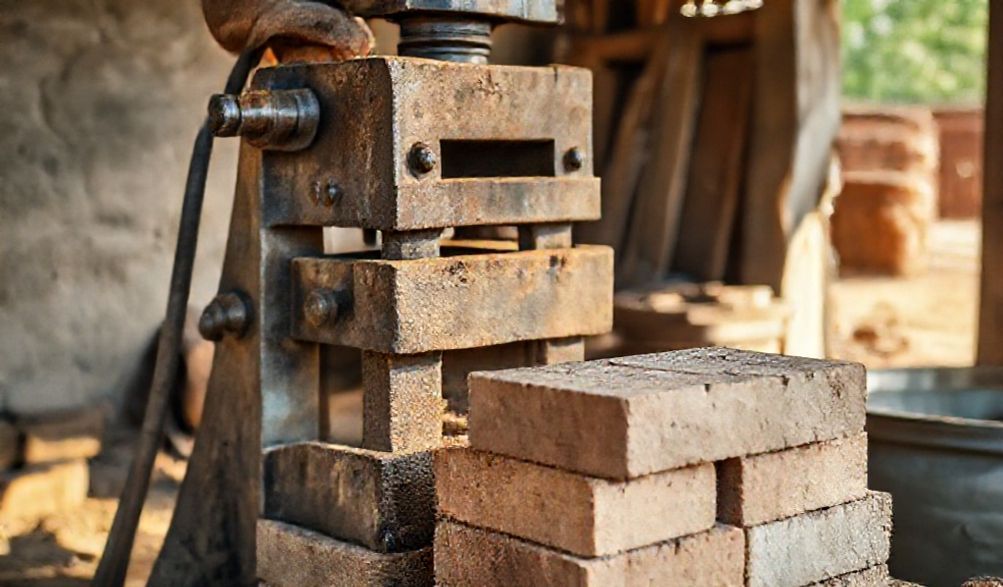
The Complete Guide to Manual Brick Making Machines: Insights from FUDA Brick Making Factory
Giới thiệu
From the ancient walls of Jericho to the modern skylines of today, bricks have been a foundational pillar of human civilization. Their enduring importance lies in their simplicity, strength, and versatility. Yet, for small-scale builders, entrepreneurs, and community projects, accessing this vital building material can be cost-prohibitive. This is where affordable, accessible technology bridges the gap, enabling sustainable development from the ground up. Enter the manual brick making machine—a powerful tool of empowerment and a low-capital entry point into production.
This guide delves deep into the world of manual brick making machines. We’ll move beyond basic descriptions to explore the practical engineering, real-world benefits, and critical considerations for success. To ground our discussion in observable industry practice, we’ll use “FUDA Brick Making Factory” as a conceptual case study. While this is not an endorsement, examining the principles that underpin professional manufacturing provides invaluable insights for anyone operating at a smaller scale.
Đến cuối hướng dẫn này, bạn sẽ hiểu rõ về:
* How manual brick machines work and what they require to operate.
* A honest cost-benefit analysis compared to mechanized options.
* Key lessons from professional manufacturing that you can apply.
* A practical checklist for evaluating and purchasing your own machine.
* Actionable steps for your first successful production run.
Whether you are a small business owner, a construction startup, a DIY builder, or a procurement officer in a developing region, this synthesis of fundamental engineering and real-world factory logic is designed to equip you with the knowledge to make an informed decision.
What is a Manual Brick Making Machine? Core Principles and Operation
At its heart, a manual brick making machine is a study in elegant, mechanical efficiency. It transforms readily available raw materials into standardized, durable building blocks using human power as its primary engine. Understanding its core principles is the first step to mastering its use.
The Basic Mechanics: Leverage, Pressure, and Molding
The fundamental physics are straightforward but effective. These machines use simple mechanisms to amplify the force applied by an operator.
- The Lever System: The most common type uses a long lever arm. This creates a mechanical advantage, similar to using a pry bar. A moderate force applied at the end of the lever is converted into significant downward pressure on the mold.
- The Screw Press System: Some models employ a large threaded screw. Turning the screw drive forces a compression plate downward, creating immense, steady pressure on the material in the mold.
- Kết Quả: This concentrated pressure compacts—or densifies—the loose raw material (like soil-cement mix), squeezing out air pockets and forcing particles to bond. Once compacted, the newly formed brick is ejected from the mold, holding its shape.
Key Components of a Standard Manual Machine
While designs vary, a robust manual brick press typically consists of these essential parts:
- Khung The heavy-duty steel structure that bears all the operational stresses. A wobbly frame leads to poor-quality bricks and quick failure.
- Mold Box/Block: The hollow cavity that defines the brick’s shape and size. High-quality machines allow for interchangeable molds to produce different brick types (solid, hollow, interlocking).
- Cơ chế nén: This is the heart of the machine—either the lever arm with a cam or the screw drive assembly that delivers the pressing force.
- Compression Plate/Piston: The plate that directly contacts and compresses the material inside the mold.
- Hệ Thống Phóng Thoát Often a simple foot pedal or secondary lever that pushes the finished brick up and out of the mold for easy removal.
- Base Plate: The stable platform where the brick is formed and ejected.
The Raw Materials: From Soil to Solid Brick
The machine is only half the equation. The raw material mix is critical. Suitable materials include:
- Clayey Soil: Offers natural cohesion.
- Laterite: A common iron-rich soil in tropical regions.
- Cát Used as an aggregate to reduce shrinkage and cracking.
- Xi măng: The most common stabilizer. Adding a small percentage (e.g., 5-10%) to soil creates soil-cement bricks, vastly improving strength and water resistance.
Preparation is key: Materials must be sieved to remove stones and organic matter, then mixed with the correct moisture content. In practice, operators report the “hand-squeeze test” is a reliable gauge: a ball of mix should hold its shape without crumbling or dripping water.
Advantages of Choosing a Manual Brick Making Machine
Why choose a manual machine over a powered alternative? The benefits are compelling, especially in specific contexts. These advantages are not just theoretical; they are proven daily on construction sites and in small yards worldwide.
Low Investment and Operational Costs
This is the most significant advantage.
* Upfront Cost: Manual machines cost a fraction of electric or hydraulic models. This dramatically lowers the barrier to entry.
* Running Costs: They consume no electricity or fuel. Maintenance involves basic lubrication and bolt-tightening, with no complex hydraulics or electronics to repair. This makes operational costs predictable and minimal.
Simplicity, Durability, and Ease of Maintenance
Built from heavy-gauge steel, a well-made manual press is incredibly robust.
* Minimal Breakdown Points: With no engines, pumps, or circuit boards, there’s very little that can go wrong.
* Field Repairs: Almost any issue can be fixed with standard tools—a wrench, hammer, and welding kit. You are not dependent on specialized technicians or imported spare parts.
Ideal for Off-Grid and Small-Scale Production
These machines truly shine where infrastructure is limited or needs are specific.
* Độc lập Năng lượng: Perfect for remote sites without reliable grid power.
* Batch Flexibility: You can produce exactly what you need, when you need it, without the high minimums of large factory orders.
* Tùy chỉnh: Need a specific size or shape for a unique project? Simply commission a new mold. This flexibility is often cost-prohibitive with automated lines.
Empowerment and Local Job Creation
The socio-economic impact is profound. A manual brick machine fosters:
* Local Entrepreneurship: Individuals can start a small brick supply business with modest capital.
* Skill Development: Operators gain valuable skills in basic mechanics and material science.
* Community Resilience: Communities can produce their own building materials for schools, clinics, and homes, retaining capital locally and controlling quality.
A Closer Look: Production Insights from a Professional Setup
How do manual machines fit into the larger world of brick manufacturing? Examining the logical role they would play in a professional factory like Nhà máy sản xuất gạch FUDA provides a masterclass in efficient production thinking.
How Factories Like FUDA Integrate Manual Machines
While a large factory primarily uses high-output automated lines, manual presses serve strategic purposes:
* Prototyping & Design Testing: Before committing to a costly mold for an automated line, factories use manual presses to test new brick designs, material mixes, and compaction ratios. This hands-on testing is invaluable.
* Specialty & Low-Volume Orders: For custom, decorative, or small-batch orders that don’t justify running the main production line, a manual machine is the perfect, cost-effective tool.
* Backup and Redundancy: If a primary machine breaks down, a manual press can keep critical orders moving, demonstrating the principle of operational resilience.
Quality Control Lessons from Factory Practice
The core QC principles in a factory are directly applicable to manual production:
1. Consistent Material Mix: Factories rigorously batch and test their raw materials. Your takeaway: Measure your soil, sand, and cement ratios precisely every time. Don’t mix “by eye.”
2. Standardized Compaction: Every brick gets the same pressure. Your takeaway: Develop a consistent operating rhythm. Pull the lever to the same stop point for every brick.
3. Controlled Curing: This is where bricks gain their strength. Factories control temperature and humidity. Your takeaway: Protect your green bricks from direct sun and wind initially, and keep them moist for several days to allow the cement to cure properly.
From Manual to Mechanized: The Production Spectrum
It’s helpful to view brick production on a spectrum:
* Hướng dẫn sử dụng: Entry point. High labor, low capital, maximum flexibility. Ideal for 300-800 bricks/day.
* Bán Tự Động: Growth stage. Uses a motor for compression (e.g., a vibratory press), increasing output and reducing labor. Requires power and higher investment.
* Hoàn Toàn Tự Động: Industrial scale. Like the primary lines at Phúc Đạt, these are computer-controlled plants producing thousands of bricks per hour with minimal human intervention.
Understanding this spectrum helps you appreciate your manual machine’s role and plan for potential future growth.
Những Điều Cần Lưu Ý Trước Khi Mua Hàng
A successful purchase requires careful forethought. Rushing in leads to disappointment. Use this checklist to guide your decision.
Assessing Your Needs: Volume, Brick Type, and Material
- Kết quả hàng ngày/hàng tuần: Be realistic. How many bricks do you actually need? A manual machine with a 2-person crew might produce 500 bricks in an 8-hour day.
- Loại Gạch: Do you need standard solid bricks, interlocking bricks for dry-stack construction, or paving slabs? Ensure your chosen machine offers the corresponding molds.
- Sự Sẵn Có của Vật Liệu Địa Phương: Test your local soil first. If it’s pure sand, you’ll need more stabilizer (cement). The best machine is useless without the right raw materials.
Critical Machine Features to Evaluate
When comparing models, scrutinize these features:
* Pressure Capacity: Higher pressure (measured in PSI or kN) generally produces denser, stronger bricks. Ask for the specification.
* Mold Interchangeability: Can you easily buy additional molds from the supplier later?
* Chất Lượng Xây Dựng: Look for thick steel plates (at least 5-6mm for key stress points) and robust welds. A lighter machine will wear out quickly.
* Ergonomics: The lever action should be smooth. The ejection system should work effortlessly. A poorly designed machine causes operator fatigue.
* Manufacturer Reputation: Research the company. How long have they been in business? Do they provide clear manuals and parts lists?
The Total Cost of Ownership
Look beyond the sticker price. Your total investment includes:
* Machine Purchase Price
* Cost of additional molds
* Basic tool kit for maintenance
* Potential cost of spare parts (like replacement mold liners)
* Transport to your site
Supplier Vetting and Avoiding Common Pitfalls
Protect your investment with due diligence:
* Request Evidence: Ask for a video of the machine in operation, producing bricks from start to finish.
* Seek References: A trustworthy supplier can connect you with previous customers.
* Check Warranty: What is covered and for how long?
* Red Flags: Be extremely wary of suppliers who make unrealistic output claims, refuse to provide contact details, or offer prices that seem too good to be true.
Getting Started: Your First Production Run
You’ve bought your machine. Now, let’s turn raw materials into your first batch of bricks.
Site Setup and Safety Basics
- Location: Choose level, solid ground. You’ll need space for material storage, mixing, the machine, and brick stacking/curing.
- Shelter: Plan for a simple covered area (a roof with open sides) to protect newly formed bricks from rain and harsh sun during the critical first week of curing.
- Safety: Always wear sturdy gloves to protect hands from pinching points and rough materials. Closed-toe shoes are essential.
Step-by-Step Operating Procedure
- Prepare Your Mix: Sieve soil to remove debris. Precisely mix soil, sand, and cement in your chosen ratio (e.g., 70% soil, 20% sand, 10% cement). Add water gradually until it passes the “hand-squeeze test.”
- Fill the Mold: Place the empty mold under the compression plate. Shovel in your mixed material, slightly overfilling it.
- Apply Compression: Engage the lever or screw drive firmly and consistently. Apply full pressure until the mechanism stops.
- Eject the Brick: Activate the ejection system to raise the brick out of the mold.
- Remove and Stack: Carefully transfer the “green” brick onto a pallet or level surface. Stack them in a stable, cross-bonded pattern for curing.
Curing and Drying for Optimal Strength
This is the most neglected yet most critical step. Proper curing is what gives soil-cement bricks their strength.
* Initial Curing (Days 1-7): Keep the bricks moist. Cover the stacks with plastic sheeting or damp burlap sacks. Lightly sprinkle them with water 1-2 times per day. This allows the cement hydration process to continue fully.
* Drying (After Day 7): Remove the cover and allow the bricks to dry slowly in a shaded, well-ventilated area for a further 2-3 weeks before use. Rapid drying causes cracks and weakens the brick.
Các Câu Hỏi Thường Gặp (FAQ)
Q1: What is the average daily output of a manual brick making machine?
A: A realistic range is 300 to 800 bricks per 8-hour day with a crew of 1-2 people. Output depends heavily on crew efficiency, machine design, and material preparation workflow. Don’t believe claims of 2000+ bricks per day without verification.
Q2: Can I make interlocking bricks with a manual machine?
A: Absolutely. Many suppliers offer interlocking molds as an option. Interlocking bricks are excellent for dry-stack construction (using little to no mortar), which can further reduce building costs and time.
Q3: How strong are manually pressed bricks compared to fired or industrial bricks?
A: When made correctly with adequate cement stabilizer (and sometimes lime), manually pressed soil-cement bricks can achieve compressive strengths suitable for single-story homes, boundary walls, and pavements. They are generally not as strong as kiln-fired clay bricks or industrial concrete blocks used in high-rise construction. Relevant standards like ASTM C67hoặcIS 1077 provide testing benchmarks.
Q4: Where can I find reliable manual brick machine suppliers?
A: Search for established industrial equipment manufacturers and exporters, often found in countries with strong manufacturing sectors. Attending regional construction or agriculture trade fairs can also be a good way to see machines in person. Always conduct thorough due diligence on any supplier.
Q5: What are the most common maintenance issues?
A: Common issues are simple to address:
* Wear and tear on the inner surfaces of the mold (liners may need replacement after extensive use).
* Bolts and nuts vibrating loose over time (regular tightening checks are needed).
* Dirt and material buildup in moving joints (keep the machine clean and lightly lubricated with grease).
Conclusion
The manual brick making machine stands as a powerful testament to appropriate technology. It is a tool for empowerment, enabling low-cost entry into material production, fostering local enterprise, and promoting sustainable, small-scale construction. By understanding the core principles of its operation—the very same principles of compaction, quality control, and curing that are scaled up in professional factories like Nhà máy sản xuất gạch FUDA—you are equipped to use this tool not just effectively, but masterfully.
Success lies in the details: choosing a robust machine from a reputable supplier, meticulously preparing your materials, and respecting the crucial curing process. We encourage you to move forward with confidence, to start small, learn through doing, and build something lasting.
Have experience with a manual brick press? Facing a specific challenge? Share your thoughts and questions in the comments below. For those looking to take the next step, explore our related content on advanced soil stabilization techniques or writing a business plan for a small-scale brick manufacturing venture.
<