
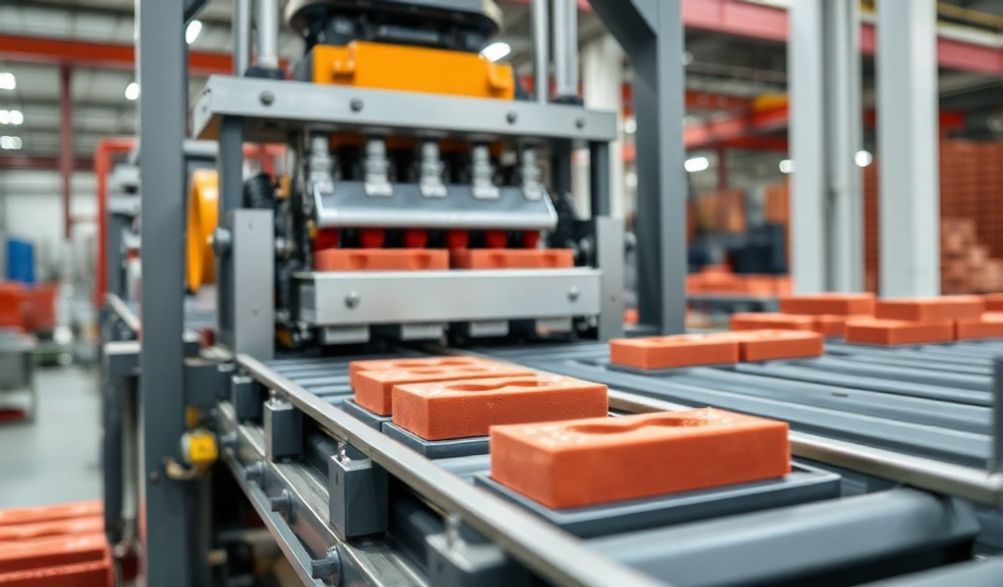
Brick Block Machine China Price Guide 2026: Cost, Quality & How to Buy Smart
Navigating the vast and complex market for brick block machines from China can feel like a high-stakes puzzle. You know the potential for value is there, but between fluctuating quotes, technical jargon, and a sea of suppliers, finding a reliable machine at a truly competitive price is a significant challenge. This guide is designed to be your definitive roadmap. Drawing on over a decade of experience in construction machinery procurement and supplier vetting across Asia, I’ve distilled the critical knowledge you need. This isn’t just a list of prices; it’s a comprehensive framework to help you understand the true cost drivers, differentiate between a trustworthy partner and a risky vendor, and make a purchase decision that balances upfront price with long-term productivity and value.
Understanding the Price Range: What to Expect in 2026
First, discard the notion of a single “China price.” The market offers a vast spectrum, from a few thousand dollars to several hundred thousand. The final price is a direct reflection of your specific needs and the machine’s capabilities. Setting realistic expectations from the start is crucial to a successful procurement process. In 2026, with continued advancements in automation and a focus on energy efficiency, the value proposition of Chinese machinery remains strong, but the differentiation between low-cost and high-value options is more pronounced than ever.
Key Factors That Determine the Final Price
The price tag is the sum of many parts. Understanding these variables allows you to decode quotes and compare machines effectively.
-
Loại Máy & Mức Độ Tự Động HóaĐây là yếu tố chi phí chính.
- Máy Móc Thủ Công: Operated entirely by hand. Lowest cost, highest labor requirement.
- Máy Bán Tự Động: Mechanize key processes like mixing and vibration but require manual handling of blocks. A middle-ground option.
- Máy Móc Tự Động Hoàn Toàn: Integrated systems with automatic batching, mixing, molding, curing, and stacking. High output with minimal labor.
- Mobile Block Machines (Egg-Laying): Self-contained units that produce blocks directly on the ground. Ideal for on-site projects.
-
Production Capacity & Output (Blocks Per Hour): Capacity is king. A machine rated for 2,000 blocks per hour will cost significantly less than one rated for 10,000 blocks per hour. Ensure the stated output is based on standard block size (e.g., 400x200x200mm hollow block) for a fair comparison.
-
Brand & Manufacturer Reputation: Established brands with a long history command a premium. You’re paying for proven R&D, consistent quality control, and reliable after-sales support. Newer or unknown factories may offer lower prices but come with higher risk.
-
Raw Material Quality & Machine Construction: This is where hidden costs are born or avoided.
- Cấp Thép: Thickness and quality of the frame and mold components determine durability.
- Thành phần cốt lõi Brands matter. Machines using reputable hydraulic systems (like Parker or Yuken), Siemens or Mitsubishi PLCs, and premium bearings will cost more but fail less often.
- Hàn & Gia công kim loại tấm Precision welding and stress-relieving treatments prevent frame cracking under constant vibration.
-
Loại Khuôn & Tùy Chỉnh Standard molds for common blocks are included. Custom molds for unique designs (interlocking, decorative, special sizes) add cost. The complexity of the mold design directly impacts its price.
Average Price Brackets for Different Machine Types
Based on current market trends and projected 2026 values, here are tangible price brackets. Remember, these are estimates—your final quote will depend on the factors above.
-
Manual & Small Semi-Automatic Machines: ($3,000 – $18,000)
- Ideal for very small startups, rural projects, or producing specialized blocks in low volume.
- Price varies based on size, whether it includes a mixer, and level of mechanization.
-
Standard Fully Automatic Block Making Machines: ($28,000 – $90,000)
- The workhorse category for small to medium-sized enterprises (SMEs) and serious block yards.
- This range covers single-pallet machines with production capacities from ~2,500 to ~8,000 blocks per hour. Includes the main machine, conveyor, and cement silo.
-
High-Capacity Fully Automatic Production Lines: ($90,000 – $300,000+)
- For large-scale commercial production, industrial parks, and export-oriented businesses.
- These are multi-pallet, fully integrated lines with automatic stackers, robotic arms, and sophisticated curing systems. Output can exceed 15,000 blocks per hour.
-
Mobile Brick Machines (Egg-Laying Type): ($8,500 – $30,000)
- Perfect for producing blocks directly at construction sites, eliminating transport costs.
- Price depends on output capacity, level of automation (some are now semi-automatic), and included features like a built-in mixer.
Beyond the Sticker Price: The True Cost of Ownership
A savvy buyer looks beyond the initial quote. The true cost of ownership (TCO) encompasses all expenses from the port to years of operation. Ignoring this can turn a “bargain” into a financial sinkhole.
Hidden Costs to Budget For
Factor these into your total project budget from day one:
-
Shipping, Logistics & Import Duties: A $40,000 FOB (“Free On Board”) price is not the landed cost.
- Sea Freight & Insurance: Varies by container size and destination port.
- Import Duties & Taxes: These are country-specific. Consult a local customs broker for an accurate rate (can range from 5% to 20%+ of the CIF value).
- Port Charges & Inland Freight: Offloading, handling, and trucking the machine to your site add up.
-
Installation, Commissioning & Training: Never skip this.
- Most suppliers offer optional technician dispatch for a fee (typically $150-$300 per day plus flights/accommodation). Professional setup ensures optimal performance and prevents self-installation damage.
- Operator training is included during commissioning. Budget for it if not.
-
Spare Parts Inventory: A proactive spare parts kit prevents weeks of downtime.
- Essential initial inventory includes: vibration motor bearings, hydraulic seals and hoses, a set of mold liners, and common electrical components. Budget $1,500 – $5,000 for this initial kit.
-
Power Consumption & Utility Requirements:
- A fully automatic line is a significant power user. Calculate your local electricity cost against the machine’s total connected load (in kW). Also, factor in water supply for mixing.
The High Cost of “Too Good to Be True” Prices
Extremely low prices are a major red flag, not a victory. Here’s what you’re likely sacrificing:
- Safety & Compliance: Machines may lack proper safety guards, emergency stops, or CE certification, putting your operators at risk.
- Inferior Materials: Thin-gauge steel, low-grade hydraulic hoses, and off-brand electronics fail prematurely. A broken mainframe from poor welding can total the machine.
- Zero Support: No English manuals, no technical drawings, and a supplier who disappears after payment. Sourcing a proprietary spare part becomes impossible.
- The Real Expense: Consider this anecdote from a client: They saved $12,000 on a machine. It broke down within 4 months. Downtime cost them $800 per day in lost production. The repair took 3 weeks because parts weren’t available. The “savings” were wiped out in under a month, not counting the permanent loss of customer trust.
How to Vet Chinese Suppliers and Ensure Quality
Your supplier is as important as the machine itself. Conducting thorough due diligence is non-negotiable for a six-figure investment.
Essential Supplier Checks (Due Diligence Checklist)
- Business License & Factory Audit: Request their official business license. Better yet, ask for a recent factory audit report from a recognized third-party inspection agency (like SGS or BV). This verifies their production capacity and quality systems.
- Years in Operation & Specialization: Prefer manufacturers with 10+ years of experience specifically in block making machinery. Avoid general trading companies that sell everything from machinery to toys—they lack technical expertise.
- Client Portfolio & Verifiable References: Ask for a list of international clients. Request contact information for 2-3 clients in a region similar to yours. A credible supplier will provide this. Call those references.
- Chứng nhận Chất lượng: CE certification is crucial for most markets. ISO 9001 for quality management is a strong plus. Verify the authenticity of certificates by checking numbers on the issuing body’s website.
The Critical Role of Communication & Documentation
Clear documentation protects you. It is the legal and technical foundation of your purchase.
- Detailed Proforma Invoice (PI) Analysis: A professional PI must include:
- Clear Scope of Supply: Itemized list of every component.
- Detailed Technical Specifications: Cycle time, pressure, power, dimensions, etc.
- Warranty Terms: Exact duration and coverage for different parts.
- Payment Terms: Breakdown (e.g., 30% deposit, 70% before shipment).
- Delivery Time: Realistic FOB or CIF shipping schedule.
- Clear Technical Specifications Sheet: This standalone document should leave no room for ambiguity. It’s your benchmark for machine performance.
- Comprehensive After-Sales Service Agreement: This should detail warranty claim procedures, guaranteed response time for technical support (e.g., “email response within 12 hours, remote diagnosis within 24 hours”), spare parts supply terms, and availability of service engineers.
Smart Buying Process: A Step-by-Step Guide
Follow this structured process to move from concept to delivery with confidence.
Step 1: Define Your Exact Needs & Budget
Answer these questions: What blocks do I need to produce (type, size, quality)? What is my required daily/weekly output? What is my local market demand? What is my total budget, including all hidden costs? This clarity prevents you from being upsold or buying an underpowered machine.
Step 2: Research, Shortlist & Contact Suppliers
- Where to Look: Use B2B platforms (Alibaba, Made-in-China) but filter carefully. Attend major industry exhibitions like the Canton Fair. Seek recommendations from industry associations.
- The First Inquiry: Send a detailed request for quotation (RFQ). Include your block type, required output, and power supply. Ask specific questions about their experience with your block type and request the due diligence documents.
Step 3: Evaluate Quotes & Negotiate Effectively
- Compare “Apples to Apples”: Line up the PIs and specs sheets. The cheapest quote often omits key components or uses inferior specs.
- Negotiate Smartly: Negotiation isn’t just about price. Focus on value-adds: an extended warranty, an extra set of standard molds, inclusion of the initial spare parts kit, or a discount on future spare parts orders.
Step 4: Secure the Transaction & Arrange Inspection
- Safe Payment: Use secure methods. A Letter of Credit (L/C) provides protection for both parties. Escrow services (like Alibaba Trade Assurance) offer another layer of security. Avoid large wire transfers without guarantees.
- Pre-Shipment Inspection (PSI): This is critical. Hire a third-party inspection agency to visit the factory before payment is released. They will check material quality, workmanship, assembly, and perform a test run to verify performance against your specs. The cost ($500-$1,000) is insignificant compared to the risk it mitigates.
Frequently Asked Questions (FAQ) on Brick Block Machine Prices
Q1: What is the cheapest brick block machine I can get from China?
A basic manual machine can start under $5,000. However, we strongly advise against chasing the absolute lowest price. Focus on total value and your minimum viable specifications. The cheapest option often leads to the highest long-term cost through maintenance, downtime, and poor-quality output.
Q2: Are Chinese brick machines reliable and durable?
The market is highly diverse. Reputable, established Chinese manufacturers produce machines that are extremely reliable, durable, and compete on a global stage. The key is the thorough supplier vetting process outlined in this guide, which helps you identify these quality-focused manufacturers.
Q3: What does the price typically include?
A standard FOB quote usually includes the main machine, a set of standard molds, a basic tool kit, and an operation manual. It typically excludes shipping, insurance, customs duties, installation, commissioning, and the initial spare parts inventory. Always demand a detailed “scope of supply” list.
Q4: How long is the warranty, and what does it cover?
Warranties from reputable suppliers typically range from 1 to 2 years for the main frame and 6-12 months for electrical and hydraulic components. Crucially, you must get the full warranty terms—including what is excluded and the process for making a claim—in writing before any payment is made.
Q5: Can I get a customized machine for a special block design?
Yes, customization is a standard service. Most manufacturers can fabricate custom molds based on your drawings or samples. This will increase the initial cost and production lead time. Provide as much detail as possible for an accurate quote.
Conclusion
The “China price” for a brick block machine is not a single number to find, but a value equation to solve. It is a function of precise specifications, uncompromised quality, and, most importantly, supplier reliability. By understanding the true cost drivers, conducting meticulous due diligence, and following a structured buying process, you transform a risky international purchase into a strategic investment. This investment will pay dividends for years through consistent productivity, low downtime, and high-quality output. Arm yourself with the knowledge in this guide, approach your supplier conversations with clarity and confidence, and you will be well on your way to securing a machine that delivers genuine, long-term value for your business.
About the Author: With over 12 years of experience in the international construction equipment sector, the author specializes in machinery sourcing and supply chain management from Asia. They have assisted hundreds of SMEs and large contractors in navigating cross-border purchases to establish and scale successful, profitable block manufacturing operations worldwide.
<