
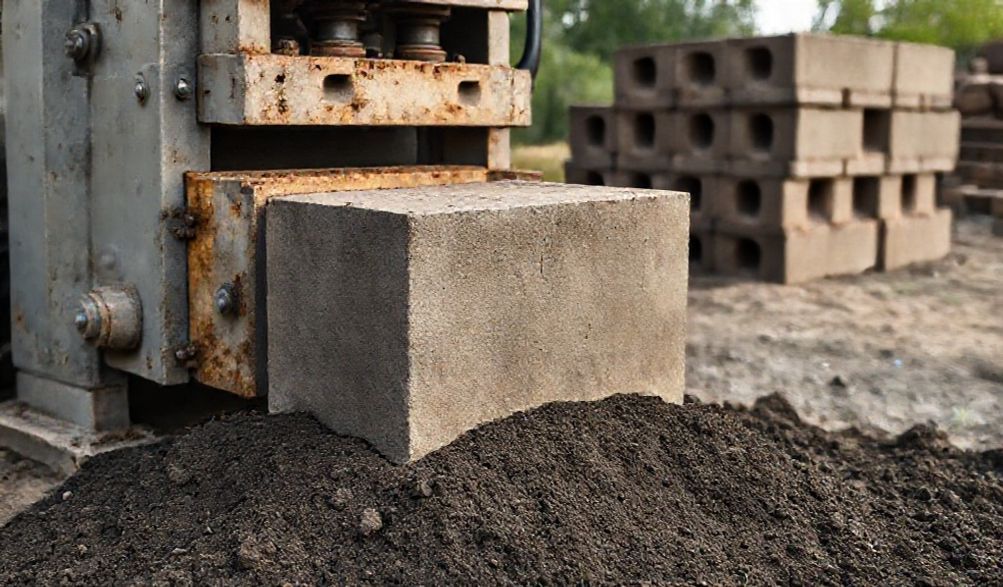
Hướng dẫn Tối thượng về Máy ép gạch đất nén: Xây dựng một Tương lai Bền vững
Giới thiệu
Cuộc tìm kiếm toàn cầu về nhà ở bền vững và giá cả phải chăng là một trong những thách thức lớn nhất của thời đại chúng ta. Khi chi phí môi trường và kinh tế của các vật liệu xây dựng thông thường như bê tông và gạch nung ngày càng trở nên rõ ràng, các nhà xây dựng, kiến trúc sư và chủ nhà đang nhìn về quá khứ để tìm ra giải pháp bền vững cho tương lai. Hãy đến với Gạch nén đất (CEBs)—một phiên bản hiện đại của một trong những kỹ thuật xây dựng lâu đời nhất của nhân loại.
Phương pháp cổ xưa này đã được cách mạng hóa nhờ một công nghệ then chốt:máy nén khối这台机器是一场静默建筑革命的引擎,将原始、本地的泥土转化为精确、高强度的建筑砌块,对环境的影响降至最低。
Trang tổng hợp toàn diện này là nguồn tài liệu dứt khoát của bạn về máy ép gạch đất nén. Chúng tôi sẽ phân tích cách chúng hoạt động, định lượng những lợi ích sâu sắc của chúng, phác thảo những cân nhắc quan trọng để chọn đúng loại máy, và định vị chúng trong phong trào rộng lớn hơn của xây dựng tái tạo. Hướng dẫn này tổng hợp nhiều thập kỷ kinh nghiệm xây dựng thực tế, nguyên lý kỹ thuật đất và kiến thức ngành để cung cấp cho bạn lời khuyên đáng tin cậy và có thể hành động cho dự án tiếp theo của bạn.
Máy ép gạch đất nén là gì?
Máy ép gạch đất nén (CEB) là một máy ép cơ học hoặc thủy lực được thiết kế để nén đất ẩm dưới lòng đất thành các khối xây dựng đặc, đồng nhất và bền vững. Nó tự động hóa và tiêu chuẩn hóa quy trình xây dựng bằng đất lâu đời, áp dụng áp suất cao chính xác để tạo ra các đơn vị đồng nhất có kết cấu chắc chắn và sẵn sàng cho việc xây dựng.
Trong khi việc xây dựng bằng đất là một tập tục cổ xưa—hãy nghĩ đến Vạn Lý Trường Thành của Trung Quốc hay những ngôi nhà bằng đất sét ở Anh—thì máy CEB hiện đại đại diện cho một bước tiến hóa đáng kể. Những máy ép thủ công đầu thế kỷ 19 đã nhường chỗ cho các hệ thống động cơ và thủy lực ngày nay, cho phép kiểm soát chưa từng có đối với mật độ, độ bền và tốc độ sản xuất của khối. Về cốt lõi, chức năng của máy rất đơn giản và thanh lịch: nó sử dụng lực khổng lồ để sắp xếp lại các hạt đất, loại bỏ khoảng trống và tạo ra một khối chặt chẽ, gắn kết chỉ thông qua quá trình nén.
How Does a Compressed Earth Block Machine Work?
Understanding the process demystifies the machine and highlights the importance of each step in creating a quality block.
The Core Process: From Soil to Block
The transformation from loose soil to a solid block follows a clear, four-step sequence:
- Material Selection & Preparation: Not all dirt is building material. Suitable soil is sourced, then screened to remove rocks, roots, and organic matter. It is then mixed with water—and sometimes a stabilizer like lime or a small amount of cement—to achieve the optimal moisture content for compaction.
- Feeding the Machine: The prepared soil mix is loaded into the machine’s hopper. From here, a measured amount is fed into the compression chamber, either manually, by gravity, or via an automated feed system.
- Compression in the Die/Mold: This is the heart of the operation. A ram or piston compresses the soil within a steel mold (the die) under extreme pressure, typically ranging from 500 to over 2,000 PSI. The block holds its shape the moment the pressure is released.
- Ejection and Curing: The newly formed block is ejected from the machine onto a pallet or rack. Unlike fired bricks, CEBs gain strength through chữa trị—a period of slow, controlled drying (often under plastic sheeting) that prevents cracking and allows for the development of full compressive strength over several weeks.
Key Machine Components Explained
- Hopper and Feed System: The entry point for soil. It can be a simple open hopper or include an auger for consistent, automated feeding.
- Main Compression Chamber and Mold: The reinforced steel cavity that defines the block’s shape and size. The mold’s design determines whether you produce standard rectangles, interlocking blocks, or special shapes.
- Hệ thống điện This defines the machine’s scale.
- Hướng dẫn sử dụng: Lever-operated, suitable for very small projects.
- Cơ khí Often powered by a tractor’s Power Take-Off (PTO) or an electric motor, ideal for community-scale projects.
- Thủy lực Uses a hydraulic pump and cylinder for the highest, most consistent pressure, used for commercial production.
- Frame and Ejection Mechanism: The robust steel frame withstands immense compression forces. The ejection system cleanly removes the finished block.
The Science of Compression: Why It Creates Strong Blocks
The strength of a CEB isn’t from glue or heat; it’s from physics. Under high pressure, the plate-like clay particles are forced into intimate contact with the larger sand and silt particles, creating powerful electrostatic bonds of cohesion and friction.
The key variable is moisture. Too dry, and the particles can’t slide past each other to pack densely. Too wet, and water pressure pushes them apart. The optimal moisture content (often identified through a modified Proctor test) provides just enough lubrication for maximum compaction, resulting in the highest density and strength.
Benefits of Building with a Compressed Block Machine
The advantages of this method span environmental, economic, and aesthetic domains, making a compelling case for its adoption.
Environmental & Sustainability Advantages
- Năng Lượng Tiêu Hao Siêu Thấp Trong Vật Liệu CEBs require no kiln-firing (which uses massive fossil fuel energy) and minimal processing compared to concrete or fired brick. Their primary energy input is the compression force itself.
- Local, Abundant Material: The primary ingredient is often available directly on the build site, slashing transportation emissions, costs, and supply chain complexity.
- Fully Recyclable and Non-Toxic: At the end of a building’s very long life, the blocks can simply be moistened, re-compacted, or returned to the earth without creating toxic landfill waste. They contain no volatile organic compounds (VOCs).
Economic & Practical Benefits
- Hiệu quả Chi phí: While machine investment varies, material costs are often negligible. This enables owner-builder projects, community builds, and affordable housing initiatives.
- Superior Energy Efficiency: CEBs have exceptional thermal mass. They absorb heat during the day and release it at night, naturally regulating indoor temperatures and drastically reducing heating and cooling costs.
- Độ Bền Đã Được Chứng Minh: When properly built with good “boots and a hat” (a solid foundation and wide roof overhangs), earth block structures are highly durable, fire-resistant, and pest-proof, with examples standing for centuries.
Design and Aesthetic Flexibility
Forget the dull, brown cube. Modern CEB construction offers remarkable versatility:
* Machines can produce a range of sizes, from standard bricks to large-format blocks.
* Natural soil yields a beautiful palette of colors, from greys and tans to reds. Mineral oxides can be added for vibrant hues.
* The blocks can be easily shaped on-site to create arches, curved walls, and sculptural elements, offering organic design potential that rigid concrete blocks cannot match.
Key Considerations Before Choosing Your Machine
Selecting the right machine is a critical decision that hinges on your specific project and site conditions.
Assessing Your Project Scale and Needs
- Small-Scale (Manual/Hand-Press): Ideal for garden walls, small sheds, or learning projects. Output may be 50-100 blocks per day.
- Medium-Scale (Mechanical/Tractor-PTO): Suited for a single-family home, workshop, or community project. Output can range from 200 to 600 blocks per day.
- Production-Scale (Hydraulic): For commercial operations, multi-unit housing, or development projects. These machines can produce 1,000+ uniform blocks per day.
Soil Testing: The Most Critical Step
This cannot be overstated: Your project’s success starts with your soil. A machine cannot compensate for poor material. In our field experience, skipping this step is the number one cause of project failure.
- Simple Field Tests: Start with a “ribbon test” (rolling moist soil to gauge clay content) and a “jar test” (settling soil in water to visualize sand-silt-clay ratios).
- Professional Lab Testing: For any serious project, send soil samples to a lab. A geotechnical report will give you the exact percentages and recommend stabilization needs (often 5-10% lime or cement) to achieve the required strength and weather resistance.
Machine Features and Specifications to Compare
When evaluating machines, look beyond price and compare these key specs:
* Áp lực định mức: Higher PSI/MPa generally means stronger, denser blocks.
* Block Size & Shape: Does it produce the block dimensions you need? Are interlocking options available for easier, mortar-less building?
* Nguồn điện: Do you have 3-phase electricity, a tractor, or only single-phase power?
* Build Quality & Support: A sturdy steel frame is essential. Equally important is the availability of replacement parts and responsive technical support from the manufacturer or distributor.
The Complete Process: From Machine to Finished Wall
Owning a machine is just one part of the workflow. A successful build follows a disciplined process.
Step-by-Step Workflow Overview
- Site and Soil Assessment: Test soil suitability and plan for material sourcing and storage.
- Soil Preparation and Stabilization: Screen, mix, and temper soil with water/stabilizer to the perfect consistency.
- Block Production and Curing: Produce blocks and store them in a protected area for the critical 4-6 week curing period.
- Mortar and Laying Techniques: Use a thin-stabilized earth mortar. Lay blocks in running bond, using a level and string line for every course.
- Protective Plastering/Finishing: Apply two coats of a breathable, earthen or lime-based plaster to protect the walls from direct rain while allowing moisture vapor to escape.
Common Challenges and Professional Solutions
- Variable Soil: Batch and mix large, consistent piles of soil to ensure uniformity.
- Inconsistent Blocks: Calibrate your machine’s feed and moisture content. A well-tempered mix should form a ball in your hand without crumbling or sticking.
- Cracking: Cure blocks slowly under plastic or breathable fabric. Rapid drying causes shrinkage cracks.
- Codes and Engineering: Engage a structural engineer familiar with earth building early. Provide them with lab test data for your stabilized blocks to secure approvals.
FAQ: Your Compressed Earth Block Machine Questions Answered
Q: How strong are compressed earth blocks?
A: Unstabilized CEBs typically have a compressive strength of 2-4 MPa (300-600 PSI). When properly stabilized, strengths of 7-10 MPa (1,000-1,500 PSI) are common—more than sufficient for 1-3 story load-bearing walls, and comparable to many conventional concrete masonry units (CMUs). Standards like ASTM D1633 provide testing protocols.
Q: Can I use any soil from my property?
A: Not necessarily. Ideal CEB soil is a “lean clay” or “sandy clay” mix—roughly 70-80% sand and gravel, 10-25% clay, and 5-10% silt. Pure clay will shrink and crack; pure sand won’t bind. Lab testing will tell you if your soil is suitable and how to amend it.
Q: What is the difference between a CEB machine and a clay brick machine?
A: This is a crucial distinction. A Máy CEB compresses damp, raw earth under high pressure. A clay brick machine extrudes or molds processed, plastic clay, which must then be fired in a kiln at temperatures over 1,800°F. The processes, energy inputs, and final products are fundamentally different.
Q: Are compressed earth block buildings safe in earthquakes and rain?
A: Yes, when properly engineered and detailed. For seismic zones, designs incorporate reinforced bond beams, vertical rebar, and flexible plasters. For rain protection, the mantra is “keep it dry.” This is achieved with large roof overhangs (at least 24 inches), raised foundations, and well-maintained, breathable plasters that shed water.
Q: How much does a compressed block machine cost?
A: Prices vary dramatically with scale. Manual presses start around $500-$2,000. Tractor-PTO or electric mechanical presses range from $5,000 to $20,000. Fully automated hydraulic production machines can cost $30,000 to $100,000+. Remember to budget for soil testing, preparation equipment (a tractor with a loader is invaluable), and finishing materials.
Conclusion
Cáimáy nén khối is more than just a piece of equipment; it’s a tool for empowerment and ecological regeneration. It puts the ability to create beautiful, healthy, and affordable shelter back into the hands of communities and individuals, using the most local material imaginable—the earth beneath our feet.
As building codes continue to evolve to embrace natural materials and the demand for low-carbon construction soars, the relevance of CEB technology will only grow. The journey begins with knowledge and a soil test. We encourage you to connect with experienced builders, consult with knowledgeable engineers, and see this guide as your first step.
For deeper dives into machine models, detailed case studies, and ongoing support in your sustainable building journey, explore our further resources. The future of building is not only high-tech but also profoundly rooted in the wisdom of the earth.
<