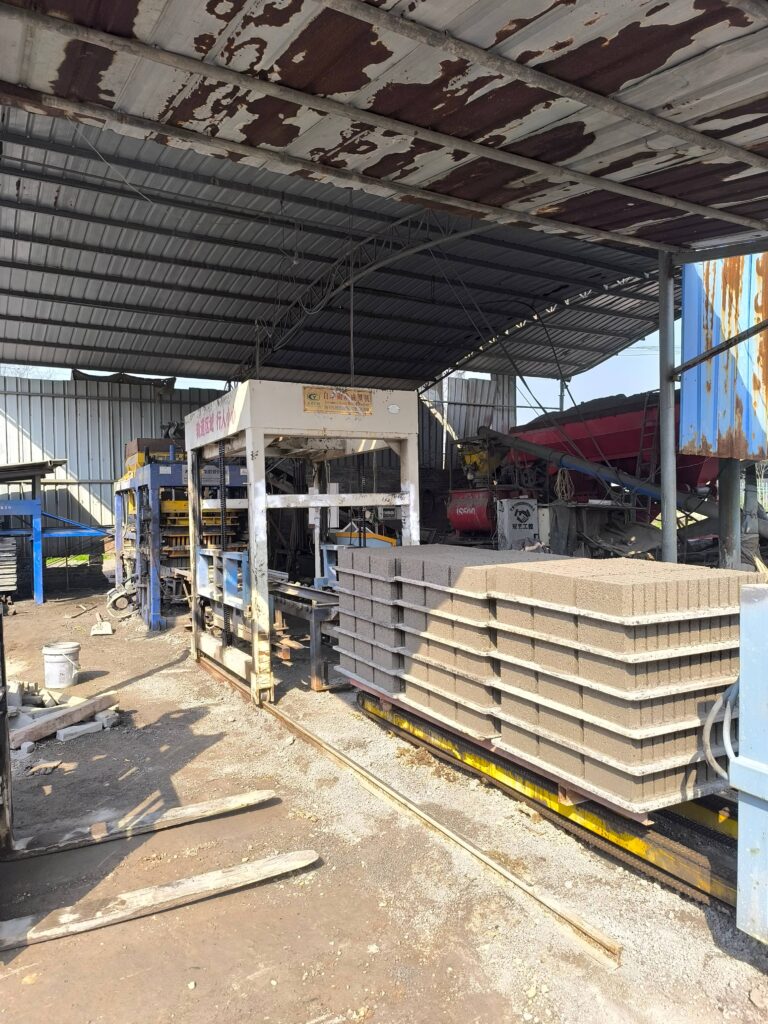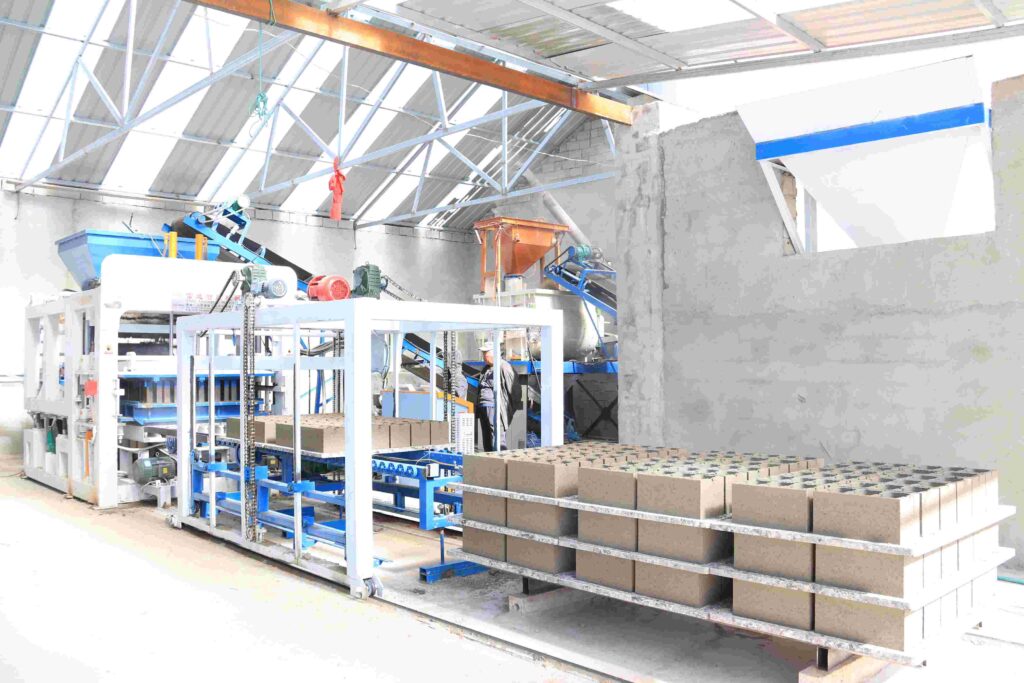
Tự động hóa đã ảnh hưởng đến ngành sản xuất gạch như thế nào.
1. Sự chuyển đổi của quy trình sản xuất
Tự động hóa đã hệ thống hóa lại từng công đoạn sản xuất gạch, chuyển từ một nghề thủ công tốn nhiều lao động sang một quy trình công nghiệp liên tục, dựa trên độ chính xác cao.
1.1. Xử lý và Chuẩn bị Nguyên liệu thô
Giai đoạn ban đầu đã chứng kiến những tiến bộ đáng kể về tính nhất quán và hiệu quả.
- Hệ thống Cho ăn Tự động và Tỷ lệ Pha trộn Bộ nạp tự động và phễu cân hiện nay đo lường và trộn chính xác đất sét, phụ gia và nước. Điều này loại bỏ sự biến thiên vốn có trong việc phối trộn thủ công, đảm bảo hỗn hợp đồng nhất quan trọng cho các đặc tính sấy và nung đều.
- Kiểm Soát Điều KiệnCác cảm biến tiên tiến giám sát độ ẩm và kết cấu theo thời gian thực, với các vòng phản hồi tự động điều chỉnh lượng nước thêm vào và thời gian trộn. Mức độ kiểm soát ngay từ đầu quy trình này là nền tảng để ngăn ngừa các khuyết tật ở các giai đoạn sau của dây chuyền sản xuất.
1.2. Định hình và Đúc khuôn
核心阶段见证了最为显著的转变,即自动化挤出和机器人搬运技术的广泛采用。
- Đùn Ép Độ Chính Xác CaoCác máy đùn hiện đại, được điều khiển bởi bộ điều khiển logic lập trình (PLC), sản xuất các cột đất sét liên tục (cột) với dung sai kích thước và mật độ chính xác. Máy cắt tự động, sử dụng dây hoặc lưỡi dao, cắt cột thành các đơn vị riêng lẻ với độ biến dạng hoặc biến thiên chiều dài tối thiểu.
- Thiết lập Robot và Xếp Pallet:Đây là một bước đột phá quan trọng trong tự động hóa. Các cánh tay robot, được dẫn hướng bằng thị giác máy tính, nhẹ nhàng nâng những viên gạch xanh (chưa nung) từ máy cắt và đặt lên xe sấy hoặc tạo hình theo khuôn mẫu với độ chính xác cao như phẫu thuật. Điều này loại bỏ tình trạng hư hỏng vật lý và hoa văn không đều thường gặp trong quá trình xếp đặt thủ công, tối đa hóa công suất của xe nung, đồng thời đảm bảo luồng không khí tối ưu cho quá trình sấy và nung.
1.3. Drying and Firing
The most energy-intensive and critical phases are now governed by intelligent automation.
- Controlled Dryer Automation: Automated dryers regulate temperature, humidity, and air velocity according to pre-set schedules tailored to the specific brick body. Sensors track the moisture content of bricks, adjusting the environment to prevent cracking from too-rapid drying—a common cause of loss in traditional systems.
- Smart Kiln Management: Modern tunnel kilns are equipped with hundreds of sensors monitoring temperature, pressure, and atmosphere at multiple zones. Centralized control systems automatically adjust fuel burners, fan speeds, and damper positions in real-time. This ensures a perfectly consistent thermal profile throughout the kiln, guaranteeing uniform color, strength, and durability across all bricks, regardless of their position on the kiln car.
2. Impacts on Product Quality and Consistency
The most direct and marketable benefit of automation is a dramatic elevation in product standards.
2.1. Unprecedented Uniformity
- Độ chính xác kích thước: Automated production yields bricks with extremely tight dimensional tolerances. This uniformity simplifies bricklaying, reduces mortar usage, and allows for the creation of complex architectural patterns with precision, meeting the stringent demands of modern construction specifications.
- Consistency in Physical Properties: Control over every variable—from raw mix to final firing—results in bricks with consistent compressive strength, water absorption, and efflorescence potential. This reliability builds trust with architects, engineers, and builders, reducing call-backs and liability issues for distributors.
2.2. Enabling Product Innovation and Complexity
Automation has unlocked possibilities beyond standard rectangular units.
- Custom Shapes and Profiles: CNC-controlled molds and dies allow for the economical production of specialized shapes—angled bricks, curved units, and intricate architectural details—that were previously prohibitively expensive or impossible to make consistently by hand.
- Surface Texturing and Coloring: Automated surface brushing, sandblasting, and the precise application of engobes (liquid clay coatings) or glazes are now integrated into production lines, enabling a vast expansion of aesthetic options without sacrificing production speed.
3. Economic and Operational Consequences
The business case for automation is powerful but comes with significant implications for the industry’s structure and economics.
3.1. Efficiency Gains and Cost Restructuring
- Increased Throughput and Yield: Automated lines operate 24/7 with minimal downtime, dramatically increasing output per hour. Reduced handling damage and fewer fired rejects (from cracks or deformities) significantly improve overall yield, turning more raw material into saleable product.
- Shift in Cost Composition: Automation leads to a fundamental cost restructuring. High initial capital expenditure is offset over time by reduced direct labor costs, lower energy consumption per unit (from optimized kiln operations), and massive savings from reduced material waste and product rejects.
3.2. Labor Dynamics and Skill Shift
- Reduction in Manual Labor: Physically demanding and repetitive roles in material handling, setting, and unloading have been vastly reduced. This addresses chronic challenges related to workforce availability in certain regions and improves workplace safety metrics.
- Emergence of New Technical Roles: The demand has shifted to a smaller number of highly skilled technicians, mechatronics engineers, and process control specialists. Their role is to maintain, program, and optimize the automated systems, representing a critical new skillset within the industry.
3.3. Barriers to Entry and Industry Consolidation
- High Capital Intensity: The multi-million-dollar investment required for a fully automated greenfield plant or a comprehensive retrofit raises the financial barrier to entry. This favors larger, well-capitalized players.
- Consolidation Pressure: There is a growing divide between automated, large-scale producers and smaller, semi-mechanized plants. This dynamic can drive industry consolidation as larger entities acquire smaller ones to gain market share or access to raw materials, potentially altering the supply landscape for distributors.
4. Challenges and Strategic Considerations in an Automated Era
Despite its benefits, the integration of automation is not without hurdles.
4.1. Substantial Capital Investment and ROI Uncertainty
The upfront cost is the single greatest barrier. Justifying this investment requires confidence in long-term market demand, access to financing, and the managerial capability to navigate the complex transition. For many established manufacturers, this is a existential strategic decision.
4.2. Technical Complexity and Dependence
- Bảo trì và Thời gian ngừng hoạt động: Highly automated systems require sophisticated preventative maintenance programs. A failure in a key component, like a robotic arm or PLC, can halt the entire production line, making technical support responsiveness and spare parts inventory critical.
- Cybersecurity Risks: As operations become more connected and data-driven, production networks become potential targets for cyber threats, necessitating investments in digital security—a novel concern for a traditionally physical industry.
4.3. Supply Chain and Inventory Implications
- Just-in-Time Production Potential: Automation’s consistency and speed enable more responsive manufacturing, supporting leaner inventory strategies. This can shift expectations downstream, with distributors potentially needing to manage more frequent, smaller deliveries.
- Standardization vs. Customization Tension: While automation excels at producing large runs of standard products, rapid changeovers for custom batches can be complex. Manufacturers must carefully balance the efficiency of long production runs with the market’s growing desire for bespoke, short-run products.
Conclusion
Automation has irrevocably transformed the brick-making industry from a craft-based trade into a high-tech manufacturing sector. Its impact cascades through the entire value chain: delivering superior, consistent quality that meets modern construction standards; restructuring production economics around capital and efficiency rather than manual labor; and reshaping the competitive landscape. For distributors, dealers, and procurement professionals, this evolution is not a distant phenomenon but a present reality that dictates sourcing decisions. The future belongs to those who partner with manufacturers who have successfully navigated the automation journey, as they represent stability, quality assurance, and innovation capacity. Understanding this shift is crucial for intermediaries to advise their clients accurately, manage inventory smartly, and secure their position in a market where precision, reliability, and efficiency are increasingly the defining currencies of success.
FAQ
Q1: As a distributor, how can I verify the level of automation at a manufacturing facility?
A: Beyond marketing claims, request a virtual or in-person facility tour. Key indicators include: the presence of robotic setting/packaging cells, a centralized control room with digital monitoring screens for the kiln and dryer, automated guided vehicles (AGVs) for material movement, and the use of automated stackers/retrievers in the finished goods warehouse. Inquire about their process control systems and how they monitor quality in real-time.
Q2: Does automation necessarily mean lower wholesale prices for bricks?
A: Not immediately or directly. While automation reduces per-unit production costs over the long term, the high capital investment often means manufacturers focus on improving margin and reinvesting before passing on significant price reductions. The primary benefit to distributors is often in giá trị: consistent quality, reliable supply, fewer rejects/returns, and access to innovative products, which reduce your operational costs and protect your reputation.
Q3: Are automated plants only suited for mass-producing standard brick types?
A: This was a limitation of early automation. Modern flexible automation systems, using quick-change molds and programmable robots, can handle much greater variety. However, there is always an efficiency trade-off. The most cost-effective production occurs with long runs. Discuss your need for specialty products directly with the manufacturer to understand their capabilities and minimum order quantities for custom items.
Q4: How does automation affect order lead times and flexibility?
A: For standard products kept in the production cycle, automation can lead to shorter, more predictable lead times due to high, consistent output. However, flexibility for urgent, non-standard orders can be reduced if it requires halting an automated line for a changeover. The key is transparent communication and collaborative planning with the manufacturer’s sales and production team.
Q5: With automation reducing labor at the plant, how does this impact the long-term stability of a manufacturer?
A: It can enhance stability in several ways. It reduces reliance on a large, potentially fluctuating manual workforce and the associated risks of labor shortages. It also makes the operation less vulnerable to skills attrition in traditional crafts. Stability becomes tied to the manufacturer’s financial health (to service capital investments) and their ability to retain a core team of technical experts, which are critical factors to assess in a partnership.