1. Giới thiệumáy làm gạch đất sét thủ công liên kết
Trong bối cảnh xây dựng toàn cầu ngày càng được định hình bởi tự động hóa tiên tiến và máy móc thâm dụng vốn, một phân khúc thị trường bền bỉ và quan trọng vẫn phát triển mạnh dựa trên các nguyên tắc đơn giản, dễ tiếp cận và siêu địa phương hóa.Máy Sản Xuất Gạch Đất Sét Thủ Công Liên Kếtđại diện cho phân khúc thiết yếu này. Đối với các nhà phân phối, chuyên gia thu mua và nhà đầu tư tập trung vào phát triển, công nghệ này không phải là di tích của quá khứ mà là một công cụ chiến lược có liên quan cho hiện tại và tương lai. Nó giải quyết các nhu cầu cơ bản tại các thị trường nơi các yếu tố như cơ sở hạ tầng hạn chế, vốn khan hiếm, địa điểm dự án xa xôi và nguồn lao động địa phương dồi dào hội tụ. Bài viết này cung cấp một phân tích toàn diện, tập trung vào thương mại cho các chuyên gia B2B, vượt ra ngoài mô tả sản phẩm cơ bản để khám phá các hệ sinh thái kinh doanh khả thi mà máy ép gạch không nung thủ công có thể tạo ra. Chúng tôi sẽ xem xét công nghệ chính xác, xác định các ứng dụng thị trường sinh lời, phân tích các mô hình vận hành và tài chính, đồng thời phác thảo khuôn khổ để triển khai và phân phối thành công thiết bị trao quyền độc đáo này.
2. Định Nghĩa Công Nghệ: Nguyên Tắc Cốt Lõi và Phạm Vi Hoạt Động
2.1. Quy Trình Nén Thủ Công Được Giải Thích
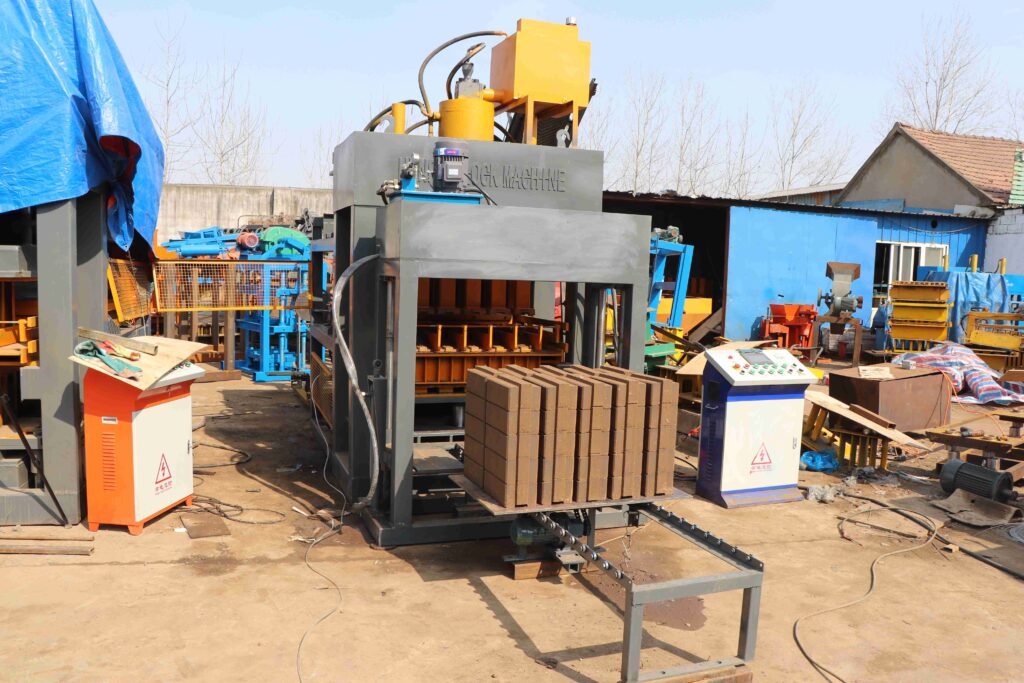
Khác với các loại máy ép rung thủy lực hay điện, một máy thủ công hoạt động dựa trên nguyên lý sử dụng lực đòn bẩy trực tiếp từ con người. Cơ chế cốt lõi là một khung thép chắc chắn chứa một khoang khuôn được thiết kế chính xác. Hỗn hợp đất, đất sét và một tỷ lệ nhỏ chất ổn định (thường là xi măng hoặc vôi) đã được chuẩn bị sẽ được đưa vào khuôn bằng tay. Người vận hành sau đó kích hoạt hệ thống đòn bẩy, thông qua lợi thế cơ học—thường sử dụng đòn bẩy kép hoặc máy ép có hỗ trợ bánh đà—tạo ra áp lực đủ lớn (thường từ 2 đến 5 tấn) để nén vật liệu thành một khối liên kết chặt chẽ, có khả năng khớp nối với nhau. Thiết kế các mấu và rãnh khớp nối được tích hợp sẵn trong khuôn, không yêu cầu gia công thứ cấp.
2.2. Sự Khác Biệt với Hệ Thống Tự Động và Bán Tự Động
Đặc điểm xác định là sự thiếu vắng nguồn động cơ để tạo lực nén. Điều này mang lại những lợi thế riêng biệt và đặt ra những giới hạn cụ thể:
- Ưu điểm:Tiêu thụ năng lượng bằng không, tính di động cực cao (thường được gắn trên bánh xe), chi phí mua sắm thấp hơn đáng kể, bảo trì tối thiểu (không có hệ thống thủy lực, động cơ hoặc PLC), và tính đơn giản vận hành vốn có.
- Hạn chế:Sản lượng thấp hơn trên mỗi công nhân, yêu cầu lao động chân tay cao hơn, và mức độ phụ thuộc nhiều hơn vào kỹ năng và sự ổn định của người vận hành để đảm bảo chất lượng sản phẩm.
2.3. Hồ sơ Nguyên liệu Thô Lý tưởng: Tính Phù hợp của Đất và Đất sét
Hiệu quả của máy móc có mối liên hệ nội tại với khoa học vật liệu. Nó được thiết kế đặc biệt choxây dựng bằng đất ổn địnhYêu cầu cốt lõi là một loại đất có thành phần cân bằng:
- Đất sétHoạt động như chất kết dính tự nhiên.
- Phù sa và Cát:Cung cấp cấu trúc khung.
- Sỏi:Thường bị loại bỏ.
Một thử nghiệm lắng đọng đơn giản trong lọ xác định tính phù hợp của đất. Một tỷ lệ nhỏ (3-8%) xi măng Portland hoặc vôi thường được thêm vào làm chất ổn định, phản ứng hóa học với đất để cải thiện đáng kể độ bền nén, độ bền và khả năng chống nước, tạo raGạch Đất Nén Ổn Định (CSEBs).
3. Phân tích thị trường: Động lực nhu cầu và Ứng dụng thích hợp
3.1. Đối tượng mục tiêu và phạm vi áp dụng theo địa lý
This technology finds its strongest foothold in:
- Rural and Peri-Urban Areas: Where access to centralized brick kilns is limited and transport costs for conventional bricks are prohibitive.
- Regions with Low-Cost Labor Availability: Where the economic equation favors human effort over expensive machinery and fuel.
- Development and Humanitarian Sectors: NGOs, government housing schemes, and self-help community projects focused on affordability and skill transfer.
- Eco-Conscious Building Markets: Where there is demand for low-embodied-energy, thermally efficient, and natural building materials.
3.2. Key Market Sectors and Project Types
Primary applications include:
- Affordable Single-Story Housing: The core application for load-bearing walls in residential units.
- Cơ sở hạ tầng cộng đồng: School buildings, clinic walls, community centers, and sanitation blocks.
- Agricultural and Estate Construction: Storage sheds, boundary walls, animal shelters, and staff housing on farms or plantations.
- Landscaping and Architectural Features: Garden walls, pergola bases, and other non-structural elements where aesthetics of earth tones are desired.
3.3. The Value Proposition for B2B Stakeholders
For distributors and investors, the value extends beyond unit sales:
- Low-Barrier Market Entry: Enables entrepreneurs with limited capital to start a brick-making enterprise, creating a network of micro-businesses.
- Portfolio Diversification: Complements higher-end automated equipment lines, allowing a distributor to service the entire market spectrum.
- Project-Based Solution Selling: Ideal for contractors undertaking specific projects in remote locations; the machine becomes a portable factory.
- Strong Development Alignment: Positions the distributor as a partner in sustainable, community-led development, often qualifying for tenders in public and NGO sectors.
4. Technical Specifications, Production Workflow, and Output Metrics
4.1. Machine Anatomy: Critical Components and Build Quality
A high-quality manual press is defined by its durability and precision:
- Khung Constructed from heavy-duty steel plate and sections, welded and reinforced at stress points to withstand repeated cyclic loading.
- Mold Box & Interlocking Head: Made from high-carbon or alloy steel, precision-machined and often hardened to resist abrasion from soil. The interlocking geometry must be exact to ensure block compatibility.
- Leverage/Press Mechanism: A robust system of levers, bearings, and a compression plate. The mechanical advantage ratio is key to achieving sufficient pressure with manageable human effort.
- Pallet and Base Plate: A flat, steel pallet upon which the block is formed and cured.
4.2. The Step-by-Step Production Cycle
- Chuẩn bị nguyên vật liệu: Soil is sieved, mixed with the correct proportion of stabilizer (cement/lime), and moisture content is adjusted to optimal levels (typically near Proctor Optimum).
- Mold Charging: A measured amount of the damp mix is placed into the mold cavity.
- Nén: The operator engages the lever, applying steady, full pressure, often with a “dwell” time at maximum compression.
- Đẩy ra: The lever is released, the mold is opened, and the newly formed block is carefully ejected onto a pallet.
- Chữa bệnh: Blocks remain on their pallets for 24-48 hours, are then carefully stacked, kept moist, and shaded for a minimum of 21-28 days to achieve full stabilized strength.
4.3. Realistic Capacity, Labor Requirements, and Quality Parameters
- Đầu ra: A skilled 3-person team (mixer, feeder, press operator) can realistically produce 200-400 standard blocks per 8-hour day, depending on block size and workflow organization.
- Lao động Requires physically fit, trainable labor. Consistency in filling and pressing is more critical than brute strength.
- Chất lượng: Well-produced CSEBs from a good manual machine can achieve compressive strengths of 4-10 MPa, more than adequate for single-story load-bearing construction. Dimensional accuracy is contingent on mold quality and operator care.
5. Commercial Viability and Strategic Deployment Framework
5.1. Cost-Benefit and ROI Analysis for Low-Capex Ventures
The financial model is compelling due to minimal overhead:
- Capital Cost: Very low, often a fraction of a motorized system.
- Primary Costs: Raw materials (soil, ~5% cement), labor, and site overhead.
- Break-Even Point: Can be achieved after producing and selling a few thousand blocks, making ROI periods as short as a few months for an active project.
- Đề Xuất Giá Trị: The final block cost is typically 30-50% lower than fired clay bricks or concrete blocks in remote areas when transport is factored in.
5.2. Business Models: From Direct Sales to Community Franchising
- Direct Equipment Sales: To individual entrepreneurs, small contractors, or farms.
- Project-in-a-Box Packages: Selling the machine along with training, soil testing kits, and a starter supply of stabilizer for a turnkey operation.
- Community Cooperative Model: Partnering with NGOs to equip community groups, providing training and a shared resource for neighborhood development.
- Rental or Lease-to-Own Schemes: For contractors with a specific, time-bound project.
5.3. Risk Assessment and Mitigation Strategies
Key risks and mitigations include:
- Risk: Poor block quality due to unsuitable soil or incorrect mixing.
- Mitigation: Provide simple soil testing guides and rigorous mixing procedure training.
- Risk: Market resistance to earth-based construction.
- Mitigation: Create demonstration walls, provide technical data on performance, and connect clients with successful case studies.
- Risk: Wear and tear on molds from abrasive soils.
- Mitigation: Supply high-quality, hardened molds and offer a clear spare parts supply chain.
6. Conclusion
The interlocking manual soil clay brick machine is a potent example of appropriate, scalable technology. For the astute B2B stakeholder, it represents far more than a simple tool; it is an enabler of decentralized, sustainable, and economically inclusive construction. Its success hinges not on brute force automation, but on the intelligent application of leverage, material science, and human enterprise. By understanding its precise operational niche, the viable business models it supports, and the critical importance of training and quality control, distributors and investors can tap into a resilient and growing market segment. In an era focused on sustainability and local resilience, this machine provides a foundational solution for building communities from the ground up, literally and figuratively, offering a commercially sound and socially impactful avenue for growth.
7. Frequently Asked Questions (FAQ) for Business Partners
Q1: How does the strength and durability of these manual pressed earth blocks compare to fired clay bricks or concrete blocks?
A: Properly made Compressed Stabilized Earth Blocks (CSEBs) using cement stabilization exhibit excellent durability. While their compressive strength (4-10 MPa) is typically lower than high-grade concrete blocks, it is fully sufficient for single and two-story load-bearing walls as per many international codes. They offer superior thermal mass and moisture regulation compared to concrete. Durability against rain requires proper soil selection, adequate stabilization, and a protected plastered finish, much like traditional earth construction worldwide.
Q2: What is the typical business setup required for a client purchasing this machine?
A: The setup is remarkably lean. Key requirements are: a flat, shaded working area (approx. 50-100 sqm); access to a suitable soil source; a reliable supply of stabilizer (cement); basic tools (shovels, sieves, watering can); and a trained team of 2-4 individuals. No grid power is needed. The model is highly adaptable, from a backyard family operation to a more organized small enterprise.
Q3: Can these machines produce different block designs, and how is this achieved?
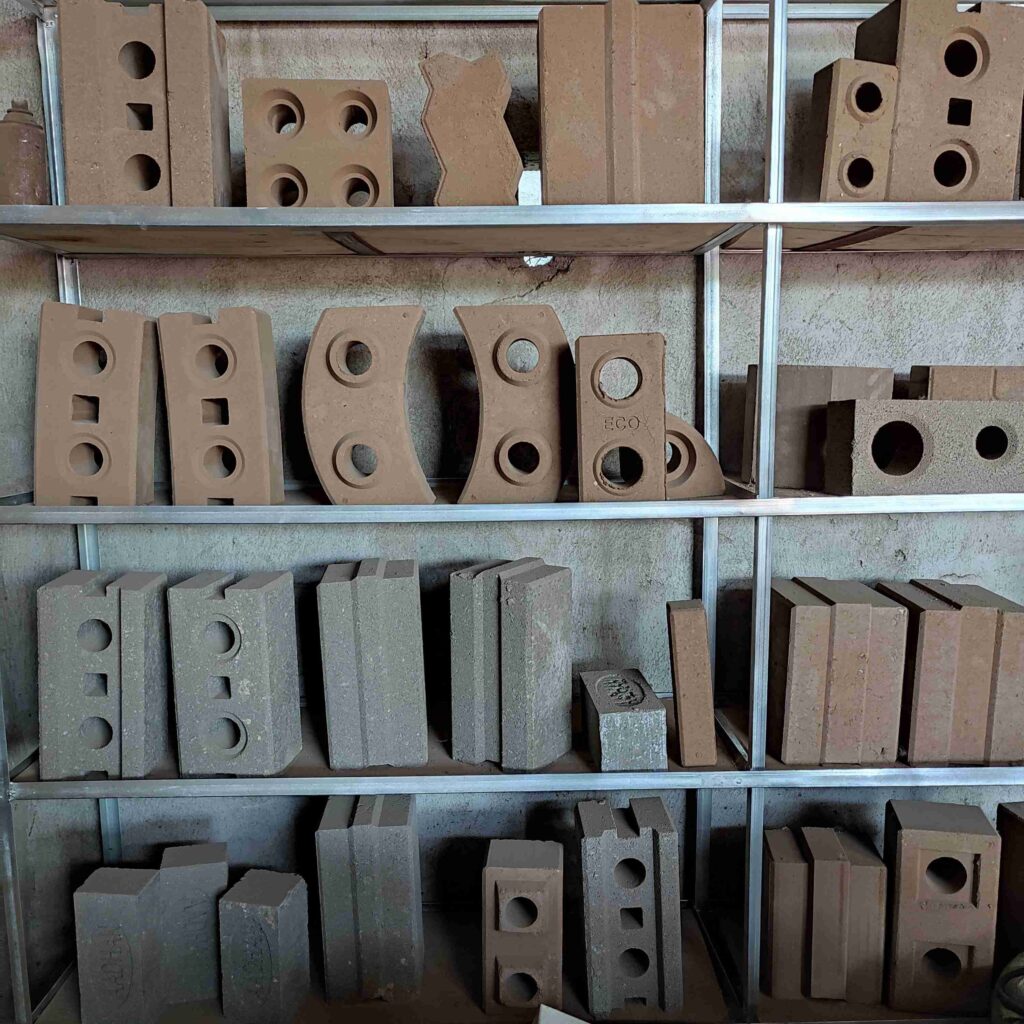
A: Yes, but with a key difference from automated systems. To change the block design (e.g., from a standard block to a corner block or a paving stone), the entire mold assembly must be replaced. Reputable manufacturers offer a range of compatible mold sets. The process is manual and takes 10-20 minutes. Therefore, production runs are best planned for a single block type per session to maintain efficiency.
Q4: What are the most common reasons for production failure or poor-quality blocks with this method?
A: Failures almost always stem from incorrect material preparation, not machine failure:
1. Unsuitable Soil: Too much clay (causes shrinkage cracks) or too much sand (lacks cohesion).
2. Incorrect Moisture Content: Too dry leads to weak blocks that crumble; too wet causes deformation.
3. Insufficient or Uneven Stabilization: Inadequate cement/ lime or poor mixing.
4. Inconsistent Compression: Operator not applying full lever pressure every cycle.
Giải pháp: Comprehensive, hands-on training is the single most important factor for success.
Q5: Is there a viable after-sales revenue stream for distributors of this relatively simple machine?
A: Absolutely. While the machine itself has few moving parts, recurring revenue streams include:
* Sale of Additional Mold Sets for different block profiles.
* Replacement Wear Parts: High-wear items like specific mold liners, compression faces, and lever pins.
* Ancillary Products: Soil testing kits, professional block hammers, curing tarps, and moisture meters.
* Training and Certification Services: Offering certified on-site training programs for clients’ operators. This builds long-term loyalty and transforms a transaction into a consultancy relationship.