
The Complete Guide to Investing in a Full Set of Brick Making Machinery
Giới thiệu
From towering skyscrapers to cozy family homes, bricks remain one of the most trusted and timeless building materials in the world. This enduring demand presents a compelling opportunity for entrepreneurs, construction firms, and investors: the chance to build a business that literally builds communities. However, transitioning from recognizing the opportunity to running a successful brick manufacturing operation requires more than just land and labor; it requires a strategic investment in the right industrial heart—the production line.
This comprehensive guide is designed to be your definitive resource. Our purpose is to demystify the process of selecting, installing, and operating a complete brick manufacturing plant. Built on industry knowledge and a deep understanding of the machinery involved, this guide aims to empower you with the expertise needed to make an informed, trustworthy, and profitable investment decision. We’ll move beyond the basics to provide actionable insights for anyone serious about entering the brick production market.
At the core of this venture is the decision to invest in a brick making machinery full set—a phrase that signifies much more than a single purchase. It represents the foundation of your entire production capability. In the following sections, we will break down exactly what constitutes a full set, explore its core components, examine the diverse products you can create, and outline the critical factors you must consider before committing your capital. Let’s build a solid foundation of knowledge.
What is a Full Set of Brick Making Machinery?
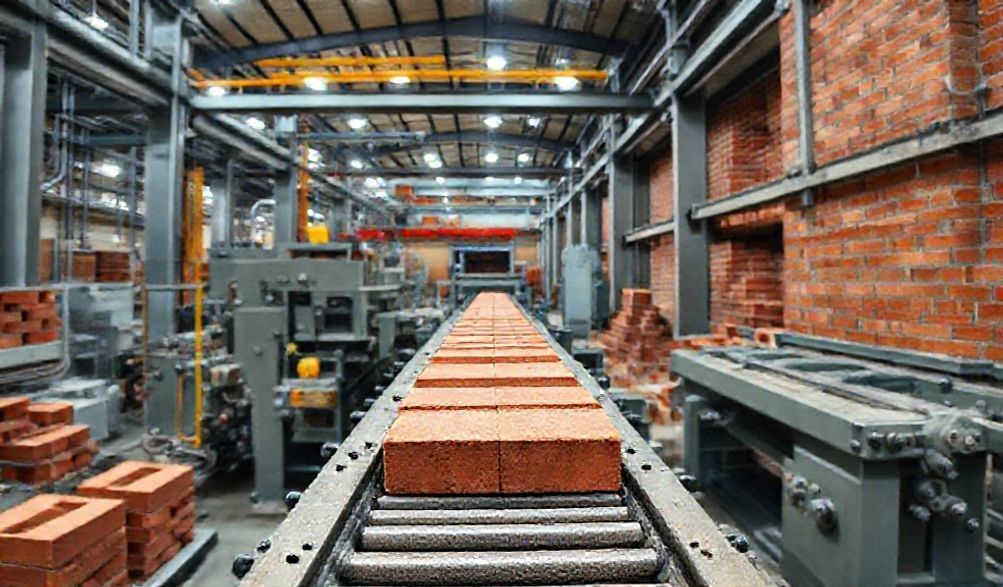
A common misconception is that a “full set” refers to one large, all-encompassing machine. In reality, it describes an integrated production line—a synchronized symphony of specialized equipment designed to automate the entire brick manufacturing process from raw material to palletized finished product.
Think of it as a factory in a flow chart. Each piece of equipment performs a specific, vital function, and the output of one becomes the input for the next. The core purpose of investing in such a system is multifaceted:
- Hiệu suất: Automated lines drastically increase output per hour compared to manual methods.
- Tính nhất quán Machines produce bricks with uniform size, density, and strength, which is critical for meeting building standards.
- Khả năng mở rộng: A well-designed line can often be upgraded or expanded to meet growing demand.
- Reduced Labor Costs & Dependence: Automation minimizes the need for intensive manual labor and reduces variability in production quality.
In essence, a full set transforms raw, low-value materials into standardized, high-value construction components with minimal waste and optimal repeatability.
Core Components of a Brick Production Line (The Full Set Breakdown)
Understanding each component’s role is key to specifying the right line for your needs. Here’s the breakdown of a typical integrated system.
Raw Material Handling & Preparation Equipment
The journey of a brick begins long before it takes shape. Consistent brick quality is impossible without consistent raw material preparation.
- Crushers, Feeders, and Screens: These are the first stage. Lumps of clay, shale, or aggregate are crushed to a manageable size, evenly fed into the system, and screened to remove oversized particles or debris.
- Mixers and Pug Mills: This is where the recipe comes together. For clay bricks, a pug mill not only mixes clay with water to the perfect plasticity but also de-airs the mixture, preventing cracks. For concrete blocks, high-intensity mixers blend cement, aggregate (like sand or crushed stone), and water into a homogeneous concrete mix.
- Điểm mấu chốt: This stage is non-negotiable. Poorly prepared material will jam machines, wear molds prematurely, and result in weak, substandard bricks.
Trái Tim: Cỗ Máy Làm Gạch
This is the centerpiece where the prepared material is formed into its final shape. The type of machine you choose dictates your product range, production speed, and brick quality.
- Hydraulic Press Brick Making Machines: These machines use immense, controlled hydraulic pressure to compress material into a mold. They are renowned for producing high-density, high-strength, and precision bricks (like pavers and engineering bricks). The process is often in cycles, producing a batch of bricks with each press.
- Extrusion Brick Making Machines: Here, the prepared, plastic material is forced through a shaped die (like toothpaste from a tube) to create a continuous column of brick material, which is then cut to size by wires. This method is ideal for efficient, high-volume production of hollow blocks and perforated bricks.
- Automation Spectrum: Both types come in variants:
- Hướng dẫn sử dụng: Operator-dependent for feeding and removal. Lowest cost, lowest output.
- Bán Tự Động: Mechanizes the pressing/extrusion but may require manual handling of bricks for curing. A balance of cost and output.
- Hoàn Toàn Tự Động: Integrates robotics and PLC controls for material feeding, molding, curing, and stacking. High capital cost, but maximizes output and minimizes labor.
Key Machine Parts:
* Molds/Dies: The interchangeable tooling that defines the brick’s shape and size (solid, hollow, paver, etc.).
* Hệ thống thủy lực: The power unit for press machines; its quality determines pressure stability and machine longevity.
* Bảng điều khiển: The brain of the operation, especially in automatic models, governing cycles, pressure, and timing.
Auxiliary & Supporting Machinery
These components handle the “before and after,” turning a brick-making machine into a true production line.
- Băng tải: The logistics network of the plant, moving raw material to the mixer and green (unfired/wet) bricks to the curing area.
- Automatic Stackers and Palletizers: Essential for high-volume operations. They gently lift, pattern, and place bricks onto curing racks or transport pallets, replacing back-breaking manual labor.
- Curing Systems: Where bricks gain their strength. This can be simple storage racks for air curing (concrete blocks) or sophisticated steam curing chambers that accelerate the hardening process in a controlled environment.
- Color Feeders & Surface Texturizers: For producing premium or architectural products. These add colored slurries to the brick surface or imprint textures (like stone or wood) before curing.
Types of Bricks & Blocks You Can Produce
The versatility of your investment is largely determined by the molds you purchase and the machine’s capability. Here’s what you can produce.
Solid, Hollow, and Paver Blocks
- Solid Bricks/Blocks: The classic workhorse for load-bearing walls. Require more material but offer high compressive strength.
- Gạch rỗng: Feature cavities that reduce weight, improve insulation (thermal and acoustic), and lower material costs. They are the standard for partition walls and many structural applications.
- Paver Blocks (Paving Stones): High-density, high-strength blocks used for driveways, walkways, and patios. They are typically made on a high-pressure hydraulic press and command a higher market price.
Machine Connection: Hollow blocks are typically made via extrusion, while dense pavers and solid bricks are often the domain of hydraulic presses.
Specialized Products: Interlocking, Curved, and Decorative Bricks
This is where you can capture niche markets and higher profit margins.
- Gạch Lắp Ghép: Designed to fit together like puzzle pieces without mortar, they are popular for quick construction of retaining walls, sheds, and even homes in some regions.
- Curved and Special Shape Bricks: For architectural features, arches, and landscaping projects.
- Decorative & Facing Bricks: Featuring unique colors, textures, or glazes for aesthetic exterior walls.
The Key: All these are produced simply by changing the mold or die on your core brick making machine, showcasing the flexibility of a well-chosen full set.
Key Factors to Consider Before You Invest
Jumping in without analysis is the fastest way to failure. Scrutinize these areas first.
Assessing Your Production Goals & Budget
- Công suất đầu ra: Be realistic. Calculate your current market demand and projected growth. Machine capacity is rated in bricks per hour or per 8-hour shift. An oversized plant drains capital; an undersized one leaves money on the table.
- Investment vs. ROI: The cheapest machine is often the most expensive in the long run due to downtime, poor output, and high maintenance. Factor in:
- Initial machinery cost.
- Shipping, installation, and commissioning.
- Cost of auxiliary equipment (generators, water systems).
- Expected lifespan and maintenance costs of a quality machine versus a cheap one.
Raw Material Analysis: Clay, Cement, Fly Ash, etc.
Your local resources should dictate your technology choice.
- Clay-Rich Areas: You will lean towards a clay preparation line (crusher, pug mill) and possibly a kiln for firing if producing burnt clay bricks.
- Access to Fly Ash, Slag, or Crushed Stone: You are a prime candidate for a concrete block machine, contributing to eco-friendly construction.
- Action Step: Have your raw materials professionally tested. Their composition, plasticity, and abrasiveness will influence the mixer type, machine pressure, and even the wear rate of your molds.
Mức độ Tự động hóa: Thủ công so với Bán tự động so với Hoàn toàn tự động
This is a strategic decision balancing capital, labor, and output.
| Feature | Manual / Simple | Semi-Automatic | Fully Automatic |
| :— | :— | :— | :— |
| Capital Cost | Low | Medium | High |
| Lao động cần thiết | High | Moderate | Low (mainly supervision) |
| Output Speed | Low | Medium to High | Very High |
|Operational Complexity| Low | Moderate | High (requires technical skill) |
| Tốt Nhất Cho | Startups, very low volume, testing markets. | Small to medium businesses with growing, stable demand. | Large-scale production, markets with high labor costs, export-oriented plants. |
Hướng dẫn Honestly assess your access to technical skill for maintenance and operation. A sophisticated automatic line is useless without someone who can troubleshoot it.
Operational Insights: Running Your Machinery Successfully
Purchase is just the beginning. Proper operation determines your profitability.
Installation, Training, and Maintenance
- Professional Installation: Never attempt a DIY setup for industrial machinery. Use the supplier’s technicians or highly qualified local engineers. Proper leveling and alignment are critical.
- Đào tạo Toàn diện cho Nhân viên Vận hành: Insist on thorough training from your supplier for all machine operators and maintenance staff. This builds in-house Chuyên môn and is a key marker of a Đáng tin cậy supplier.
- Preventive Maintenance Schedule: Adhere to the manual. Daily greasing, weekly bolt checks, monthly hydraulic fluid inspection, and annual comprehensive overhauls prevent catastrophic failures and extend machine life by years.
Optimizing for Efficiency and Quality Control
- Tính nhất quán là Vua: Maintain strict control over your raw material mix ratios and moisture content. Even the best machine cannot fix a bad mix.
- Master the Curing Process: Whether air-curing concrete blocks or firing clay bricks, follow time and temperature protocols precisely. This is where the brick achieves its rated strength.
- Implement Quality Checks: Regularly test sample bricks for dimensions, compressive strength, and water absorption. Keep records. This ensures you consistently meet market and regulatory standards, building your brand’s reputation.
FAQ: Your Brick Making Machinery Questions Answered
Q1: What is the approximate cost range for a full set of brick making machinery?
A: Costs vary extremely widely based on capacity, automation, and country of manufacture. A basic, small-scale semi-automatic line might start around 25.000 – 50.000 đô la. A medium-capacity, robust semi-automatic plant could range from $70,000 – $150,000. Large-scale, fully automatic production lines can easily cost $250,000 to $1 million+. Always request detailed, itemized quotes from multiple suppliers based on your specific production requirements.
Q2: Can one machine produce different types of bricks?
A: Absolutely. This is a primary advantage. By changing the mold or die, the same core brick making machine can produce solid blocks, hollow blocks, pavers, or interlocking bricks. However, consider the time and labor required for mold changeover and the cost of purchasing multiple mold sets.
Q3: What are the most common challenges in setting up a brick plant?
A: Key challenges include: 1) Securing a consistent, cost-effective supply of quality raw materials. 2) Finding and retaining skilled machine operators and maintenance technicians. 3) Ensuring reliable access to power and water. 4) Thoroughly understanding local building material standards and market demand to produce the right product mix.
Q4: How do I choose a reliable machinery supplier?
A: This is crucial. Use this checklist:
* References & History: Request and contact client references, especially those with similar setups. Ask about machine performance and after-sales support.
* Factory Visit: If possible, visit the supplier’s manufacturing facility.
* Dịch vụ hậu mãi: Clarify warranty terms, availability of spare parts, and the responsiveness of their technical support team (phone, video, on-site).
* Chứng chỉ: Check for relevant international quality and safety certifications.
* Transparency: A trustworthy supplier will provide clear manuals, detailed drawings, and honest answers about both the capabilities and limitations of their equipment.
Conclusion
Investing in a brick making machinery full set is a significant decision that moves you from concept to producer. It is the essential link that transforms humble raw materials into the fundamental blocks of construction and infrastructure. As we’ve explored, this investment encompasses far more than just a machine; it involves a systematic approach to material preparation, forming, handling, and curing.
Let this guide serve as your foundational blueprint. We reinforce the principle of E-E-A-T (Experience, Expertise, Authoritativeness, Trustworthiness) by urging you to conduct thorough due diligence. Supplement this knowledge with direct conversations with multiple suppliers, seek out independent industry consultants if needed, and, if possible, visit existing plants in operation.
Take the next step with confidence. Clearly define your production goals, budget, and material constraints. Use the insights and checklists provided here to engage in informed discussions with equipment manufacturers. Your careful planning today will lay the groundwork for a sustainable, efficient, and profitable brick manufacturing business tomorrow.
<