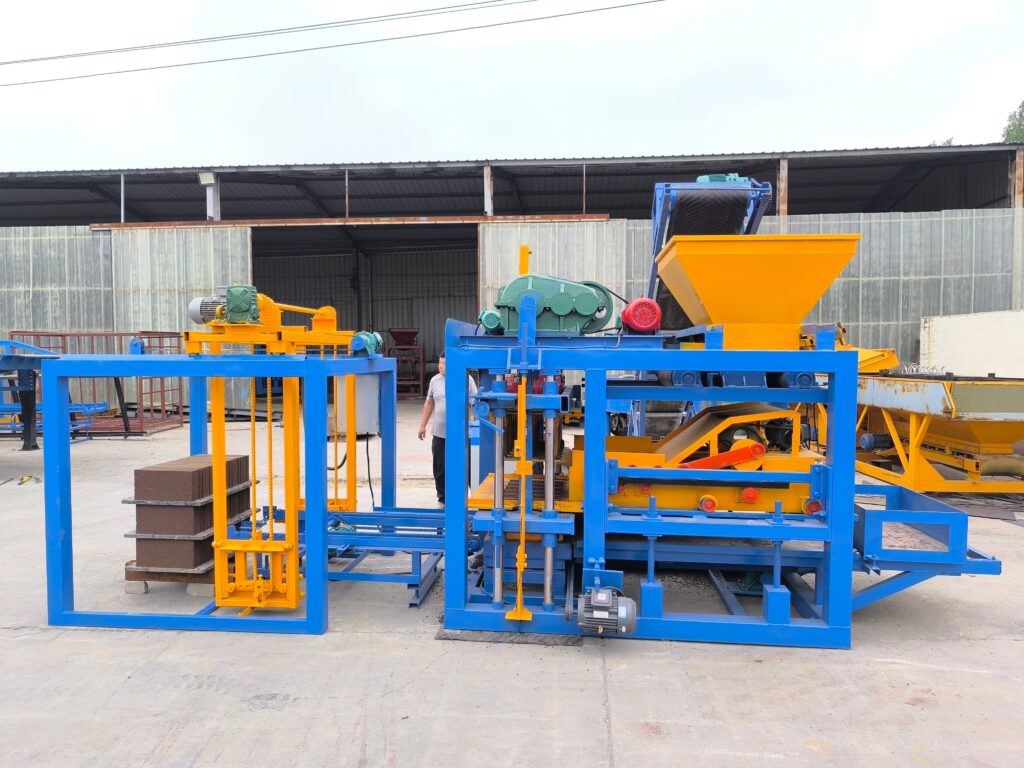
Khoa Học và Cơ Chế Sản Xuất Gạch Tro Bay
1.1 Thành Phần Độc Đáo của Gạch và Khối Tro Bay
Khác với gạch đất sét truyền thống, vốn dựa vào đặc tính kết dính của đất sét, gạch tro bay là sản phẩm của thành phần hóa học chính xác và quá trình nén cơ học. Nguyên liệu thô chính, tro bay, là một chất thải dạng bột mịn giàu silic, nhôm và carbon chưa cháy. Để biến nó thành một đơn vị xây dựng bền vững, nó được trộn với các thành phần khác theo một công thức được định lượng cẩn thận.
- Nguyên liệu thô cốt lõi:Thiết kế hỗn hợp tiêu chuẩn bao gồm tro bay (khoảng 50-60%), chất kết dính như vôi hoặc xi măng (8-12%), chất hoạt hóa như thạch cao (3-5%), và bụi đá nghiền hoặc cát làm chất độn (20-30%). Một lượng nước chính xác được thêm vào để bắt đầu phản ứng hóa học và tạo tính công tác cho việc đầm nén.
- Quá Trình Chữa Bệnh:Độ bền của gạch tro bay bắt nguồn từ một phản ứng hóa học được gọi là "phản ứng pozzolan." Khi tro bay, vôi và nước được trộn lẫn, chúng tạo thành các gel canxi silicat ngậm nước (C-S-H), chính là các chất kết dính tương tự như trong xi măng. Phản ứng này phát triển độ bền theo thời gian, đặc biệt trong môi trường ấm và ẩm. Do đó, gạch được bảo dưỡng bằng hơi nước hoặc nước trong một khoảng thời gian nhất định, tạo ra sản phẩm thường vượt trội về cường độ chịu nén so với gạch đất sét truyền thống.
1.2 Dây chuyền sản xuất tự động: Sự kết hợp hài hòa của các hệ thống
Một nhà máy sản xuất gạch tro bay tự động là một hệ thống tích hợp liền mạch, nơi các thành phần cơ khí, điện tử và thủy lực hoạt động đồng bộ.
- Định lượng và Trộn Nguyên liệu Thô:Quá trình bắt đầu bằng việc tự động phối liệu nguyên liệu thô từ các phễu chứa trên cao. Các cảm biến cân đảm bảo tỷ lệ chính xác của từng thành phần được đưa lên băng tải, sau đó chuyển vào máy trộn thùng quay hoặc máy trộn cánh. Tại đây, các nguyên liệu được đồng nhất hóa với một lượng nước được kiểm soát để tạo thành hỗn hợp bán khô đồng nhất. Tính đồng nhất của hỗn hợp này là yếu tố then chốt cho chất lượng sản phẩm cuối cùng.
- Nén và Đúc Áp Lực Cao:Hỗn hợp đã chuẩn bị sau đó được chuyển đến hộp cấp liệu của máy ép gạch. Một bộ cấp liệu tự động phân phối một lượng chính xác hỗn hợp vào các lòng khuôn. Trái tim của máy là hệ thống nén áp suất cao. Sử dụng lực thủy lực cực lớn (thường dao động từ 80 đến 300 tấn, tùy thuộc vào model máy), hỗn hợp được nén chặt thành gạch đặc hoặc khối rỗng đặc chắc. Áp lực được duy trì trong một khoảnh khắc ngắn để đảm bảo hình dạng được định hình, sau đó những viên gạch "mộc" mới tạo hình được đẩy ra băng chuyền.
- Xử lý và Bảo dưỡng Tự động:Các cánh tay robot hoặc máy xếp gạch nhẹ nhàng nâng những viên gạch xanh và đặt chúng một cách có hệ thống lên giá hoặc pallet. Sau đó, những giá này được chuyển đến buồng bảo dưỡng hoặc bãi phơi. Trong các thiết lập tiên tiến, hệ thống bảo dưỡng tự động kiểm soát nhiệt độ và độ ẩm để đẩy nhanh phản ứng pozzolan, cho phép gạch đạt được cường độ mục tiêu trong vòng vài ngày thay vì vài tuần.
Lợi Thế Thị Trường Chiến Lược cho Nhà Phân Phối và Khách Hàng của Họ
2.1 Lợi ích Kinh tế và Vận hành Hấp dẫn
The adoption of automatic fly ash brick machinery delivers a powerful return on investment, making it an easy proposition for your clients.
- Exceptional Production Speed and Output: A standard automatic plant can produce between 7,000 to 12,000 bricks per hour, or a proportional number of larger blocks. This massive output enables manufacturers to fulfill large-scale contracts and achieve economies of scale that are impossible with manual or semi-automatic methods.
- Significant Reduction in Production Costs: The primary raw material, fly ash, is often procured at a very low cost or sometimes even for free from power plants, which are eager to dispose of this waste product. This drastically reduces the raw material expenditure. Furthermore, the high level of automation minimizes labor costs, requiring only a small team for supervision and maintenance.
- Minimal Wastage and Superior Product Consistency: The precision of automated batching, mixing, and pressing ensures that every brick or block is dimensionally identical and possesses uniform strength. This consistency reduces mortar consumption during construction by up to 50% and virtually eliminates on-site breakage and waste.
2.2 Powerful Environmental and Marketing Proposition
Beyond pure economics, this technology offers a powerful unique selling proposition (USP) in an increasingly eco-conscious market.
- Green Manufacturing Credentials: By utilizing fly ash, this process prevents the accumulation of this industrial waste in landfills, which can leach heavy metals into groundwater and cause air pollution. It also conserves topsoil and eliminates the need for fossil fuel-intensive firing in kilns, reducing the carbon footprint of brick production by over 80%.
- Compliance with Green Building Standards: Fly ash bricks and blocks contribute significantly to points under international green building rating systems like LEED (Leadership in Energy and Environmental Design) and BREEAM. This makes them the material of choice for developers working on environmentally certified projects, opening up a premium market segment.
- Enhanced Product Portfolio for Distributors: By offering this technology, you enable your clients to produce a diverse range of products, including solid bricks, hollow blocks, paving blocks, and interlocking landscape products, all from the same machine with a simple mold change. This versatility allows them to serve multiple construction segments simultaneously.
Critical Technical and Commercial Evaluation Parameters
3.1 Analyzing Machine Specifications for Market Fit
Selecting the right machine model is paramount to ensuring client satisfaction and long-term success.
- Cycle Time and Output Capacity: The key metric is the number of bricks or blocks produced per cycle and the cycle time in seconds. A machine with a 12-second cycle time producing 10 bricks per cycle has an output of 3,000 bricks per hour. Match the machine’s capacity to the projected demand in your target market.
- Pressure Force and Product Strength: The hydraulic pressure (measured in tons) directly determines the compactness and final compressive strength of the brick. For standard building bricks, a minimum of 100-120 tons is common, while for high-strength paving blocks or larger hollow blocks, 200 tons or more may be required.
- Level of Automation and Integration: Options range from basic automatic presses to fully integrated plants with automatic raw material handling, color dosing systems for paving blocks, robotic stacking, and automated curing systems. The choice should be guided by the client’s budget, available labor, and production ambitions.
- Power Consumption and Energy Efficiency: Machines equipped with Variable Frequency Drives (VFDs) and servo-hydraulic systems consume significantly less power, reducing the client’s operational expenditure. This is a critical selling point in regions with high electricity costs.
3.2 Assessing Long-Term Viability and Support
The initial capital outlay is just one part of the total cost of ownership. A thorough evaluation of support structures is essential.
- Build Quality and Component Durability: The machine’s frame should be constructed from high-tensile steel to withstand constant vibration. The quality of the hydraulic cylinders, pumps, and the PLC (Programmable Logic Controller) are indicators of the machine’s reliability and lifespan.
- After-Sales Service and Parts Availability: The supplier must have a proven track record of providing prompt technical support, whether remotely or on-site. A readily available inventory of critical spare parts, such as molds, hydraulic seals, and sensors, is non-negotiable to minimize client downtime.
- Comprehensive Training and Documentation: The supplier should provide extensive training for the client’s operators, electricians, and maintenance staff. Clear, well-illustrated manuals and easy access to the machine’s electrical and hydraulic diagrams are vital for troubleshooting and daily maintenance.
Conclusion: Building a Profitable and Sustainable Future
The automatic fly ash brick and block making machine is more than just an industrial asset; it is a catalyst for sustainable industrial growth. It presents a proven, viable, and responsible alternative to traditional brick manufacturing, offering unparalleled economic efficiency and a reduced environmental impact. For the discerning distributor and procurement specialist, this technology represents a frontier of immense opportunity.
Success in this domain requires a strategic approach that combines deep technical knowledge with an understanding of the evolving green construction market. By partnering with reputable manufacturers and offering comprehensive solutions that include robust machinery, reliable support, and expert guidance, you can empower your clients to become leaders in the new era of construction. The foundation for a greener, more profitable built environment is ready to be laid, one fly ash brick at a time.
Các Câu Hỏi Thường Gặp (FAQ)
Q1: What is the primary difference between fly ash bricks and traditional clay bricks?
A: The core difference lies in the raw materials and the method of gaining strength. Clay bricks are made from soil and gain strength through firing in a kiln at high temperatures, which consumes significant energy and emits CO2. Fly ash bricks are made from an industrial by-product (fly ash), lime, and gypsum, and gain strength through a chemical reaction during curing, which requires less energy and has a much lower carbon footprint. Fly ash bricks are also generally more consistent, stronger, and have better resistance to water penetration.
Q2: Are the bricks produced strong enough for multi-story construction?
A: Absolutely. When produced with the correct mix design and adequate compaction pressure, fly ash bricks can achieve compressive strengths ranging from 75 kg/cm² to over 200 kg/cm². This comfortably exceeds the strength requirements for load-bearing walls in multi-story buildings as per most international building codes.
Q3: How critical is the quality of the fly ash, and what parameters should be checked?
A: Fly ash quality is paramount. It should be procured from reliable sources and tested for key parameters:
- Loss on Ignition (LOI): Indicates the amount of unburned carbon. A high LOI can adversely affect strength and color consistency.
- Fineness: Finer particles lead to a better pozzolanic reaction and a denser brick.
It is highly recommended to conduct a raw material analysis and trial production run with the machine supplier to optimize the mix design.
Q4: What is the typical setup and commissioning time for a new plant?
A: From the point of order, manufacturing and sea freight can take 60-90 days. On-site, the foundation work must be completed beforehand. The actual installation, assembly, and commissioning of the machine by a team of engineers typically takes 3 to 4 weeks, depending on the plant’s complexity and the level of local support available.
Q5: Can these machines produce colored or textured products for aesthetic applications?
A: Yes, this is a significant advantage. By integrating a color dosing system, pigments can be automatically added during the mixing process. This allows for the production of a wide range of colored paving blocks, facing bricks, and landscaping products. Different mold designs can also create various textures and surface patterns, greatly enhancing the product’s market appeal.
Q6: What are the key maintenance routines to ensure long machine life?
A: A disciplined preventive maintenance schedule is crucial. Key routines include:
- Hàng ngày: Cleaning the machine, checking hydraulic oil levels, and inspecting for loose bolts.
- Hàng tuần: Greasing all bearings and guide rods, checking for oil leaks, and cleaning sensors.
- Monthly: Inspecting hydraulic hoses for wear, checking electrical connections, and calibrating the feeding system.
- Hàng năm Replacing hydraulic oil and filters, and conducting a thorough inspection of all major components.