
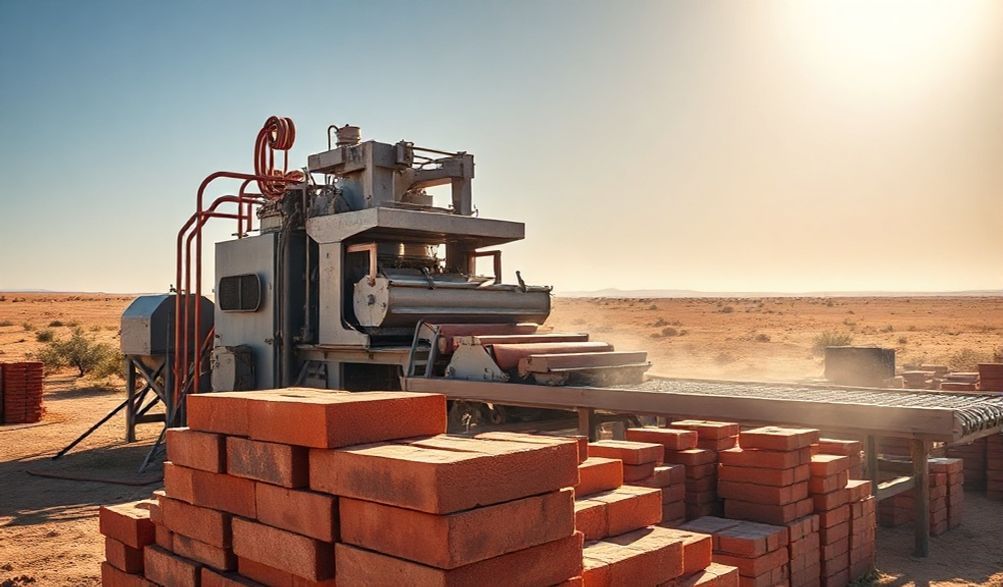
Hướng Dẫn Toàn Diện Về Máy Làm Gạch tại Namibia: Chi Phí, Loại Máy & Nhà Cung Cấp (2024)
Giới thiệu
Namibia đang xây dựng tương lai của mình. Với tình trạng thiếu hụt nhà ở trên toàn quốc ước tính lên tới hàng trăm nghìn đơn vị và các dự án cơ sở hạ tầng trọng điểm của chính phủ sắp triển khai, nhu cầu về vật liệu xây dựng chất lượng, giá cả phải chăng chưa bao giờ cao hơn thế. Làn sóng này mở ra một cơ hội mạnh mẽ: khả năng sản xuất gạch ngay tại địa phương, giảm chi phí, tạo việc làm và thúc đẩy phát triển từ gốc rễ.
Hướng dẫn toàn diện này được thiết kế để trở thành nguồn tài nguyên xác định của bạn vềmáy làm gạch ở NamibiaĐược tổng hợp từ dữ liệu ngành, thông tin nhà cung cấp và hiểu biết sâu sắc về bối cảnh vận hành đặc thù của Namibia—từ khí hậu đến nguồn vật liệu sẵn có—bài viết này hướng tới cung cấp thông tin khách quan và có thể áp dụng thực tế. Mục tiêu của chúng tôi là trang bị cho các doanh nhân, công ty xây dựng và nhà hoạch định đô thị Namibia khả năng đưa ra quyết định đầu tư được am hiểu đầy đủ. Lưu ý rằng mọi chi phí và mô hình được thảo luận chỉ mang tính chất tham khảo và có thể thay đổi theo biến động thị trường.
Đây là những gì bạn sẽ học:
* Những lý do thuyết phục để đầu tư vào sản xuất gạch tại Namibia.
* Phân tích chi tiết về các loại máy móc hiện có.
* Key operational and financial considerations before you buy.
* Transparent 2024 price ranges in Namibian Dollars (NAD).
* How to find and evaluate reliable local suppliers.
* Practical steps for operating a successful brick-making business.
Why Invest in a Brick Making Machine in Namibia?
Investing in a brick making machine is more than just purchasing equipment; it’s about tapping into a growing market and contributing to national development. Here’s why the timing is right.
Meeting Local Demand
Namibia’s construction sector is a key driver of economic growth. Major projects like the Windhoek-to-Okahandja dual carriageway, large-scale housing initiatives under the Mass Housing Project, and private commercial developments are ongoing. Simultaneously, the need for affordable housing across regions like the Khomas, Erongo, and Ohangwena remains acute. Local brick production directly addresses this demand, reducing reliance on imported materials and shortening supply chains for builders.
Economic Advantages
The financial case is strong:
* Tiết kiệm Chi phí: Transporting bricks from South Africa or beyond adds significant cost. Local production eliminates hefty logistics fees and import duties, making bricks more affordable for end-users.
* Job Creation: A brick-making enterprise, even a small one, creates direct jobs for machine operators, laborers, and sales staff, plus indirect jobs in raw material supply and transport.
* Local Resource Utilisation: Namibia has abundant deposits of sand and suitable soil. Using these local materials keeps money within the local economy and reduces the environmental footprint associated with long-distance transport.
Business Opportunity
This venture is highly scalable, making it an ideal SME opportunity. You can start small with a manual machine serving your local community, and gradually scale up to a semi- or fully-automatic plant supplying entire towns or construction companies. It’s a tangible business that produces an essential product with a steady market.
Types of Brick Making Machines Available in Namibia
Choosing the right machine is critical. Your choice will depend on your budget, target output, and available resources. Here are the three main categories available in the Namibian market.
Máy Làm Gạch Thủ Công
These are human-powered machines, often using a lever mechanism to compress soil-cement or clay mix into a mold.
- Mô tả: Ideal for micro-enterprises, community projects, or individual builders. They produce solid or interlocking bricks one at a time.
- Ưu điểm:
- Đầu tư ban đầu rất thấp.
- No electricity required—perfect for remote areas.
- Highly portable and simple to operate.
- Nhược điểm:
- Labor-intensive and slow (typically 500-1,000 bricks per day).
- Output quality can vary with operator consistency.
- Not suitable for large commercial orders.
Máy Làm Gạch Bán Tự Động
These machines use mechanical or hydraulic systems, often powered by electricity or a diesel engine, to automate the pressing and molding process. Loading of raw material and removal of finished bricks is usually manual.
- Mô tả: The most popular choice for small to medium-sized businesses (SMEs) in Namibia. They offer a great balance between output and cost.
- Ưu điểm:
- Significantly higher output than manual machines (2,000 to 10,000 bricks per day).
- More consistent brick quality and density.
- Reduces physical labor compared to manual machines.
- Nhược điểm:
- Requires a higher capital investment.
- Needs a power source (3-phase electricity or a generator).
- Requires basic technical knowledge for operation and maintenance.
Máy Làm Gạch Tự Động Hoàn Toàn
These are complete production lines with automated material feeding, mixing, pressing, curing, and stacking. They are controlled by programmable logic controllers (PLCs).
- Mô tả: Designed for large-scale industrial production, supplying major construction firms or serving regional markets.
- Ưu điểm:
- Very high, consistent output (15,000+ bricks per day).
- Exceptional product uniformity and quality.
- Minimal manual labor required.
- Nhược điểm:
- Very high capital cost (multi-million NAD investment).
- Requires reliable, high-capacity power and significant space.
- Needs skilled technicians for operation and maintenance.
Máy làm gạch di động so với máy làm gạch cố định
A key consideration for Namibia’s vast geography is mobility.
* Máy Móc Di Động: Mounted on a trailer, these are excellent for producing bricks directly on a construction site, eliminating transport costs for the final product. Ideal for building projects in remote locations.
* Thực vật cố định: Set up at a fixed location (a yard or factory), these are for centralized production and supply to a wider area. They allow for more extensive setup, including curing sheds and storage.
Key Considerations Before Buying Your Machine
Rushing into a purchase is the biggest mistake you can make. Operational data from successful local businesses highlights the importance of thorough planning.
Assessing Your Needs
Start with a clear business plan:
* Daily Output: How many bricks do you need to produce to meet your sales goals? Be realistic about your market.
* Brick Type: Will you make standard solid bricks, hollow blocks for insulation, or interlocking pavers for landscaping? Different machines specialize in different products.
* Ngân sách: Factor in the total investment: machine cost, land, raw material processing equipment, and working capital for at least 3-6 months of operations.
Raw Material Analysis
This is arguably the most critical step. Not all soil is suitable for brick making. You must test the composition of the sand or soil from your intended source (e.g., your plot in Windhoek, gravel from a nearby riverbed). The clay, silt, sand, and gravel ratios must be compatible with the brick-making process. Many reputable suppliers in Namibia can help with this testing or guide you to local labs. Using unsuitable material will lead to poor-quality bricks that crack and crumble.
Power & Utility Requirements
- Hướng dẫn sử dụng: No power needed.
- Bán Tự Động: Typically requires a 3-phase electrical connection or a robust diesel generator.
- Hoàn Toàn Tự Động: Requires a heavy-duty, stable 3-phase power supply.
- Nước: A consistent water source is needed for mixing. Consider water storage tanks, especially in arid regions.
- Không gian You need space for the machine, raw material storage, a mixing area, a curing area (where bricks gain strength), and finished product storage. Curing requires covered space protected from direct sun and wind.
After-Sales Support is Crucial
Your relationship with the supplier doesn’t end at purchase. The importance of local after-sales support cannot be overstated. Ensure your supplier offers:
* Installation and commissioning.
* Comprehensive operator training.
* A readily available inventory of spare parts (like molds, wear plates, and hydraulic seals).
* Access to maintenance technicians. A machine breakdown without local support can halt your business for weeks if parts must be imported.
Brick Making Machine Price Range in Namibia (2024 Guide)
Important Disclaimer: The following price ranges are estimates based on current market research. Final costs vary significantly based on machine specifications, brand, supplier margins, and foreign exchange rates. Always get detailed, itemized quotations.
Manual Machine Costs
- Khoảng giá: NAD 15,000 to NAD 80,000.
- What you get: A simple, robust machine, often with one or two interchangeable molds for different brick types.
Semi-Automatic Machine Costs
- Khoảng giá: NAD 100,000 to NAD 500,000+.
- What you get: A significant step up in capability. Prices vary with features like hydraulic vs. mechanical systems, output capacity, and level of automation. A standard hydraulic block-making machine often starts around NAD 250,000.
Fully Automatic Plant Costs
- Khoảng giá: NAD 1 million and above.
- What you get: This is a major capital project. The price includes the main machine, conveyors, feeders, mixers, and sometimes a pallet return system. Quotes are always project-specific.
Beyond the Machine: Additional Costs
Your total startup investment must include:
* Raw Material Processing: A pan mixer, a crusher for stones, and sieves.
* Ancillary Equipment: Pallets (for carrying wet bricks), wheelbarrows, shovels.
* Infrastructure: Land preparation, shed for curing and storage, water tanks, power connection.
* Chi phí vận hành: Labor wages, electricity/fuel, raw material purchase, maintenance fund.
Finding Reliable Suppliers of Brick Machines in Namibia
Choosing the right supplier is as important as choosing the right machine. It’s a long-term partnership.
Local Distributors and Agents
This is generally the recommended route for most buyers in Namibia.
* Lợi thế: They provide hands-on support, have a physical presence you can visit, understand local conditions, and can facilitate quicker service and parts delivery. They often represent well-known international brands.
International Manufacturers (Direct Import)
Buying directly from a manufacturer in China, India, or Turkey can seem attractive due to potentially lower upfront costs.
* Ưu điểm: Possibly lower FOB (Free on Board) price.
* Significant Cons:
* High shipping and logistics costs.
* Complex customs clearance and potential import duties (VAT, etc.).
* No local support—any breakdown requires international communication and shipping of parts, leading to lengthy downtime.
* Risk of receiving a machine unsuited to Namibian conditions or materials.
Evaluating a Supplier
Use this checklist:
1. Hồ sơ theo dõi: How many years have they operated in Namibia? Can they provide references from past clients?
2. Physical Presence: Do they have a showroom, workshop, or warehouse where you can see the machines?
3. Support Offerings: What is included in the warranty? Do they offer training? What is their promised response time for spare parts?
4. Transparency: Are they willing to explain machine specifications in detail and provide a clear breakdown of costs?
The Importance of Seeing a Demo
Never buy a machine based on a brochure or website alone. Insist on seeing a live demonstration, either at the supplier’s facility or, even better, at an existing client’s site. This allows you to:
* See the machine’s actual output and ease of operation.
* Hear firsthand from a current operator about performance and support.
* Assess the quality and consistency of the bricks produced.
Operating Your Brick Making Machine for Success
Owning the machine is just the beginning. Proper operation and business management determine your profitability.
Quy Trình Sản Xuất Từng Bước
- Chuẩn bị nguyên vật liệu: Test and mix your raw materials (soil/sand, cement, water) to the correct consistency.
- Loading & Molding: The mixture is fed into the machine’s hopper and compressed into molds under high pressure.
- Đẩy ra: The freshly formed (green) bricks are ejected onto pallets.
- Chữa bệnh: This is where bricks gain strength. They must be kept moist and under cover for a minimum period (often 7-14 days) before being air-dried. Proper curing is essential for durability.
Maintenance Tips for Longevity
Namibia’s dusty environment demands diligence.
* Hàng ngày: Clean the machine thoroughly at the end of each shift. Lubricate all moving parts as per the manual.
* Hàng tuần: Check hydraulic hoses for leaks, inspect electrical connections, and tighten any loose bolts.
* As Needed: Replace worn-out molds and mixing blades. Keep a small stock of critical spare parts.
Ensuring Brick Quality & SABS Standards
Consistent quality builds your reputation. While Namibia may not have its own specific brick standards, the South African Bureau of Standards (SABS) specifications (like SABS 227) are widely recognized and used as a benchmark in the local construction industry. Aim to meet or exceed these for compressive strength, dimensions, and water absorption. Implement simple quality control checks on random samples from each batch.
Marketing Your Bricks
- Start Local: Approach local builders, hardware stores, and individual homeowners in your area.
- Showcase Quality: Have sample bricks available. Let your product’s quality speak for itself.
- Network: Connect with local construction associations and attend relevant trade shows or business expos.
Frequently Asked Questions (FAQ) About Brick Making Machines in Namibia
Q1: What is the most popular type of brick making machine in Namibia for a small business?
The semi-automatic hydraulic brick making machine is the most popular choice. It offers the best balance between affordable investment and high enough output (2,000-5,000 bricks per day) to run a viable small business without being overly complex or power-intensive.
Q2: Can I use the soil from my plot in Windhoek/Oshakati/etc. to make bricks?
Possibly, but you must test it first. Soil composition varies greatly. Soil with too much clay can cause cracking, while sandy soil may not bind properly. A simple test is to make a few sample bricks and let them cure. If they hold their shape and don’t crumble easily, it’s a good sign. For certainty, consult your machine supplier for a professional analysis.
Q3: How many bricks can a semi-automatic machine produce per day in Namibia?
Output depends on the model and crew efficiency. Commonly reported figures by local operators range from 2,000 to 6,000 standard bricks per 8-hour shift. Factors like crew skill, material preparation speed, and machine cycle time all affect the total.
Q4: Is there training provided when I buy a machine?
Any reputable supplier in Namibia will provide basic operator training as part of the purchase package. This is non-negotiable. Ensure the training covers operation, safety, routine maintenance, and basic troubleshooting.
Q5: What is the typical payback period for a brick making machine investment in Namibia?
This varies widely based on machine cost, your production efficiency, and your sales success. For a small semi-automatic setup, with good market access and management, many businesses report a payback period of 12 to 24 months. A detailed business plan with realistic projections is essential to estimate your own timeline.
Conclusion
Investing in a brick making machine in Namibia represents a tangible opportunity to build a profitable business while contributing to the nation’s infrastructure development. The key to success lies in careful planning: understanding your market, choosing the right machine type for your scale, and most importantly, partnering with a reliable supplier who offers robust after-sales support.
Our final, authoritative advice is to move beyond online research. Start with a solid business plan, then actively visit multiple suppliers, request live demonstrations, and speak to their existing customers. See the machines in action and get a feel for the support you will receive.
Your next step is clear: Contact several reputable suppliers in Namibia to discuss your specific project needs and request detailed quotations and a live demonstration. This hands-on approach is the surest way to make a smart, sustainable investment in your brick-making future.
<