
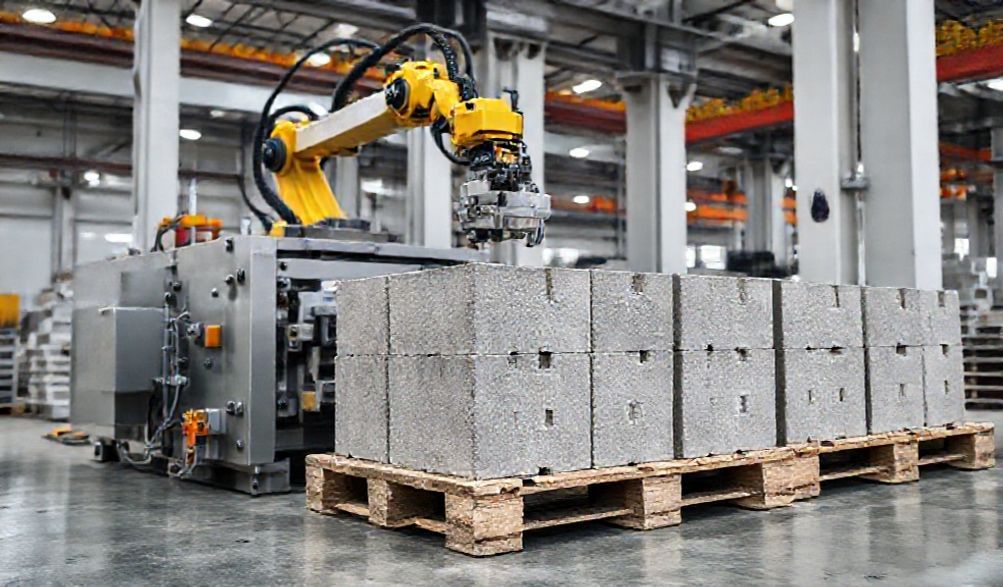
2026年中国全自动砌块成型机终极指南
Giới thiệu
Thế giới đang xây dựng. Từ các siêu dự án đô thị đến cơ sở hạ tầng thiết yếu ở nông thôn, nhu cầu toàn cầu về vật liệu xây dựng bền vững, giá cả phải chăng chưa bao giờ cao hơn thế. Trọng tâm của cơn bùng nổ xây dựng này là một thành phần tuy đơn giản nhưng vô cùng quan trọng: khối bê tông. Tuy nhiên, các phương pháp sản xuất khối truyền thống - dựa vào lao động thủ công và thiết bị bán tự động - đang không đáp ứng được áp lực từ những yêu cầu hiện đại về tốc độ, tính đồng nhất và hiệu quả chi phí.
Các nhà thầu và nhà sản xuất vật liệu xây dựng ngày nay đang đối mặt với ba thách thức chồng chéo: chi phí nhân công tăng vọt, chất lượng sản phẩm không đồng đều gây khó chịu, và tốc độ sản xuất không thể theo kịp tiến độ dự án. Những điểm tắc nghẽn này không chỉ làm trì hoãn công trình; chúng còn bào mòn lợi nhuận và lợi thế cạnh tranh.
cuộc cách mạng công nghệ được thể hiện bởiTrung Quốc máy đúc khối tự độngThiết bị này đã phát triển từ một lựa chọn thay thế tiết kiệm chi phí thành tiêu chuẩn công nghiệp toàn cầu cho tự động hóa hướng đến giá trị. Bằng cách tích hợp liền mạch hệ thống thủy lực tiên tiến, bộ điều khiển chính xác và kỹ thuật bền bỉ, những máy móc này mang đến giải pháp thuyết phục cho những vấn đề cấp bách nhất của ngành công nghiệp.
Hướng dẫn này được xây dựng dựa trên nền tảng phân tích kỹ thuật, nghiên cứu chuyên sâu về thông số kỹ thuật của nhà sản xuất và hiểu biết về hệ sinh thái công nghiệp năng động của Trung Quốc. Mục tiêu của chúng tôi là trang bị cho bạn - người mua hàng sáng suốt - những kiến thức cần thiết để tự tin thâm nhập thị trường này. Chúng tôi sẽ loại bỏ những thông tin nhiễu loạn để cung cấp những phân tích đáng tin cậy và có thể áp dụng ngay.
Hướng dẫn toàn diện này sẽ khám phá những lợi ích không thể phủ nhận, phân tích các tính năng cốt lõi, phác thảo một khuôn khổ để sàng lọc nhà cung cấp, và chi tiết những cân nhắc quan trọng khi đầu tư và vận hành một hệ thống hàng đầu.máy đúc khối tự động来自中国。
Tại sao nên chọn máy đúc khối tự động từ Trung Quốc?
Quyết định nhập khẩu máy móc hạng nặng từ nước ngoài là một bước đi quan trọng. Trong lĩnh vực thiết bị sản xuất gạch block tự động, Trung Quốc đã chuyển mình từ một nguồn cung giải pháp giá rẻ sang trở thành trung tâm hàng đầu thế giới về các giải pháp sáng tạo, đáng tin cậy và cạnh tranh về chi phí. Dưới đây là lý do.
Hiệu Quả Chi Phí và Giá Trị Vượt Trội
Lợi thế trước mắt nhất là về kinh tế. Các nhà sản xuất Trung Quốc được hưởng lợi từ quy mô sản xuất khổng lồ, chuỗi cung ứng nguyên liệu và linh kiện phát triển cao, cùng chi phí sản xuất cạnh tranh.
- Đầu tư vốn thấp hơnGiá mua ban đầu của một máy tự động tương đương từ Trung Quốc thường thấp hơn 30-50% so với các đối tác châu Âu hoặc Bắc Mỹ.
- Favorable Total Cost of Ownership (TCO): When you factor in reliable performance, lower maintenance costs due to simpler component sourcing, and strong energy efficiency in newer models, the long-term value proposition becomes even clearer.
- Customization for Budget: The vast market offers options at every price point without a complete sacrifice of core functionality, allowing businesses to scale their investment appropriately.
Technological Sophistication and Innovation
Gone are the days of copied, inferior technology. Leading Chinese manufacturers are now at the forefront of innovation.
- Rapid Adoption and Improvement: They have not only absorbed best practices from German hydraulic engineering, Japanese precision, and Italian design but have also iterated and improved upon them.
- Tập trung vào Hệ thống Cốt lõi Significant R&D investments are made in high-efficiency vibration systems, intelligent PLC (Programmable Logic Controller) integration, and energy-saving hydraulic circuits.
- Smart Manufacturing Trends: The latest models feature IoT-ready sensors for remote monitoring, predictive maintenance alerts, and data-driven optimization of production parameters.
Scalability for Diverse Business Needs
Whether you’re a small entrepreneur starting a block yard or a large corporation supplying a national infrastructure project, China’s market has a machine for you.
- Model Spectrum: The range extends from semi-automatic machines (requiring some manual intervention) to fully automatic, computer-controlled production lines with robotic pallet handling and stacking.
- Modular Design: Many systems are designed to be modular, allowing you to start with a core block making machine and later add mixers, conveyors, and curing systems as your business grows.
- Output Flexibility: Production capacities can be tailored, with outputs ranging from a few thousand to over 20,000 standard blocks per 8-hour shift.
Robust Global Supply Chain and Support
China’s status as the “world’s factory” is a major logistical advantage.
- Estimated Export Expertise: Manufacturers and freight forwarders have extensive experience in packaging, documenting, and shipping heavy machinery globally via sea freight.
- Growing After-Sales Culture: Recognizing the need to compete globally, reputable factories now offer comprehensive English manuals, video support, readily available spare parts inventories, and even optional on-site technical service packages.
- Digital Communication: Platforms like video calls and shared digital workspaces make pre-shipment factory audits, production progress checks, and technical discussions more accessible than ever.
Core Features of a High-Quality Automatic Block Machine
Understanding the key components of a machine is crucial to evaluating its quality and longevity. Here are the non-negotiable features of a superior máy đúc khối tự động.
Advanced Hydraulic System & Vibration Technology
This is the heart and soul of the machine, determining block strength and production efficiency.
- Hệ thống thủy lực: Look for a stable, high-pressure system with renowned brand pumps and valves (e.g., Rexroth, Yuken, Huade). It ensures consistent mould pressure, smooth ejection of blocks, and reliable operation of the entire machine frame.
- Công nghệ Rung: A high-frequency, vertically-oriented vibration system, often with multiple motors, is essential. It removes air bubbles and compacts the concrete mix to its maximum density within the mould, directly resulting in higher compressive strength and better surface finish.
Programmable Logic Controller (PLC) & Human-Machine Interface (HMI)
This is the brain of the operation, transforming a mechanical press into an intelligent production unit.
- PLC: A branded PLC (e.g., Siemens, Mitsubishi, Delta) provides reliable, precise control over the entire production cycle: material feeding, vibration time, compaction pressure, and ejection.
- HMI Touchscreen: The user-friendly interface allows operators to select pre-set “recipes” for different block types (hollow, solid, paver), monitor production counts, diagnose faults, and adjust parameters with ease. This reduces human error and training time.
High-Durability Moulds and Components
The quality of wear parts dictates your maintenance costs and machine uptime.
- Khuôn mẫu: The block moulds should be constructed from high-chromium alloy steel, heat-treated for extreme hardness and abrasion resistance. Precision machining is vital for dimensional accuracy and smooth block release.
- Khung cấu trúc: The main frame must be fabricated from heavy-duty steel plate with reinforced welding to withstand years of constant vibration and stress without deformation.
- Cylinders & Seals: Hydraulic cylinders should be of high-grade steel with durable seals to prevent leaks and pressure loss.
Tính Linh Hoạt trong Sản Xuất
A single machine should be a revenue-generating asset for multiple product lines.
- Dải sản phẩm: A quality machine, through quick-change mould systems, should produce:
- Hollow Blocks (of various sizes and void percentages)
- Khối rắn
- Paving Stones & Interlocking Bricks
- Curbstones & Grass Pavers
- Special Shapes (like slope protection blocks)
- This versatility allows you to respond to market demands, making your máy sản xuất khối bê tônghoặcpaver making machine a more flexible investment.
Leading Manufacturers and How to Vet Them
Navigating the landscape of Chinese manufacturers requires a strategic approach. While we won’t list specific brands, this framework will help you identify and evaluate serious partners.
Reputable Chinese Manufacturers (A Generic Overview)
The market is broadly segmented into three tiers:
- Large, Established Heavy Machinery Groups: Often with decades of history, these companies may produce a wide range of construction equipment and have strong R&D capabilities.
- Specialized Block Machine Factories: These focused players have deep expertise specifically in block making technology and often offer the best balance of innovation and value.
- Emerging Technologically-Agile Brands: Smaller but nimble, they often compete on cutting-edge features, customization, and responsive service.
E-E-A-T Focus: Your first step is verification. Use business platforms to check:
* Business Licenses: Ensure they are a registered industrial manufacturer, not just a trader.
* Số năm hoạt động: Prefer companies with a track record of 8-10+ years.
* Export History: Evidence of successful exports to regions similar to yours (e.g., Africa, Southeast Asia, the Middle East, South America) is a strong positive indicator.
Evaluating Manufacturer Credibility: A Checklist
Go beyond the sales brochure with this due diligence list:
- Factory Audit Report: Insist on a recent, third-party inspection report from agencies like SGS, BV, or TÜV. This is the single most effective way to verify production capability, quality control processes, and workshop conditions.
- Client References & Case Studies: Ask for 2-3 contactable references from past international clients. Better yet, request detailed case studies or videos of machines operating in projects similar to yours.
- Authentic Certifications: Understand what certifications mean. ISO 9001 indicates a quality management system. Dấu CE (for Europe) shows compliance with health, safety, and environmental standards. Be wary of manufacturers who claim certifications they cannot provide documentation for.
- Quality of Communication: Assess their responsiveness, technical knowledge, and willingness to provide detailed drawings, specifications, and videos. Poor communication before the sale is a red flag for after-sales support.
The Pitfalls to Avoid
- Trading Companies vs. Factories: Many intermediaries pose as manufacturers. Always confirm the factory address and visit via video call. Trading companies can add cost and complicate technical support.
- The Lowest Price Trap: An abnormally low quote often signals inferior components (non-branded hydraulics, cheap steel), lack of testing, and non-existent after-sales service. Your total cost of ownership will be higher.
- Vague Contracts & Payment Terms: Avoid contracts with unclear warranty terms, undefined delivery schedules, or payment demands that seem risky (e.g., 100% upfront). Legitimate manufacturers offer balanced, standard international trade terms.
Critical Buying Considerations Before You Invest
A successful purchase is defined long before the machine arrives at your port. Meticulous planning is key.
Đánh Giá Yêu Cầu Sản Xuất Của Bạn
Begin with a clear internal analysis:
- Công suất đầu ra: Calculate your current and projected future demand in blocks per day or month. Choose a machine that can meet peak demand with some buffer.
- Các Loại Khối & Kích Thước: List all the products you plan to make. Provide these specifications to manufacturers to ensure their machine and moulds are compatible.
- Mức độ Tự động hóa: Decide between semi-automatic (lower cost, higher labor) and fully automatic (higher investment, lower labor, higher output). Consider factors like local labor availability and cost.
Understanding Total Costs: Beyond the Sticker Price
Budget for the entire project, not just the machine invoice.
- Machine Cost: The base price from the factory.
- Moulds & Spare Parts Kit: Additional moulds and a recommended set of critical spares (seals, filters, etc.).
- Vận chuyển & Hậu cần: Sea freight (FOB to CIF costs), insurance, and port handling fees.
- Import Duties & Taxes: Consult a local customs broker in your country for accurate rates.
- Lắp đặt & Vận hành: Costs for foundation work, electrical connection, and potentially flying in a technician.
- Training & Initial Raw Materials: Factor in the cost of training your operators and sourcing initial batches of cement and aggregates for testing.
After-Sales Service & Technical Support
This aspect can make or break your investment. Treat it with equal importance to the machine specs.
- Bảo hành: Standard is 12 months for parts (excluding wear parts like moulds). Clarify what is covered and the process for claiming.
- Chính sách Linh kiện Thay thế: Confirm the availability of parts, lead times for ordering, and their warranty. Do they stock parts for older models?
- Support Channels: Do they offer email, WhatsApp, or WeChat support? Is remote desktop assistance available for PLC issues?
- On-Site Service: What are the costs and lead times for dispatching an engineer to your country? This is a critical question.
The Procurement Process: From Inquiry to Installation
A typical, well-managed process follows these steps:
- Initial Inquiry (RFQ): Send detailed requirements to 3-5 shortlisted manufacturers.
- Quotation & Negotiation: Review technical proposals, clarify details, and negotiate terms.
- Contract Signing & Deposit: Sign a detailed proforma invoice (PI) and pay the deposit (typically 30%).
- Production & Monitoring: Request regular photo/video updates of the production and assembly process.
- Pre-Shipment Inspection (PSI): Mandatory. Hire a third-party inspector or visit yourself to test the machine before it’s crated.
- Final Payment & Shipping: Pay the balance, receive shipping documents, and track the vessel.
- Customs Clearance & Installation: Clear the machine through customs, transport it to your site, and install it (with or without the supplier’s technician).
Maximizing Your Investment: Operation and Maintenance
Your machine is a productivity engine. Proper operation and care will ensure it runs for years.
Best Practices for Efficient Operation
- Raw Material Control: Consistency is key. Use well-graded aggregates, clean sand, and fresh cement. The moisture content of your mix must be strictly controlled.
- Optimal Mix Design: Work with your local concrete experts to develop a mix that works with your aggregates and the machine’s compaction method. The right mix prevents block damage and mould sticking.
- Đào tạo Toàn diện cho Nhân viên Vận hành: Ensure operators understand not just how to press buttons, but the principles of the machine, basic troubleshooting, and daily checklists.
Essential Preventive Maintenance Schedule
A small amount of regular maintenance prevents major downtime.
- Hàng ngày: Check hydraulic oil levels and for leaks. Clean the mould, pallets, and conveyor. Lubricate all guide rails and moving parts as per the manual.
- Hàng tuần: Inspect vibration motor mounts and bolts for tightness. Check electrical connections. Clean hydraulic and air filters.
- Monthly: Test hydraulic system pressure. Inspect moulds for wear or damage. Thoroughly clean the entire system and check all safety devices.
Troubleshooting Common Issues
- Low Block Strength: Usually caused by incorrect vibration time/amplitude, low compaction pressure, or a poor concrete mix design (too much water, wrong cement ratio).
- Surface Cracks: Often due to improper curing (drying too quickly) or an overly dry concrete mix.
- Blocks Sticking in Mould: Can be caused by worn or damaged moulds, insufficient mould release agent, or a concrete mix that is too wet.
Các Câu Hỏi Thường Gặp (FAQ)
Q1: What is the average production capacity of a China automatic block moulding machine?
A: Capacities vary widely. A standard fully automatic model can produce between 4,000 to 10,000 standard hollow blocks (e.g., 400x200x200mm) per 8-hour shift. High-end plant lines can exceed 20,000. The output for solid blocks or pavers will be different, so always confirm based on your specific product.
Q2: How does the quality compare to European machines?
A: The gap has narrowed dramatically. While top-tier European brands still hold an edge in ultimate precision and some proprietary technologies, the best Chinese manufacturers now produce machines with comparable core performance, durability, and automation levels. The significant advantage remains in capital cost and value-for-money, making Chinese machines the preferred choice for a vast global market.
Q3: What are the payment terms typically offered?
A: The most common and secure terms for both parties are: 30% deposit via T/T (bank transfer) upon signing the contract, and 70% balance paid before shipment after the machine passes the pre-shipment inspection. Letters of Credit (L/C) are also common for larger orders.
Q4: Do manufacturers provide installation and training?
A: Most reputable manufacturers provide detailed installation manuals, electrical diagrams, and video guides. However, physical on-site installation and training is typically an optional, paid service. For first-time buyers or complex lines, investing in this service is highly recommended to ensure correct setup and operator competency.
Q5: How do I handle spare parts and repairs?
A: Upon purchase, you should buy a recommended “critical spare parts kit” from the manufacturer. For future needs, establish a clear channel for ordering parts. Confirm the part numbers in your manual, lead times, and shipping methods. Reliable factories will stock common parts and ship them via air freight for urgent needs.
Conclusion
The journey to modernizing your block production is a significant strategic decision. As we’ve explored, China’s automatic block moulding machine industry offers a powerful combination of technological sophistication, remarkable cost-effectiveness, and scalable solutions for businesses of all sizes. From the core engineering in the hydraulic and vibration systems to the intelligent PLC controls, this equipment is designed to deliver consistent, high-quality output that meets global standards.
Success, however, does not end with choosing a machine. It is fundamentally linked to the diligence of your manufacturer vetting process, a crystal-clear understanding of your own production needs, and a long-term plan for operation and maintenance. Your due diligence in verifying factory credentials, insisting on third-party inspections, and securing solid after-sales agreements is as critical as the technical specifications themselves.
Ready to transform your block production? Begin by meticulously defining your project specifications. Then, use the framework and checklist in this guide to reach out to and critically evaluate 3-5 well-vetted manufacturers. Request detailed quotations, ask the hard questions about support, and always plan for the total cost of ownership.
Looking ahead, the industry continues to evolve. We can expect even greater integration of IoT for real-time performance monitoring and predictive maintenance, a stronger focus on energy-efficient and eco-friendly designs, and continued innovation in speed and material versatility. By making an informed investment today, you position your business not just to meet current demand, but to thrive in the future of construction.
<