
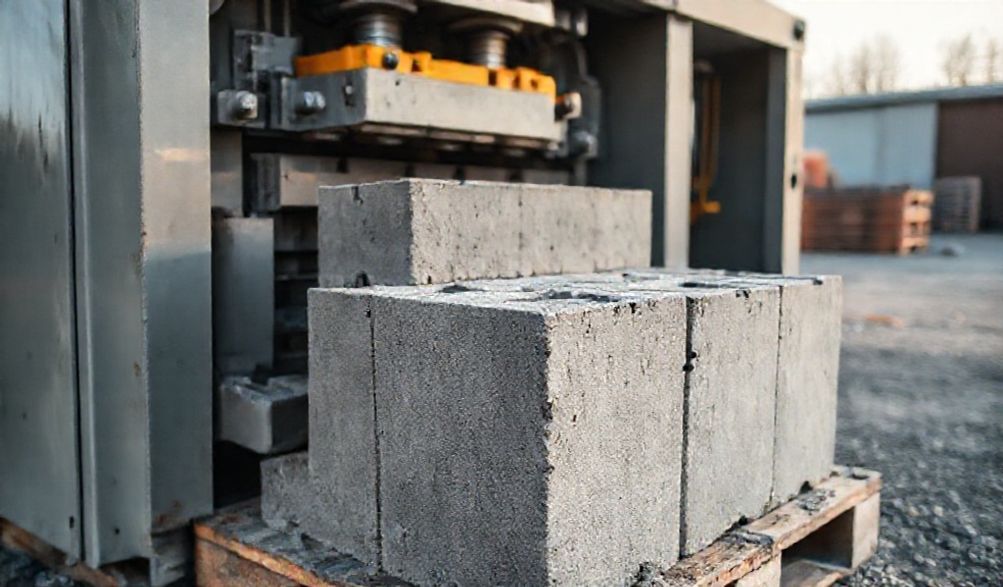
The Ultimate Guide to Choosing the Right Machine for Making Concrete Blocks
From the foundations of skyscrapers to the simplicity of a garden wall, concrete blocks are a universal building staple. Their strength, durability, and cost-effectiveness make them indispensable. However, the quality, efficiency, and ultimate profitability of any block-related project hinge on one critical decision: choosing the right machine for making concrete blocks.
This guide is built on industry expertise and practical knowledge, designed to cut through the noise. We understand you’re navigating a complex market filled with terms like block making machine, concrete block machine, and brick making machine. Your goal is to find a reliable, cost-effective solution that matches your specific needs—be it for a small-scale venture, a growing commercial operation, or a fully automated plant.
By the end of this article, you will have a clear framework to demystify the options, compare machine types meaningfully, and make an informed investment that serves your business for years to come.
Hiểu về Máy Sản Xuất Khối Bê Tông: Những Khái Niệm Cốt Lõi
Before comparing models and prices, it’s essential to grasp what these machines are and how they turn raw materials into the building blocks of our world.
Máy sản xuất gạch bê tông là gì?
At its core, a concrete block making machine is a device that compacts a mixture of cement, aggregates (like sand or crushed stone), and water into a mold to form blocks of uniform shape, size, and density. While the basic principle of compressing material into a form is ancient, modern machines have evolved into sophisticated systems that automate this process for remarkable speed and consistency. Today’s equipment is a far cry from manual methods, leveraging vibration, hydraulic pressure, and computer controls to achieve industrial-scale production.
Các Thành Phần Chính và Cách Chúng Hoạt Động
While complexity varies, most machines share a common set of core components that work in a synchronized cycle:
- Hộp chứa & Cơ cấu cấp liệu: This is where the raw materials (dry mix) are loaded into the machine.
- Máy trộn: Often a pan or planetary mixer, it combines the dry materials with water to create a homogeneous concrete mix.
- Hệ thống băng tải:Vận chuyển bê tông đã trộn đến khu vực đúc khuôn.
- Khuôn hoặc Lòng Khuôn The heart of the machine. This is the steel form that gives the block its shape (hollow, solid, paving, etc.).
- Vibrating Table & Hydraulic System: These provide the compaction force. High-frequency vibration removes air pockets, while hydraulic pressure compresses the mix into a dense, strong block.
- Bảng điều khiển: The operator’s interface, ranging from simple switches on manual machines to programmable logic controllers (PLCs) on automatic lines.
The simplified process flow is:
1. Cho ăn & Trộn thức ăn: Raw materials are batched, fed, and mixed.
2. Đúc khuôn & Nén chặt The mix is fed into the mold and subjected to intense vibration and pressure.
3. Đẩy ra: The freshly formed, “green” block is ejected onto a pallet or curing rack.
4. Chữa khô và Xếp pallet Blocks are moved to a curing chamber (often integrated in automatic plants) to gain strength before being stacked for storage or shipment.
Primary Benefits of Using a Dedicated Block Machine
Investing in a dedicated machine offers transformative advantages over makeshift or manual methods:
- Tính nhất quán và Chất lượng: Machines produce blocks with uniform dimensions, weight, and, most importantly, compressive strength. This reliability is non-negotiable for structural integrity and passing building codes.
- Hiệu Suất Sản Xuất Cao: A single semi-automatic machine can output more in an hour than a team of laborers can in a day. This scalability is key to meeting project deadlines or market demand.
- Long-Term Cost-Effectiveness: While the initial investment is higher than manual tools, the lower cost per block, reduced labor expenses, and material efficiency lead to a superior return on investment.
- Tính Đa Dạng Của Sản Phẩm: With interchangeable molds, one machine can produce a range of products—hollow blocks for walls, solid blocks for foundations, and paving stones for landscaping—maximizing your market potential.
Types of Machines for Making Concrete Blocks: Find Your Match
The market segments machines primarily by their level of automation. Your choice here will define your production capacity, labor model, and business scale.
Máy Sản Xuất Gạch Thủ Công
Mô tả: These are the simplest type, operated entirely by human labor. A lever is used to compress the concrete mix into a single mold.
- Tốt Nhất Cho: Extremely small-scale, personal projects (e.g., building a shed), DIY enthusiasts, or remote locations with no access to power.
- Ưu điểm:
- Chi phí ban đầu thấp nhất.
- Completely portable and requires no electricity.
- Simple to understand and operate.
- Nhược điểm:
- Rất tốn công sức và chậm chạp.
- Very low production rate (typically 100-500 blocks per day).
- Quality and consistency heavily depend on operator skill and effort.
Máy Làm Khối Bán Tự Động
Mô tả: This is the most popular category for small to medium businesses. The core compaction process—vibration and often hydraulic pressure—is mechanized. However, tasks like feeding raw materials, moving pallets, and stacking finished blocks are done manually.
- Tốt Nhất Cho: Starting a block production yard, small construction firms, or medium-volume commercial production.
- Ưu điểm:
- Excellent balance between affordability and output.
- Significantly improves block quality and consistency over manual methods.
- More efficient use of labor compared to fully manual systems.
- Nhược điểm:
- Still requires a consistent crew for material handling.
- Output is limited by the speed of manual ancillary processes.
- Requires a stable power source (often 3-phase electricity).
Máy Làm Khối Tự Động Hoàn Toàn
Mô tả: These are complete production lines. Computer-controlled systems automate the entire process: batching raw materials, mixing, molding, curing (in integrated chambers), and stacking. Human intervention is primarily for monitoring and maintenance.
- Tốt Nhất Cho: Large-scale commercial plants, government projects, and businesses supplying to major retailers or contractors.
- Ưu điểm:
- Maximum possible output (can exceed 10,000 blocks per shift).
- Minimal labor requirements per block produced.
- Unmatched consistency and integrated curing for optimal strength.
- Highest level of operational efficiency.
- Nhược điểm:
- Đầu tư vốn ban đầu rất cao.
- Requires significant space, stable high-capacity power, and technical knowledge for maintenance.
- Less flexibility for very small, custom batches.
Máy Đúc Khối Di Động
Mô tả: These are self-contained units, typically semi-automatic, mounted on a trailer or truck bed for easy transportation.
- Tốt Nhất Cho: Construction companies working on large, remote sites (e.g., road projects, rural housing). The key benefit is producing blocks directly where they are needed.
- Ưu điểm:
- Eliminates the high cost and breakage risk of transporting finished blocks over long distances.
- Provides just-in-time production on the job site.
- Nhược điểm:
- Generally has a lower output than a stationary plant of equivalent cost.
- Requires moving and setting up the machine at each new location.
Các Yếu Tố Quan Trọng Cần Xem Xét Trước Khi Mua Hàng
Choosing the right machine is more than picking a type. You must align the machine’s specifications with your concrete business goals.
Đánh Giá Nhu Cầu Sản Xuất Của Bạn
Start by asking yourself these foundational questions:
- What is my required daily or hourly output? Be realistic about current needs and near-term growth.
- What is the scale of my projects or target market? A local housing development has different needs than supplying a city.
- What types of blocks do I need to produce? List your required products: 4″, 6″, 8″ hollow blocks, solid blocks, interlocking pavers, grass blocks, etc.
Đào Sâu Thông Số Kỹ Thuật Máy Móc
Once you know your “what,” dig into the “how” with these technical specs:
- Pressure & Vibration System: This is critical for block strength. Hydraulic pressure (measured in tons or kN) and vibration frequency (Hz) determine the final density. Higher density means higher compressive strength.
- Thời gian chu kỳ: How long does it take to produce one set of blocks? A machine with a 15-second cycle time is vastly more productive than one with a 45-second cycle, even if they use the same mold.
- Tính Linh Hoạt của Khuôn Mẫu: Check how easily molds can be changed. Quick-change systems save hours of downtime when switching products. Ensure the manufacturer offers the specific mold designs you need.
- Yêu cầu về nguồn điện: Verify if the machine needs 3-phase electricity, which is common for industrial motors. If reliable grid power isn’t available, explore diesel-powered options.
Quality, Durability, and Brand Reputation
The machine’s construction determines its lifespan and uptime.
- Look for a robust, heavy-duty steel frame that can withstand constant vibration.
- Inquire about the brand of critical components like hydraulic pumps, valves, and vibrator motors. Name-brand parts often indicate better reliability and easier servicing.
- Research the manufacturer thoroughly. How long have they been in business? Do they have a network for after-sales service, technical support, and spare parts? Read customer reviews and, if possible, ask for references from current owners. A trustworthy supplier is as important as the machine itself.
Budgeting: Initial Cost vs. Total Cost of Ownership
The purchase price is just the entry ticket. For a true financial picture, consider:
- Chi phí ban đầu: Machine price, shipping, and import duties.
- Setup Costs: Foundation preparation, electrical/diesel installation, and potential technician travel for installation.
- Chi phí vận hành: Regular maintenance, spare parts, energy consumption, and labor.
- Đào tạo: Ensuring your crew can operate and maintain the machine safely and efficiently.
A slightly more expensive, well-built machine from a reputable brand often has a lower total cost of ownership than a cheap machine prone to breakdowns and lacking support.
Operational Best Practices and Maintenance
Your machine is a long-term partner. Proper setup and care are non-negotiable for productivity and safety.
Setting Up for Success: Installation and Safety
- Foundation: Ensure a perfectly level and strong concrete foundation as per the manufacturer’s specs to prevent misalignment and excessive wear.
- Utilities: Have a qualified electrician handle all connections for electrical machines. For diesel units, ensure proper ventilation and fuel storage.
- Safety: Establish clear protocols. Use lock-out/tag-out procedures during maintenance. Ensure all guards are in place and operators wear appropriate PPE (safety glasses, gloves, hearing protection).
Daily Operation and Optimal Mix Design
A common mistake first-time operators make is using an inconsistent or poor-quality mix.
- Mix Design: The block’s strength starts here. A typical standard mix ratio is 1 part cement to 6-8 parts aggregate (a blend of sand and gravel), with just enough water for workability. The exact ratio depends on your aggregate properties and the target block strength. Always conduct trial batches.
- Material Consistency: Use clean, well-graded aggregates. Variations in sand moisture content can drastically alter the water-cement ratio, leading to weak or cracked blocks.
Essential Maintenance Schedule
Preventative maintenance is far cheaper than emergency repairs and downtime.
- Hàng ngày:
- Clean the machine thoroughly at the end of each shift, removing all concrete residue.
- Lubricate all moving parts as indicated in the manual.
- Check hydraulic oil levels and for any visible leaks.
- Weekly/Monthly:
- Inspect molds for wear or damage. Apply a recommended mold release agent to prevent sticking.
- Check the tension of drive belts and chains.
- Inspect hydraulic hoses and fittings.
- Test the vibration motors and table bearings.
- Hàng năm Consider a comprehensive inspection by a qualified technician, potentially from the supplier.
Frequently Asked Questions (FAQ)
Q: What is the average output of a semi-automatic block making machine?
A: Output varies significantly by model and block size. A typical semi-automatic machine can produce between 1,000 to 4,000 standard hollow blocks in an 8-hour shift, depending on the operator’s speed and the machine’s cycle time.
Q: Can one machine produce different types of blocks?
A: Yes, this is a key advantage. Most machines are designed with interchangeable molds. You can produce hollow blocks, solid blocks, paving stones, and curb stones by purchasing and switching the respective mold sets. Always confirm mold compatibility and changeover time with the manufacturer.
Q: What is the typical lead time for delivery and installation?
A: Lead times vary. For standard models from stock, expect 4-8 weeks including shipping. For custom configurations or large automatic lines, it may take 12+ weeks. Professional installation is highly recommended for automatic systems and is often provided or arranged by reputable suppliers.
Q: How do I ensure the blocks meet local construction standards?
A: You must use the correct mix design and achieve proper compaction. The finished blocks should be tested for compressive strength at a local certified materials testing lab (e.g., to meet standards like ASTM C90 or IS 2185). Reputable machine suppliers can provide proven mix design guidelines to help you start.
Q: What are the most common operational problems and fixes?
A: Common issues include:
* Blocks sticking in molds: Clean molds regularly and use a proper release agent.
* Poor surface finish or weak blocks: Check vibration efficiency and adjust the moisture content of your mix.
* Dimensional inaccuracy: Inspect molds for wear and ensure the machine is properly calibrated and on a level foundation.
Conclusion
The journey to selecting the ideal machine for making concrete blocks culminates in a clear truth: the best choice is the one that aligns perfectly with your production scale, budget, and labor strategy. There is no universal “best” machine, only the best machine for bạn specific operation.
Remember, this is a pivotal investment. Prioritizing a quality machine from a reputable and supportive supplier, backed by a commitment to proper operator training and disciplined maintenance, is the proven path to long-term profitability and product excellence. We encourage you to conduct thorough due diligence: request detailed product catalogs, ask for customer references, and, if feasible, visit a working machine in operation. Consulting with an independent construction equipment specialist can provide valuable final validation before your purchase.
As you move forward, know that the industry continues to evolve with trends like more energy-efficient motors and smarter, connected PLC controls. Making an informed choice today positions your investment to remain productive and competitive well into the future.
<