
Hướng Dẫn Toàn Diện Về Máy Sản Xuất Gạch Sinh Thái: Kiến Tạo Tương Lai Bền Vững
Ngành công nghiệp xây dựng toàn cầu đang ở ngã ba đường. Hãy xem xét điều này: việc sản xuất gạch đất sét nung truyền thống được cho là chịu trách nhiệm cho khoảng2,6 tỷ tấn khí thải CO2 hàng nămmột yếu tố đóng góp đáng kể vào lượng khí nhà kính toàn cầu. Hơn nữa, chất thải xây dựng và phá dỡ chiếm gần30% tổng lượng rác thải được tạo ra ở nhiều khu vựcphần lớn trong số đó cuối cùng bị chôn lấp tại các bãi rác. Mô hình tuyến tính "khai thác - sản xuất - vứt bỏ" này vừa gây thảm họa cho môi trường, vừa kém hiệu quả về mặt kinh tế.
Trong nhiều thế kỷ, viên gạch khiêm tốn đã là nền tảng của nền văn minh, nhưng quy trình sản xuất thông thường của nó—liên quan đến các lò nung nhiệt độ cao đốt trong nhiều ngày—giờ đây đã trở thành di tích của một quá khứ không bền vững. Những thách thức là rõ ràng: tiêu thụ năng lượng khổng lồ, ô nhiễm không khí nghiêm trọng, cạn kiệt tầng đất mặt và chi phí leo thang.
NhậpMáy Sản Xuất Gạch Sinh Thái—một công nghệ đột phá đang định hình lại cách chúng ta nghĩ về vật liệu xây dựng. Hướng dẫn này, được tổng hợp từ nguyên lý kỹ thuật, nghiên cứu ngành và các nghiên cứu thực tế, sẽ cung cấp cho bạn hiểu biết toàn diện về giải pháp bền vững này. Dù bạn là nhà thầu, kiến trúc sư, doanh nhân hay đơn giản là một cá nhân có ý thức sinh thái, bạn sẽ tìm hiểu cách thức hoạt động của những máy móc này, lợi ích sâu sắc của chúng, các loại hình có sẵn và những yếu tố quan trọng để lựa chọn. Đến cuối cùng, bạn sẽ được trang bị để đưa ra quyết định sáng suốt mang lại lợi ích cho cả dự án của mình và hành tinh.
Máy Gạch Sinh Thái là gì? Định Nghĩa Lại Vật Liệu Xây Dựng
Một máy làm gạch sinh thái, thường được gọi là máy làm gạch đất nén hoặc máy làm gạch tro bay, là thiết bị sản xuất các khối xây dựng thông qua quá trình nén cơ học và đóng rắn.loại bỏ hoàn toàn nhu cầu nung đốt ở nhiệt độ caoNó biến các vật liệu sẵn có tại địa phương, thường là từ chất thải, thành những viên gạch đặc và bền chắc.
Định nghĩa và Nguyên lý Cốt lõi
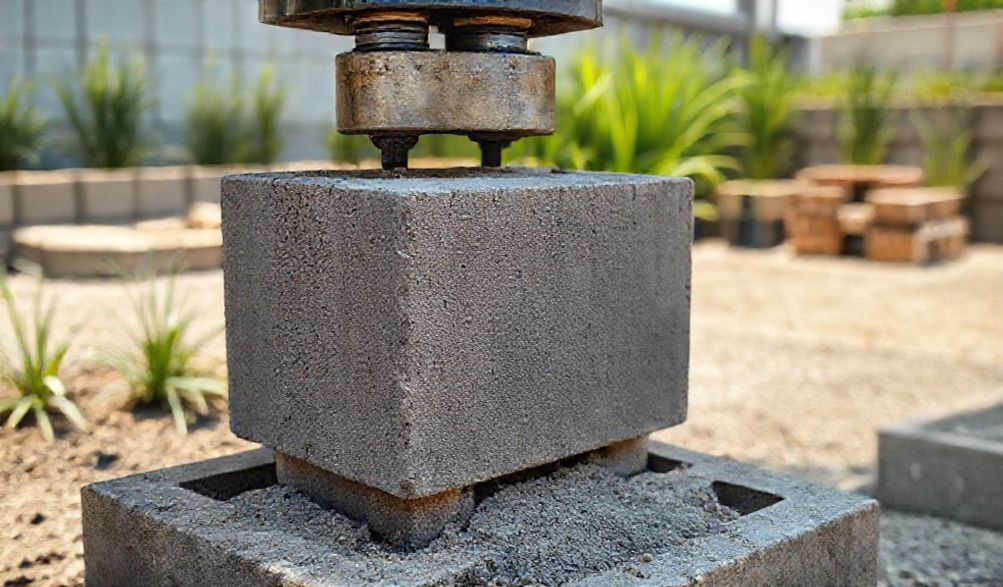
Cốt lõi, một máy sản xuất gạch sinh thái hoạt động dựa trên nguyên lý đơn giản nhưng mạnh mẽ:high-pressure compaction. Unlike traditional brickmaking, which uses heat (around 1000°C) to sinter clay particles, these machines use hydraulic or mechanical force to compress a moist mix of raw materials.
- Quy trình: The machine compresses the material in a mold under immense pressure (typically 10 to 30+ tons), mechanically bonding the particles together.
- Kết Quả: This creates a brick with immediate “green strength” that is then cured, usually with water, for a period of weeks to achieve its full structural potential through a chemical process (like cement hydration or pozzolanic reaction).
Key Raw Materials: Turning Waste into Wealth
The true genius of this technology lies in its feedstock. It turns industrial and urban waste into valuable resources.
- Tro bay: A fine powder waste from coal-fired power plants. It’s a pozzolanic material, meaning it reacts with lime and water to form cementitious compounds. Using fly ash solves a major disposal problem.
- Crushed Construction & Demolition (C&D) Waste: Concrete, mortar, and ceramic waste can be crushed into an aggregate, closing the loop on construction material lifecycles.
- Bụi mỏ đá: A by-product of stone crushing operations, often used as a fine aggregate.
- Soil (Stabilized): Locally sourced soil, stabilized with a small percentage (3-10%) of cement or lime to achieve strength and water resistance.
- Xỉ lò A by-product from steel mills.
The mantra is “local materials for local construction,” drastically reducing transportation emissions and costs while cleaning up the local environment.
The Environmental Mechanism: How It Saves the Planet
The ecological benefits are direct and measurable:
- Zero Burning, Zero Emissions: By eliminating the kiln, it removes the associated release of CO2, sulfur dioxide (SO2), and particulate matter.
- Dramatic Water Savings: Traditional clay brick production is water-intensive for mining and molding. Ecological brick production uses minimal water, primarily for curing.
- Topsoil Preservation: It does not require fertile topsoil, preserving agricultural land and preventing topsoil erosion.
Advantages of Using Ecological Bricks and Machines
Adopting this technology isn’t just an environmental statement; it’s a practical, economic, and social win.
Tangible Environmental Benefits
- Giảm Thiểu Dấu Chân Carbon: Lifecycle assessments show a reduction of up to 90% in embodied carbon compared to fired bricks.
- Chuyển Hướng Chất Thải: A single medium-scale unit can divert hundreds of tons of fly ash or C&D waste from landfills annually.
- Tín Chỉ Xây Dựng Xanh: The use of these bricks contributes significantly to certification systems like LEED (Thiết kế Hướng dẫn Năng lượng và Môi trường)hoặcGRIHA (Green Rating for Integrated Habitat Assessment), earning points for regional materials, recycled content, and innovation.
Economic & Practical Advantages for Builders
- Lower Unit Cost: Raw materials are often low-cost or even free (waste by-products), leading to a cheaper brick. Production costs can be 20-30% lower than fired bricks.
- Superior Construction Efficiency: Machine-produced bricks have consistent size and shape, leading to less mortar use, faster laying times, and reduced skilled labor requirements.
- Proven Strength and Durability: When properly made, compressed ecological bricks can achieve compressive strengths exceeding 10 MPa, suitable for load-bearing walls (referencing standards like IS 1077:1992hoặcASTM C67).
- Enhanced Comfort: The density and composition provide excellent thermal mass, regulating indoor temperatures, and offer better cách âm than conventional bricks.
Societal Impact
- Affordable Housing: The low production cost directly enables more affordable, sustainable housing projects.
- Green Job Creation: It fosters new micro-enterprises and jobs in material collection, brick production, and masonry.
- Circular Economy Model: It embodies a circular economy, transforming waste streams into valuable assets for community development.
Types of Ecological Brick Machines: Choosing the Right Technology
Selecting the right machine depends entirely on your scale, budget, and business model.
Manual / Hand-Operated Press Machines
- Lý Tưởng Cho: Community-led building projects, NGOs, homesteaders, and entrepreneurs testing the market with minimal capital.
- Đầu ra:Xấp xỉ300-500 bricks per 8-hour day.
- Ưu điểm: Very low cost, completely portable, requires no electricity—perfect for remote areas.
- Nhược điểm: Highly labor-intensive and physically demanding. Output is limited by operator stamina.
Semi-Automatic Hydraulic Press Machines
- Lý Tưởng Cho: Small to medium enterprises (SMEs), start-up brick manufacturing businesses, and medium-sized construction projects.
- Đầu ra: Ranges from 1,000 to 4,000 bricks per day, depending on model and crew size.
- Ưu điểm: Excellent balance of affordability and productivity. Electric or diesel-powered hydraulic systems ensure consistent, high-pressure compaction with a small team (2-4 people). Offers a strong return on investment for serious ventures.
Fully Automatic Production Lines
- Lý Tưởng Cho: Large-scale commercial production plants supplying entire regions or major construction companies.
- Đầu ra: 10,000 to 50,000+ bricks per day.
- Ưu điểm: Maximum output with minimal manual labor. These are integrated systems with automated material feeding, mixing, pressing, and stacking/palletizing.
- Nhược điểm: Requires a very high initial capital investment, significant space, and a reliable, high-capacity power supply.
Critical Factors When Selecting an Ecological Brick Machine
Buying a machine is a significant decision. Look beyond the brochure.
Assessing Your Production Needs & Scale
- Are you building a single house or starting a supply business?
- Calculate your required daily output (Bricks Per Day) based on project timelines or market demand. Always factor in a buffer for growth.
Raw Material Analysis is Key
This is the most critical step. Test your local materials first.
* A reputable supplier should offer to test your soil or waste material sample.
* The machine must be compatible with the material’s clay content, silt, and grain size distribution. A high clay content, for instance, may require a different mix design or machine pressure.
Đào Sâu Thông Số Kỹ Thuật Máy Móc
- Áp lực (Tấn lực): Higher pressure (e.g., 20 tons vs. 10 tons) generally produces denser, stronger bricks. Match this to your target strength and material type.
- Thời gian chu kỳ: How many seconds per brick? This directly determines your maximum daily output.
- Yêu cầu về nguồn điện: Choose between electric (cleaner, lower OpEx) or diesel (for areas with unreliable grid power).
- Durability & After-Sales Service: The frame, hydraulics, and mold should be robust. A supplier’s willingness to provide training, spare parts, and technical support is non-negotiable.
Cost Analysis: Beyond the Sticker Price
- Consider Tổng Chi Phí Sở Hữu: Initial machine cost + cost of auxiliary equipment (mixer, sieve) + operating costs (labor, power, maintenance).
- Calculate ROI: Based on your local brick selling price and production cost, project how long it will take to recoup your investment. A semi-automatic machine for an SME often has an ROI of 12-24 months.
The Production Process: From Raw Material to Finished Brick
Understanding the process ensures quality control.
Step 1: Sourcing and Preparation of Raw Materials
Materials are sieved to remove debris and oversized particles. Hard aggregates may need crushing. The goal is a consistent, homogenous feedstock.
Step 2: Precise Mixing and Moisture Control
This is where quality is made. The raw materials (e.g., soil, fly ash, cement) are mixed in a mechanical pan mixer. Optimal Moisture Content (OMC)—usually around 8-12%—is critical. Too dry, and the brick won’t compact properly; too wet, and it will deform after ejection.
Step 3: Compression in the Machine
The mix is fed into the machine’s chamber and compacted under high pressure for a few seconds. The brick is then ejected onto a pallet.
Step 4: Curing and Quality Assurance
- Chữa bệnh: Bricks are stacked and kept moist (often by sprinkling water and covering with plastic sheeting) for 14 to 28 days. This allows the cement or lime to fully hydrate, achieving the designed strength.
- Quality Tests: Simple on-site tests include the “drop test” (a cured brick should not break when dropped from waist height) and checking for uniform color and lack of cracks.
FAQ: Your Questions About Ecological Brick Machines Answered
Q1: Are ecological bricks as strong as traditional fired clay bricks?
A: Yes, and often stronger. When produced to standard with proper material ratios and compaction, they easily meet and exceed common building code requirements for compressive strength (e.g., IS 1077 specifies a minimum of 3.5 MPa for common burnt clay bricks, while quality compressed blocks often achieve 7-10 MPa).
Q2: What is the typical cost of setting up an ecological brick production unit?
A: Costs vary dramatically. A basic manual press can start around $1,500 – $3,000. A semi-automatic hydraulic plant, including mixer and basic setup, may range from $15,000 to $50,000. A fully automatic line can start from $100,000 and go into the millions. Location, scale, and automation are the key drivers.
Q3: Can I start this business without an engineering background?
A: Absolutely. Many successful operators come from varied backgrounds. Reputable suppliers provide comprehensive operational and mix-design training. A willingness to learn, attention to detail, and hands-on practice are more important than a formal degree.
Q4: How do I find a reliable machine supplier?
A: Conduct thorough due diligence. Look for manufacturers with a long track record. Always ask for client references and visit an existing working unit if possible. Insist on a live demonstration using a sample of bạn raw materials. Scrutinize the warranty and after-sales service contract.
Q5: Are there any government subsidies or policies supporting this technology?
A: Many governments worldwide promote green construction technologies. In India, for example, the Building Materials & Technology Promotion Council (BMTPC) actively certifies and promotes such technologies. Check with your local Ministry of Environment, MSME development institutes, or green building councils for potential grants, soft loans, or tax incentives.
Conclusion: Building Greener, Building Smarter
The ecological brick machine represents more than just a piece of equipment; it symbolizes a paradigm shift towards a restorative and responsible construction industry. It addresses environmental degradation, economic constraints, and social needs in one integrated solution.
The future is bright, with advancements like AI-driven mix optimization, solar-powered production units, and even stronger geopolymer binders on the horizon. The technology is proven, scalable, and ready for adoption.
Your Call to Action:
* For Builders & Architects: Specify “compressed ecological bricks” or “fly ash bricks” in your next project’s Bill of Quantities. Demand sustainable materials from your suppliers.
* For Entrepreneurs: Conduct a localized feasibility study. The market for green building materials is growing exponentially. Reach out to a reputable supplier for a detailed consultation.
* For Everyone: Share this knowledge. Promoting sustainable construction practices is a collective responsibility.
Based on verifiable industry data and engineering best practices, integrating ecological brick technology is one of the most concrete steps we can take toward a sustainable future. The blueprint for change is here, and it’s compressed into the shape of a brick.
<