
Hướng Dẫn Toàn Diện Về Khối Gia Công CNC: Độ Chính Xác, Vật Liệu và Ứng Dụng
Giới thiệu
Thành phần nền tảng nào là yếu tố then chốt cho hoạt động của động cơ phản lực, máy MRI cứu sinh, và dây chuyền lắp ráp robot tốc độ cao, nhưng vẫn thường bị lãng quên? Câu trả lời thường nằm ở một mảnh kim loại hoặc nhựa được gia công chính xác: khối gia công. Chúng không chỉ là những khối vật liệu thô; chúng là nền tảng được thiết kế kỹ thuật, nơi ngành công nghiệp hiện đại xây dựng độ tin cậy, sự đổi mới và độ chính xác.
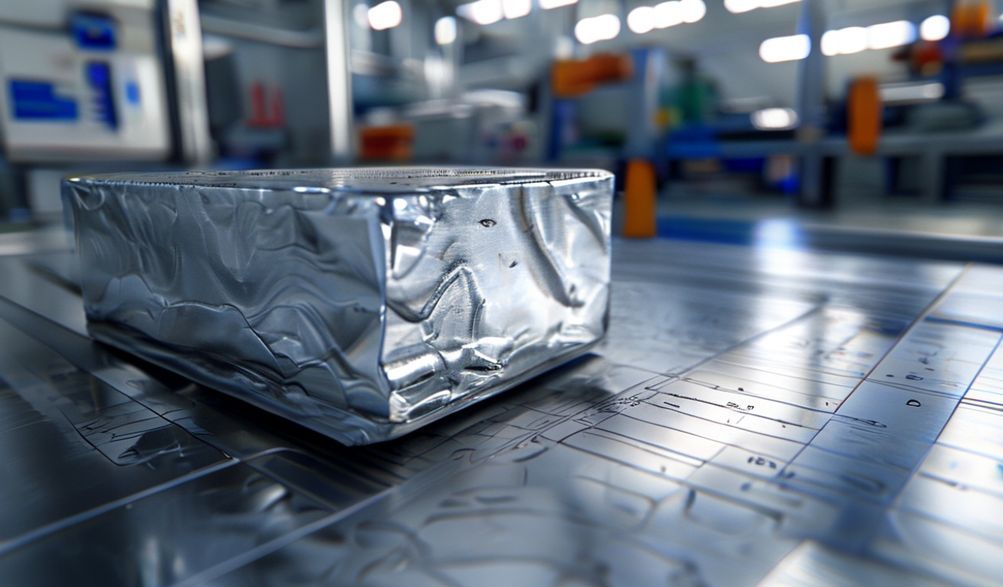
A khối máylà một nguyên liệu thô—kim loại, nhựa, hoặc vật liệu composite—đã được định hình và hoàn thiện tỉ mỉ bằng các công cụ máy móc được kiểm soát như máy phay CNC, máy tiện, và máy mài. Quá trình này biến một phôi thô thành một linh kiện với các thông số kỹ thuật chính xác về kích thước, hình học và độ hoàn thiện bề mặt. Độ chính xác này là yếu tố bắt buộc; hiệu suất, độ an toàn và tuổi thọ của cụm lắp ráp cuối cùng phụ thuộc trực tiếp vào độ chính xác của những bộ phận cơ bản này.
Hướng dẫn này tổng hợp hàng thập kỷ kinh nghiệm sản xuất, kiến thức khoa học vật liệu và các tiêu chuẩn kỹ thuật. Nó được thiết kế để trang bị cho các kỹ sư cơ khí, chuyên gia thu mua, quản lý sản xuất và nhà thiết kế kiến thức cần thiết để chỉ định, thiết kế và tìm nguồn cung ứngkhối máyvới sự tự tin. Hãy cùng khám phá thế giới của những thành phần thiết yếu này.
What is a Machined Block? Core Concepts and Definitions
At its core, a machined block is the finished product of a subtractive manufacturing process. Understanding what sets it apart from other forms is key.
Machined Block vs. Raw Stock vs. Casting
It’s crucial to distinguish between these three stages:
* Raw Stock: This is the starting point—a bar, plate, or billet of material (e.g., aluminum, steel) with standard mill tolerances. It is essentially “blank.”
* Casting/Forging: These are near-net-shape processes. A casting is made by pouring molten metal into a mold, creating a rough part shape. It requires machining on critical surfaces to achieve final precision.
* Machined Block: This is the final, ready-to-use component. Starting from raw stock or a casting, material is precisely removed via CNC machining to hit exact blueprints. Every critical dimension, hole, and surface is finished to specification.
Key Characteristics: Tolerances, Surface Finish, and Flatness
The value of a machined block is quantified by its adherence to strict specifications:
* Dung sai kích thước: The permissible limit of variation in a physical dimension (e.g., 50.00 mm ±0.05 mm). Tighter tolerances increase cost and require advanced machining.
* Surface Finish (Ra): The measure of the texture of a surface, typically in microinches (µin) or micrometers (µm). A lower Ra value indicates a smoother surface. Critical for sealing, friction, and aesthetics.
* Geometric Tolerances: These control the shape, orientation, and location of features.
* Flatness: Ensures a surface is planar within a specified zone.
* Parallelism: Guarantees two surfaces or axes remain equidistant.
* Perpendicularity & True Position: Control angular relationships and hole placement.
Materials for Machined Blocks: Selecting the Right Foundation
The material choice is the first and most critical decision. It dictates the block’s performance, cost, and manufacturability.
Metals: Aluminum, Steel, Stainless Steel, and Brass
- Aluminum (e.g., 6061-T6, 7075):
- Ưu điểm: Excellent strength-to-weight ratio, good machinability, natural corrosion resistance, and high thermal/electrical conductivity.
- Nhược điểm: Lower hardness and wear resistance than steel.
- Ứng dụng: Aerospace frames, automotive components, electronic enclosures, robotic arms.
- Steel (e.g., 1018, 4140, A36):
- Ưu điểm: High strength, durability, and excellent wear resistance. 4140 (alloy steel) can be heat-treated for even greater strength.
- Nhược điểm: Heavier, prone to rust unless coated, and harder to machine than aluminum.
- Ứng dụng: Machine bases, heavy-duty fixtures, gears, hydraulic components.
- Stainless Steel (e.g., 304, 316, 17-4 PH):
- Ưu điểm: Superior corrosion and chemical resistance, high strength, and can be sterilized.
- Nhược điểm: More expensive, tougher to machine (generates work hardening), and heavier.
- Ứng dụng: Medical devices, food processing equipment, marine hardware, chemical valves.
- Brass:
- Ưu điểm: Outstanding machinability, good corrosion resistance, antimicrobial properties, and electrical conductivity.
- Nhược điểm: Lower strength than steel, higher cost.
- Ứng dụng: Precision instrumentation, decorative fittings, electrical components, plumbing fixtures.
Plastics and Composites: Delrin, PEEK, UHMW
- Delrin (POM): A stiff, low-friction acetal plastic. Excellent for gears, bearings, and insulators.
- PEEK: A high-performance thermoplastic. Resistant to high temperatures, chemicals, and wear. Used in demanding aerospace, automotive, and medical implants.
- UHMW (Ultra-High-Molecular-Weight Polyethylene): An extremely tough, impact-resistant, and low-friction plastic. Ideal for wear strips, liners, and material handling parts.
Material Selection Criteria
Use this framework to guide your choice:
1. Mechanical Load: What stresses (tensile, compressive, shear) will the block endure?
2. Operating Environment: Exposure to temperature extremes, chemicals, moisture, or UV radiation?
3. Precision Requirements: Does the material maintain dimensional stability under load or temperature change?
4. Weight Constraints: Is lightweighting a priority?
5. Regulatory/Biocompatibility: Needed for medical (ISO 10993) or food contact (FDA) applications?
6. Ngân sách: Balance material cost with machining cost (e.g., some tough materials are expensive to machine).
CNC Machining Processes for Creating Precision Blocks
Modern khối máy are born from Computer Numerical Control (CNC) technology, which provides repeatable, complex precision.
CNC Milling: The Primary Workhorse
A rotating cutting tool removes material from a stationary block.
* 3-Axis Milling: The most common. The tool moves in X, Y, and Z. Ideal for parts with prismatic features.
* 4-Axis & 5-Axis Milling: The block can rotate (4th axis) and tilt (5th axis), allowing complex, contoured geometries to be completed in a single setup. Essential for aerospace and complex manifolds.
CNC Turning for Cylindrical Components
Used for creating rotationally symmetric parts. The raw material (bar stock) rotates while a stationary cutting tool shapes it. Ideal for producing precision shafts, cylindrical blocks, and rotors. Often combined with milling in “turn-mill” centers.
Secondary Operations: Drilling, Tapping, Grinding, and Finishing
- Drilling & Tapping: Creating holes and threading them for fasteners.
- Grinding: Uses an abrasive wheel to achieve ultra-tight tolerances (±0.0001″) and superior surface finishes. Critical for gauge blocks and precision slides.
- Finishing: Processes like anodizing (aluminum), passivation (stainless), plating, or painting to enhance corrosion resistance, appearance, or surface hardness.
Critical Applications of Machined Blocks Across Industries
Aerospace & Defense: Engine Mounts, Structural Components
Here, failure is not an option. Blocks are machined from high-strength alloys like 7075 aluminum, titanium, and Inconel. They must withstand extreme forces, temperatures, and vibrations while meeting astronomically tight tolerances. Every component, from wing spar fittings to satellite housings, is meticulously validated.
Automotive: Engine Blocks, Transmission Housings, Prototyping
From high-volume production of engine cylinder blocks (often from castings with machined surfaces) to one-off prototype parts for testing, machining is central. Blocks serve as transmission cases, suspension components, and brackets, where precision ensures efficiency and durability.
Medical: Surgical Instrument Bases, Imaging Device Components
Precision here is measured in microns and lives. Machined blocks for surgical robots, MRI coil supports, and diagnostic devices are made from biocompatible 316L stainless steel or titanium. They require flawless surface finishes for cleanability and must be produced in controlled environments, often adhering to ISO 13485 standards.
Industrial Automation: Fixturing, Jigs, and Machine Bases
This is the unsung hero of manufacturing. Custom khối máy form the backbone of assembly jigs, welding fixtures, and test equipment. Their accuracy ensures that every product coming down the line is built identically. Durability and stability are paramount.
Design for Manufacturability (DFM) for Machined Blocks
DFM is the practice of designing parts to optimize them for the machining process, reducing cost and lead time while improving quality.
Optimizing Designs for Cost and Efficiency
- Simplify Geometries: Avoid deep, narrow pockets and sharp internal corners which require small, fragile tools and slow machining.
- Standardize Features: Use standard drill and tap sizes. Specify radii that match available cutter sizes.
- Tolerances: Only apply tight tolerances where functionally necessary. Every decimal place adds cost.
- Consider Setups: Design parts that can be machined in minimal setups. Can critical features be accessed from one or two sides?
Technical Drawing Best Practices
A clear drawing is the contract between you and the machinist.
* Fully Dimensioned: Provide all necessary dimensions; don’t make the machinist measure the 3D model.
* Use GD&T: Geometric Dimensioning and Tolerancing is the most precise language for communicating fit, form, and function.
* Call Out Critical Features: Clearly specify surface finishes, thread depths, and hardness requirements.
* Material Spec: Include the full material grade and standard (e.g., AL 6061-T6 per ASTM B221).
How to Choose a Machining Partner: A Buyer’s Guide
Selecting the right shop is as important as the design itself.
Evaluating Capabilities and Expertise
Ask potential partners:
* What is your range of CNC equipment (3-axis, 5-axis, turning centers)?
* What is your maximum part size capacity?
* Do you have experience in our specific industry (e.g., medical, aerospace)?
* What quality management certifications do you hold (ISO 9001, AS9100, ISO 13485)?
* Can you provide material certifications (mill certs)?
* What is your process for first-article inspection and in-process quality control?
Understanding Quotations and Lead Times
Look beyond the bottom-line price:
* Process Breakdown: Does the quote detail operations (mill, turn, finish)?
* Tolerance Assumptions: Are they quoting to your drawing or making assumptions?
* Nguồn cung ứng vật liệu: Is material included, and is it from a reputable supplier?
* Lead Time Realism: Does the timeline account for material procurement, machining, and quality inspection? An unusually cheap, fast quote can be a red flag.
FAQ Section
Q: What is the typical tolerance achievable for a machined block?
A: For most commercial applications, ±0.005″ (0.127 mm) is standard. High-precision machining can consistently hold ±0.001″ (0.025 mm) or tighter. For metrology-grade parts, grinding can achieve tolerances in the tenths of thousandths (±0.0001″).
Q: Which material is best for a lightweight, corrosion-resistant machined block?
A: 6061-T6 Aluminum is the go-to for an excellent balance of light weight, good strength, and natural corrosion resistance. For more severe environments (e.g., saltwater, chemicals), 316 Stainless Steel or engineered plastics like PEEK are superior choices, though at a higher cost and weight (for steel).
Q: How does the cost of a machined block compare to a casting or forging?
A: For prototypes, low volumes, or highly complex one-off parts, machining from solid is typically more economical, as it avoids the high cost of mold/tooling creation. For high-volume production (thousands of parts), casting or forging becomes cost-effective for the blank, but these “near-net-shape” parts almost always require secondary machining on critical surfaces.
Q: What file format should I provide for a machined block quote?
A: Always provide both a 3D model and a 2D drawing. For the 3D model, use a neutral format like STEP (.stp) or IGES (.igs). For the 2D drawing, a dimensioned PDF is standard. The drawing is the legal document that specifies critical tolerances and notes.
Q: What quality certifications should I look for in a machine shop?
A: ISO 9001 is the baseline for a quality management system. For aerospace, AS9100 is essential. For medical devices, ISO 13485 demonstrates adherence to strict regulatory requirements. Industry-specific certifications are a strong indicator of specialized expertise.
Conclusion
Machined blocks are far more than simple pieces of metal or plastic. They are the precision-engineered fundamentals upon which advanced technology and reliable industry are built. Their unassuming presence belies their critical role in everything from exploring space to healing the human body.
The path to a successful component hinges on a powerful synergy: intelligent material selection guided by application demands, thoughtful design optimized for manufacturability, and a trusted partnership with a qualified machine shop that possesses the right expertise and equipment.
Ultimately, in a world driven by precision, the foundation matters. Don’t leave it to chance. Use the knowledge from this guide to inform your specifications, and engage with engineering and manufacturing professionals who can translate your critical designs into flawless, reliable reality. For your next project, consult with an expert team and request a detailed quote—your blueprint for success awaits.
<